Table of Contents Show
Almost a year ago, we did an introduction to the Gospel of John. It was an attempt to cross off a decade-old New Year’s resolution that turned into writing a book on the Samaritan Woman at the Well.
However, an eschatological blog post turned into a book, and it’s big and rough. Apparently, that first needed to be written for personal reasons as an exploration of a thesis and its concepts. It was required to write a commentary on John’s Gospel. John never went away while writing the other book. In fact, he continued to haunt me, and books are lying around to prove it.
During the last few years, passages from John have hit me as epiphanies, usually flooring me. Along the way, a thesis developed:
John’s Gospel was a spiritual declaration meant to be trusted, followed, and taught through personal practice and communal relationships. This Gospel challenged the outside “worlds” by making its participants go inward and step out in the Light. It was a narrative designed to be used by early communities, and not necessarily as commercial devotional fodder or Western theological debates, though John never backs down from such arenas and stands above all of them. John’s writings were meant to be used as a sacred spiritual narrative within communities and private disciplines, from memorizing to being read in one setting, to communion liturgies and songs, and possibly reenactments. In order for John to do it genuinely in the first century Roman Empire meant that John’s Gospel was also a Greco-Roman mystery religion and political propaganda polemic.
John is so juicy he tends to drip into everything. However, I’ve been holding back the deluge, aside from two necessary posts on John 14:6 and John 3:16, and it’s finally time to dive back in.
A Quick Review
It’s essential to recall the world John was writing from and into. The Ancient Near East and the Roman Empire had been a mixing pot for centuries. Unlike Old Testament scriptures, which were written to a predefined Jewish theocratic nation, the New Testament broke out into a diverse Gentile global world. John, himself a Jew, was putting pen to paper concepts and a narrative that had to work across more than just language barriers: it would have to pierce competing worldviews, stand up to lords and persecutions, invite people to trust a crucified Jewish man, and stand the test of time. I’d imagine, for John, there was a sacredness about it, a calling to do a good and faithful job for his Lord and Savior.
John’s Gospel emerged after that, and from collisions between Jewish messianic hope, Roman imperial propaganda, and a mix of Greco-Roman and local mystery religions. In the first century, “gospel,” “Lord,” “church,” “salvation,” and “Son of God” were not neutral theological terms but loaded political language: they were Rome’s own propaganda. To call Jesus “kurios” (lord) was to reject the empire’s claim to divine order. Even “resurrection” was a term debated in Athens when Egyptian religions had their first wave of fad, and again later with the Romans1.
At the same time, the Mediterranean and Levant had been awash in religions and mysticism for possibly thousands of years. Israel had been surrounded by empires all their life, including Egypt, Babylon, and Greece. Israel’s origin stories include two foreign captivities. They were the minority religion and probably knew it.
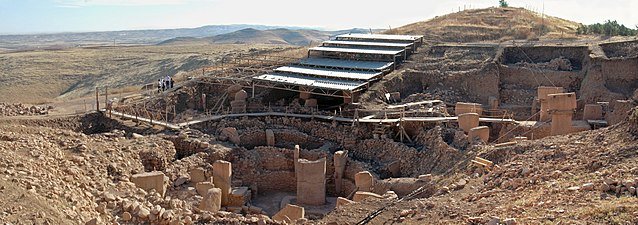
Research from places like Gobekli Tepe and Tel Arad paints a much more colorful picture than simple Sunday School flannel graphs may suggest. We have evidence of female ritual specialists buried in Israel from early periods, long fasting rituals with consumed ingredients that incited visionary states, and the mixing of herbs and psychoactive substances into wine long before nineteenth-century purity laws. Archaeobotany shows ancient peoples experimented much as people do today.
Meanwhile, east of Israel and on the fringe of the Roman Empire lay India and China, and their philosophies traveled. Alexander the Great facilitated encounters that carried not just Hellenism eastward, but also eastern ideas westward. Before the first century, Buddhist missions had already moved into Central Asia and the Mediterranean2. The Greco-Buddhist kingdoms of Bactria and Gandhāra even produced Greek Buddhists—Hellenized rulers and communities engaging Buddhist philosophy. If Buddhism reached Greek-speaking worlds before Jesus, it had to pass through or alongside the Levant’s trade routes. In short, John’s world was already cross-pollinated with Eastern and Western thought long before he ever put pen to papyrus.
From the Eleusinian Mysteries and Mithraic cults to ritual use of wine and altered states, people sought divine union through secret rites. John subverts these practices by presenting the Logos (the divine reason, life, and light) not as a hidden secret for initiates but as revelation made flesh for all people.
Jewish religious debates and Greco-Roman philosophy both shaped John’s world. Thinkers like Philo of Alexandria used the term Logos to describe God’s intermediary presence; John radicalizes that language by identifying the Logos as a person. This is the world Israel was centered in, and the world into which John’s Gospel would step and take center stage among these competing worlds.
John’s Authority and Circulation
John’s Gospel arrives late to the party. Most scholars place its writing around the end of the first century, roughly 90–110 AD. Yet, it hit the ground with surprising authority. John’s authority is backed in two overlapping ways: first, through a living eyewitness memory and its circulation.
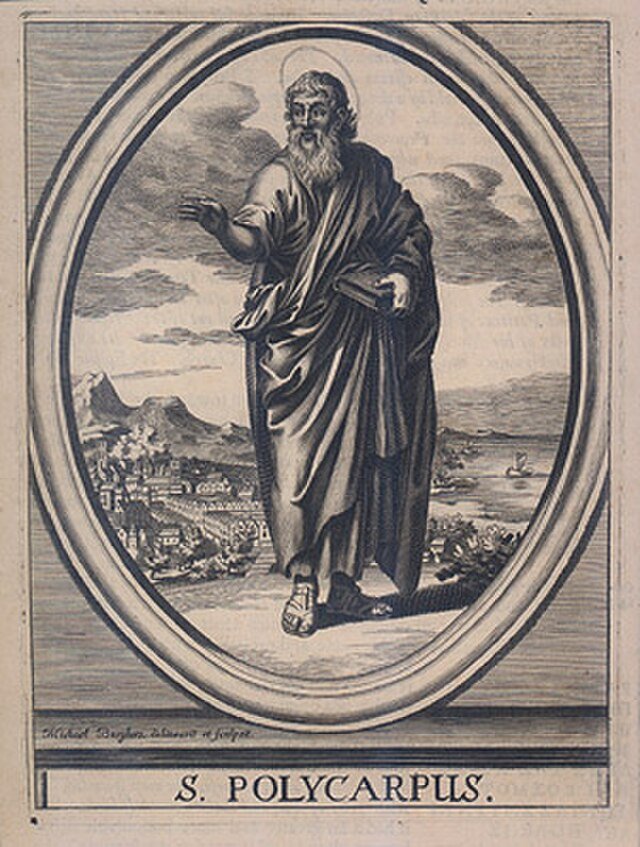
Irenaeus, our earliest witness to this tradition, personally knew Polycarp as a young man. He recorded that Polycarp was discipled by John and that he “was not only taught by the apostles, and conversed with many who had seen Christ, but was also appointed by apostles in Asia as bishop of the church in Smyrna” (Against Heresies 3.3.4).
Papias (early 2nd century), as quoted by Eusebius, describes receiving information from people who knew and lists two different Johns. Some later sources imply Ignatius had contact with John while John was in Ephesus. Taken together, these witnesses show that by the early second century, John’s influence had already become widespread.
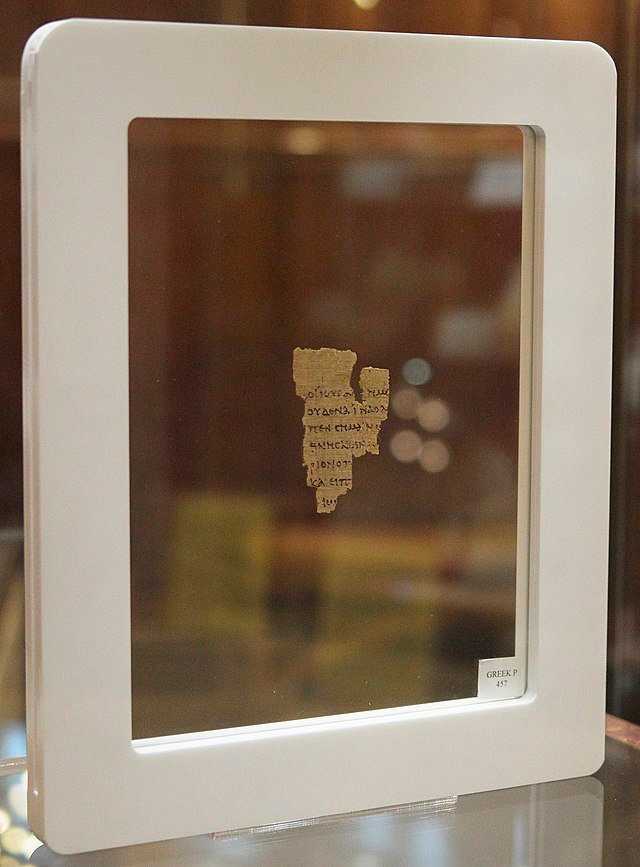
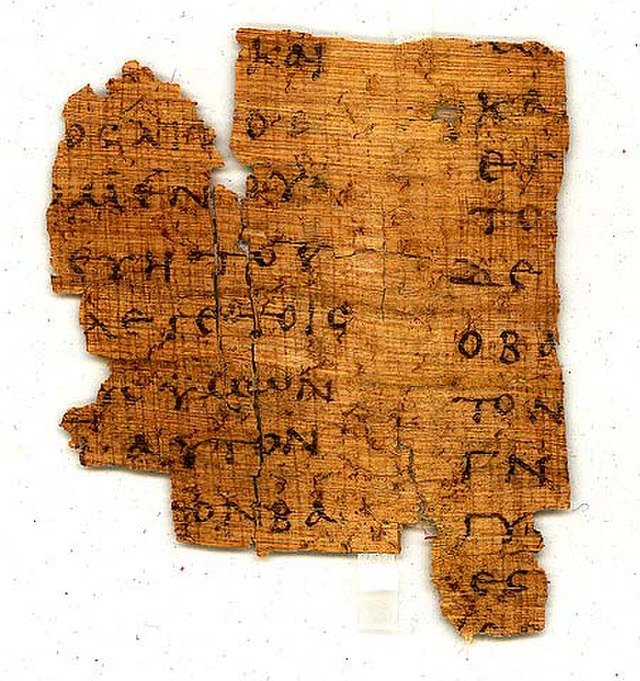
Second, through fast canonical recognition: for example, the Muratorian list from the second century already calls John the “fourth” Gospel. We shouldn’t be surprised his book spread quickly; an early second-century scrap of John from Egypt (papryi P52) demonstrates textual circulation as far as Africa by at least the second century, and the testimony of the early church fathers that John published a Gospel while he was residing at Ephesus corroborates the same local memory that undergirds the Gospel’s credibility.
The Synoptic Gospels3, at least Matthew and Mark, had been around for a couple of decades. It is reasonable to assume John was familiar with them. Paul’s letters also help provide chronological anchors. Paul’s letters date to the 50–60 AD, and Mark is generally placed around the 60–70 AD. So, by the time John writes, the church already possessed apostolic letters, public preaching, and at least three narrative Gospels, all of which shape John’s rhetorical choices and pastoral aims. John writes late enough to be summing up and polemicizing within an emerging Christian world, yet early enough to have the credibility and practical fidelity that made the “fourth” Gospel a foundational text for early communities and the wider church.
John’s Intent
John’s intent seems clear: to invite people to trust Jesus and the message of this gospel. John tells us what his intent is in a few places, like John 17:3. He explicitly tells his early audience what his intent was at the end of the book, just in case they missed it:
“Now Jesus did many other signs in the presence of the disciples, which are not written in this book; these are written so that you may believe that Jesus is the Christ, the Son of God, and that by believing you may have life in his name.”
To do this, John had to use the same language and idioms; he had to infiltrate people’s mindsets and tell an authentic story well. He was no idiot, having faced expulsion by Rome later and, maybe, was in part for his Gospel’s widespread influence, which competed with Rome’s. John presented Jesus not only as the fulfillment of Jewish messianic hope but also as the ultimate Kurios, whose kingdom supersedes the temporal and geographic control of Rome.
Between chapter 1, verse 1, and his closing verse, we are going to discover, experientially, what John meant, and how his book was meant to force us to meet the resurrected Jesus face to face. “Signs” will be one of many ways John tries to show his audience what he saw so they can’t unsee it, but it is also just one of a litany of tools and devices he’ll employ.
Manuscripts and Political Context
The earliest surviving manuscripts, such as Papyrus 66 and Papyrus 75 (c. 175–225 for P66; P75 late 2nd or early 3rd century), call this “The Gospel according (kata) to John.” The later Codex Sinaiticus and Vaticanus simply call it “according to John.” Gospel was no unique word for the Greco-Roman world: in fact, it was a loaded one, as we’ve discussed. The title itself postures itself in contrast with the euangelions of previous Caesars and other kings who used the Divine Right of Kings or Heavenly Mandate. The Greco-Roman propaganda machine regularly used religious and cultural ideologies as tools for gaining approval and directing the masses.
Revelation names Patmos as John’s location and links his presence there to “the word of God and the testimony of Jesus” (Rev 1:9). However, there’s debate on whether the same John wrote Revelation. The epistles, however, do seem to at least come from the same author.4
By the second century, Irenaeus places that exile at the end of Domitian’s reign, and Eusebius echoes that, hence the tradition that John was exiled under Domitian. At the very least, John’s Gospel sets the stage for the John of Revelation. Revelation reads like a first-rate imperial polemic, cheering disciples of Christ to keep their heads up and hearts alive while denouncing imperial claims and cultic enslavements. Both writers, if not the same John, would have been politically dangerous in Asia Minor.
Also, some scholars treat the Domitian persecution narrative cautiously. There is no contemporary Roman edict preserved that orders a systematic empire-wide purge. Persecution did happen. So, it may be responsible to keep it in perspective.
John 1:1–5 as First-Century Readers
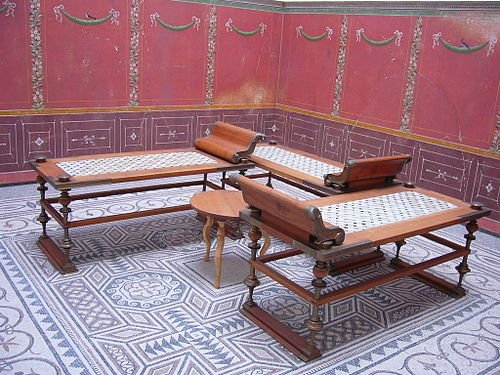
With that first-century context in mind, we transport ourselves back as first-century listeners, together in Tarsus, Antioch, Jerusalem, Alexandria, or Rome: Whatever first-century context comes closest to yours. We’re standing around a large dining room in someone’s house. Three tables arranged as a horseshoe, called a triclinium, normally sit in the middle, but we can’t see those. We’re in the back corner: It’s standing room only today. Crowded in this first-century room is an odd mix of ethnics and beliefs. There’s a person up front, one of the lucky ones who can read, and he or she is going to be reading John to all of us as a narrative, telling it as a story, and hoping we pick up the things John was putting down.
Someone urges silence. It’s about to begin.
“John thinks he is writing a new Genesis.”
— N.T. Wright
Verses 1–2
“In the beginning was the Word, and the Word was with God, and the Word was God. He was in the beginning with God.”
v. 1–2
John opens his Gospel with ἐν ἀρχῇ, “in the beginning.” In the Septuagint, the Greek translation of the Old Testament, Genesis begins with the same words. John immediately drops his readers into the world of Genesis 1:1 and will reframe all of Creation with the rest of his Gospel.
In the beginning, before the moment of Creation, there was the Word. The Greek word is logos, which meant something like the intuitive and intelligent spirit that permeates all living things and creation. The Stoics used it that way, and so did the Jews. For Jews, the “word” (dabar) represents God’s active, creative agency performed by divine speech in Genesis 1. “Then God said,” not taking preexisting material and reworking it with his hands, but creating by what theologians call ex nihilo5. For our context, in ancient times, both kings and gods would speak like this to show their words had power. It was the power a Hollywood Pharaoh might have to say, “So let it be written, so let it be done.”
Greek philosophers long played with this word, “Word,” too. First to give it a philosophical meaning, Heracleitus describes Logos as the universal, eternal principle of order and reason governing all things, though humans often fail to grasp it. Similarly, he said that a human can’t put their foot in the same river: since the human, foot, and river will have changed, but all are held together by the Logos that remains (c.f. Col 1:17 and Eph 1:10).
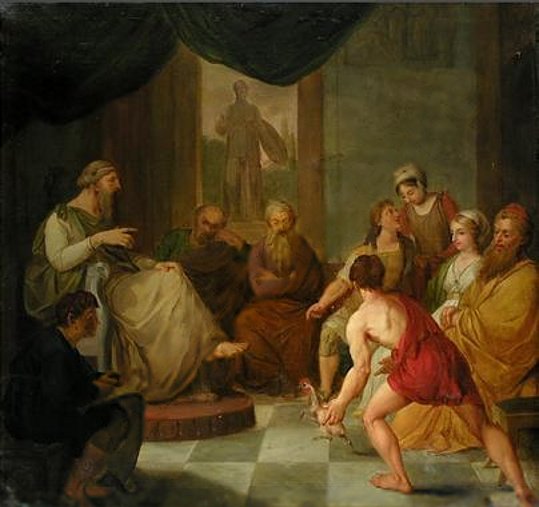
Plato framed Logos as divine reason woven into the soul. But ancient thinkers weren’t unified. Diogenes famously walked into the Academy with a plucked chicken, tossed it on the floor, and said, “Behold, a man!”, mocking Plato’s project. Debates back then were no less sharp, sarcastic, or diverse than ours. Philo’s use of Logos was as a divine intermediary, while the Stoics were as “cosmic reason.” Then John’s move to identify the Logos with a person is his radical theological claim.
For his opening lines, John pulls on both ideas without commentary, and collapses the Jewish/Gentile dichotomy: first, he says, “the Word was with God,” perhaps not identical to “God,” but then John says, “the Word was God.” In Greek, the literal rhythm actually says “The Word God Was,” kind of like Yoda. In a purely Western Cartesian logical way, this doesn’t make sense. John takes a heavy swing at his time’s dualistic worldviews and keeps trucking along with his prologue. It seems like a contradiction, and thus we have centuries of doctrinal debate. John entices his first-century readers with ambiguity and an invitation to learn more. To understand John 1:1, it helps to have the contexts he was working with in mind, but we also have to experience the Gospel in its narrative arc to see what John was doing and why this Gospel remains so powerful. He’ll explain what he meant by inviting people to keep listening, looking, and experiencing the rest of the Gospel “according to John.”
“John has the most penetrating gaze of all the New Testament writers into the eternal mysteries and the eternal truths and the very mind of God.”
— William Barclay
The Word, whatever or whoever it is, was always there and is somehow a fundamental part of God. After his introduction, John will tell us how this Word came into our world.
Verse 3
“All things were made through him, and without him was not anything made that was made.”
v. 3
Verses 1 and 2 are a tiny chiasm, while verse 3 offers a grammatical nuance. Lexically, θεόν (God) is the last noun before the pronoun “him”; pronominally, however, the pronoun strongly suggests the λόγος (Word).
Today, in some camps, this verse has been proof-texted a lot in Creationism and Christological debates. It’s helpful to forget our current debates and remember that ancient readers were also asking the same big questions we ask today, just with different evidence and contexts. For the Greeks, the debate included dualism and the afterlife.
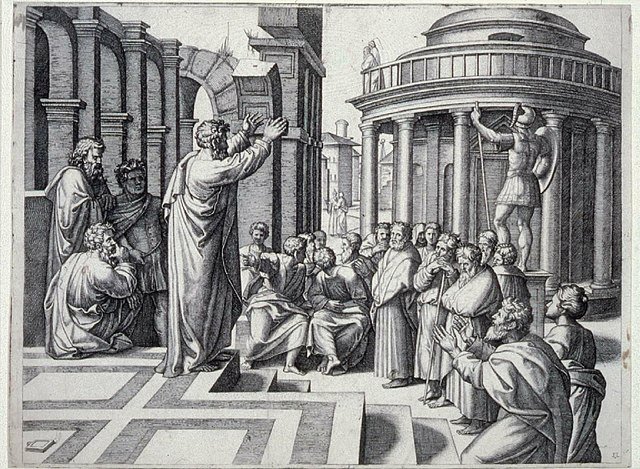
Many Romans, including the educated classes shaped by Plato, Cicero, Seneca, and later Marcus Aurelius, were already questioning the old mythic pantheon. By the first century, the real debates weren’t “Zeus vs. no Zeus,” but whether the universe had a rational soul, whether providence existed, and what a human soul even was. Stoics and Epicureans were two main poles: providence and cosmic reason on one side; materialism and meaninglessness on the other. That same divide ran through Judaism: Sadducees denying resurrection or afterlife, while Pharisees, Essenes, Herodians, Zealots, and Samaritans held different visions of the soul’s survival and God’s involvement in history and politics.
Marcus Aurelius stood in that tension. He didn’t reject the gods outright; he interrogated them and stripped them of mythology. Rather than ignoring divinity and his humanity, Marcus “worshipped” a rational, animating order: the Logos, in which pneuma (spirit) and heimarménē (ordered fate) exist and through which run all things. For the Stoic mind, the divine is the logical mind of the cosmos itself.
When John name-drops the Logos, he drops a philosophical grenade into the Greco-Roman worldview. He borrows a word that a Stoic and Jew could nod along with, then overturns the whole system by making the Logos personal, relational, and embodied. John takes the cold, rational principle of the empire’s philosophers and says that the very Logos took on flesh and walked among us.
In this verse, John wasn’t speaking to one group of people, as we’ve seen from the context already, and we’ll see different groups of people he had in mind in his narrative.
So, let’s see what John just did in verse 3 with a chart:
| Things Made | Things Not Made |
| Everything made (Physical World) | Word |
Whatever the “Word” is, it’s uncreated and a part of the Divine. In fact, here’s one more chart that I’ve wondered if John was toying with:
| Everything | God |
| Things Not Made | Word, Light, Love, Truth |
| Things Made | Physical World |
“John sees eternal life not as a far-off hope but as a present reality, a mystical participation in the life of God.”
— C. H. Dodd
Verses 4–5
“In him was life, and the life was the light of men. The light shines in the darkness, and the darkness has not overcome it.”
v. 4–5
In the Logos was life. That life was the light of humanity. John is popular because of his use of short and pregnant words: life, love, light. While John plays with Platonic philosophy, Greco-Roman culture, and Jewish theology, he is also speaking to everyday people, and you can tell. This is something to appreciate about John: his pastoral heart and his ability to cut through noise with a bright message. It’s something to learn from instead of letting baggage and ego determine how we carry ourselves and treat others.
For first-century readers, these promises would have sounded familiar. They had drunk from other cups and been oppressed by other “gospels.” Other people promised the light of the world and peace on earth. The Jews longed for the Light: the first day of creation, prophetic revelation, scriptural signs. They had also heard Gentile rulers and cults promising similar things. The Pax Romana was everyone’s Big Brother. The Jewish community itself was fractured and debated what life and truth meant. They were not strangers to cultural confusion; it was what they grew up in.
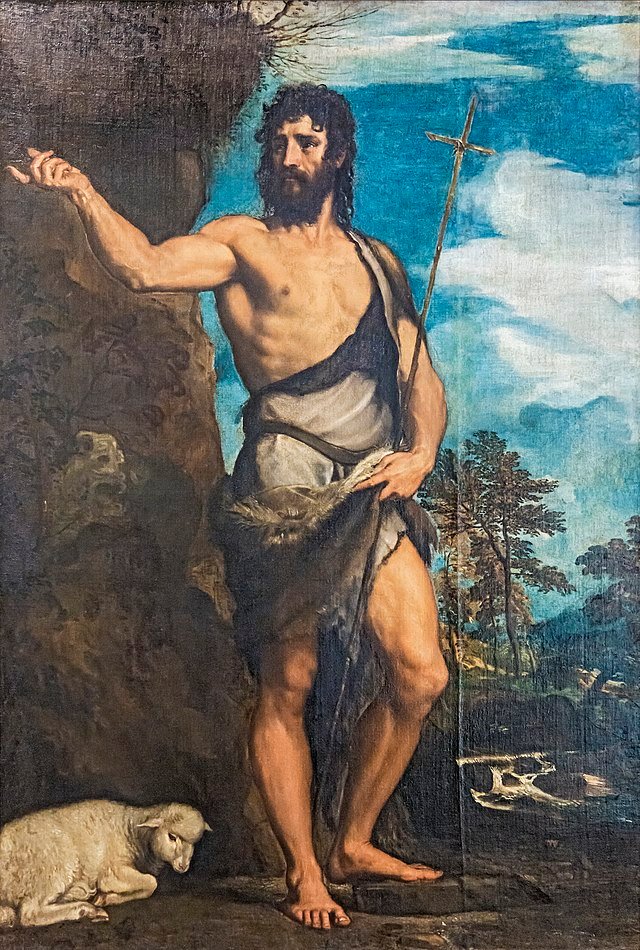
John radicalizes these expectations by identifying the Logos as a person: Christ. The prologue (“In the beginning was the Word…”) becomes a manifesto of spiritual and political rebellion, declaring that Divine Truth has entered the world not through empire, temple, or code, but through incarnation itself.
Before John explores the Logos more, he introduces the first person or thing named in the story: John the Baptist.
Next time, we’ll finish the Prologue of John (verses 1–14), and start laying out some of his literary devices and themes. In the next section, we’ll see how John quickly introduces the ambiguous figure of Jesus with seven titles, and in so doing, start uncovering his hidden patterns and treasures John tucked into this archaic story that has had more influence on our world than perhaps any other book of the Bible.
The opening of John’s Gospel reframes the cosmic, mystical, daily, and political into one reality: the Word made flesh, whose light the darkness cannot overcome.
“This Gospel is a daring attempt to shatter religious security and to confront us with a new understanding of God and life.”
— John Spong
Updated: 12/26/2025
Footnotes:
- The obelisk outside St. Peter’s Basilica in Rome (the Vatican Obelisk) was taken from Egypt by Emperor Caligula around 37-40 AD and brought to Rome to adorn the Circus of Nero, a pagan site, before being re-erected in its current spot by Pope Sixtus V in 1586. ↩︎
- There is evidence of Buddhist outreach westward, particularly from Emperor Ashoka in the 3rd century BC, who sent missionaries to Hellenistic kingdoms as far west as the Mediterranean, with archaeological finds at Egyptian ports like Berenike supporting this, though the most significant missionary journeys were Chinese monks traveling eastward to India for scriptures, documenting their travels across Central Asia along the Silk Road.
↩︎ - The Synoptics are so named because they “look” similar. The Gospel according to John, meanwhile, is dramatically different in structure and content. Knowing the first three Gospels, assuming John was familiar with them, helps in understanding the context of John’s writing. ↩︎
- Patristic memory and early manuscript evidence long attributed the Fourth Gospel, the three epistles, and Revelation to a single “John.” Modern analysis complicates that tidy picture: the Gospel and the Johannine epistles show clear literary and theological kinship (arguing for one author or a closely knit Johannine circle), while Revelation differs sharply in language, style, and symbolic imagination and is therefore usually credited to a distinct “John of Patmos.” Early witnesses (Papyrus scraps, Muratorian notice, Irenaeus’s testimony) confirm wide and early circulation of Johannine material, but those historical stitches don’t resolve every internal discrepancy. Read the books on their merits; authorship is a historical footnote, not the hermeneutic key. ↩︎
- The doctrine of creatio ex nihilo (“creation out of nothing”) developed gradually. While Genesis 1 does not explicitly state it, Jewish literature such as 2 Maccabees 7:28 and early Christian authors (especially Theophilus of Antioch, Ad Autolycum II.10) articulate the idea that God created without using preexisting matter. By the 2nd–3rd century AD, ex nihilo became a standard theological interpretation of the Genesis creation narrative. ↩︎