Table of Contents Show
Updated: 4/21/2026
The old post is now the first main section of Fire & Mantles: A Peek Behind The Veil of Elijah & Elisha. For new readers, this is a 4-part blog series that moves from Elijah through Elisha and looks at their character development and how the narrative changes around them. The full, enhanced manuscript is now available as a free download on Academia. A version with discussion questions is available for Patreons and will be available for Existential Hangover Newsletter subscribers soon. The other 3 parts are not updated, but do an adequate job of showing the meat of the thesis.
A few short years after the supposed glory of Solomon, the Davidic empire of Israel split in half: Israel to the North and Judah to the South. Some faith in the Divine had been lost in favor of a king, along with political control and turmoil (Deuteronomy 17:14–20; 1 Samuel 8:10–18). The spirituality of the surrounding nations and their temptations bleed in while Israel’s distinctiveness was lost to its desire to compete with the Joneses.
Before long, foreign oppressors are ruling back over Judah, armies sweep in, people are deported, and God continues to keep trying to teach His people the lessons staring them in their face. For the next several decades, the split nation spiraled into a cycle of coups and cults, eventually landing in the hands of the most notorious duo in the Bible: Ahab and Jezebel.
When we arrive at the middle of 1 Kings, Ahab is concisely but dramatically introduced at the end of chapter 16. His ambitious overhaul of Israelite identity into another is outlined. Scripture is uniquely clear about his character: “He did evil in the sight of the Lord, more than all who were before him. And as if it had been a light thing for him to walk in the sins” of basically everyone before him (1 Kings 16:30-31). His wife, Jezebel, a non-Israelite, was a part of it, as were foreign pagan cults.
This is the context in which Elijah suddenly arrived. His dramatic character and actions earned him a spot in the story and our shared histories. He was oozing with what some Hebrews called qanaʾ, a fiery zeal. It can be seen in his flair, as well as his fundamental importance in both Israel’s timeline and Second Temple Judaism.
Rather than a perfect hero, Scripture will expose Elijah’s psychology and reveal how God restores His prophet. Starting with Elijah’s rise and collapse, moving through his exodus and recommissioning, and lastly looking at his protege, Elisha, and the vision of a renewed Promised Land.
Elijah’s Opening Move & Moses Problem (1 Kings 17:1)
Now Elijah the Tishbite, of Tishbe in Gilead, said to Ahab, “As the Lord, the God of Israel, lives, before whom I stand, there shall be neither dew nor rain these years, except by my word.”
*POOF* “Here’s Elijah!”
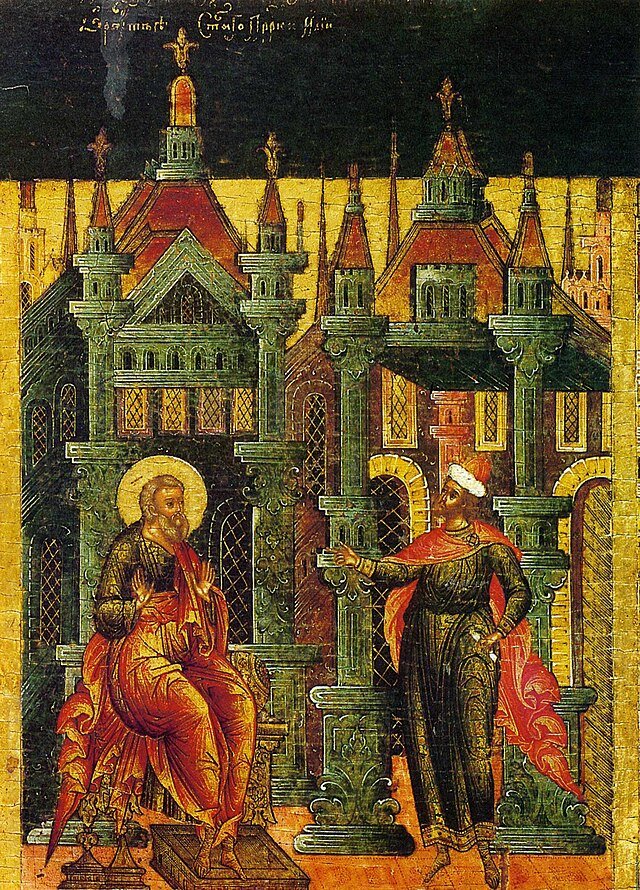
Elijah enters the biblical narrative without a backstory. There’s no genealogy and “son of” formula, no Divine calling like Isaiah’s temple vision or Jeremiah’s “before I formed you in the womb.” Just his name and a toponym (Tishbite of Tishbe in Gilead) and then this performative declaration. Later, in the next book of the Bible, we learn that, “He wore a garment of hair, with a leather belt around his waist” (2 Kings 1:8). His outfit was even making a statement. And the Tishbite basically kicked down the king’s door and verbally blasted him.
When Elijah arrived in the North, he wasn’t just a spiritual figure; he was a reminder that God’s presence doesn’t respect the borders human empires draw.
However, the “except by my word” was an issue. This is performative, risky, speech—the utterance itself executes covenant sanction, as if on its own authority. What’s missing is any “thus says the Lord” formula. God doesn’t commission this drought in the Bible, but He allows it.
The Talmud explicitly wrestled with whether Elijah had the right to decree the drought:
“Elijah decreed a famine… but the Holy One, blessed be He, said to him: ‘You have shut up My world.’”
— Sanhedrin 113a
Some rabbinic manuscripts continue with the idea that Elijah’s zeal exceeded proper mediation, forcing God to intervene to limit its damage. It makes sense, in some sense, given where this mystery character originated from “Tishbe in Gilead.”
Tishbe compounds the ambiguity. Otherwise unknown, even ancient interpreters were unsure of its location. Gilead, however, was clear: a Transjordanian region, marginal to Jerusalem, politically volatile, and geographically liminal. Gilead produces fighters and outsiders, like Jephthah (cf. Judges 11:1-25), not temple priests. The designation situates Elijah outside institutional Israel before he ever speaks a word.
After Elijah declared it, God told him to hide at the Cherith brook. It’s the first time He speaks. The Divine omission is an intentional silence. The ancient scribes were more than precise about Divine statements. When words are absent, it matters. Elijah acted out of his own will.
This is also the mechanism that cost Moses the Promised Land. In Numbers 20:10-12, Moses was told to speak to the rock. He struck it instead, adding, “Shall we bring water out of this rock for you?” God’s response: “Because you did not believe in me, to uphold me as holy in the eyes of the people of Israel, therefore you shall not bring this assembly into the land.” The failure wasn’t technical; water still came out. The failure was mediatorial: Moses collapsed God’s initiative into his own agency. “By my word” and “speak to the rock” are the same problem, just different situations.
The ancient rabbis and later Christians noticed this. Scripture is setting up a hermeneutical parallel: mediatorial speech that shifts attention from God’s action to the mediator’s power is the recurring failure mode of Israel’s greatest leaders. Elijah’s opening gambit carries Moses’ structural danger.
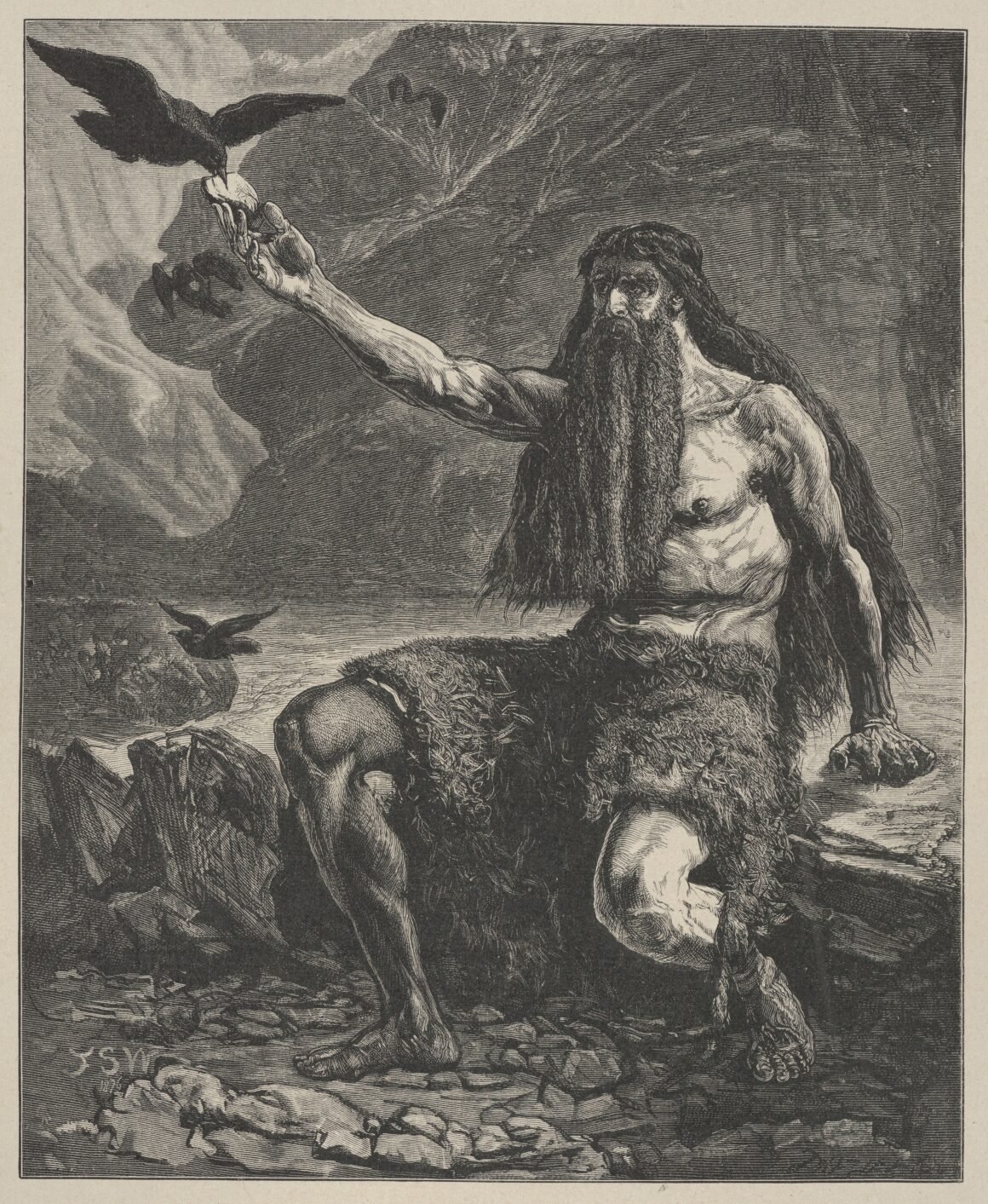
Ravens, orebim in Hebrew, appear in Leviticus 11:15 and Deuteronomy 14:14 as ritually unclean. They’re carrion birds, scavengers, or corpse-eaters. God didn’t send doves or manna. He sends unclean scavengers. God was sending Elijah a deliberately inverted message.
Ravens & Ritual Irony (1 Kings 17:2-6)
“Depart from here and turn eastward and hide yourself by the brook Cherith, that is east of the Jordan. You shall drink from the brook, and I have commanded the ravens to feed you there.“
— 1 Kings 17:3-4
Cherith is a wadi east of the Jordan River, on the other side of the Promised Land’s entry point, and away from the main population of Ahab’s Israel. The Jordan River functions throughout Scripture as a theological boundary and locus of covenant transition. In Joshua, the crossing of the Jordan marks Israel’s transition from wilderness wandering into the land God promised, echoing the Red Sea crossing in Exodus as a foundational deliverance motif, water held back while the Divine presence led the people.
This boundary becomes symbolic in the New Testament: John the Baptist’s ministry takes place at “Bethany/Bethabara beyond the Jordan,” where people come to repentance and be baptized in the wilderness, recalling Israel’s formative journey. It’s also where Jesus is baptized before beginning his public ministry (Matthew 3:13–17). Both Peter and Paul will use the Red Sea as an allegory for baptism (1 Peter 3:20–21; 1 Corinthians 10:1–2).
God’s command to Elijah to “hide himself” doesn’t function as a promise of security in the usual biblical sense. It stands in quiet contrast to Israel’s language of blessing and protection, with God as refuge, fortress, and shelter. Instead, the Hebrew sāṯar (“hide”) introduces ambiguity. The verb calls the Jewish reader back to an earlier biblical moment of concealment marked by tension rather than comfort: Cain’s fear of being “hidden from God’s face” after the murder of Abel (Genesis 4:14), and Moses hiding his face before the terrifying holiness of God at the bush (Exodus 3:6). Strikingly, and uncoincidentally, it’s also the same verb in Deuteronomy 31:17-18 and 32:20 where Israel was warned about taking a king and how God would hide His face from them. God was also not giving Elijah the red carpet treatment while the drought was in play.
In all these cases, hiding signals exposure, dislocation, or fear, not safety and Divine blessing, as in contrast with the High Priestly Blessing. Elijah was told to withdraw, while God sent ravens as signs of distressed provision. This imagery is clear when read canonically: God did not send a dove, as in Noah’s story, a bird of return, peace, and restored order (cf. Job 38:41; Psalm 147:9). He sent ravens, creatures associated with death, abandonment, and impurit1y. The provision is real, and not reassuring. The same unresolved tension explains why ancient interpreters sensed something unsettled here: prophetic vocation is preserved, but not stabilized; sustained, but not affirmed.
Both Brueggemann & Sweeney, Old Testament scholars and theologians, flag 1 King’s narrative pattern of prophetic peak → crisis → burnout. Environmental, social, and interpersonal signs are deliberate narrative cues that the prophet is misreading. They stress that the Bible itself shows that Elijah is not fully aware of his own human and moral limits, not unlike a psychological burnout arc, nor his nemesis’.
The sequence of events is God’s pedagogy, or discipleship, of Elijah in real time. Yahweh’s provision operates outside and over prophetic purity categories and methods. When the cult doesn’t behave or can’t supply, God supplies from what the cult deems impure (cf. Acts 10). Another way of saying this is that a second look at Hebrews 11 will show God working around and behind people’s mistakes and blessing their imperfect faith, because at least they had faith, or qanaʾ.2
To triple down, it’s the same thing as God using the sins of the world when it crucified Jesus to bring about the ultimate resolution of Genesis 3. Truly, God works out all things for the good of those who love Him; we just have to actually love Him.
Gentile Territory, Death, & Priestly Function (1 Kings 17:7-24)
“Arise, go to Zarephath, which belongs to Sidon, and dwell there. Behold, I have commanded a widow there to feed you.”
— 1 Kings 17:9
The brook Cherith had dried up as a direct result of the drought Elijah pronounced. So, God’s provision shifts dramatically: water is withheld, and instead, the prophet is redirected to a Gentile widow, destitute, preparing her last meal for herself and her child. The first human Elijah encountered in this standoff was not an Israelite, politician, or priestly figure, but a poor, struggling single mother. She was no accident: through her, God demonstrates that life, sustenance, and covenantal care are not limited to Israelite structures. Even as His own people suffer and die, God supplies His zealous servant from unexpected sources, while attempting to teach him.
Zarephath also lies in Phoenician, Sidonian territory—Baal’s home court and backyard of Jezebel, Ahab’s infamous bride. In sending Elijah to Zarephath, the narrative places God’s provision in Gentile territory, a Sidonian land associated with Baal worship and Jezebel’s household. Again, this is no incidental detail: Yahweh purposely situates the prophet outside Israel’s borders and in territory symbolically aligned with the very idol he claims to be contesting. It underscores that God’s care is not limited to territorial claims and disagreements about legitimacy, that true allegiance to YHWH can be found outside Israel’s assumptions.
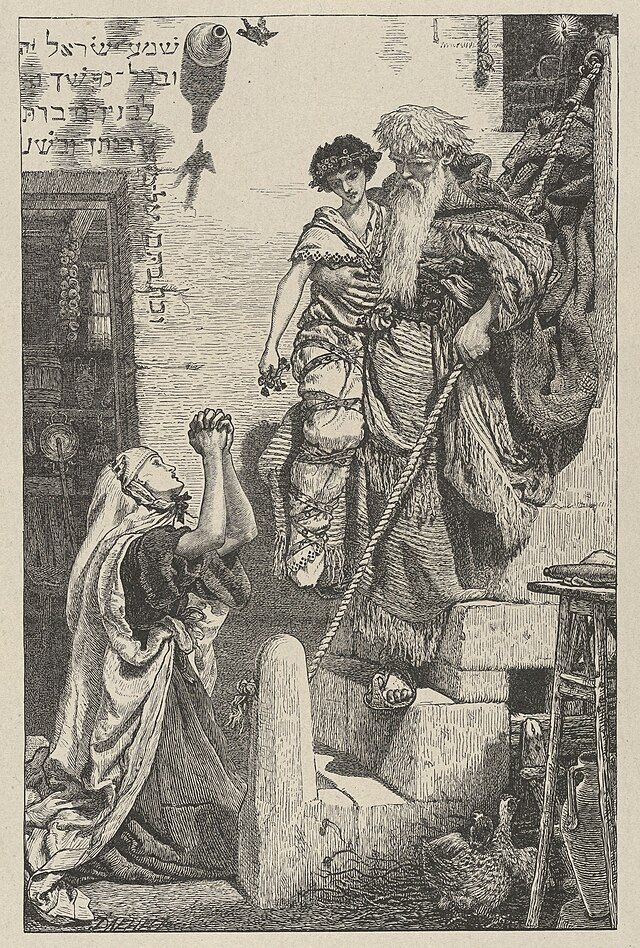
Through both the widow and the Sidonian town she inhabits, God demonstrated that life, sustenance, and covenantal care were not limited to Israel’s borders. Jesus, in Luke 4:25–26, pointed out this detail centuries later: “There were many widows in Israel in the days of Elijah… and Elijah was sent to none of them but only to Zarephath.” God’s salvific work lands in enemy territory, bypassing Israel’s covenant blessing entirely.
God was and is always for the refugee, widow, and orphan (Deuteronomy 10:17–19; James 1:27). By sending His prophet to a Gentile land to survive, God was modeling the “moving house” theology of the Tabernacle. God wasn’t “stationary” in Jerusalem or Samaria; He moves where the people are. Provision, mercy, and life were not constrained by borders, ethnicity, or human expectation (cf. Matthew 5:45).
The narrative intensifies when the widow’s son dies. Elijah’s response (17:20–22) is suggestive: “O Lord my God, have you brought calamity even upon the widow with whom I sojourn, by killing her son?” Notice where Elijah places the responsibility for the “calamity” he called down—God. Perhaps out of subconscious guilt to fix the problem he played no small part in, he stretched himself upon the child three times and cried to the Lord, “O Lord my God, let this child’s life come into him again.” The Lord listened, and the child lived again.
This account is one of only three resurrections in the Hebrew Bible. Foreshadowing, but the others will be Elisha in 2 Kings 4:32–37 and 13:21. Each is framed as Yahweh’s response to prophetic intercession: neither creates life on their own, but mediates God’s power into the world. The prophetic role functions outside a temple or political title. Where religious, civil, or government titles are compromised or fail, as under Ahab and Jezebel, prophets assumed practical priestly duties: feeding the hungry, negotiating between people, intervening in events, and mediating between life and death. Theologically, they operate under divine authority; practically, they fill a functional vacuum and act as a corrective. God will continue working, even when humanity falters.
The Political Landscape & Obadiah’s Underground Network (1 Kings 18:1-16)
Three years after the drought began, God commanded Elijah to present himself to Ahab because, as He said, “I will send rain upon the earth” (1 Kgs 18:1). The Lord wasn’t leaving it to Elijah. This simple directive carries a weight: Elijah was being forced to step back into public visibility after a period of exile and suffering. Rather than sieging the whole nation and bringing the king to his knees, Elijah must first move and re-engage.
Meanwhile, Jezebel has “cut off the prophets of the Lord” (v. 4). Into this hostile political environment stepped Obadiah, Ahab’s palace administrator, described as one who “feared the Lord greatly” (v. 3). Obadiah’s story is remarkable: he took a hundred prophets and hid them, “by fifties, in a cave” and sustained them with bread and water (v. 4), an interesting contrast to Elijah’s bread and meat diet. The biblical text emphasizes Obadiah’s order, structure, and faithfulness during persecution. The prophetic community was not dismantled but covertly preserved through Obadiah’s faithfulness.
Elijah again just appears, but this time to Obadiah. Strikingly, the prophet doesn’t acknowledge Obadiah or the hidden network of prophets. Three times, on Mount Carmel (18:22) and twice at Mount Horeb (19:10, 19:14), Elijah will claim he alone was left, while he wasn’t. The prophet’s assumed isolation and uniqueness were products of his own egoic creation. Scripture will continue to subtly critique the prophet, offering a window into his perception and emotional state, showing how zeal, isolation, and personal expectation narrowed his vision.
As Brueggemann notes:
“As often happens to the zealous, Elijah has overvalued his own significance and become blind to a multitude of allies, including the hundred prophets hidden from Jezebel… More than any other reason, it is this singular, isolating, moral self‑importance that drives the zealot to despair.”
Meanwhile, Scripture explicitly preserves a functioning underground network of resistance, sustained and organized by Obadiah3, operating under political duress and mortal threat. The contrast between Elijah’s subjective self-assessment and the objective reality underscores the tension between prophetic fervor and human limitation, and hints at his unfolding struggle toward wholeness.
When Elijah meets Obadiah on the road, he says, “I stand before the Lord” (18:7), echoing his own declaration at the start of his prophetic career, as in 1 Kings 17:1, “As the Lord, the God of Israel, lives, before whom I stand…” This repeated phrase was performative, while asserting authority and covenant alignment, and it frames Elijah as a rogue agent.
His boldness exists alongside misperception and moral-myopic confidence. Obadiah’s careful, loyal, and structured response contrasts with Elijah’s isolated self-assessment, showing that prophetic action can be effective even when the “hero” misreads his own context.
This passage is not just a political background or a narrative pause. It illustrates an intentional thematic arc: Elijah was on a trajectory of zeal and moral intensity that blinds him to the very structures of divine provision and human loyalty already in place. He was “zeal without wisdom” (Romans 10:2). Scripture shows prophetic work exists within community, networks, and relational resilience, and that heroic isolation, even in the face of visible corruption, can be a narrative trap.
Elijah’s zeal and misperception set the stage for the dramatic confrontation at Mount Carmel and later burnout at Horeb. First, he makes Obadiah go fetch the king.
A Forced Intervention (1 Kings 18:17-30)
“God was not in the fire, though fire obeyed Him. For divine power may act through a man before divine wisdom rests within him.”
— Gregory the Great
When Ahab sees Elijah, he shouts, “Is it you, you troubler of Israel?” Elijah retorts, “I have not troubled Israel, but you have, and your father’s house, because you have abandoned the commandments of the Lord and followed the Baals” (18:17-18). This was Covenant-lawsuit language and a similar showdown as Moses before Pharaoh over the heart of Israel.
Elijah has Ahab “gather all Israel to me at Mount Carmel, and the 450 prophets of Baal and the 400 prophets of Asherah, who eat at Jezebel’s table” (v. 19). For some reason, the king silently obeyed. When they came back, Elijah said to everyone, “How long will you go limping between two different opinions? If the Lord is God, follow him; but if Baal, then follow him. And the people did not answer him a word” (v.21).
So, he proposed a duel:
“Let two bulls be given to us. And let them choose one bull for themselves and cut it in pieces and lay it on the wood, but put no fire to it. And I will prepare the other bull and lay it on the wood and put no fire to it. And you call upon the name of your god, and I will call upon the name of the Lord, and the God who answers by fire, he is God.”
(18:23-24)
This was an Ancient Near East (ANE) oracle-contest genre in full tilt4. Two ritual special claims with two altars, competing for divine response and a nation on the line. The winner adjudicates the theological and legitimacy claim. Another such contests, such as with Micaiah, four chapters later, when he stands before Ahab and Jehoshaphat. The form has other analogues across ANE contest traditions. The Bible employs it to settle Yahweh’s sovereignty over the storm/fertility domain, which the Baal/Asherah mythology claimed.
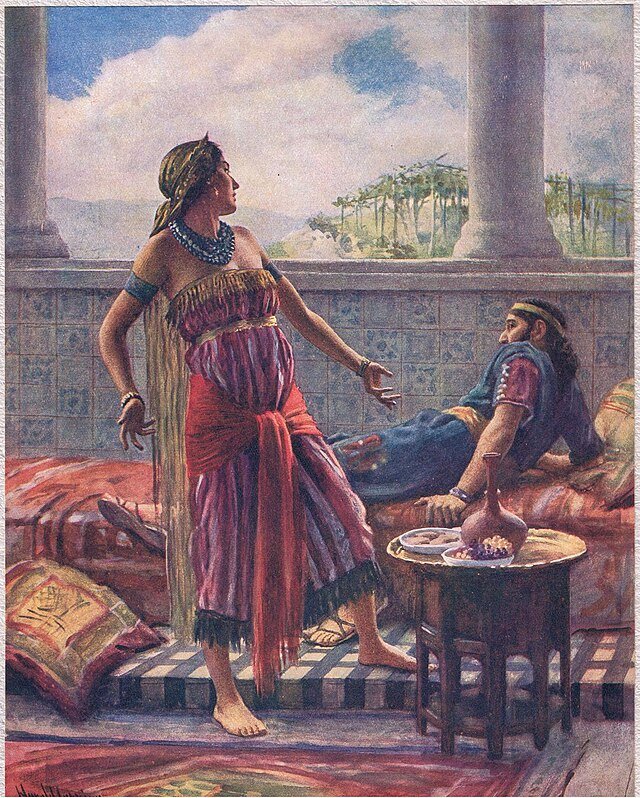
The prophets of Baal go first. Morning to noon, they dance and shout: “O Baal, answer us!”
Nothing.
And at noon Elijah mocked them, “Cry aloud, for he is a god. Either he is musing, or he is relieving himself, or he is on a journey, or perhaps he is asleep and must be awakened” (v. 27). So, they “raved on” and “cut themselves after their manner with swords and lances, until the blood gushed out” (v. 28). Still nothing. The evening sacrifice time passed, and “there was no voice. No one answered; no one paid attention” (v. 29).
Burn.
The Divine is not some human needing attention and capitulation, or distracted with human affairs we think are big deals. He has no obligation to our methods and is untouched by our delusions.
The Wildest Bible Study Ever (1 Kings 18:30-40)
It’s the Tishbite’s turn. First, Elijah tells the people, “Come near to me” (v. 30)
So, they gather close. In stark contrast to the priests of Baal, Elijah includes the people (for once) and holds an overnight Vacation Bible School as ceremonial participation. From the afternoon through evening, Elijah led the people in repairing the old altar, clearing stones and debris, and handling the covenantal symbolism of their origins. As the sun sets, under Elijah’s direction, the group continues together in preparation, digging a trench and arranging twelve stone blocks, one for each tribe5.
Scripture implies an overnight vigil. While the Baal prophets’ activity dominated the daylight hours, morning to noon, ending in the mid-afternoon, Elijah’s work aligns with the temporal markers of Genesis’ days and Levitical sacrifice. Late afternoon and evening are spent reconstructing the altar, pouring water, and instructing the crowd in ritual attentiveness. While Baal’s day expired as the sun went down, Elijah leaned into the Genesis rhythm: day begins with evening.
Diverse scholars and commentators, such as Cassuto and Leithart, highlight that such preparation serves a didactic and covenantal purpose: the people are being re-taught the rhythms of worship, the precision of sacrificial practice, and the memory of their tribal unity.
Through the night, Elijah and the Israelites repeat ritual rehearsal: soaking the wood, the stones, and offering in water, with a triple immersion pattern, and rehearsing the proper timing for the tamid offering. Rabbinic sources, such as Tanchuma Ki Tissa 12, interpret this nocturnal instruction as a deliberate pedagogical act: the Israelites are to internalize covenantal fidelity through participation, not just observation. The vigil itself embodies endurance, devotion, and attentiveness; qualities absent from the frenetic, chaotic rituals of Baal’s prophets. Israel’s God meets them in silence, not the show.
“At the time of the offering of the oblation, Elijah the prophet came near and said…”
— 1 Kings 18:36
By aligning their work with the morning oblation offering (tamid), Elijah situated the climactic moment within Israel’s Levitical rhythm. The “offering of the oblation” referred to the daily tamid sacrifice, the morning burnt offering, a sanctioned moment for collective worship and prayer (cf. Exodus 29:38–42; Numbers 28:3–8). By situating his prayer at this ritual hour, Elijah signals that the confrontation with Baal is not a mere spectacle. It’s a deliberate insertion into Israel’s sacred rhythm, reclaiming covenantal time from idolatrous chaos.
The overnight engagement transformed the confrontation into a faithfulness exercise, not merely a spectacle: the people witness, learn, and act in ways that reinforce communal memory, authentic identity, and obedience to God.
Elijah’s ritual layering extends into numerology and symbolic action. He reconstructs Yahweh’s altar with twelve stones (1 Kings 18:31), recalling the twelve tribes of Israel and restoring a visual covenantal memory. He immerses the altar and offering in water three times, repeating the process in a threefold pattern. These structured acts (3 × 4 symbolic elements) create a narrative echo of completeness, covenantal integrity, and attentiveness to ritual precision.
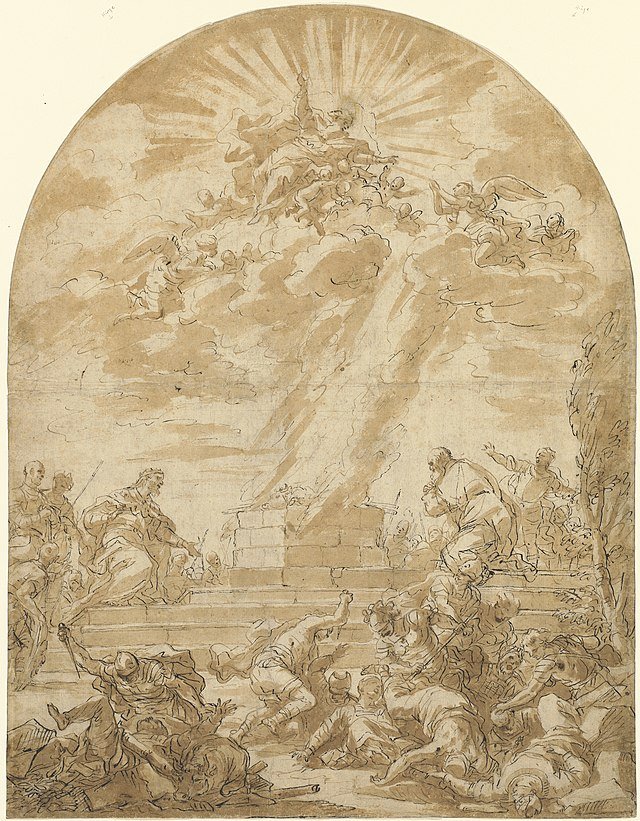
Through these gestures, Elijah called Israel back to its roots:
- Twelve stones: For the 12 tribes and recalling the other times they were constructed an altar, such as the crossing of the Jordan into the Promised Land with Joshua.
- Threefold immersion with 4 barrels: Both equal twelve and echo seven (3+4). Mikvahs were ritual cleanings, sort of like baptisms, so Elijah wasn’t just being dramatic.
- Tamid timing: situates prophetic action within Israel’s recognized liturgical rhythm, legitimizing intervention while contrasting the chaos of Baal worship.
U. Cassuto notes that these details “reassert the covenantal memory of Israel, anchoring prophetic daring in ritual fidelity” (Commentary on Kings). In effect, Elijah was far from improvising, but rather methodically reconstructing Israel in its covenantal identity as strangers and kingdom of priests of the Divine, performing prophetic acts that double as priestly ritual.
Thus, the hours of preparation, instruction, and ritual immersion, from late afternoon through the night into the morning oblation, function as both a didactic and ritual purification, preparing Israel to recognize people back under Yahweh’s sovereignty.
And that’s when the prophet is finally ready to pray for fire.
“Even on Mount Carmel, Elijah is acting as a priest of the national cultus, insisting that true worship must follow the prescribed times and forms of the Mosaic law. The fire falls not just in response to a prophet’s whim, but at the hour when Israel was commanded to draw near to God.”
— Peter Leithart
A Divine Spark
Elijah prayed once:
“O Lord, God of Abraham, Isaac, and Israel, let it be known this day that you are God in Israel, and that I am your servant, and that I have done all these things at your word. Answer me, O Lord, answer me, that this people may know that you, O Lord, are God, and that you have turned their hearts back.”
Fire fell and consumed the altar, wood, stones, dust, and water in the trench. The people fall and confess:
“The Lord, he is God; the Lord, he is God.”
— 18:39
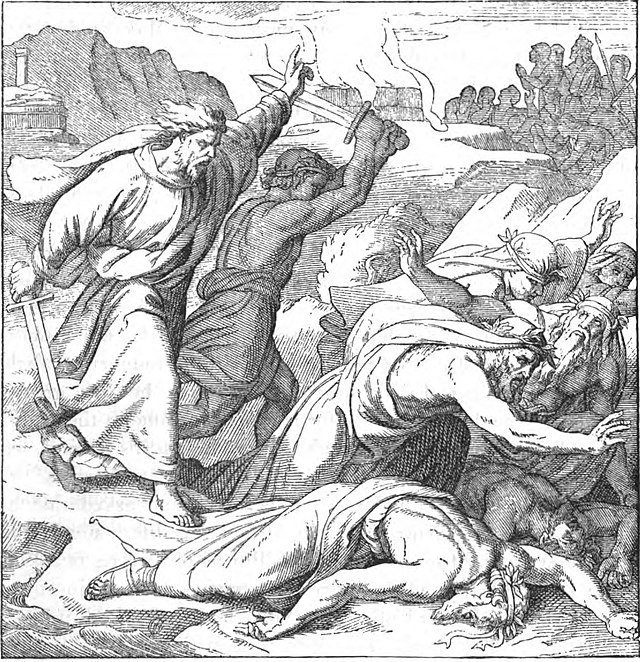
The immediate aftermath is the blood bath of the prophets of Baal at the brook Kishon by Elijah (18:40), re-introduces the ethical tension. Yet again, Scripture did not record a “thus says the Lord” for this action. Elijah commands, the people obey, and Scripture reports that Elijah did the killing.
Only the prophets of Baal are seized and slaughtered at the Kishon. The prophets of Asherah, explicitly named earlier and said to “eat at Jezebel’s table,” simply never appeared in the story. Baal, Jezebel’s imported royal cult, was publicly exposed and purged, while Baal’s bride remained in the palace.
Asherah, though promoted by Jezebel, had far older roots in the land and a different social footprint. Archaeological evidence, like Judean pillar figurines and inscriptions in Kuntillet Ajrud, suggests Asherah devotion was embedded in household religion rather than organized around a public, professional prophetic guild in the way Baalism was.
Some later rabbinic traditions speculate that Asherah’s cult involved court-affiliated or female functionaries, which might have further complicated public punishment under Israelite law. No matter how it’s accounted for, the silence is telling: Baal’s visibly masculine foreign cult is judged and eliminated temporarily, while the older, embedded devotion associated with Asherah quietly persists in Israel’s social and religious landscape.
Rain & Running (1 Kings 18:41-46)
“Elijah is a figure of uncompromising zeal whose passion outruns his capacity for mediation. His fidelity is genuine, but it lacks the restraint required for durable leadership.”
— Walter Brueggemann
After the slaughter, Elijah tells Ahab, “Go up, eat and drink, for there is a sound of the rushing of rain” (18:41). Elijah goes to Carmel’s peak, bows to the ground, and sends his servant to look toward the sea seven times. On the seventh (*cough*) look: “Behold, a little cloud like a man’s hand is rising from the sea” (18:44). Elijah tells Ahab to get moving before the rain stops him.
Ahab was there and participating, too, passively. He also confessed. Now, with the drought ending, it was time for both king and prophet to get moving.
“And the hand of the Lord was on Elijah, and he gathered up his garment and ran before Ahab to the entrance of Jezreel” (18:46). The prophet passed the king and his horses on their way back to his old woman. Of course, with it raining, the king’s chariot wheels getting stuck in the mud wouldn’t have surprised the Israelites.
It’s an interesting scene. Pharaoh’s chariots become liabilities rather than instruments of power when creation itself turns against them (Exodus 14:23–28). Water, which once opened a path for the liberated, becomes a medium of judgment for the pursuing king. By contrast, Elijah runs unimpeded. The narrative inversion is subtle but deliberate: the prophet advances on foot while royal technology falters. As in Exodus, political authority proves vulnerable when divine action reclaims the natural order. The rain that signals covenant restoration simultaneously exposes the fragility of kingship built on coercion, spectacle, and speed.
The “hand of the Lord” is a standard biblical formula for divine empowerment (cf. Ezekiel 1:3, 3:14, 8:1, etc.). The passage attributes the run to God. Cross-cultural data document “spirit-running” and endurance trance across cultures. Contemporary neuroscience on neurological suppression during extreme exertion provides possible descriptions for how ancient communities might interpret such feats, not as explanations that negate the Text. Scripture states that God empowered it. I’m just guessing something neurophysiological was happening too. Both are data.
The run itself is symbolic of Elijah: drought, resurrection, confrontation, fire from heaven, 450 executions, drought broken, and the capstone move was a sprint to the finish line, outrunning the king’s chariot to Jezreel. The sequence is a sprint. Scripture presents it as a public vindication and a divine sign. But it’s also peak performance for peak spectacle. Elijah was operating at maximum.
Elijah was almost at his end. The Divine was just about to begin.
It was God’s turn to teach Elijah a lesson.
“Elijah’s actions frequently exceed what the narrative explicitly attributes to divine command, creating deliberate tension between prophetic initiative and divine authorization.”
— Marvin A. Sweeney
Part II is Collapse, Care, and the God Who Meets Prophets in Gutters, where it’s God’s turn to teach Elijah a lesson.
*Footnotes:
- The raven’s appearance here invites comparison with Genesis 8:6–12. After the flood, Noah first releases a raven, which “went to and fro until the waters were dried up from the earth” (Genesis 8:7), never returning with confirmation of restoration. Only later does Noah send the dove, which eventually returns with an olive leaf, signaling renewed life and covenantal stability. The raven functions as a creature capable of surviving amid death and desolation, but it does not signify peace or return. By choosing ravens rather than a dove to sustain Elijah, the narrative signals provision without resolution, life sustained in a world still under judgment. Elijah is preserved, but the land is not yet healed. The echo underscores that this moment belongs not to restoration, but to suspension: judgment continues, order is delayed, and the prophet lives in the tension ↩︎
- Hebrews 11 is often called the “Hall of Faith,” but that framing collapses under closer inspection. The chapter prominently includes heroes of the faith such as Gideon, Barak, Samson, and Jephthah, individuals whose biblical narratives are riddled with fear, moral failure, and, in some cases, outright catastrophe. What is striking is not just their inclusion, but what Hebrews omits: their failures, sins, and consequences are deafeningly silent. And let’s not forget the women who quietly made these “heroes” possible: Sarah, Deborah, Jael, Samson’s mother, Delilah, and Jephthah’s daughter. ↩︎
- References to bands or “sons of the prophets” appear as early as the Samuel traditions (1 Samuel 10:5–12; 19:18–24), where prophets are depicted living, traveling, and prophesying in groups under senior figures. By the time of Elijah, these communities were already established and dispersed, located at Gilgal, Bethel, Jericho, and later the Jordan valley (2 Kings 2:3–5; 4:1; 6:1–2). Their presence indicates continuity rather than innovation: a resilient prophetic infrastructure operating alongside, and often beneath, royal power. ↩︎
- See “Ancient Near Eastern Literature: Genres and Forms,” by Tawny Holm: In A Companion to the Ancient Near East (2nd Ed., 2007), Pp. 269-288. https://www.academia.edu/1198669/_Ancient_Near_Eastern_Literature_Genres_and_Forms_In_A_Companion_to_the_Ancient_Near_East_2nd_ed_2007_pp_269_288
↩︎ - The “jars” (kaddîm) poured over the altar (1 Kings 18:33–35) were likely standard Iron Age water vessels holding approximately 10–20 liters each, comparable to domestic storage jars recovered from ninth-century BC sites in Israel. Twelve jars, poured three times, would thus involve roughly 360–720 liters of water, or about 95-190 gallons. Mount Carmel is a coastal range with seasonal streams, but permanent surface water isn’t abundant, so it’s plausible the people relied on stored water, like cisterns, jars, or even personal storage. This volume, whether from stored supplies or nearby sources, would require sustained effort and significant time. The narrative’s emphasis on daylight waning coheres with an extended, deliberate ritual process beginning in the afternoon and unfolding through the night. The point is exhaustion, saturation, and effort.
↩︎