Table of Contents Show
“Genesis 1 is not a myth of battle and conquest; it is a poem of order and purpose, teaching that humanity’s place is as caretaker, not slave or subject.”
— Umberto Cassuto, A Commentary on the Book of Genesis
This post comes from the first of three classes being taught at Sacred Ally in Missoula, MT. Today, we’re looking at Genesis as a Jewish origin story, setting up the rest of the Old Testament. We’re only sharing up through Genesis 2:3 from the class here. The full draft from this class will be on Patreon shortly. In the next classes, we’ll explore how the Gospel of John pulls from and parallels Genesis as a Jewish sect syncretized with Hellenistic thought, and finally, how Revelation acts as both the end of ego and empire and the genesis of a new world.
The material we’re covering stretches back a couple of decades, through different churches, failures, and what I loved about being a pastor. My hope is to free the Bible from stigmas it never earned. Not as an apology tour, but as a kind of living amends—letting the Text be what it actually is. When we demythologize the distortions wrapped around Scripture, its history and depth can breathe again. The Bible becomes what it was meant to be: a shared spiritual resource, not a weapon for camps and pulpits, egos and empires.
Introductions Matter: Systematic Theology vs. Narrative Theology
Before we actually get to Genesis 1:1, we have some ground to cover.
Many of us grew up in churches that taught systematic theology. We ask questions like “How do I get saved?” or “Do I go to heaven?” and we got confident answers. However, change the theological system, and we get completely different answers to those same questions.
A Greek Orthodox Christian answers salvation differently than a Pentecostal or Calvinist. A dispensationalist sees the end times differently than an amillennialist. A complementarian views gender differently from an egalitarian. Same Bible, different systems. And each system claims to be “biblical” while dismissing the others as heretical or misguided.
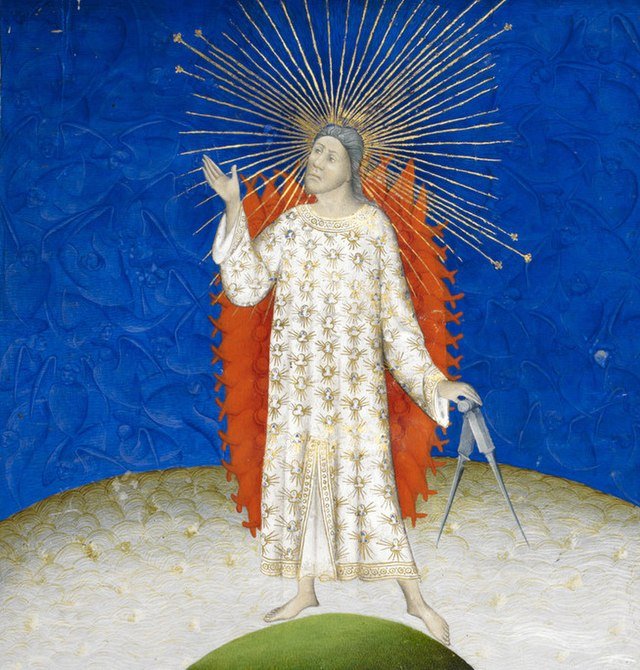
These systems and their doctrines are human-made and sustained, like creeds, councils, and canons, and are therefore not Scripture itself. The problem arises when they are given interpretive priority over Scripture in practice. People are required to accept an interpretation of the Bible before they have learned how to read the Bible. Systematic theology begins with conclusions and then mines Scripture for proof texts, becoming an ephod in the back of the Temple (Judges 8:27): once a tool, now a substitute mediator. The result is a flattened narrative, an erasure of cultural and historical context, and a Bible treated like a divine encyclopedia rather than what it actually is—a library of texts written over more than a thousand years by dozens of authors in multiple languages and cultural settings.
To let scripture writers speak as they intended, an integrated, historical, and psychologically honest approach is needed, the same one you and I use when we read any other foreign book. I’m an advocate for Narrative Theology. Instead of starting with “What do I believe about X?” we ask “What was this text actually doing? Why did the writers say it that way? How did the original audience hear this? What patterns emerge across the story? How do I relate to this?”
Rather than rejecting objective truth, it doubles down, forcing the subjective to acknowledge it as well. This requires honest analysis, supported by rigorous scholarship: intrapersonal (what’s happening inside us), personal (our relationship with the Divine), historical (what was happening when this was written), and scientific (what does archaeology, linguistics, genetics, and comparative literature tell us).
There are plenty of voices in Christianity. Over time, I’ve found that a much larger Christian conversation has been happening for a while. My influences became eclectic by necessity. Philip Yancey taught me to ask honest questions. Francis Schaeffer showed me that ideas have consequences and Christianity engages the whole world. Kierkegaard reminded me that objective truth is subjective in the best sense (you have to live it, not just know it). Carl Jung opened the door to the shadow and the collective unconscious. N.T. Wright grounded me in a first-century Jewish context. Dallas Willard brought mysticism back from the margins where American Protestantism had pushed it. Richard Rohr became almost a modern prophetic voice, reassured that Christ did intend to become one with everyone, and God All in All. Even voices like Andrew Huberman on neuroscience, Derek Sivers on thinking differently, musicians like NF, and shows like Ted Lasso remind me that Truth sneaks in to unexpected places.
As Brené Brown and many others have observed, humans make meaning through narrative. Narrative Theology, then, is the theology of everyday humanity: It is how we already function, which makes it both a discipline to be studied and a skill to be cultivated. It deals with worldviews, psychology, and philosophy, as well as family, debt, and addiction. Like any human system, it can also become toxic, self-referential, and egoic. Jung repeatedly warned that the unexamined psyche is among the greatest dangers we face. Narrative Theology invites us to understand the human condition and to free ourselves of it, to take the promises and blessings of Scripture seriously.
“We make meaning through stories. What we choose to tell, and how we tell it, shapes our capacity for empathy, courage, and connection.”
— Brené Brown
The Oral Traditions: Stories We All Share
With that, let’s set the stage for Genesis with Pleiades.
Look up on a clear night, and you’ll see a cluster of stars that Orion looks like he’s aiming at. Both Orion and Pleiades show up in the Old Testament (Job 9:9; Job 38:31; Amos 5:8). Almost every culture on Earth has stories about Pleiades. The Greeks said they were seven daughters of the Titan Atlas and the Oceanid Pleione. Merope, the youngest, is often considered “missing” because she married a mortal (Sisyphus) and was ashamed. Aboriginal Australians tell of seven sisters fleeing a man, often a hunter or sorcerer, with one sister hiding or being held captive. The Cherokee speak of seven boys who danced too much, neglecting their families, who ascended to the sky, but one returned to earth. Hindus know them as the Krittikas, seven mothers who cared for the war god Kartikeya, one of whom abandoned her duties or became estranged.

In every tradition, there’s a missing sister. One who hid, or married a mortal, or abandoned her calling. If you look at Pleiades today, there are only 6 visible stars. So why the seventh sister?
It turns out, about 100,000 years ago, two of the stars in Pleaides were far enough apart to be seen as two, so there were actually seven stars in Pleaides. Yet, over time, they drifted together and overlapped, looking like one star. And human mythology, across the planet, captured this astronomical event.
Storytelling was fundamental to human history before a single word of the Bible was ever penned. Oral traditions, culture, mythology, language, and history already existed long before these scriptures were written. Scripture was not created ex nihilo, nor did it emerge in isolation. It arose within a world already full of stories and symbols, addressing human beings in the midst of real history and lived experience. Genesis belongs to this larger human conversation about meaning, origin, and purpose.
Genesis was written in conversation with, and often in opposition to, the dominant myths and narratives of its time.
The Manuscript Evidence: What We Actually Have
Some grew up thinking the Bible fell out of heaven, leather-bound and KJV. That’s not how it worked, and thank God. Paper and writing are still relatively modern luxuries for the masses. With literacy rates well below 50% for most of human history, books had to be copied by hand, and often read aloud by someone who could actually read. The way we know a book existed at all is through the evidential fragments left behind, which we then piece back together. This is called manuscript evidence.
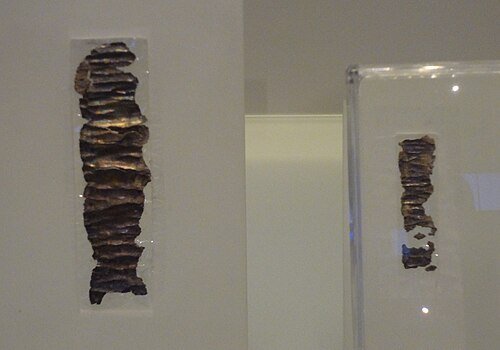
The Ketef Hinnom silver amulets (late 7th–early 6th century BC) are the oldest extant archaeological texts. These two tiny silver amulets, discovered in 1979 in burial caves near Jerusalem, contain portions of the Priestly Blessing from Numbers 6:24-26. They predate the Dead Sea Scrolls by about 500 years.
The Dead Sea Scrolls, specifically the Qumran finds and related Judaean Desert manuscripts, span roughly the 3rd century BC through the 1st century AD and include the oldest substantial copies of many biblical books. The Rylands Papyri (around 125 AD) contain New Testament fragments. Codex Sinaiticus (circa 350 AD) is one of our earliest complete manuscripts of the Greek Bible. These are but a few examples of thousands.
In total, the Old and New Testament manuscripts are the most numerous and solid examples of manuscript evidence we have. Compared to the Odyssey or even Julius Caesar’s Commentaries, both testaments have orders of magnitude more evidence to work with. These manuscripts show us that the biblical text was preserved with remarkable care, but also that it developed over time. There are variations, additions, and scribal notes. There are some debates on passages, but, as a whole, the Bible is in fact trustworthy. This isn’t a problem unless you need the Bible to be something it never claimed to be: a dictated, inerrant, ahistorical text dropped from heaven.
Here’s a rough timeline of how the Bible came together:
- Pre-2000 BC: Oral traditions and myths circulating in the Ancient Near East.
- 2000-1500 BC: Abrahamic traditions beginning to take shape.
- 1500-1200 BC: The Exodus period and early Israel’s formation.
- 1050-930 BC: The United Monarchy under Saul, David, and Solomon.
- 930-586 BC: The Divided Kingdom period, ending with the Babylonian exile.
- 586-332 BC: Babylonian Exile and Persian Period. This is when much of the Torah likely reached its final written form. Jewish scribes in exile are compiling, editing, and preserving their sacred texts.
- 332-167 BC: Hellenistic influence spreads after Alexander the Great. The Septuagint (Greek Old Testament) was translated in Alexandria.
- 63 BCE-70 AD: Roman rule and the destruction of the Second Temple in 70 AD.
- 90-300 AD: Christianity spreads, and the New Testament is written and compiled.
- 313 AD: The Edict of Milan legalizes a form of Christianity, outlawing others, under Constantine.
Understanding this timeline is important. When Genesis was written down in its final form during or after the Babylonian exile (likely between 600-400 BC), the Jewish authors were in direct conversation with the dominant empires and their creation myths. This was far from plagiarism. It was polemic artistry. It was theological resistance and communal mental health. This Jewish origin story was different from all others.
Ancient Near Eastern Context: Abraham’s World
When Abraham, a leading character in Genesis, left Ur of the Chaldees around 2000 BC (if we take the narrative historically, which is debated and besides the point), he was leaving one of the most advanced civilizations on Earth then. Mesopotamia had Sumerian mathematics, astronomy, plumbing, law codes (like Hammurabi’s), and elaborate creation myths. Egypt had pyramids, hieroglyphics, and its own cosmology centered on gods like Ra and Atum. Canaan and Phoenicia had Baal worship and fertility cults. The Hittites and Hurrians brought their own gods and theological systems.
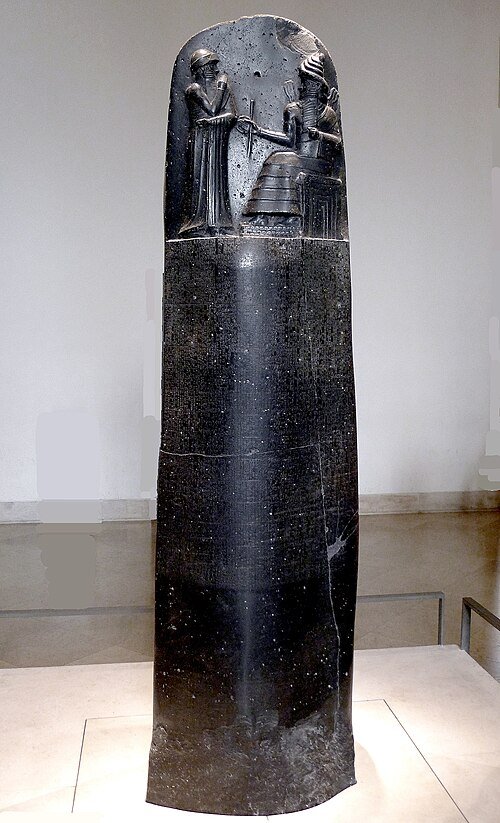
All of these cultures had origin stories. All of them dealt with the same fundamental questions: Where did we come from? Why are we here? What is our relationship to the divine? What explains suffering? What gives kings the right to rule?
These weren’t just religious texts. They were also political. Creation myths legitimized kingship, explained social hierarchies, and justified conquest and slavery. When the gods create through violence, and humans are made to serve as slaves for the divine realm, it creates a certain kind of society. Brutal ones like what Israel had been the victim of, including Assyria, Persia, and Rome.
Some examples that ancient Jews would have been surrounded by, or subjected to, include:
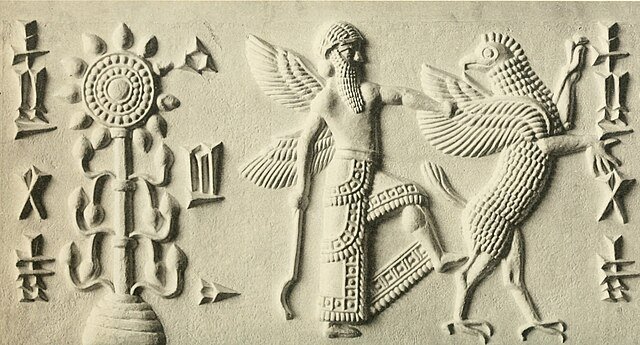
- The Enuma Elish (Babylonian, circa 1100 BC, though the traditions are older): The god Marduk defeats the chaos dragon Tiamat in a cosmic battle. He splits her body in half to create the sky and the earth. Humanity is created from the blood of Kingu, Tiamat’s defeated general, specifically to serve the gods and do their menial labor so the gods can rest. The entire epic culminates in the gods building Babylon and Marduk’s temple, the Esagila, and declaring Marduk supreme.
- The Epic of Gilgamesh (Mesopotamian, circa 2100 BC): Includes a flood story where the gods send a deluge because humans are too noisy and disturbing their sleep. Utnapishtim (the Babylonian Noah) is warned by Ea and builds a boat. After the flood, the gods regret their decision and establish a covenant with humanity.
- The Heliopolitan Cosmogony (Egyptian, circa 2000 BC): Atum emerges from the primordial waters of Nun (chaos) on a primordial mound. He creates Shu (air) and Tefnut (moisture) by masturbating or spitting them out. They produce Geb (earth) and Nut (sky), who in turn produce Osiris, Isis, Set, and Nephthys. Creation is an ongoing cycle, symbolized by the daily rebirth of the sun god Ra.
- The Pyramid Texts (Egyptian, circa 2400-2300 BC): Ra creates the world and establishes cosmic order (Ma’at). The pharaoh is the living embodiment of the gods on earth.
These stories weren’t historical or scientific in our modern sense. They were mythopoetic. They encoded worldview, political structure, and theological assumptions into memorable narratives.
The Seven-Tablet Structure: A Pattern We Should Notice
When we look at the major themes and movements of these other texts, things become interesting fast. The Enuma Elish was structured across seven tablets. The Heliopolitan myth (as reconstructed by scholars) had seven major movements. And Genesis 1? Seven days of creation.
This isn’t a coincidence. It’s a conversation.
Enuma Elish:
- Tablet 1: Primordial chaos (Apsu and Tiamat1), divine conflict begins
- Tablet 2: Ea kills Apsu, Marduk is born
- Tablet 3: Tiamat seeks revenge, creates monsters
- Tablet 4: Marduk rises as champion, battles, and defeats Tiamat
- Tablet 5: Marduk organizes the cosmos from Tiamat’s corpse, creates celestial bodies, and time
- Tablet 6: Humanity created from Kingu’s blood to serve the gods, and Babylon and Marduk’s temple were established
- Tablet 7: The gods assemble, praise Marduk, and assign him fifty names signifying his rule
Heliopolitan Creation (reconstructed):
- The primeval waters (Nun) exist in chaos
- Atum emerges from Nun on the primordial mound (benben)
- Atum creates Shu (air) and Tefnut (moisture)
- The separation of Geb (earth) and Nut (sky) creates space for life
- Birth of Osiris, Isis, Set, and Nephthys (order, chaos, life, death)
- The Ennead was established as the divine family structure
- Ongoing creation cycle through the sun’s daily journey
Genesis 1:
- Chaos and darkness, Spirit hovering over waters, light created
- Firmament separates the waters, creating the sky
- Land appears, vegetation created
- Sun, moon, and stars created
- Sea creatures and birds created
- Land animals and humanity were created in God’s image
- Sabbath rest, God declares creation complete and good
The structure and themes were deliberately parallel. The Genesis author(s) wanted the audience to recognize the patterns and hear the same words. But the message and meaning? Radically and subversively different.
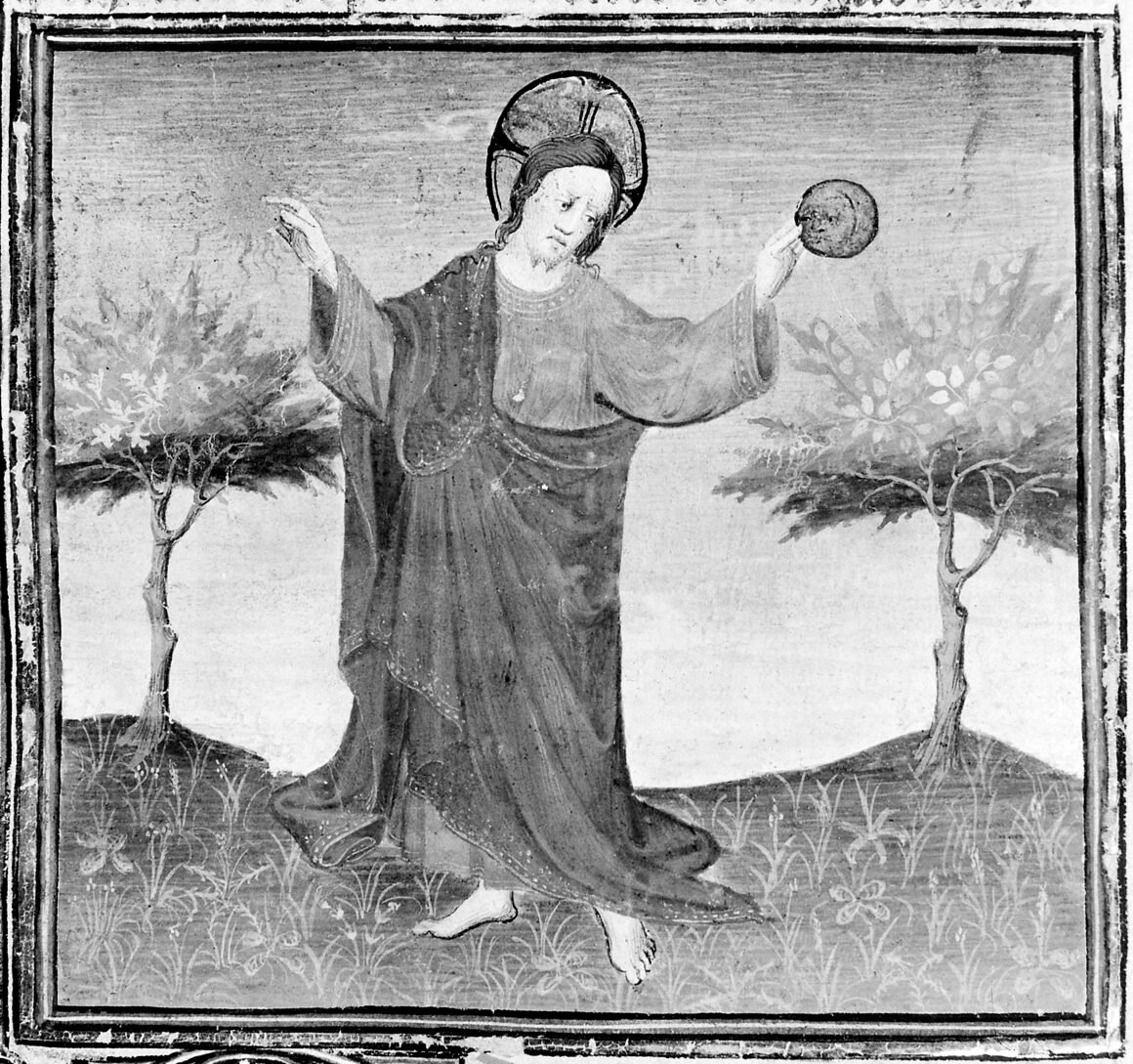
In other mythologies, creation happens through violence, conquest, and corpse-splitting. The universe is a battlefield. Humanity exists to serve divine masters who are capricious and cruel. In Genesis, creation happens through word and intention. “Let there be light,” and there was light. No battle. No bloodshed. Just sovereign command and creative will.
Humanity in Genesis isn’t created from a slain god’s blood to be slaves, or as an afterthought. Humanity is created in the image of God, given dominion (responsibility, not tyranny), blessed, and invited into Sabbath rest alongside the Creator.
This is a theological revolution wrapped in familiar form. The Genesis story is whispering: “You know that story Babylon or Egypt told us? The one that says humans are slaves and kings are gods and violence is how the world works? That’s a lie. Here’s what actually happened. Here’s who God actually is. Here’s who you actually are.“
“Genesis 1 presents a functional creation, not material origins: God creates a space and assigns roles, signaling order and purpose rather than scientific mechanics.”
— John Walton, The Lost World of Genesis 1
Genesis 1: The Structure of Meaning
Genesis 1-2:3 is a long Hebrew poem. In English, the poetic cadence and rhythm still come through. There are patterns all over, so here are a few:
- The first verse of Genesis contains seven Hebrew words.
- Three of them are nouns: God (Elohim), heavens (shamayim), and earth (eretz).
- The word “God” appears 35 times in Genesis 1 (5×7).
- The word “earth” appears 21 times (3×7).
- “Heavens” appears 21 times (3×7).
- The phrase “the seventh day” appears exactly three times in the Sabbath passage.
This structure reinforces a Hebrew homonym between “seven” (sheba) and “completeness” or “fullness” (saba).
Rather than an ancient science manual, Genesis is an ancient Jewish genre. Genesis uses numerology to communicate something deeper than mere chronology and connect important details. Seven represents completion, perfection, and divine order. Three represents divine presence, testimony, and covenant. The numbers are doing theological work, signaling to the informed reader that this text is carefully crafted, intentional, and meaningful beyond the surface narrative.
As Genesis builds on itself, it starts describing how God creates space in the undeveloped chaos and then fills it. The six days of creation are organized into two triads addressing the problems of tohu (formlessness) and bohu (emptiness) introduced in Genesis 1:2. Look at the parallel structure of the creation days:
Days 1-3: Forming/Separating
- Day 1: Light separated from darkness (forming time/day and night)
- Day 2: Waters separated by firmament (forming space/sky and sea)
- Day 3: Land separated from seas, vegetation appears (forming place and provision)
Days 4-6: Filling
- Day 4: Sun, moon, stars fill the time/day and night with light bearers2
- Day 5: Sea creatures and birds fill the space/waters and sky
- Day 6: Animals and humanity fill the place/land
Day 7: Rest
- The culmination isn’t more creation but Sabbath. Work is good, but rest is holy. Productivity is valuable, but ceasing from productivity is sacred. When we remember how the next book after Genesis begins, with the Israelites in slavery, then the polemic of this becomes clear even to the modern temptations of hustle culture and workaholism.
This creation narrative was a direct challenge to empires built on endless expansion, exploitation, and slave labor. The God of Genesis rests, not because He’s tired, but because creation is complete and good. More importantly, it’s because he invited humanity to join Him in rest and rule over Earth, not one human over another. It’s now humanity’s turn. This was revolutionary in a world where rest was only for the elite, and slaves worked until they died.
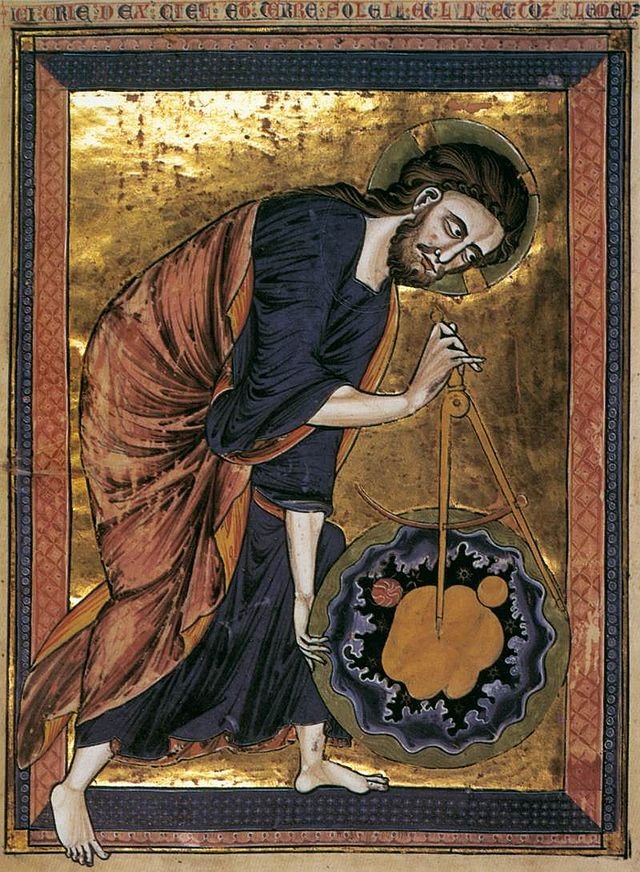
Each day follows a pattern: “Let there be,” separation or creation, naming, “it was good,” “evening and morning.” The repetition creates liturgical rhythm. Where the pattern breaks, there’s a reason. This isn’t meant to be read as a scientific journal entry. It’s meant to be recited, sung, remembered, and searched. Study was a form of “worship” for Jews.
The Image of God: What Makes Humans Human
“Then God said, ‘Let us make man in our image, after our likeness. And let them have dominion…'”
Genesis 1:26a
Who is the “us”? Scholars debate. Is it a royal “we”? A divine council (as may be suggested by passages like Psalm 82 and Job 1)? The Trinity speaking in eternity? I think all three interpretations carry truth in different ways. So, here’s what matters most: humanity is created to image God.
In the Ancient Near East, idols and kings/pharaohs were considered images of the gods, not the masses3. Practically every other mythology, from Gilgamesh to Augustus, was built around the assumption of the divine right of kings. The king was the intermediary between heaven and earth, the living icon of divine presence. But Genesis democratizes this radically. Every human, male and female, bears the divine image. This is revolutionary. This levels every hierarchy. This dignifies every person, and the New Testament will double down on it.
What does it mean to be the image of God? It means we have capacity for relationship (like the God who speaks and creates), creativity (like the God who makes), moral discernment (like the God who sees good and evil), awareness (like the God who saw His creation), and participation (like the God who still tends creation). Like God, it means we can stop and rest as we are. It means we’re not cosmic accidents or divine slaves. We’re children invited into the family business of tending creation.
“So God created man in his own image, in the image of God he created him; male and female he created them.”
Genesis 1:27
Notice that equality was built into the introduction of the Bible. It was the standard God created. Gender differentiation exists (ish and ishah, man and woman), but both image the Divine fully. God allows things to be “according to their kind” (Gen. 1:25). There’s just no hierarchy built into humanity or subordination: just relationship. This would have been radical in a world where women were often considered property, female infanticide was common, and women had no legal rights. It’s still controversial today.
The command to “be fruitful and multiply and fill the earth and subdue it” isn’t about conquest or exploitation. First up, there are four commands here in two pairs. The first pair is to be fruitful and multiply. It captures both relationship and ontology, a recent favorite word of mine. Ontology is about being, not cause and effect, or rules and dictates. It’s about whether we are the kind of people to listen, see, accept, forgive, and live free within Creation and the Divine.
The first pair of commands sets the proximity for the next pair. The Hebrew words for “subdue” (kabash) and “have dominion” (radah) carry connotations of responsible stewardship, not tyrannical rule, over the Earth4. Again, not rivaling each other. Humans are gardeners, not strip miners. We are more like trees than we realize. We’re meant to cultivate, nurture, and tend. The garden imagery that follows in Genesis 2 reinforces this and will play an important role throughout the rest of the Bible.
After creating humanity, God looked at the sixth day, instead of just declaring it “good,” He said it was “tove moed,” very good. “Violently” might have been a good word for “very.” It’s the kind of good that needs a second to take in. Over and over again, God royally declares goodness over His Creation.
The Seventh Day: Rest as Resistance
“And on the seventh day God finished his work that he had done, and he rested on the seventh day from all his work that he had done. So God blessed the seventh day and made it holy, because on it God rested from all his work that he had done in creation.“
Genesis 2:1-3
If this sounds redundant, it’s because of the Hebrew poetic repetition. Three times it states God rested on the seventh day, and once it states God blessed and made it holy.
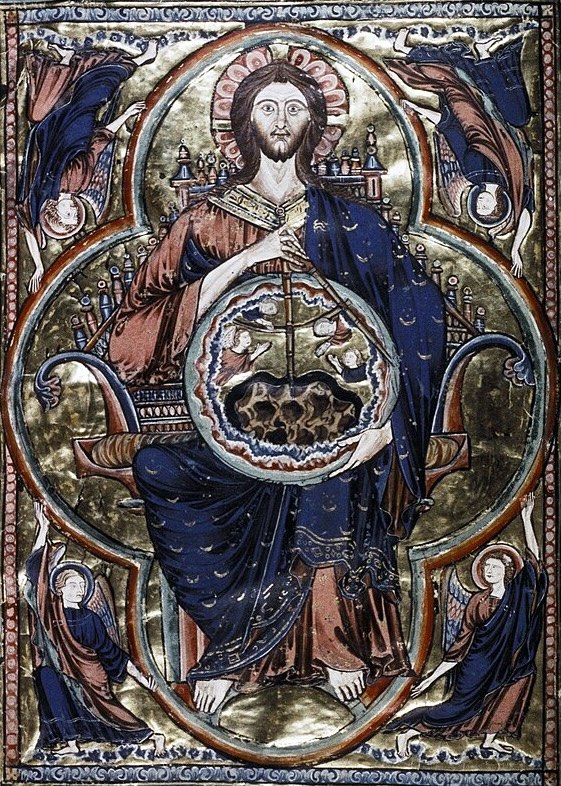
Often, when a temple was built or a new god was introduced, there was a record of how the god came to reside in that temple. There were also rites and rituals done to bring the spirit of the god inside the physical images of them. In Egypt or Persia, the gods never rested, and we were all at their mercy. They’re capricious, demanding, and insatiable. The whole point of creating humans was so the gods could rest while humans did the work. But in Genesis, God rests because creation is complete and good.
This establishes Sabbath as a divine pattern woven into the fabric of reality. Rest isn’t laziness. It’s trust and acceptance, gratitude and presence. It’s the refusal to let productivity define your worth. It’s the acknowledgment that you’re a creature, not the Creator, and the world doesn’t depend on your constant striving.
“The Sabbath is a declaration against imperialist productivity: God rests, and so humans are called to practice justice, care, and trust.”
— Walter Brueggemann
In a world of empire and slavery, Sabbath was subversive. Still is. Every time you rest when capitalism tells you to hustle, every time you cease from productivity to simply be, you’re participating in Genesis 1’s theological resistance. This is where the Jewish notion of shalom comes from, that deep peace when things are as they should be, in proper relationship and harmony.5
The text says God “blessed” the seventh day and made it “holy” (qadosh, set apart). Holiness isn’t about moral purity here. It’s about distinction. The seventh day is different. It’s sacred not because of what happens, but because of what doesn’t happen. Just rest. This day doesn’t have an ending. It is the foundation of the rest of the story. As the writer of Hebrews reminds us, we are continually invited back into His rest.
Later, God will tell His people to be holy as he is holy, calling them back to this moment.
“Faith begins precisely where understanding ends, yet it is lived in the particulars of human life, as when Adam names the creatures and tends the garden.”
— Søren Kierkegaard
If you made it this far and you actually like reading—and I mean really reading—then the rest of Genesis, the full draft with everything from Abraham onward, is waiting for you on Patreon. There’s more reading and ramblings, perks, and more stuff coming.
Footnotes:
- The Hebrew Tehom (the deep) is a linguistic cognate of the Babylonian Tiamat. In the biblical account, however, it is presented as an impersonal, non-divine element, signaling a transition from polytheistic conflict to monotheistic sovereignty. ↩︎
- By referring to the sun and moon as “greater and lesser lights” rather than by names, which were also the names of ANE deities like Shamash, Genesis strips them of their royal status, reducing them to chronological tools for the liturgical calendar. Rather than humanity serving them, they serve humanity at God’s blessing. ↩︎
- As noted by scholars like John Walton, the “image of God” (tselem) in the ANE was a functional status. Just as an emperor placed a statue of himself in a conquered province to mark his presence, humans are placed in creation as God’s representatives to exercise “dominion.” ↩︎
- The command to “subdue” and “have dominion” is often interpreted within the context of the Jewish “house of the father” (bet ab), the basic unit of ancient society. This dominion is not a license for exploitation but a call to loving family relations as the basis of stewardship of the “macro-temple” of creation. ↩︎
- For a people displaced from their physical temple in Jerusalem, the Sabbath functioned as a “temporal temple,” a sanctuary in time that remained accessible in the heart of the Babylonian empire and throughout the later Diaspora. ↩︎