We’ve spent centuries caught in a binary argument: Nature versus Nurture. We are neither, and both, yet told we were either the sum of our imperfect nature or the byproduct of our environment. Both of these perspectives leave out the most vital piece of the puzzle: the conscious being that stands in the middle of them. We aren’t just a result of what happened to us; we are a determinative factor in what happens next. We are more like the wind than we cared to admit.
This two-part excerpt is taken from a section of my book, The Son of Man & Its Mystical Awakening, where we attempt to bridge the gap between the clinical and sacred, pointing to our neuology to “prove” the mystical. We move past “ghost in the machine” metaphors to look at the actual substance being spiritually transformed.
The Truth & Love Of Chaos & Order
We reference neuroscience in this section not to get technical, but to ground the mystical. The point is simple: mystical experiences are normal and vital to our living and becoming. What we neglect, we replace. And what we replace, we tend to forget. But it can’t forget us.
Modern research now confirms what ancient practices always claimed: the brain is plastic. It can rewire itself. Change isn’t rare. It’s expected. Practices like meditation, learning, journaling, prayer, fasting, even relational upheaval or spiritual awakening—all of it can reshape how we think, perceive, and respond. Some researchers call these gateways pivotal mental states; periods of radical openness where transformation becomes possible. These are the moments where the scaffolding of the self loosens, and something new can take shape.
But transformation isn’t mechanical. The brain is not a machine with separable gears. It’s a dynamic, living ecosystem. A dialogue of competing voices and balancing functions. If spiritual change is real, then something shifts inside that system—and not just conceptually. It must also be neurological.
This is not a book about defining the soul. It doesn’t try to settle the eternal nature of consciousness or build a metaphysical theory of what survives death. That’s partly by design, but mostly by humility. I don’t know. Not fully.
This section is about something more immediate. It’s about what your own subjective holon1 can know—from the inside out. Real change has to pass through real substance. There must be some conversion point where spiritual surrender becomes material reconfiguration. And often, the miracle we’re begging for is already available in the organ we ignore most: our mind. Scripture has been saying this all along. Maybe that’s where miracles were always meant to happen. Maybe it’s the only place they can.
Chaos and order are not just poetic concepts, but also neurological tendencies. They show up in how the hemispheres function. The right hemisphere, often correlated with openness, creativity, and intuitive connection, leans into chaos and love—not as disorder, but as generativity and flow. The left hemisphere, more narrowly focused, favors pattern recognition, categorization, and precision. It leans toward order and truth—not truth as revelation, but truth as articulation and structure.
Both, and more, are essential. But when one part controls, distortion creeps in.
To understand spiritual transformation (neurologically, psychologically, theologically), we must first dismantle two myths: the myth of mind-body dualism and the myth of hemispheric equality. Only then can we begin to see how easily we’ve misused the very tools we were given: our neurology, our consciousness, and our capacity for holy, terrifying, beautiful change.
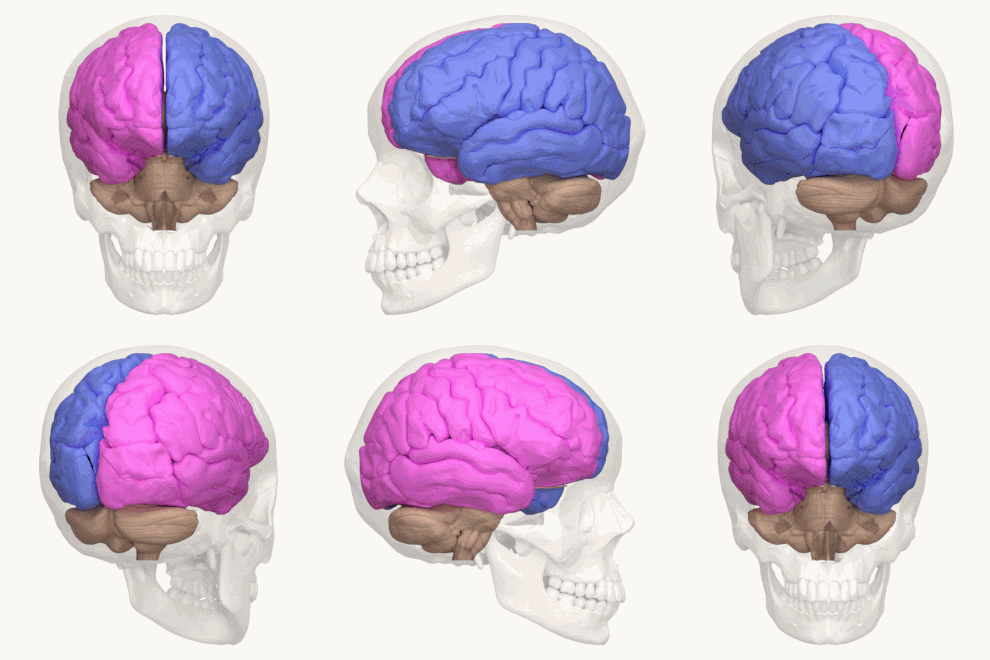
McGilchrist’s The Master and His Emissary reveals a tragic irony: the left hemisphere, originally designed to serve the right hemisphere’s embodied, contextual wisdom, has staged a slow coup. Instead of functioning as an emissary, it now rules as a self-appointed master. This neural imbalance mirrors our cultural one—favoring abstraction over integration, certainty over relationship, quantification over meaning.
In a similar vein, Daniel Kahneman’s research in Thinking, Fast and Slow offers language for two primary cognitive systems: System 1, fast, intuitive, and holistic; and System 2, slow, effortful, and analytical. Ideally, these systems work in concert—System 1 reading the world fluidly, with System 2 stepping in to evaluate or course-correct. But in the modern world, that balance has collapsed. We’ve over-activated System 2, allowing it to dominate both our inner and outer landscapes. The result? A culture addicted to problem-solving at the expense of presence, obsessed with control, and disoriented by meaninglessness.
The left hemisphere’s obsession with labeling, isolating, and managing mirrors System 2’s overconfidence in logic. But as both McGilchrist and Kahneman warn, neither system is wrong—the crisis emerges when one becomes ultimate. What’s missing isn’t intelligence. It’s integration.
System 1 and the right hemisphere are attuned to what can’t be measured: irony, nuance, tone, beauty, mystery. They grasp paradox and can hold tension without premature resolution—exactly the terrain spiritual transformation requires. When the emissary becomes the master, when System 2 overrides the embodied wisdom of System 1, we don’t get a smarter society. We get a fragmented one. Beneath that fragmentation lies a theological distortion: that salvation is systematizable, that sanctification can be optimized, and that mystery must be eliminated in the name of certainty. But transformation doesn’t happen through domination. It begins with surrender. And the brain, like the soul, must kneel before it can see clearly.
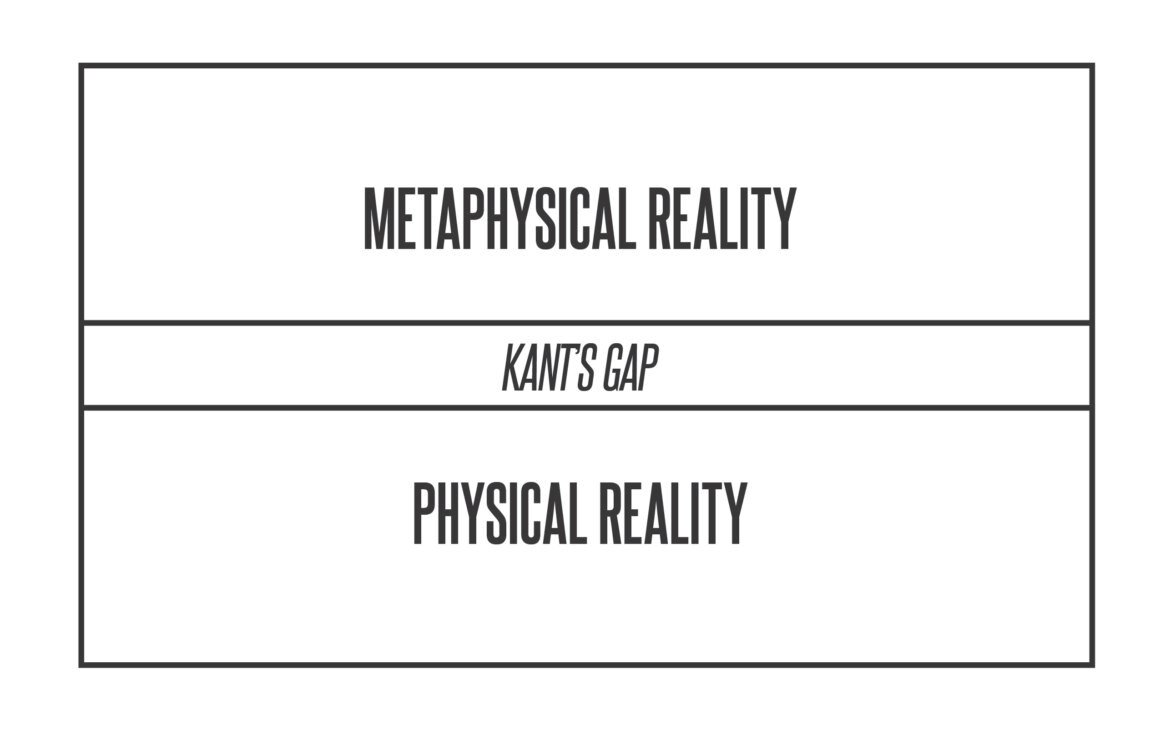
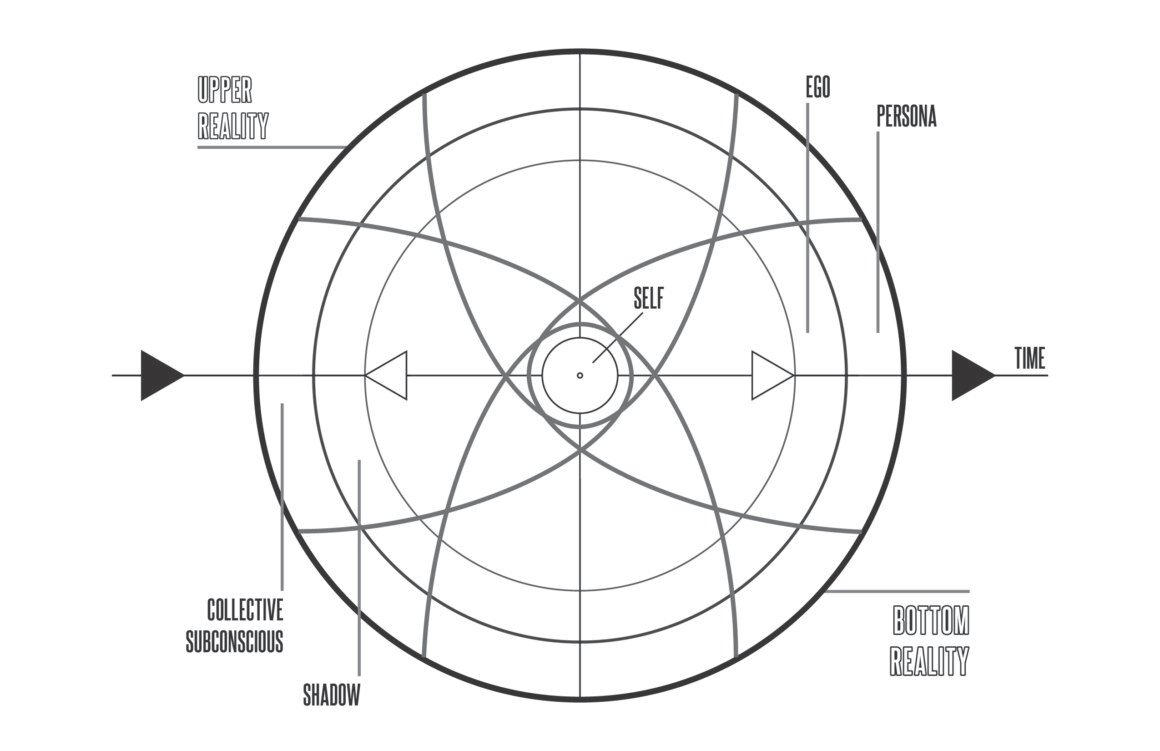
In the hemispheres, we glimpse Kant’s gap2: the left hemisphere embodying logic and order (Truth/Order), the right hemisphere embodying creativity and experience (Love/Chaos). But even this duality oversimplifies. The brain is not a chessboard. It is top-down and bottom-up, cortical and limbic, neural and visceral. There is a cortical homunculus, a sort of “map” of the body etched across the brain. The mind does not end at the skull. It extends through the vagus nerve, into the gut, into a second brain of its own. What we call “consciousness” is not centralized. It is a constellation.
Our inner wiring is more complicated than we admit or confess. Consider the amygdala hijack: when primal emotional circuitry overrides the prefrontal cortex, we lose access to nuance, patience, and higher-order reflection. In trauma or panic, we become someone else. Now, place that next to the left-hemisphere hijack3, where abstraction crowds out embodiment, and language overwrites intuition. One is emotional override, the other cognitive colonization. In both, we are hijacked. We live in systems, and in brains, that routinely disconnect us from ourselves.
Even sex differences highlight these internal differences. Research suggests men tend to stay within a single hemisphere longer, while women tend to shift more fluidly between them. The corpus callosum, the bridge between hemispheres, varies in structure between sexes, wrapping the brain and linking to other integrative regions. That alone implies something profound: our foundational experience of the world, and of our own minds, is not universally uniform, even across gender.
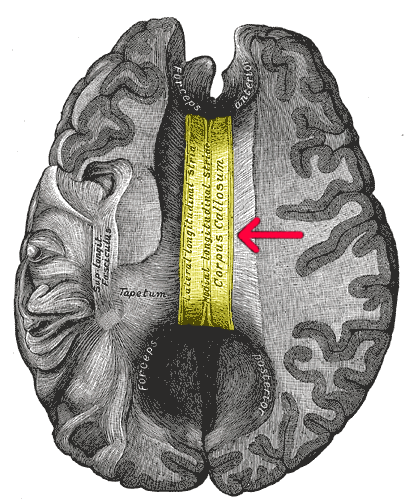
The modern “human condition” is not just a neurobiological split. It’s a philosophical one. fMRI studies show that chronic digital stimulation strengthens the left hemisphere’s Default Mode Network, especially its self-referential loops, while weakening the right hemisphere’s capacity for sustained empathy, focus, and spiritual perception. The corpus callosum, once a bridge, now channels propaganda: fragmented symbols, algorithmic simulations of connection, and endless distraction. Constant stimulation rewires us. Social media teaches us to curate ourselves instead of knowing ourselves. The result is not transcendence, but performative ego. And the damage isn’t just psychological; it’s spiritual.
To be clear: these are only three examples (the DMN, amygdala, and corpus callosum) of how we use the brain’s very structure to build temples of avoidance. You can spend your whole life inside your own skull, yet never meet yourself.
Whether we’re talking about theology, philosophy, psychology, worldview, or spirituality, we’re not just talking about ideas. We’re talking about inner realities—living dynamics inside our minds and bodies. These aren’t abstract disciplines. They’re internal landscapes. The brain doesn’t store ideas in separate folders. It encodes them as experience. Everything we “know” becomes part of us.
Truth isn’t a proposition. It’s a possession. Not because we control it, but because it becomes us.
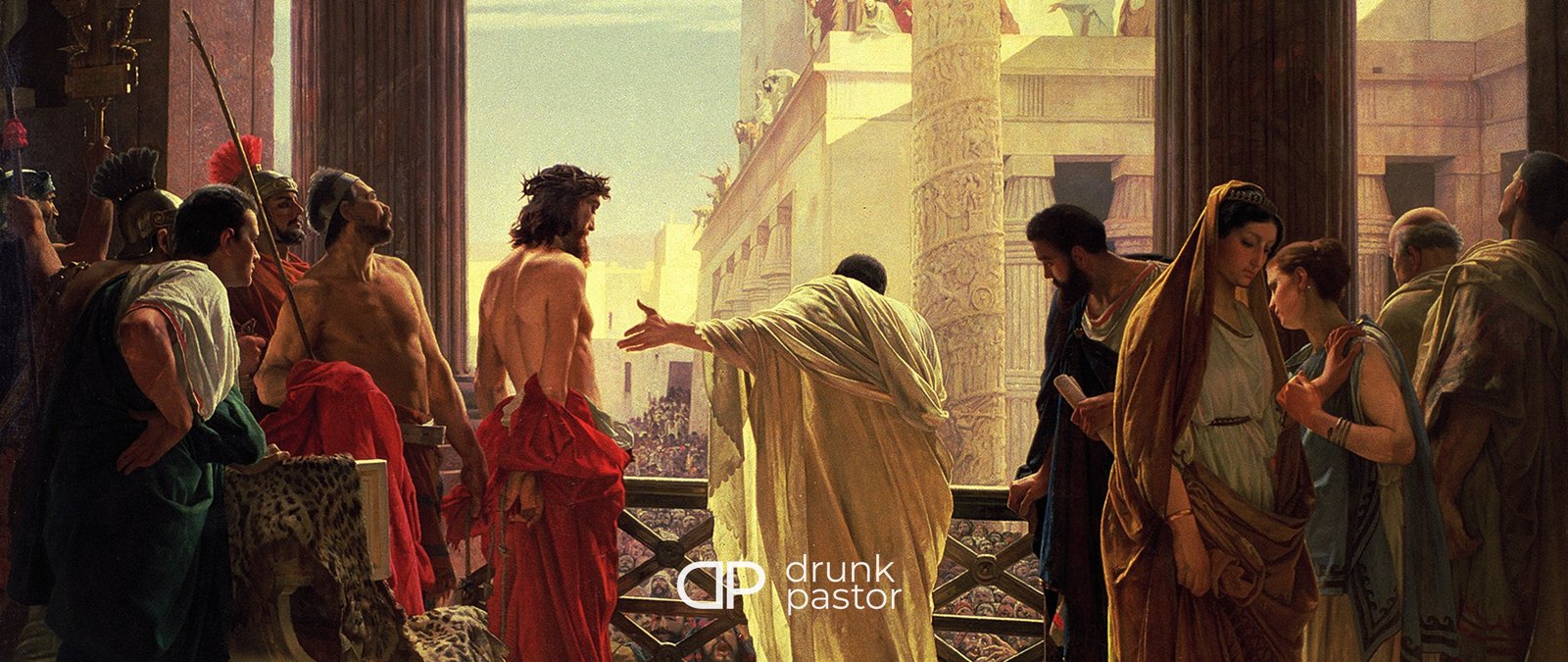
Only the individual can wrestle with what is true—whether you’re Pilate, Jesus, Jonah, or Hitler. Whether you face it in prayer or in protest, the question isn’t “What is truth?” but “Am I being true?”
Everything we know is housed within us—our families, communities, nations, faiths, memories, and mythologies. When we ponder them, we don’t reach out to grasp some external certainty. We reach in to navigate a web of neural and experiential truths. What we call knowledge is a living archive. And what we believe shapes how we move through it.
Truth, in the end, isn’t something we find. It’s something we embody. And how we answer it, how we live it, makes all the difference.
Next Week: Part 2 — Man as the Measure, Truth as Alignment, & the Cave’s Shadow
In the second excerpt from The Son of Man & Its Mystical Awakening, we hone in on the existential heart of the matter. If Part 1 is about the structure of our minds ending dualistic avoidance, Part 2 will be about the movement of the soul out of Plato’s Cave, where a conscious being must ultimately choose to stop staring at flickering shadows and turn toward the light.
We were often told that truth was a set of facts or a list of dogmas, but it became just another projection on the wall. Truth is alignment and freedom. It’s something we live in, not “know” or “believe” from a distance. It’s the process of the conscious self stepping out of the epistemic prison of ego, traditions, and algorithms to face the blinding reality of what is.
Part 2 will be published on Feb 18, 2026.
*Footnotes (& Leftovers)
- Subjective conscious holon is a term covered early in the book that refers to the individual human being and their inner experiences, will, and awareness. Rather than suggesting truth is subjective, it treats the human as an objective reality, and one that is subjective by necessity. ↩︎
- Kant’s “gap” is something explored earlier in the book and refers to the dualism in his critical philosophy, specifically the “illogical gap” between theoretical philosophy (knowledge of the phenomenal world) and practical philosophy (morality/freedom). This gap is often interpreted as the inability to bridge the “is” (how things appear) with the “ought” (moral duty) or the separation of sensibility and understanding, leaving a divide between human knowledge and the noumenal realm of things-in-themselves. Here, we move past Kant’s Gap as an interesting consideration to an diagnositc reality witha remedy. ↩︎
- Not an actual term in literature, however, it’s well documented and explored in previous sections. ↩︎