Below is the second part of an excerpt from The Son of Man & Its Mystical Awakening. The first part looked at the objective realities of our inner subjective experiences by picking apart just a few parts of the brain and looking at the hemispheres. At the end of the day, every individual is responsible for what they “believe” and how true they are to Reality. Only you and I can “decide” what is true, and that’s a power that even God bestowed upon us.
“Man is the measure of all things,” Protagoras declared1. In the modern age, this has become both our creed and our crisis. We are the answer to Pilate’s question, “What is truth?” Not because we invent reality, but because we are the only creatures who must consciously align ourselves with it. The subjective “I” is not an arbitrary authority, but a capacity for reflection—a living portal through which truth must pass. Freedom is not the liberty to believe whatever we wish. It is the difficult, often disorienting capacity to see what is and to align ourselves with it.
Plato’s allegory of the cave remains the most enduring parable of this human predicament. In The Republic, he imagines prisoners born into a cave, chained so they can only face forward. Behind them, unseen objects pass in front of a fire, casting flickering shadows on the wall. These shadows are all the prisoners have ever known. Then one is freed. At first, the light blinds him. But, slowly, he sees: the fire, the objects, and eventually the outside world, lit by the sun. Returning to the cave, his vision is mocked. Reality now threatens the comfort of illusion.
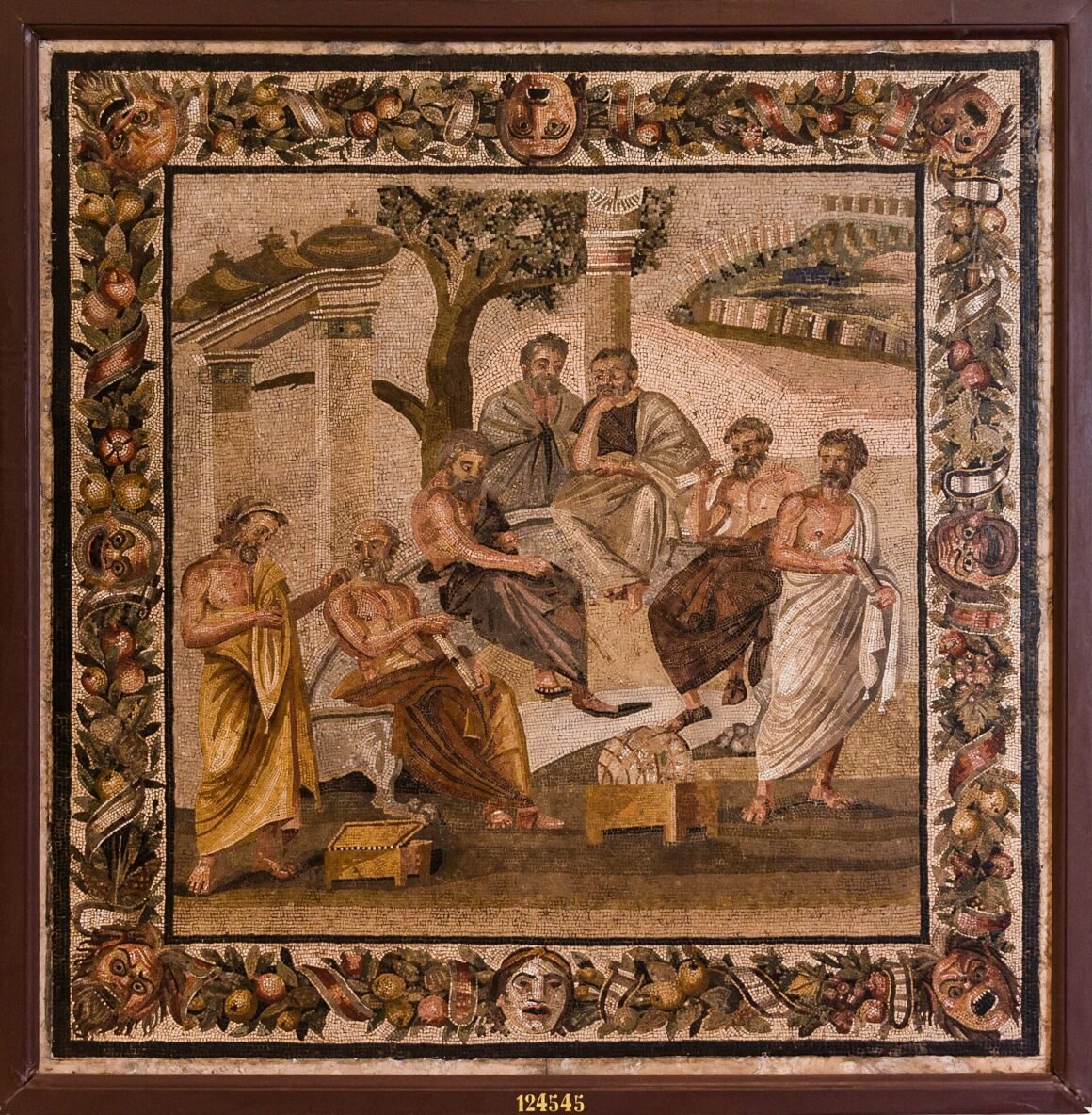
Traditionally, this is read as the ascent from ignorance to enlightenment. But it also anticipates modern frameworks of psychological growth. Piaget’s stages of development, Jung’s individuation, and Kegan’s subject-object theory all echo Plato’s deeper point: transformation isn’t about acquiring more data. It’s about seeing through the projections that once defined us. The cave isn’t merely symbolic of ignorance. It represents our conditioned noosphere, our infosphere, the epistemic prison we mistake for reality. Leaving it is not an escape from society but a confrontation with our inherited illusions. No wonder the freed prisoner is blinded at first. Truth wounds before it frees.
This pagan myth has long resonated with Christian thinkers. Augustine saw in Plato a prophetic glimpse of the soul’s ascent toward the verum bonum—the highest good—later revealed in Christ. The cave, for Christians, is every system that mistakes dogma for the divine or tradition for truth. The real question is not whether we live in caves. It’s whether we dare to leave them. And when we return with eyes adjusted to reality, we may not be welcomed. But that doesn’t make the journey less necessary.
We are born into shadows: assumptions, traditions, tribal dogmas. The journey out is not merely intellectual. It is existential. It requires the death of certainty and the shattering of what once felt safe. In Plato’s vision, the philosopher is not a collector of abstract truths, but a midwife of awakening—someone who dares to face the light and returns to help others do the same.
The cave is not just an ancient myth. It is a living metaphor for our digital age. Our shadows are algorithmically curated. Our realities are fragmented by echo chambers and confirmation bias. The challenge remains: will we mistake the shadows for substance, or risk the discomfort of stepping into the light? The “measure” of man, then, is not our power to shape the world, but our willingness to be measured by it.
This is the paradox at the heart of awakening: we become most ourselves not by asserting our separateness, but by aligning with what transcends us. To be consciously free is to participate in reality, to surrender the illusion of mastery, and to embrace the vulnerability of seeing things as they are. It is to leave the cave again and again, and to invite others into the light—not with coercion, but with the humility of one who knows how easy it is to mistake a shadow for the real.
Mentalization & Spirituality: The Danger of Near-Enemies
Mentalization is not just a therapeutic term. It’s the living process by which we make sense of ourselves and others. It’s how we construct and refine our “inner map.” Neuroscience shows this is both a top-down and bottom-up phenomenon: our brains synthesize abstract frameworks (top-down) with the raw data of experience and emotion (bottom-up). But it’s more than neurology. Our relationship with knowledge has become existential. As science, spirituality, and selfhood intersect, knowing transforms into a relational act—an invitation not to dominate truth, but to commune with it. This shift marks a deeper epistemic humility, one that aligns with both mystic traditions and contemporary neurocognitive research.

This same dynamic appears in what Brené Brown calls the “Wheel of Science”—a cycle of observing, naming, theorizing, and testing that undergirds all genuine knowledge, whether scientific or spiritual. In Atlas of the Heart, Brown draws from both empirical studies and contemplative wisdom, showing how emotional precision is foundational. Naming an emotion accurately is not trivial—it’s the difference between being overtaken by shame and recognizing it as a signal, between spiraling in despair and naming it as grief. Naming becomes a form of mentalization. It gives us a chance to pause, reflect, and choose our response rather than react blindly. In biblical language, this is the difference between walking “in the flesh” and walking “in the Spirit.” The distinction isn’t just moral—it’s neurological. It reflects the very nature of God that we, as humans, embody.
Brown’s most piercing contribution arrives at the end of her book: the idea of “near enemies,” a term borrowed from Buddhist psychology and rendered sharply in her framework. A near enemy is not the opposite of a virtue—it’s a counterfeit, a false mirror. Pity, for example, is the near enemy of empathy. It mimics empathy’s form, but lacks its essence. It’s a mask with a shadow behind it.
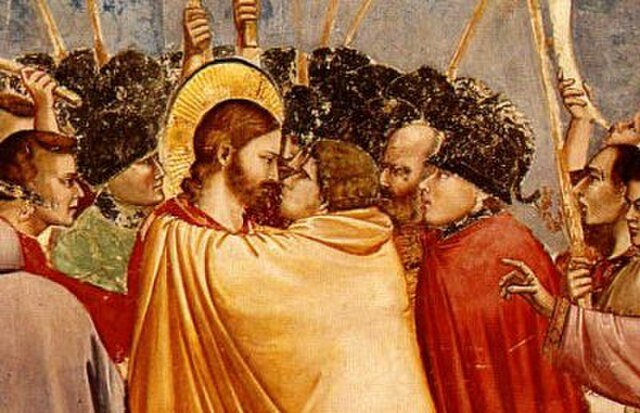
As a friend—with a kiss (Luke 22:48). The most dangerous distortions of truth rarely come from outside the household, but from within (Matthew 10:36). Temptation doesn’t shout; it whispers alternatives. The golden calf wasn’t framed as rebellion, but as worship. The serpent didn’t contradict God—it offered a reinterpretation. Near enemies are persuasive precisely because they feel familiar. But what they offer is simulation, not transformation.
Religion, at its best, is meant to refine our inner maps—to integrate revelation (top-down) with lived experience (bottom-up). It’s meant to be a laboratory for mentalization, a sacred space to see ourselves and one another more clearly. But when religion becomes the near enemy of spirituality, it offers the appearance of transformation without its substance. It replaces the hard work of integration with prepackaged answers, rituals, and tribal identities.
Neuroscience affirms this: when religious practice becomes performative or tribal, it activates the brain’s reward circuitry but bypasses deeper structures tied to empathy, self-awareness, and moral transformation. It becomes a dopamine loop dressed in liturgy. And Scripture warns us: even the devil can come disguised as an angel of light.
This isn’t a personal crisis. It’s a systemic one. The American Gospel is a textbook case: it borrows the vocabulary of Jesus but inverts His message. It sanctifies exclusion, baptizes consumerism, and confuses cultural nostalgia with spiritual renewal. This isn’t an attack on patriotism—it’s a diagnosis of how easily virtue gets imitated, especially at scale. The near enemy is a universal temptation: neural, spiritual, cultural.
We’ve already seen how this dynamic appears in Girardian theory, in tribal hypocrisy, and in the weaponization of moral language. It’s not new—but we see it more clearly now. And Scripture has always named it. The prophets railed against those who “draw near with their mouths and honor me with their lips, while their hearts are far from me” (Isaiah 29:13). Jesus reserved His harshest critiques not for pagans, but for the devout who mistook their inner map for a claim on the territory of others (Matthew 23). Judas’s betrayal, Peter’s denial, the Pharisees’ resistance—none were acts of open rebellion, but failures of proximity. These weren’t enemies in the traditional sense. They were near enemies: insiders, friends, the righteous gone astray.
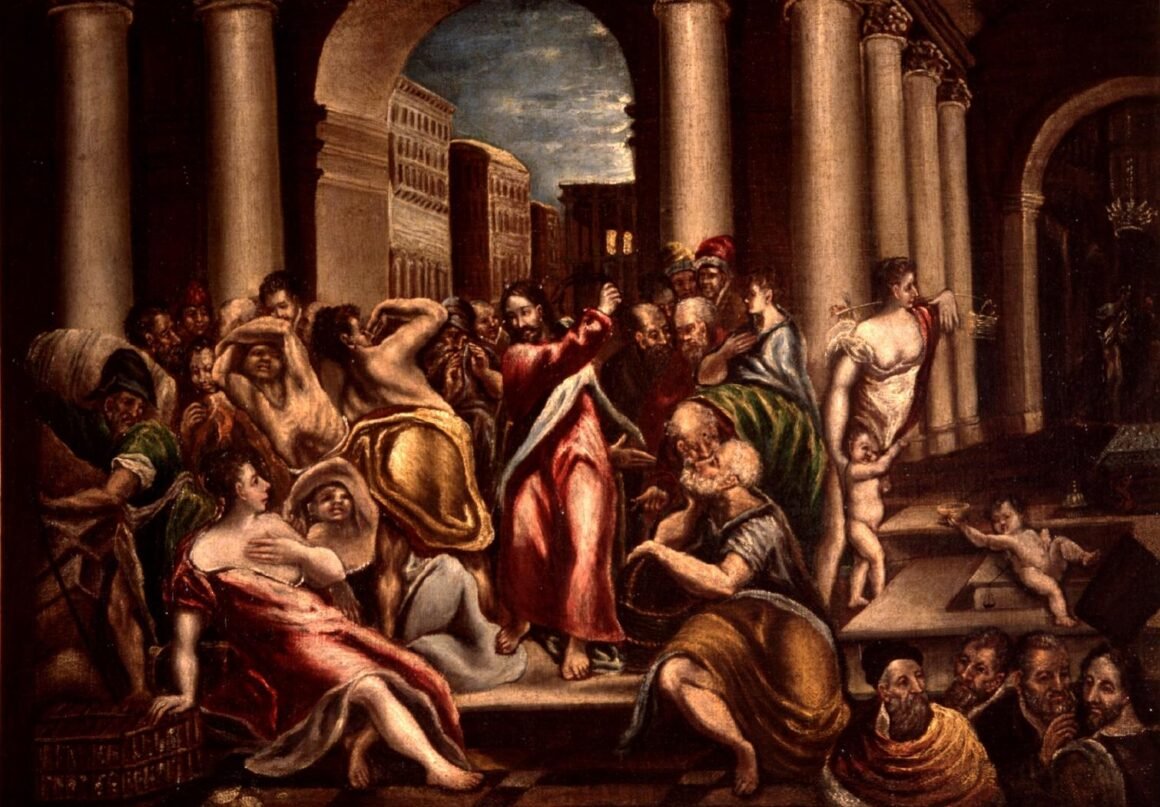
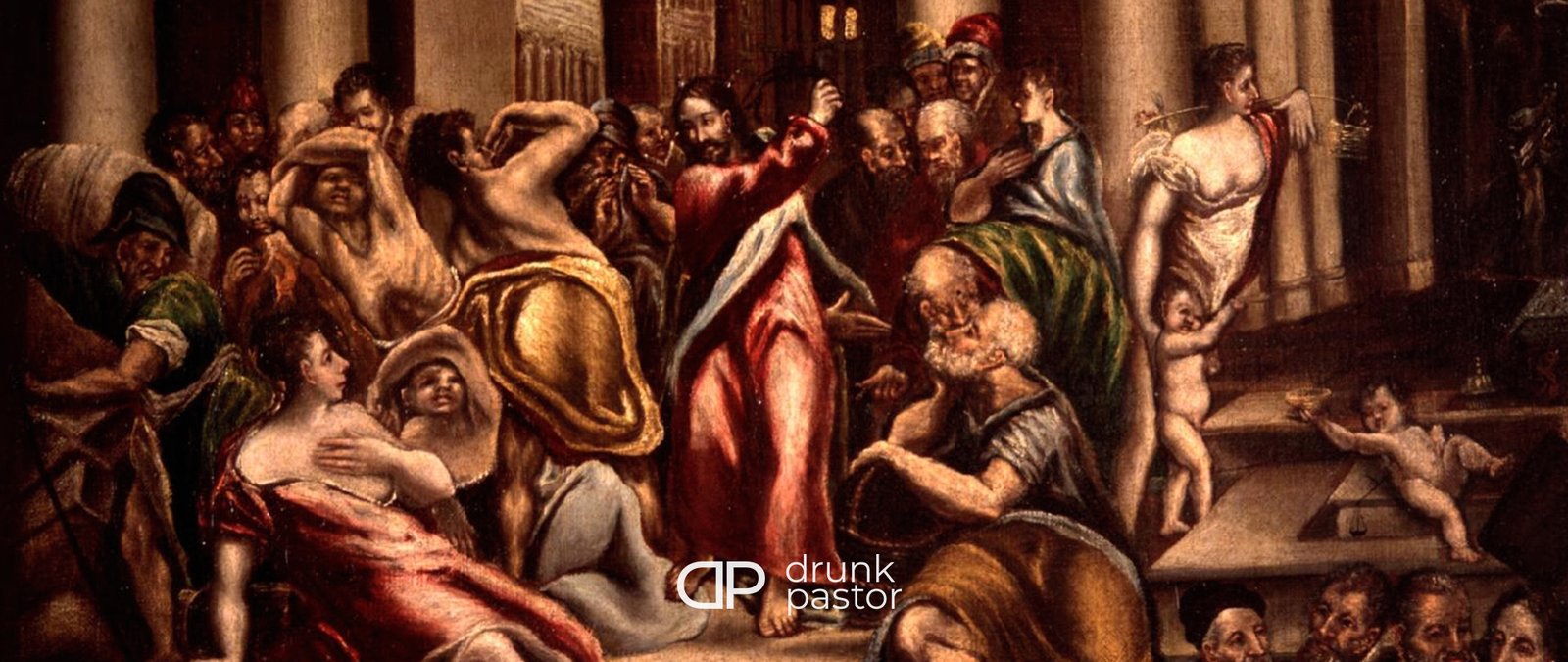
The near enemy is the fatal flaw in the old logic: “keep your friends close and your enemies closer.” That logic maintains the status quo. True enemies—personal, institutional, systemic—play the same game. But the mind-bender is this: our worst enemy is often ourselves. The only way out isn’t to play better—it’s to upend the game entirely. Jesus flipping the temple tables wasn’t just a protest; it was an inversion of the whole system, a refusal to settle for counterfeit holiness. In game theory terms (which we’ll explore later), it was a move that broke the existing equilibrium and forced a new one into being.
Mentalization, then, isn’t optional. It is the ongoing, courageous act of refining our inner maps—of integrating the top-down with the bottom-up, of naming our near enemies and refusing their easy comfort (or our own role in playing one). It’s the path from hollow religion to embodied spirituality, from counterfeit community to the living body of Christ, from status-quo consciousness to the coming of the Son of Man—a collective awakening that is as neurological as it is spiritual, as personal as it is cosmic.
Footnotes (& Leftovers):
- Protagoras (c. 490–420 BC) was a pre-Socratic Greek philosopher and sophist. His relativistic view of truth challenged metaphysical absolutes and presaged modern subjectivism. His work marks one of the earliest articulations of epistemological selfhood—exactly the kind of lens this book attempts to both expose and transcend. ↩︎
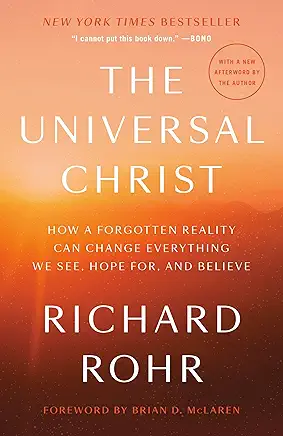
Instead of plugging my book, let me recommend Richard Rohr’s The Universal Christ. Mine is good for the exegesis, context, philosophy, and psychology…which is why it’s over 240K words. Rohr’s book captures the same thesis in a much shorter time and is a good audiobook. If you get through the whole thing and can’t completely disagree with it, then welcome to the Awakening.