Table of Contents Show
“The greatest of all illusions is to take things for granted.”
— G.K. Chesterton
Happy Thanksgiving!
Holiday loneliness, family drama, financial burdens, and avoiding political and controversial issues at the dinner table can make “sitting all the way down,” like AA likes to say, a struggle. The fact that it took me a few deliberating minutes on whether to use “Happy Thanksgiving” is indicative of how our current cultural debates complicate things. This blog is about gratitude, and we’ll get there.
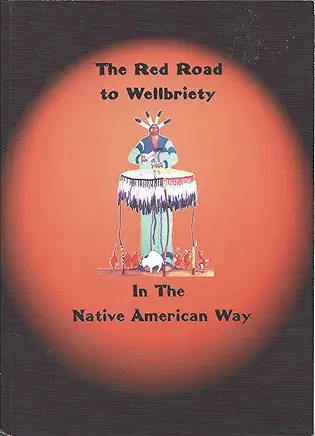
When I was in my second rehab, and even before, some Native Americans were in my life, and their beliefs and practices were what drove them to help me. I read The Red Road to Wellbriety in rehab, the 12 Steps explained through Native American beliefs and the medicine wheel, alongside The Zen of Recovery: both of these helped me a lot. To this day, smudging is a part of my morning rituals.
For many of them, today may be called a National Day of Mourning and Thankstaking Day. These people are real. Their stories, histories, and family legacies are rooted in blood and soil, and are just as American as my white self. I’m comfortable with my right to say “Happy Thanksgiving,” and to understand my friends’ perspectives and circumstances, the real facts and subjective interpretations, because Lord knows I’m full of them.
Some of my Christian Nationalist and Fundamentalist friends post things like the picture below. These messages have been trending, and this is but one topic. It’s in part a reaction of one tribe justifying its existence and character defects to another: we’re all humans, and this is a very human thing. Our histories, all of them that have led up to today, November 27, 2025, have been a mix of good and bad, a blend of blessings and curses, and we’ve all been trying to figure this out. We all know better and can respect each other as humans, and take the time to understand and have empathy for others’ stories, while living our lives gratefully. There is no law against it.

This “cute” meme screams a lack of study in cultures and history, a lack of honesty about objectivity in politics and social change, a clear ignorance of psychology and the collective unconscious, and dares to show the poster as a fool.
This coming from a cis white male, BTW, who is adamantly neither blue nor red, and for the first time has a clue about his “identity,” values, beliefs, history, past, and what he wants to do in this world. I’m confident in my research, studies, and personal wrestling with and exploration of these matters, as well as the mistakes that have made me along the way. And the truth is, these are complicated, messy, and not-so-easily reduced topics that we then throw real humans under the bus with our shallow and egoic thoughtless posts. With such mindsets, we will keep sacrificing humans in the name of our opinions and “rights.”
It’s billions of humans posting little things like this, and much more—from BS relationship advice and egoic false narratives to watching Left and Right fight it out like two toddlers while families fall apart and the economy bends under the strain of our excess and division. It can be difficult to be grateful without offending someone.
“The thankful person thinks of himself as a debtor; but a proud person thinks he is a creditor.”
— Søren Kierkegaard
Here’s the segue: we still can be. Gratitude is something I have had to practice for four years to begrudgingly drag my unwilling butt this far, if that gives you any idea how long and how much of a struggle this can be (if you knew me before, it makes complete sense!). The “fact” that it seems like we have to be careful what we’re grateful for and around whom is a mirage of our divisive and nihilistic Western world that we’ve all played a small part in. There is nowhere to point a finger if we’re all honest enough.
As such, gratitude is an option that we have no excuse but to face and bend a knee to. This was a trick I discovered in my second rehab: that I could “practice” gratitude even if I didn’t feel like it. After a lot of practice, I wake every morning and fall asleep every day with a gratitude list, and it’s part of the aforementioned morning ritual. TBH, there have been countless times God has broken through enough of my sinful and insecure crap to finally make me realize how much I had to be grateful for that I had missed. Gratitude has been a bedrock, a logical and irrefutable foundation for peace, change, and God’s redemptive work.
Gratitude isn’t a mood; it’s the posture of a soul finally willing to stop resisting reality. One that is ready to give as much as accept, rest as much as serve, and to listen as much as speak.
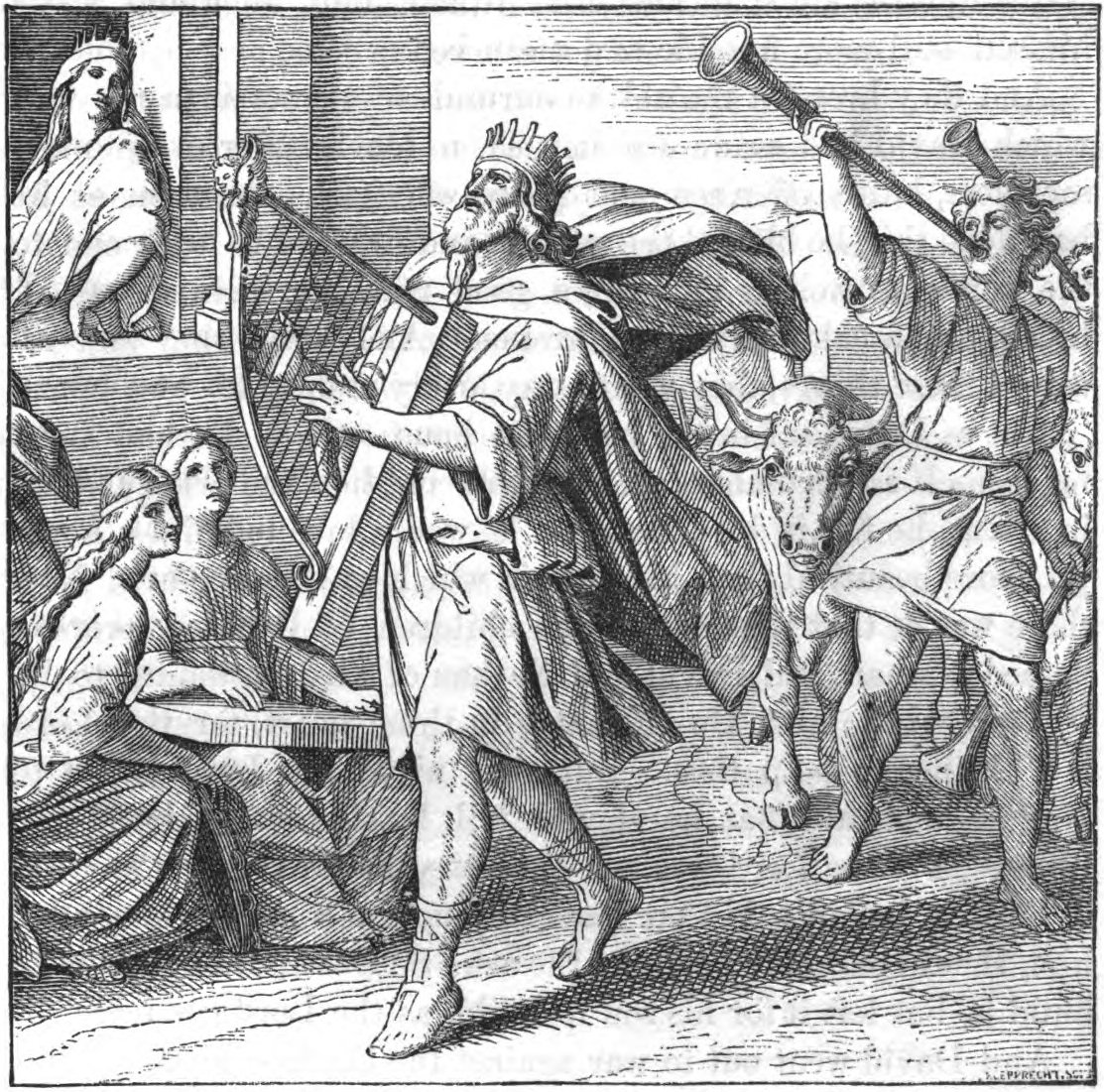
Maintaining gratitude after the moment is where a lot of the work has been for me—stretching those small moments of gratitude until they’re long enough that they can start bumping into each other and overlapping. Dealing with my issues and defects as God brought more up, and surrendering more to His presence, helped deepen and eventually make it more natural. If we’re not grateful, it’s usually because there’s something we’re not accepting, at least for me. There is so much I’m grateful for now, and that was a process too; learning how to manage that overwhelming and long-avoided part of my spiritual psyche.
Psalm 118 has been coming to mind recently, specifically the part about “This is the day the Lord has made; let us rejoice and be glad in it.” For a few days this week, I’ve been chanting that to myself when I’m in a depressed or grumpy moment.
Looking at the passage helped expand it more this morning as I read it. The entire psalm is about Thanksgiving:
“Oh give thanks to the Lord, for he is good;
for his steadfast love endures forever!”
We don’t know who wrote Psalm 118. There’s no historical basis for Davidic authorship, and it seems it could have been written after Israel’s captivity in Babylon. However, the intention and purpose of it is clear.
Psalm 118 Within a Larger Liturgical Corpus
“If the only prayer you ever say in your entire life is ‘thank you,’ it will be enough.”
— Meister Eckhart
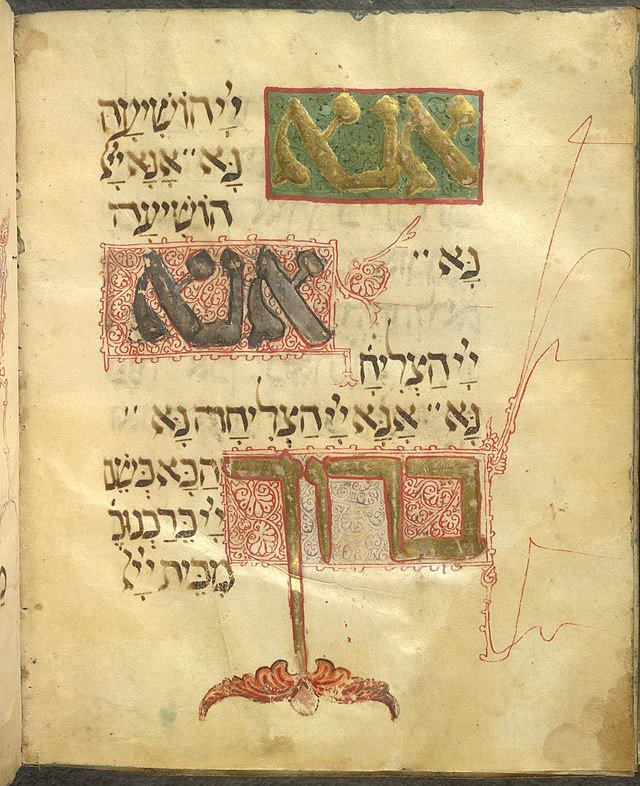
Psalm 118 does not stand alone. It is the final psalm of the Egyptian Hallel1 (Psalms 113–118), a cohesive liturgical unit used in Israel’s major festivals, especially Passover. These psalms formed a single ritual arc: praise remembered, deliverance retold, thanksgiving renewed. They were not merely read; they were sung, memorized, recited, and enacted.
This corpus was shaped in the post-exilic era, when survivors of the Babylonian catastrophe were rebuilding their religious and communal identity. The Hallel (הַלֵּל, “praise“) became a way for a wounded community to narrate its survival and bind itself together again through ritual memory.
People Who Told the Story in the First Person
One of the distinctive features of Israel’s worship is its invitation to step inside the story. When Jews sang the Hallel at Passover, they didn’t think, “Our ancestors were delivered from Egypt.” They thought:
- “We were saved in Egypt.”
- “God redeemed me at the Red Sea.”
- “He has become my salvation.”
Their liturgy turned history into identity. The psalms were not fragments of an old record; they were a living script that pulled each generation into the Exodus as a present reality. Psalm 118, standing at the climax of the Hallel, carried this experiential thrust: the “I” represents the whole people, and the whole people become the “I.”
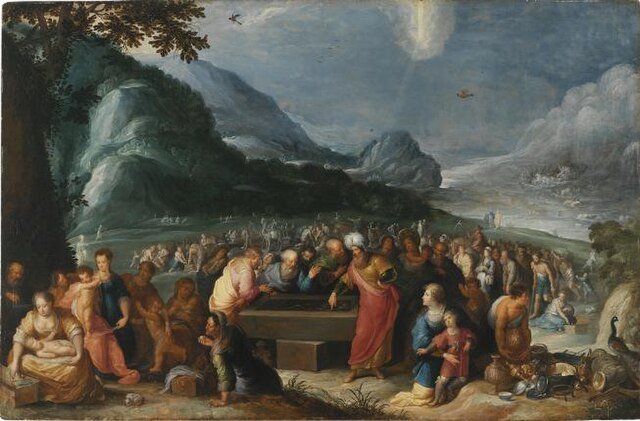
“Open to me the gates of righteousness…
The stone the builders rejected…
This is the day the Lord has made…”
These lines were not museum pieces. They were reenacted at the Temple, repeated at Passover, sung by pilgrims entering Jerusalem, and later chanted by Jews in Jesus’ time who longed for deliverance once more.
A Commentator’s Voice
Old Testament scholar Walter Brueggemann captures this dynamic well:
“Israel does not simply remember its past; it re-performs it. The community becomes the Exodus generation again, and in the retelling, Israel is reconstituted as a people summoned, rescued, and given life.”
This is precisely what Psalm 118 accomplishes in its place within the Hallel. It takes a historical rescue and turns it into an existential practice—an identity-forming discipline of gratitude, trust, and communal rebirth.
Psalm 118 and the Gates of Thanksgiving
Open to me the gates of righteousness,
v. 19-20
that I may enter through them
and give thanks to the Lord.
This is the gate of the Lord;
the righteous shall enter through it.
The liturgy instructs us that righteousness is the gate by which God’s people enter into thanksgiving—the kind of being that is, and doesn’t have to be forced. You know those moments when we’re simply grateful and can rest and trust in it. Righteousness for the Jew was tzedakah, and it was not merely a law or code but right living. The Stoics discussed the same concept in eudaimonia, or being “good.” The “good life” is, in essence, what philosophy has been debating as footnotes since the time of Plato (and clearly before, since this psalm was written roughly 100–200 years earlier).
It’s ironic and also psychologically true that if you want righteousness—if you “hunger and thirst” for it (Matt. 5:6)—you also must surrender and enter into it. “Faking it until you make it” will only get you so far. Old professors and pastors have warned that we can’t teach what we don’t know and can’t lead where we haven’t been. This is even more true when it comes to the surrender of the soul, the depths of the human psyche, and the unending fathomability of the Divine. The righteous are those who surrender to that, participate fully with it, and can seem to stand on their own feet even on shaking ground.
They are the widows who still donate their last two mites (Mark 12:41–44), and the Erastus of Ephesus who lives and works in the midst of the elite and governing bodies (Rom. 16:23). It is the single mom making ends meet and the recovering addict lying bored on their bunk in sober living—finally sober for the first time. It is the salon owner figuring her stuff out and the pastor in Australia wrestling with next steps while joking about our American political circus (he’s not wrong).
It’s all of us, wherever we are, wanting to be true, good, loving, and grateful, to trust God and His reality as it is, and knowing He loves us as we are, even in the midst of whatever distracts us from what is calling us to gratitude.
I thank you that you have answered me
v. 21-23
and have become my salvation.
The stone that the builders rejected
has become the cornerstone.
This is the Lord’s doing;
it is marvelous in our eyes.
The Christological motifs here are clear, and the writer of the psalm invited its participants to experience them for themselves. Jesus was the stone the builders rejected (Matt. 21:42), yes, but so were Israel, David, Moses, Joseph, Rahab, Bathsheba, Mary, Peter, the leper and the zealot, the Pharisee and Pilate. The mindset of Christ (Phil. 2:5-11) and the mystery of “Christ in [us], the hope of glory” (Col. 1:27) is a two-thousand-year-old proclamation, a mystery carried throughout the world. It took centuries of deconstructing the Dark Ages for us to begin to see it again. Still, it is a literal, logical, scriptural, and surprisingly scientifically verifiable telos of every God-breathed Scripture (2 Tim. 3:16).
“This is the Lord’s doing,” and all it takes is opening our eyes to see, and then to marvel at it. It’s why Paul had three days of scales falling from his eyes (Acts 9:18), whether literal or allegorical, and probably why he took three years of private study before approaching the apostles in Jerusalem to fact-check his Gospel and calling (Gal. 1:17–18).
This is the day that the Lord has made;
v. 24
let us rejoice and be glad in it.
Gratitude & the World(s) We Inhabit
The connection between righteousness and gratitude is an interesting one, and it collapses some false divisions. It invites us to not merely check gratitude off a list but to embody it, value it, and cherish it. It helps us understand Paul’s command to be “filled” with the Spirit rather than intoxicated with lesser spirits (Eph. 5:18), and Rumi’s similar counsel to let joy “drink you.”
So, this Turkey Day—no matter where you are, how your family lineage brought you here, or what your ideologies and opinions may be—happy Thanksgiving every day. May we amor fati2 like Nietzsche’s Zarathustra only dreamed we could. Today, and every day, is the day the Lord has made (Ps. 118:24). May we be the righteous who enter into His gates with gratitude.
“The real labor is to remember, to attend. In fact, to come awake. Still more, to remain awake.”
— C.S. Lewis
Footnotes:
- The term Hallel does not refer to a person but to a liturgical collection of psalms (from the Hebrew hallel, “to praise”). The “Egyptian Hallel” designates Psalms 113–118, a fixed unit in Jewish worship whose structure appears in the Mishnah (Pesachim 10) and the Babylonian Talmud (Pesachim 95a–118a). These ancient sources describe how these psalms were recited during the Passover meal: Psalms 113–114 were sung before the meal, and Psalms 115–118 afterward. The grouping is named “Egyptian” because Psalm 114, “When Israel went out from Egypt,” serves as the thematic center. This liturgical sequence is attested across Second Temple Judaism and remains unchanged in Jewish tradition today. By the first century, Psalm 118 had become the climactic festival psalm of Passover, used in processions and celebrations of national deliverance; thus its language formed part of the devotional world of Jews in Jesus’ time and was naturally invoked during public, messianic-tinged gatherings (cf. Mark 11:9–10). ↩︎
- Nietzsche coined “amor fati” as the radical affirmation of one’s fate without appeal to transcendence. Zarathustra’s struggle to bless existence is depicted in Thus Spoke Zarathustra, Part II (“The Old and New Tablets”). ↩︎