Table of Contents Show
“For the glory of God is a living man, and the life of man is the vision of God.”
— Irenaeus of Lyons, Against Heresies
In Part 1, we found a line running through Western thought: external versus internal, empirical versus experienced, institutional versus illuminated. In Part 2, we traced that line back to Greece and found it was never a border but rather a trade route. Greek religion and philosophy were built with Near Eastern, Egyptian, and Indian materials, and Greek writers said so themselves, quite proudly.
Part 3 asks what happened next, and what it means today. The thesis is simple to state and annoying to defend:
- Christianity began as a participatory, community movement, and became entangled with the Roman state in a way that changed how it was taught. The Church’s and Scripture’s definitions of authority, space, language, and spiritual experience were intrinsically altered by reformations of the Constantine era.
- The Reformers began the right correction, with a partial set of historical tools, while still living inside Western imperial assumptions.
- America inherited this partial deck, and its missing cards help explain why our arguments sound the way they do and why people are searching for authentic spirituality without pretense.
- Archaeological and manuscript evidence from the last few decades lets us look at some “settled” questions again. Not all of them. Some.
- The East/West line is a Western construction, and the real line runs through each of us. That is why the explosion of interest in contemplative practice isn’t a fad, and why religious certainty is hardening at the same time.
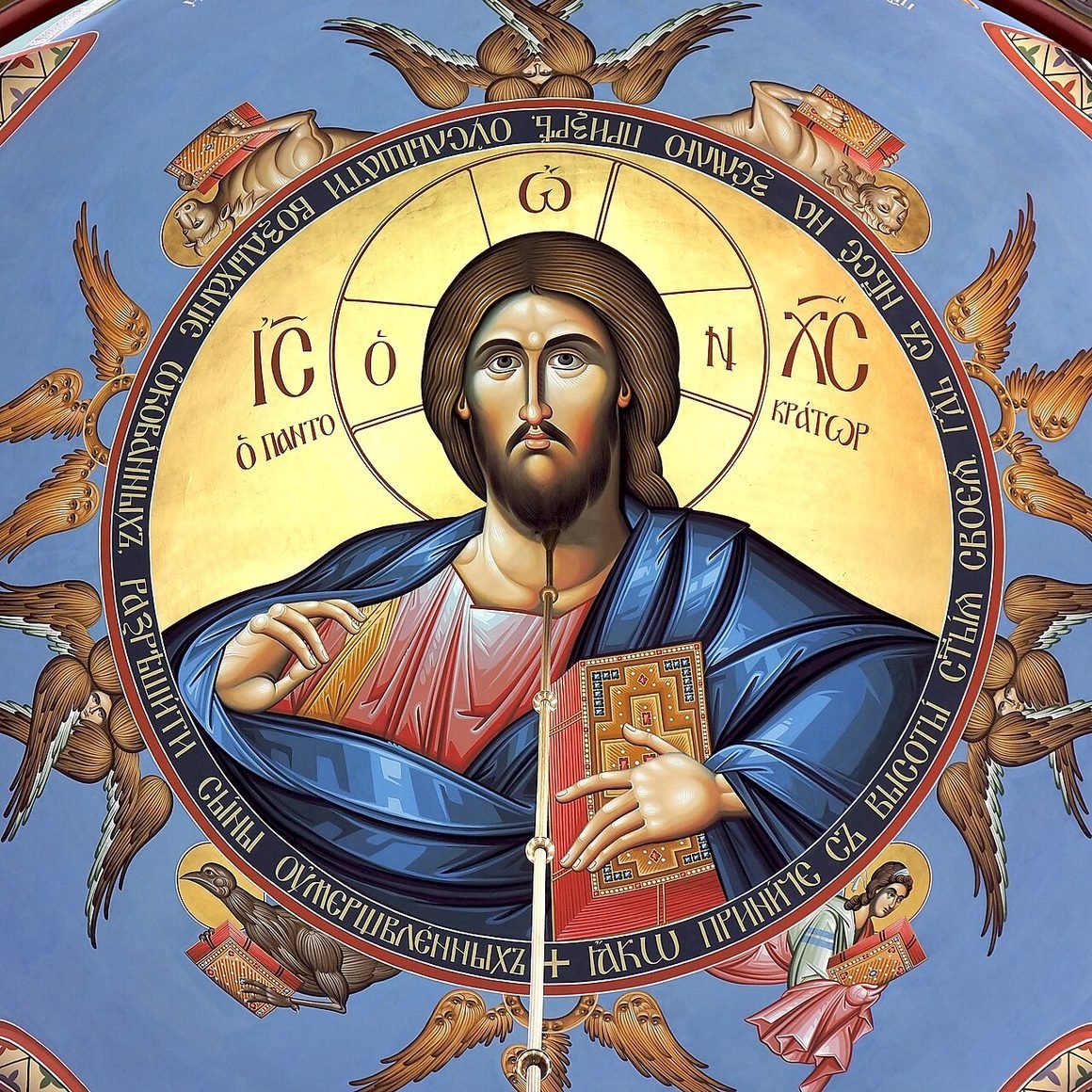
The Conversion of Christ into Caesar
This section is a map. More evidence is in The Conversion of Christ into Caesar, so we’’ll just keep to the load-bearing beams.
A movement born allergic to Caesar
The first Christians spoke a political vocabulary with intention. Euangelion (“good news”) was already imperial language. A calendar inscription from Priene (9 BC) calls the birthday of Augustus the beginning of “good news” for the world. Soter (savior), kyrios (lord), and “son of God” (divi filius) were all on Augustus’s resume, nearly every Caesar’s, and were not unique to Romans. To say “Jesus is Lord” in the Roman Empire wasn’t only a private spiritual statement. It was a rival claim about who held ultimate authority.
Authority in that movement ran through witness. The word martys meant someone who testifies to what they have seen. Their meetings happened in homes, around tables, in groups small enough that everyone could see everyone.
Patronage
With Nero’s persecution being a possible exception, Christian persecution was sporadic and regional until Decius (250 AD) and Diocletian (303 AD), then brutal. Galerius ended it in 311. In 313 AD, Constantine and Licinius agreed on a policy of toleration, which is called the “Edict of Milan,” even though scholars note it survives as a rescript (written in response to an inquiry) rather than a formal edict. Constantine’s Christianity may have been real, at least in some sense.
However, he was also still minting coins with Sol Invictus and keeping the title pontifex maximus. He wasn’t baptized until his deathbed in 337, by Eusebius of Nicomedia, a bishop with Arian sympathies — history has a sense of humor. Like Dionysius, the strategy became, “If you can’t beat them, join them.”
The organization, structures, and teachings were gradually recentered within Roman government. What matters is the pattern of patronage:
- Property: church structures could sit on imperial land that Constantine donated.
- The clergy was exempted from compulsory civic duties (munera).
- Bishops gained judicial standing.
You don’t need a conspiracy to explain what follows. Every modern politically minded person gets this: privilege, status, and incentives do the work. When a movement’s leaders become dependent on imperial favor, the movement learns what the emperor likes.
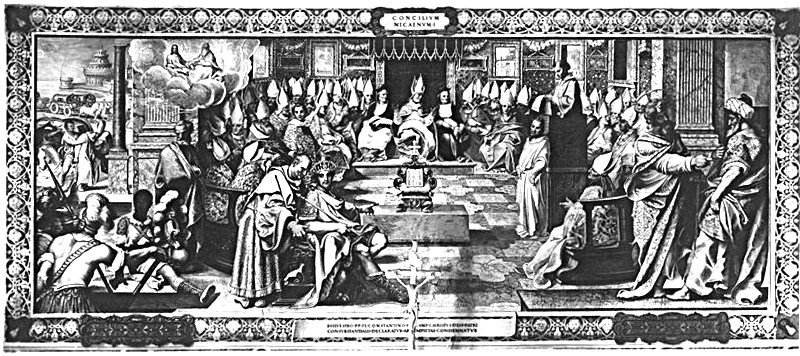
Nicaea: from dispute to policy
Constantine called the council of 325 AD, paid for it, presided over it, and enforced it. His letter to Alexander and Arius treats the controversy as a petty quarrel that was disturbing public peace. The problem was a question of order.
To be fair to Nicaea, Homoousios (“of one substance” or “consubstantial”) was not invented as a mind-control device, and Athanasius, its great defender, argued something deeply participatory: that only God could deify humanity, so only a fully divine Christ could do the job (2 Peter 1:4 speaks of sharing in the divine nature). The Nicene tradition produced some of Christianity’s finest theology.
Nicene doctrine is not empty. The claim is about mechanism and its effects. After 325 AD, an imperial court could convene bishops, enforce a creed with exile (or even death), and treat dissent as disorder. Constantine’s later order against Arius’s writings, reported by the historian Socrates Scholasticus, threatened death for concealing them. A vehicle built for unity can serve control just as well, as long as vehicles comply.
Pope Damasus I’s relationship with the city of Rome, its political elite, and imperial authorities illustrates how episcopal authority was becoming entangled with Roman political power. Following the death of Pope Liberius, two factions emerged. Pope Damasus I’s election in 366 AD was contested by a rival claimant, Ursinus, and the ensuing violence was severe.
The prefect Juventius was unable to contain the violence and withdrew to the suburbs. The new prefect, Ammianus Marcellinus, reported that 137 people were found dead inside the Basilica of Sicininus. Later, he and imperial authorities expelled Ursinus and his supporters. Damasus eventually won the struggle and became pope, while Ursinus was elected by a rival faction and became an antipope.
His papacy (366–384 AD) offers an early example of the growing political influence of the Bishop of Rome, whose authority increasingly depended upon relationships with the imperial administration as well as the Church.
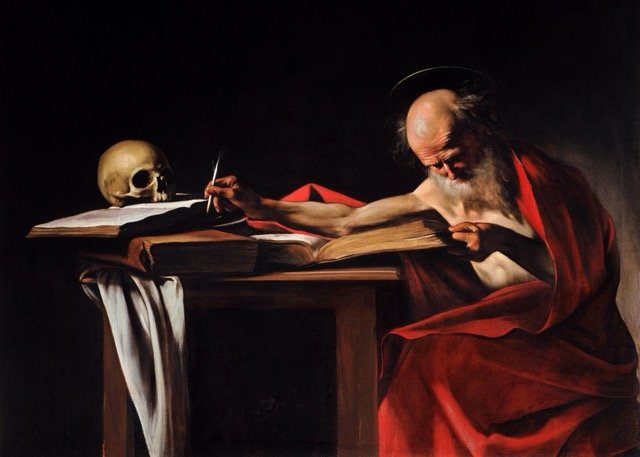
Damasus recognized the importance of establishing a more consistent Latin biblical text. Around 382 AD, he commissioned St. Jerome to revise the existing Latin Gospels against the Greek manuscripts. After Damasus’s death in 384, Jerome translated the Old Testament from Hebrew, largely while living in Bethlehem. Together with earlier Latin translations and the work of other revisers, these texts eventually formed the collection known as the Vulgate, from the Latin vulgata, meaning common or generally used.
More than a millennium later, amid the religious and textual disputes of the Reformation, the Council of Trent declared the existing Latin Vulgate edition authentic for public lectures, disputations, sermons, and expositions in 1546. It also reinforced the Church’s authority to determine the permissible interpretation of Scripture. The decree did not prohibit vernacular translations, but it did establish the Vulgate’s privileged position within Catholic ecclesiastical life.
Language, space, law
“Quid est imperatori cum ecclesia?”
— Donatus
(What has the emperor to do with the church?)
Language: The shifts we look at are the ones that survive scrutiny. Pistis (trust, faithfulness) moved into Latin fides (loyalty, fidelity, assent), which in Roman life meant reliability within relationships of civil obligation. Teresa Morgan’s Roman Faith and Christian Faith (2015) shows how deeply Roman fides culture shaped how Christian trust was understood.
Martys began narrowing to “one who dies for the faith” as early as the mid-second century, in accounts like the Martyrdom of Polycarp, and hardened into a cult of saints and relics. Not quite a lexical transformation, ekklesia (an assembly), a common word before the New Testament for any kind of public gathering and meeting, official or not, and was carried into Latin as ecclesia, a transliteration that predates Jerome. More importantly, the cultural understanding of “church” was changed back to more Greco-Roman concepts. What changed was what the word pointed to: from an event of people gathering to an institution that exists whether anyone gathers or not.
Space: At Dura-Europos (c. 240 AD), the house church was a domestic space modified for worship: a larger room for gathering, a smaller one for baptism. The basilica, adapted from Roman halls of judgment and old temple architecture, now had a bishop’s throne (cathedra) in the apse and a congregation in the nave. Instead of participating, people spectated. The architecture teaches posture before anyone says a word.
Law: Cunctos populos (380 AD) told the people of Constantinople which faith to follow and branded others “heretics.” Edicts in 391–392 AD banned sacrifice and closed pagan temples. The Theodosian Code (438 AD) catalogued legal penalties by category of belief. Imperial Christianity now had its law written down.
What happened to dissenters
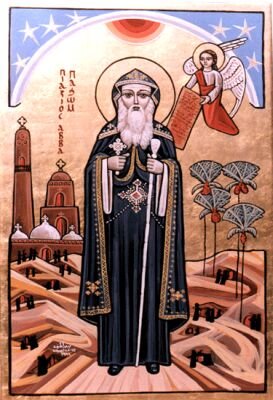
- Desert monastics: Antony, Pachomius, and others left the city for the desert, partly in protest against a church growing comfortable (270–350 AD). They thought the church was being absorbed. Athanasius’s Life of Antony recast the hermit as an ally of orthodoxy, and monasteries were folded into episcopal structure.
- Donatists: Constantine tried to settle the African dispute by councils, ruled against the Donatists, used force in 317 AD, and reversed to toleration in 321. Violence returned under Constans in 347 AD.
- Arians and their successors: Constantius II (337–361) swung imperial power the other way, proving the mechanism worked for anybody holding the lever. Christians associated with Arian or anti-Nicene theological positions used imperial or royal authority to persecute other Christians.
- Priscillian: In 385, he and several followers were executed at Trier on charges that included sorcery. Ambrose and Martin of Tours protested.
- Beyond Rome: Armenia, Ethiopia, and the Church of the East developed outside the imperial system. The Church of the East reached Tang China by 635 AD, and the Xi’an Stele (781 AD) confirms another branch of Christianity was spreading in the opposite direction of Rome.
The careful version
Roman paganism did not flip a switch and become Christianity. It was a civically contested, omnidirectional process of societal thesis-antithesis-synthesis with a plethora of competing factors. Ambrose forced Theodosius to do public penance after the Thessalonica massacre in 390 AD. The church wasn’t a puppet. It’s people. And people were capturing being captured simultaneously.
The mystical tradition survived inside and outside of whatever tradition was prevailing or popular. What changed was the Gospel’s relationship with government and who guarded the gate. Experience of the Divine went from something a community practiced together to something an institution administered, and the administering came with courts, jails, and tax exemptions.
The line was moving back and forth, this way and that way, as the idea of the Gospel infected the world like an anti-virus. Now, let’s fast-forward a thousand years.
“I utterly dissent from those who would not have the holy scriptures translated into the vulgar tongues, to be read by the private and unlearned persons… I would that all the meanest women of the country should read the Gospels and the Epistles of St. Paul.”
— Erasmus, preface to his 1516 Greek New Testament
The Reformation: A Necessary Deconstruction With an Incomplete Deck
The Reformation is not the villain of anyone’s story. It was the inevitable outcome of a millennium of distortions. It was a partial, bloody correction, made with evidence from antiquity.
By 1500 AD, the Latin church had been through the Avignon papacy, a time with seven rival popes, the burning of Jan Hus (1415), and a booming indulgence trade. Lorenzo Valla had shown in 1440 that the Donation of Constantine, the document claiming Constantine handed the pope temporal power over the West, was a forgery. Valla proved that the document—which the papacy had used for centuries to justify its political authority over Western Europe—could not have been written in the 4th century by Emperor Constantine. Humanist philology (the study of language, literature, and historical sources) was cutting at the foundations with nothing but grammar.
Martin Luther read Valla and was reportedly shaken by it. In a letter to Georg Spalatin (1520 AD), he said, “I have at hand Lorenzo Valla’s proof (edited by Hutten) that the Donation of Constantine is a forgery. Good heavens! What a darkness and wickedness is at Rome!“
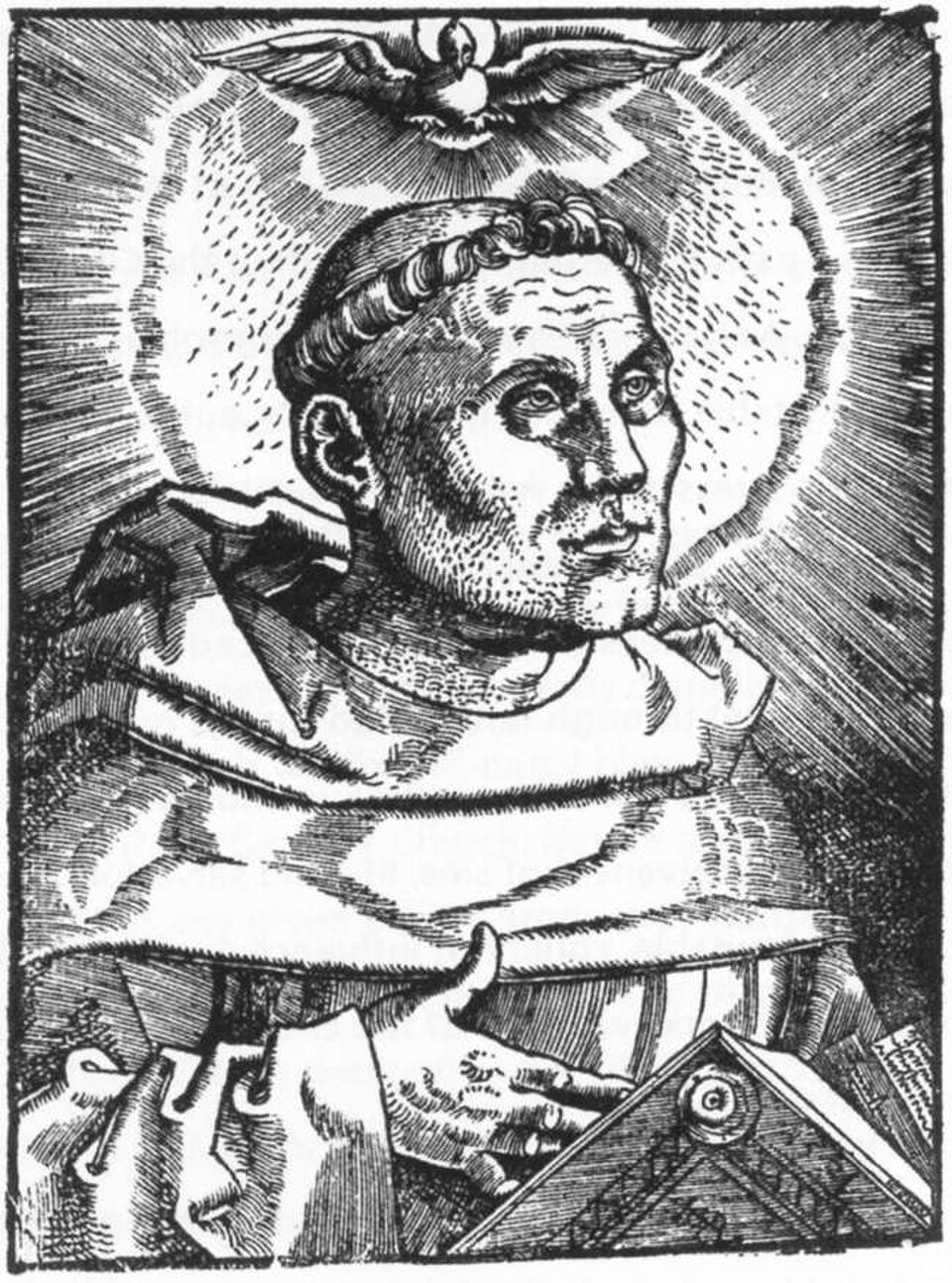
Ad fontes & its limits
Erasmus published the first printed Greek New Testament in 1516 AD. It was a landmark, and an early iteration, built on the handful of late medieval manuscripts available, with the final verses of Revelation retranslated from Latin back into Greek. The famous Comma Johanneum (1 John 5:7–8) was added in a later edition under pressure, as the traditional account goes. Printing made all this scalable. Luther’s German New Testament (1522 AD) put Scripture in the hands of normal people who couldn’t read Latin. Its language and accessibility, propelled by the printing press, added to the growing falling away from Roman Catholic systems.
When Luther said at Worms that his conscience was captive to the Word of God, he was reclaiming an older principle: authority from witness, not office. The priesthood of all believers is a recovery of the martys idea in that it took the priesthood away from the ruling elite and demystified hero worship. Calvin’s Treatise on Relics (1543 AD), mocking the multiplication of saints’ bones, attacks the hero-cult pattern we saw in Section 1.
What they had & didn’t
The Reformers did not have:
- Codex Sinaiticus (found 1844/1859), or serious collation of Vaticanus
- The Oxyrhynchus papyri (1890s onward)
- Nag Hammadi (1945)
- The Dead Sea Scrolls (1947 onward)
- Deep knowledge of the Church of the East or Oriental Orthodoxy
- Any of the archaeological evidence discovered in the last 100 years.
They did have contact with the Greek East, and one sustained attempt shows how Latin their categories were. In the 1570s, Lutheran theologians at Tübingen sent the Augsburg Confession to Patriarch Jeremias II of Constantinople. He answered three times (1576, 1579, 1581), politely disagreeing on tradition, grace, human cooperation, and more. The exchange ended in deadlock. Two Christian traditions found they were using different operating systems.
The mystic problem
The Reformers’ attitude to interiority was mixed, not hostile. Luther published and praised the Theologia Germanica. He also dismissed Pseudo-Dionysius as more Platonist than Christian. The radical Spiritualists (Müntzer, Schwenckfeld, Franck), the Pietists, and eventually the Quakers kept the “inner word” alive at the margins. In the center, Protestant scholasticism turned Scripture into a system, and reinstitutionalized Christian faith along denominational lines. Without a living interpretive tradition, sola scriptura fractured into rival confessions and creeds, none able to prove itself to the others.
The pivot to reason
Then the wars came. The Thirty Years’ War (1618–1648 AD) killed millions. The modern quest for certainty, from Descartes onward, was partly a response to Christianity’s bloody beliefs: if confessional claims could be settled by killing, Europe needed a foundation outside confession. Reason would be that foundation. The split between doctrine and experience hardened into a split between rationalism and religion, spiritual and scientific.
The Reformers started an essential deconstruction with the evidence available to them. They didn’t resolve the underlying division between knowing about and being changed.
America inherited its early Christian beginnings from the above.
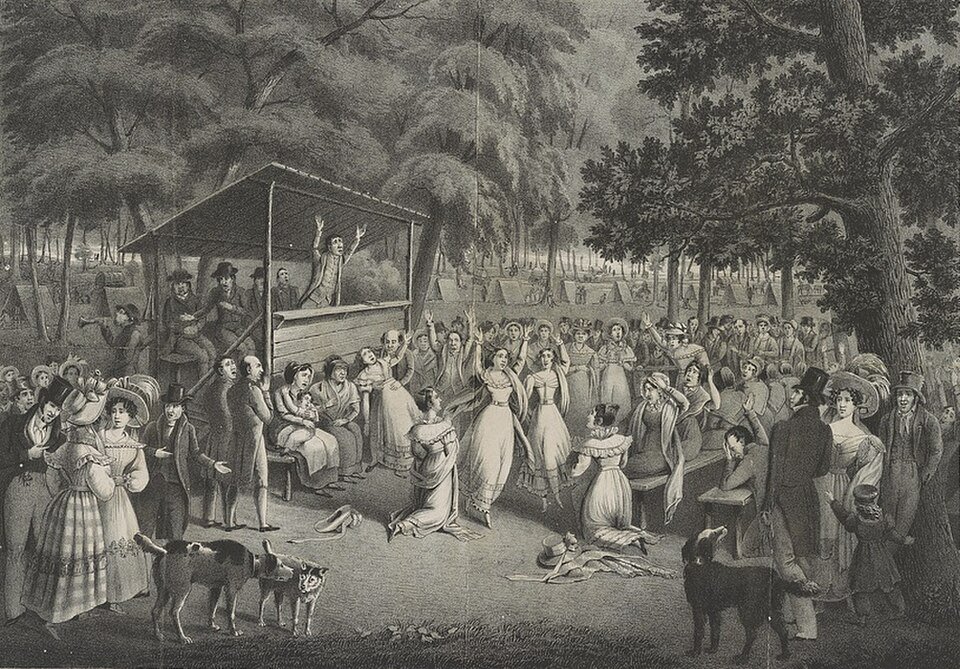
The First Great Awakening (1740s) produced America’s own version of the Part 1 binary. Jonathan Edwards defended “religious affections” as the heart of true religion, with tests for authenticity. Charles Chauncy attacked revivalist emotion as disorder. Jefferson later took scissors to the Gospels, cutting out miracles and resurrection to produce a purely ethical Jesus (c. 1820).
The Second Great Awakening pushed the other way (1790–1835 AD), rejecting strict Calvinist predestination in favor of free will, personal moral responsibility, and universal salvation. Transcendentalists read the Bhagavad Gita, and Vivekananda addressed the 1893 World’s Parliament of Religions in Chicago. Fundamentalism and modernism then fought a century-long war over which half of the person counted.
The Line Runs Through the Human Heart
In The Gulag Archipelago, Solzhenitsyn wrote that the line dividing good and evil doesn’t separate states, classes, or parties. It cuts right through every human heart. That is the title of this section, because it reframes the whole series. The East/West divide, the institutional/experiential divide, the upper/lower story: these are outward projections of an inward fault line.
Hemispheres
To be human is to be many things. The fields of neuroscience provide several examples of how many moving parts the human psyche has. The human brain has two distinct halves that work together, while also having a top-down and bottom-up structure, and systems that envelop the whole. In other words, our brains have complex parts working together.
One such example is how our brain hemispheres specialize. Typically, language is in the left hemisphere, while the right hemisphere is more involved in things like rhythm, faces, and broad attention. Split-brain research shows that when the hemispheres are surgically disconnected, they can act independently. Michael Gazzaniga found that the left hemisphere supplies explanations for actions it didn’t initiate, confidently and wrongly. In his classic experiments, patients explained behavior triggered by images only the right hemisphere saw, inventing reasons on the spot. He called this the interpreter.
Iain McGilchrist, in The Master and His Emissary, argued the hemispheres represent two modes of attention, one narrow, grasping, and abstract, the other broad, contextual, and embodied, and that modern Western culture is dominated by the first. Critics say the neuroscience is selective and speculative. The point we’re borrowing is the concept of a bifurcated system, a binary attempting to work together.

Brain lateralization offers a structural analogy, and one that has been present with homo sapiens for all of history: a mind that integrates narrow focus and wide context versus one that lets the narrow mode run the show. The brain also categorizes things vertically, somatically, and territorially.
Not that it’s that simple either. The well-established field of Internal Family Systems demonstrates just how complex the internal relationships we have within ourselves. It’s within the human that this line between good and evil exists. These are examples of where that line often lives.
Evil isn’t “left brain” and good “right brain.” Solzhenitsyn’s own observation is that evildoers need a justifying story: ideology gives evil its long-sought justification. That sounds a lot like Gazzaniga’s interpreter at a civilizational scale, or Plato’s Noble Lie. Self-justification isn’t a bug in one hemisphere. It’s what a divided self does to stay comfortable: as further evidence, consider a world’s best-selling business leadership book: Leadership & Self-Deception. Rene Girard’s work is another good analogy.
These divisions are reproduced within us. Over time, complicated things can become reduced while simple things become complicated. Humans have a well-established propensity for making a mess of things.
The psychology of projection
What the ego refuses to own doesn’t vanish. It gets projected outward onto enemies. Jung noted the less it is integrated into conscious life, the darker and denser it gets. Within the context of globalization and advancement, he was concerned for our future.
Tribalism is cheap and easy. Arbitrary, meaningless group assignments produce in-group favoritism. The closer people get, the smaller differences they’ll compete over. Girard’s scapegoat mechanism (see my earlier piece) explains why groups find a common enemy to unify against.
People defend inherited identities that no longer explain their experience because the identity is holding something up. Giving it up feels like dying (Galatians 2:20 implies that it is kind of the point, while Romans 7 makes it visceral).
Self & Divine
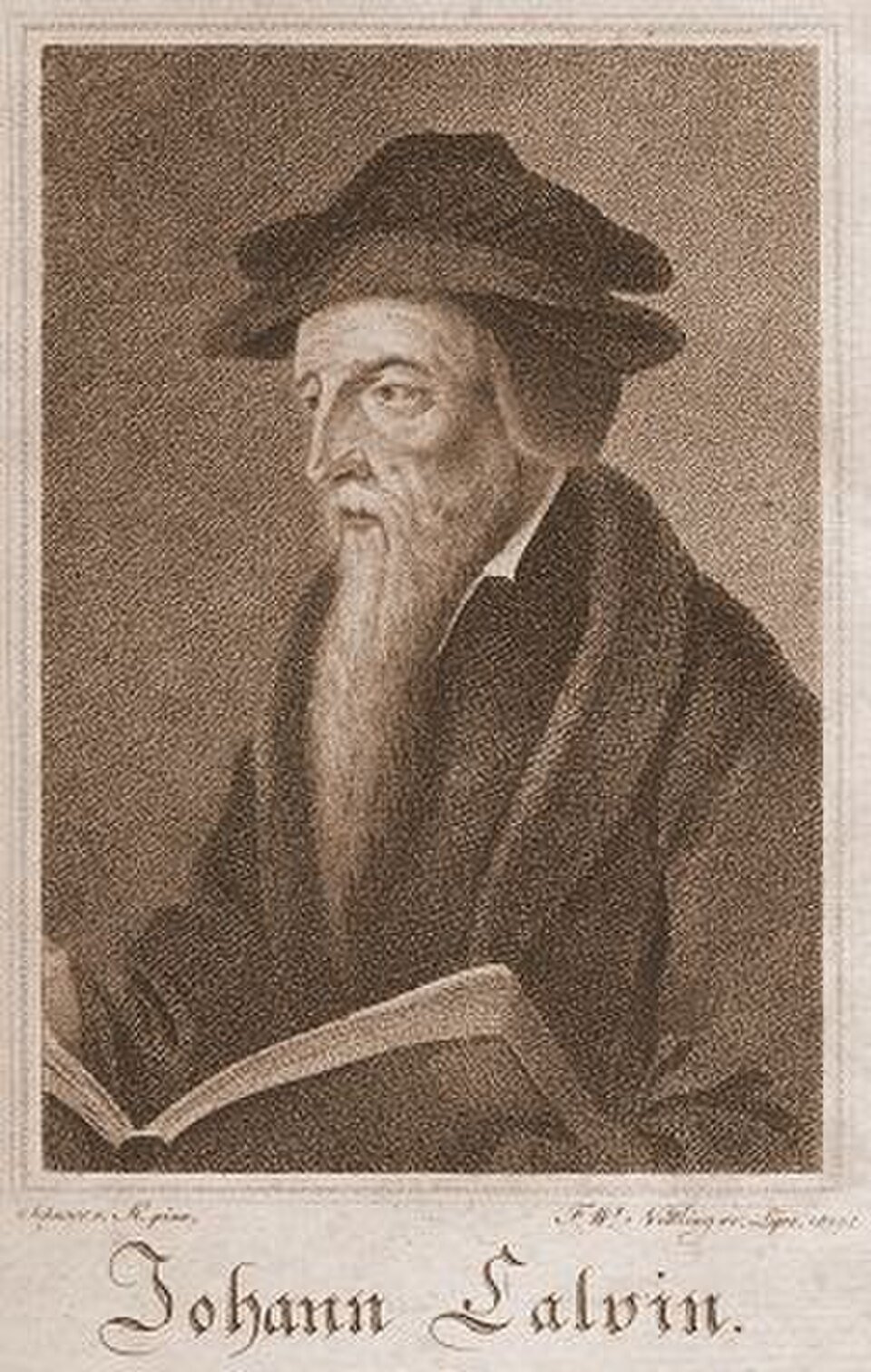
John Calvin opened the Institutes by saying that nearly all wisdom consists of knowing God and knowing ourselves, and that you can’t do one without the other. Delphi’s “know thyself” (see Part 2) says it from the Greek side: Easterners have their own such wisdom. Eckhart says it from the mystic side: “The eye through which I see God is the same eye through which God sees me; my eye and God’s eye are one eye, one seeing, one knowing, one love.”
Humans draw lines because it is convenient, practical, and orderly. However, it’s with the same lines that we exile, neglect, outcast, judge, and oppress. This instinct to categorize and judge across lines comes from within people, always. It is not manufactured ex nihilo.
If the line runs through us, then how we divide ourselves shapes how we picture the Divine: a God of the courtroom for the person who lives in an inner courtroom, a God of pure abstraction for the person who has cut off their body, an easy god that can be controlled; the options are endless. Our theology becomes the autobiography our inner narratives are transcribing.
The Unavoidable Return to Experience
Several pressures converge. A pandemic exposed how thin purely institutional and purely informational lives are. Social fragmentation, technological saturation, and economic precarity make existential questions louder. And the political fusion of religion with partisan identity has pushed many people out. Putnam and Campbell (American Grace) and Hout and Fischer documented that the rise of the “nones” was partly a reaction to the religious right. Religious fervor on one side generated exits on the other. AI advancement and early problems are only increasing nihilism about the future. These things show up in the daily lives of people and influence the culture we live in.
If the interior is calling and institutions can’t answer, one response is to turn up the volume on certainty: a louder identity, a harder boundary, a bigger enemy. Secular rationalism and religious fundamentalism can both function this way. Each offers a sealed system that lets you skip the unsettling work of looking inward. One says the interior is irrelevant, the other says it’s already been settled by authority. (Same structure as the Part 1 tables, different costumes.)
“Whatever things were rightly said among all men, are the property of us Christians… For all the writers were able to see realities darkly through the planting of the implanted seed of the Word [Logos] that was in them.”
— Justin Martyr
The Bible as a Case for Universal Mysticism
First, a definition, because “mysticism” is a slippery word. I mean what Bernard McGinn emphasizes: not just unusual experiences, but a transformative awareness of, and participation in, the presence of God. The Biblical texts assume that the capacity to be addressed by, and to participate in, divine reality is built into being human. Many of the articles on this blog explore how the mystical inevitably leaps off the pages of Scripture. We’ll briefly cover some of them here. If this is old, skip to the Conclusion.
Logos (λόγος)
John 1 says the Logos was with God and was God, and that the true light “gives light to everyone” (1:9). The vocabulary was a shared currency: Jewish Wisdom literature (Proverbs 8, Sirach 24, Wisdom of Solomon 7), Philo’s Logos as intermediary, Stoic logos pervading the cosmos, Heraclitus before them. The nearest background is probably the Wisdom tradition. Either way, John chose a word that Greeks and Jews both already heard as meaningful.
Justin Martyr took the next step in the second century. He argued that a seed of the Logos is present in all people, so that those who lived according to reason, such as Socrates and Heraclitus, were in a sense Christians before Christ.
Phōtizō (φωτίζω)
I covered this in Phōtizō: Getting Out of the Cave, so briefly: the verb means to illuminate or enlighten. It appears in John 1:9, Ephesians 1:18 (eyes of the heart enlightened), and Hebrews 6:4 and 10:32 (those who “have been enlightened”). By the second century, Justin calls baptism photismos. The mysteries also used light imagery. Apuleius’s initiate in Metamorphoses 11 describes seeing the sun at midnight. Christianity didn’t reject the language of illumination. It claimed it.
Mysterion (μυστήριον)
In the Greek of Daniel 2, mysterion translates the Aramaic raz: a hidden thing God reveals. The Dead Sea Scrolls use raz heavily. In the New Testament, it appears just under thirty times, mostly in Paul. Mark 4:11 speaks of “the mystery of the kingdom” given to disciples. In Paul, the mystery isn’t an unsolvable puzzle. It’s a disclosed secret, and the content is shocking: “Christ in you” (Colossians 1:26–27) and Gentiles as fellow heirs (Ephesians 3:3–6). The parallel to the mysteries is real, which fits Part 2.
Paul speaks of wisdom “among the mature” (1 Cor 2:6) and of milk versus solid food (1 Cor 3:1–2). Early Christianity had developmental tiers, not unlike initiation but more like human development. Maturity, or telos, in love was the point. It’s a process of becoming another state of being. Everyone is invited to grow up, and to do so honestly.
Pistis (πίστις)
Covered in Section 1 and in earlier work: faith means trust, not agreement. Paul’s “the life I now live, I live by pistis” (Galatians 2:20) is more than assent and loyalty. There’s an old scholarly debate over pistis Christou (faith in Christ or faith/faithfulness of Christ), and either reading pushes against “faith as mental agreement.” To have faith means to be faithful to. Intellectual agreement is a shallow version, a copycat of actual trust and relationship. A person can trust something they don’t believe, and believe something they don’t trust.
Gnosis & Agnōsia (ἀγνωσία)
Agnōsia appears only twice in the New Testament (1 Cor 15:34, 1 Pet 2:15), both times in a negative sense: ignorance. The Bible does not shy away from knowing either. Knowledge (gnosis) and relationship are on every page of the New Testament. In truth, knowledge expands awareness of areas of unknowing. The more one knows, the more one’s awareness of the unknown becomes possible.
In apophatic traditions, “unknowing” as the highest knowing was developed by later writers. Some of the biblical anchors were:
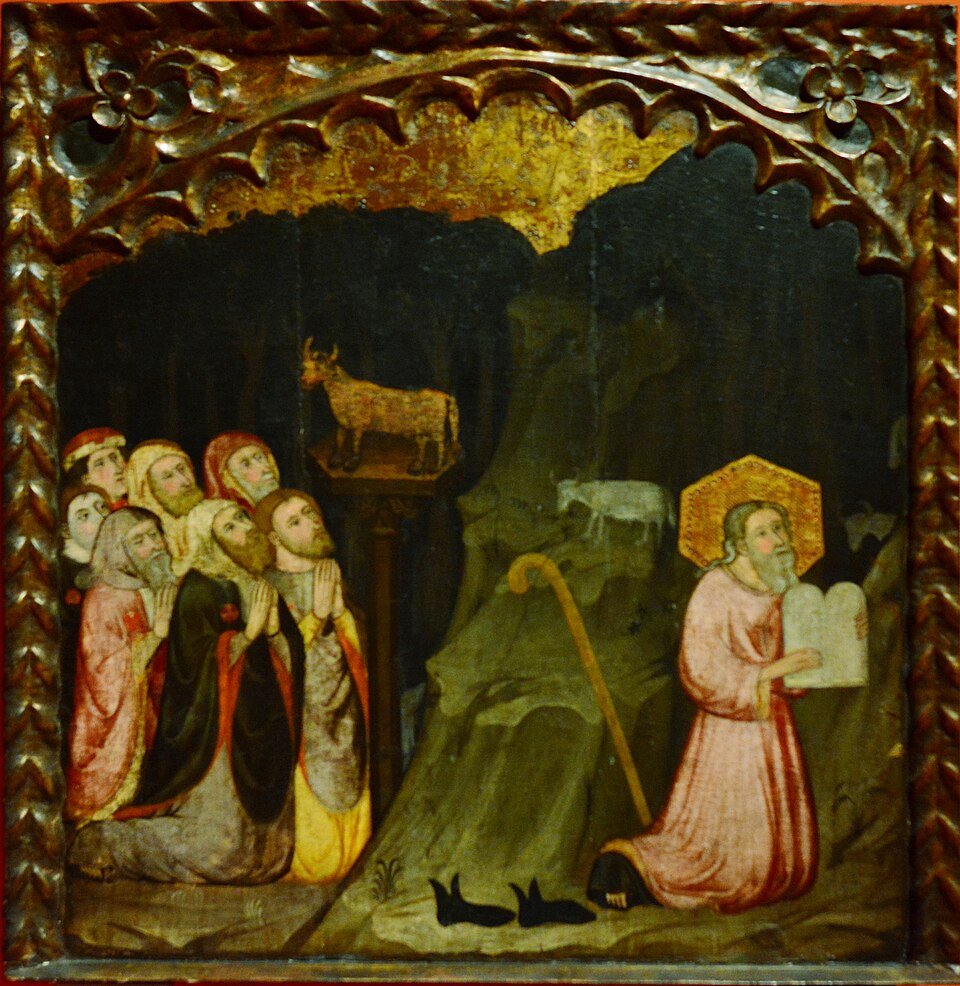
- Moses entering the thick darkness (Exodus 20:21) and seeing only God’s back (33:18–23)
- Elijah and the “sound of sheer silence” (1 Kings 19:12)
- “Truly you are a God who hides himself” (Isaiah 45:15)
- The unsearchable depths of Romans 11:33
- Peace that surpasses understanding (Philippians 4:7)
- Knowing “the love of Christ that surpasses knowledge” (Ephesians 3:19), a paradox in a single phrase
Gregory of Nyssa, a bishop from the 370s until he died in 394 AD, read Moses’s ascent as endless progress into luminous darkness, drawing on Paul’s “straining forward” in Philippians 3:13 (epektasis).
“This truly is the vision of God: never to be satisfied in your desire to see him. But rather, what we should hope for is this: to be continually desiring him as we go up, and by our desires to see him ever more invisibly.”
— Gregory of Nyssa
The kingdom within and among us
Luke 17:21 says the kingdom is entos hymōn. The Greek can mean “within you” or “among you” (in your midst). Scholars divide, and the context (Jesus was speaking to Pharisees) favors “among.” The Gospel of Thomas (saying 3) says the kingdom is both inside and outside you. I’d argue the translation fight is itself a clue: the question assumes you must choose between interior and exterior, and the Text declines. God is one.
The New Testament is not shy about using the word “all” (pantas). Several texts press toward all: John 1:9 (every person), John 12:32 (draw all), Colossians 1:19–20 (reconcile all things), 1 Timothy 2:4, Titus 2:11, 1 Corinthians 15:28 (God “all in all”). There are counter-texts (Matthew 25:46, Revelation 20:15), and the doctrine of final outcomes is contested. My claim here concerns the scope of the capacity for participation, not a guarantee of outcomes.
Dissolved divisions
Covered in Part 2’s footnote. The addition here: Paul’s “no male and female” echoes Genesis 1:27, and the baptismal formula suggests this was a practiced ethos of the early communities, not just rhetoric.
Paul in Athens is the Bible’s own case study in cross-cultural mysticism. He starts from their altar to an unknown god and quotes Greek poets (the line “we are his offspring” comes from Aratus’s Phaenomena). He says people seek God, “perhaps grope for him and find him,” and that God is “not far from each one of us.” The verb for “grope” is the one used for feeling in the dark. Paul names what many were feeling. Verse 34 ends with a convert named Dionysius the Areopagite (the irony of his name should not be lost). Centuries later, an anonymous Syrian author took that name for the writings we now call Pseudo-Dionysius. The circle closes on itself.
Gentiles without the Law do “by nature” what the Law requires, with conscience (syneidēsis) bearing witness. Romans 1:19–20 says God’s nature can be perceived through what has been made. Both passages assume that moral awareness and awareness of God exist outside explicit possession of Scripture. That’s one short step from a closed system.
Some Traditions that Kept Mysticism Alive
- Clement of Alexandria wrote of the true gnostikos, the mature contemplative Christian, and argued that Greek philosophy was a tutor for the Greeks as the Law was for the Jews.
- Pseudo-Dionysius gave Christianity its most influential apophatic framework. He also designed a rigid hierarchy of angels, bishops, priests, and deacons. The same corpus produced radical unknowing and strict mediation. Mysticism and institution aren’t opposites. They can be fused.
- Maximus the Confessor (c. 580–662 AD) developed a vision of humanity’s participation in the divine. He also opposed the Byzantine emperor’s doctrinal compromise (Monothelitism). After years of trials and exile, his tongue and right hand were cut off in 662. A great theologian was mutilated by imperial authorities over doctrine. If you want a one-person summary of this whole article, Maximus is it.
- Meister Eckhart pushed apophatic theology to the limit, even praying to be rid of “God,” meaning the concept he had mistaken for God. We can make an idol of anything, including our idea of God.
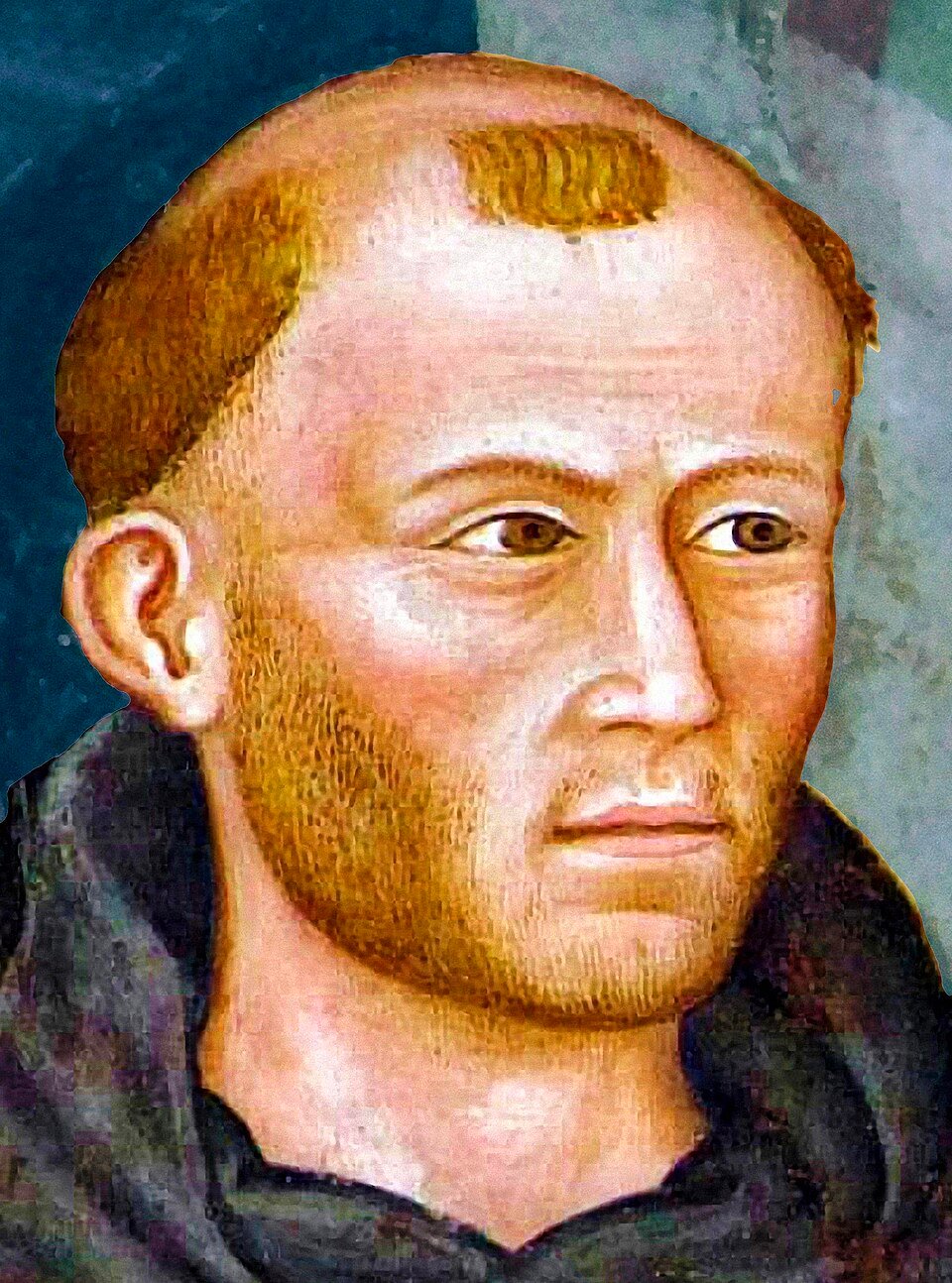
Pull the threads together:
- The East–West line is historically porous. Greek thought was built with Near Eastern and Indian parts (Part 2). Christianity began as a Middle Eastern movement and spread east as readily as west. The map was drawn later.
- The same line is reproduced inside people and societies. Institution versus experience, certainty versus openness, narrow focus versus wide context: these are fault lines in a single human being before they are disputes between civilizations.
- Neither institutional certainty nor skeptical rationalism resolves it. The first fuses with power and polices the interior. The second walls off the interior and calls it irrelevant. Both can serve as avoidance.
- We can’t outsource our relationship with reality, other people, or the Divine. We can borrow maps, and we should. Texts, traditions, teachers, and communities are not the enemy. But the territory has to be walked by the one doing the walking.
- The work needs both intellectual honesty and experiential participation. Honesty without participation produces cleverness. Participation without honesty produces credulity. Together they produce something closer to wisdom, and wisdom is a good thing to get in return for giving up a few certainties.
This was never really an academic argument about which civilization deserves credit for spirituality. It’s a human situation we all have to navigate whether we acknowledge it or not, and the fact that more people seem to be acknowledging it now is the most hopeful thing in this whole story.
Participation in divine reality is part of the biblical understanding of being human. Perhaps the third awakening can be the charm.
“Some people want to see God with their eyes as they see a cow, and to love Him as they love their cow… The person who is in union with God seeks nothing for themselves, neither honor nor profit nor comfort nor devotion nor holiness nor reward nor heaven.”
— Meister Eckhart
Footnotes (& Leftovers)
- The 313 arrangement between Constantine and Licinius survives in Lactantius and Eusebius as a letter/rescript. Many historians prefer “Milan agreement” or “Milan rescript.”
- Optatus’s attribution of the Donatus line comes from an opponent, not from Donatist sources.
- Cunctos populos (380 AD) was addressed to the people of Constantinople. Its reach across the empire came through later legislation.