Table of Contents Show
“Mystery is not something you cannot understand; it is something that you can endlessly understand. There is no end to it.”
— Richard Rohr
The biblical tradition repeatedly moves divine encounter away from exterior performance and toward interiority, relationship, and transformation. The New Testament’s use of “mystery” and “secret place” gives us a window into the hidden places where God continually discloses Himself.
In Matthew 6:6, in contrast to public displays and performative prayer, Jesus instructs “when you pray, you must not be like the hypocrites. For they love to stand and pray in the synagogues and at the street corners, that they may be seen by others. Truly, I say to you, they have received their reward. But when you pray, go into your room and shut the door and pray to your Father who is in secret. And your Father who sees in secret will reward you.”
The instruction of praying in secret is returned with the promise of God seeing and rewarding in private. While Jesus specifically means praying in seclusion, away from others—a geographic reality—the practice points beyond geography toward an interior reality: the place within us where we stop performing for others and become fully present to God.
What’s A Secret Place?
In Greek, “in the secret place” is en tō kryptō. The phrase itself simply means “in secret” or “in the hidden place.” But the biblical imagery surrounding hiddenness repeatedly overlaps with the language of shelter, refuge, the heart, and the inward person. That gives us a richer theological picture than geography alone. God who dwells in the heights of heaven and depths of Sheol also reigns in the space between neurons.
Ancient people, both in Jesus’ time and in ancient Israel, would have related to the image of walled cities and guarded palaces. Where wars and battles could reset a geopolitical reality every generation, security from outside enemies was a common necessity.1
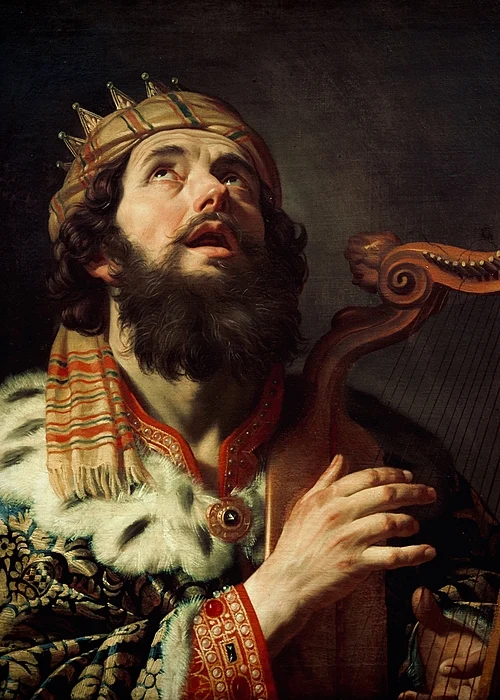
As a psalmist, King David would have a bit of a different take on the imagery, being called to be a priestly, serving king. As a man, he was both modeling his faith and inviting his people to enter the same Presence he had.
Another place is Psalm 27, where it uses both the idea of the Tabernacle (“the cover of his tent”) and walled cities (“his shelter”) together as illustrations for where God’s peace and protection really meet us: it is never out there, in our external circumstances, though God does work with and through those. It is always and only when humans actually trust and surrender to the Divine.
“For he will hide me in his shelter
— Psalm 27:5
in the day of trouble;
he will conceal me under the cover of his tent;
he will lift me high upon a rock.”
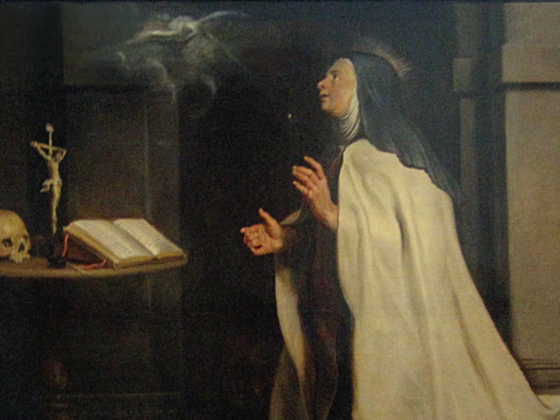
Biblically, it is the Imago Dei each human is born into. Christian contemplatives have long recognized in Jesus’ teaching a reality that modern psychology describes in different terms. St. Teresa of Avila called it the inner castle. Sometimes we consider it our heart; in Internal Family Systems and other therapeutic models, it’s called the Observing Self. In meditation and therapy, participants can enter a “self energy” state, which resembles meditative states and other spiritual practices. All of that to say, it’s a real thing.
Every human, as images of God, contains this mysterious place: it’s the inside of ourselves that no other human eye can directly look into. The secret place inside us is where mysteries are revealed, where God’s Spirit breathes through, and where transformation works from the inside out: sort of like the good version of Inception.
“Secrecy is the discipline through which we abstain from causing our good deeds and qualities to be known by others… In secrecy we abstain from letting people know about our good deeds, prayers, or virtues, and we experience the freedom of acting solely for the eye of God.”
— Dallas Willard
The Philosophers on the Mysteries
Mysteries are those things we don’t understand, that confound us, or we simply were ignorant of before, and are suddenly revealed to us. It’s like those uncomfortable conversations when someone points out a pattern we never realized we have been doing, or when someone invests something meaningful into us that we can no longer be the same. People in recovery have to become accustomed to the little epiphanies where we understand ourselves better, despite not liking what we see in the mirror.
Ancient thinkers had ample thoughts on the concept of mysterion. Around the Mediterranean Sea, there had existed for thousands of years temples and cultic systems that offered services, teaching, and healing for certain elements. In recent decades, dating back to Carl Jung’s study of the psyche, shamanic and subconscious healing has not only been well studied, but there are also evidence-based healing centers that use the very techniques ancient shamans and traditions had developed over hundreds of years of practice.2
Aristotle famously noted that those initiated into the Eleusinian mysteries3 “are not supposed to learn anything, but rather to experience something and be put in a certain disposition.” For Aristotle, the mystery was not primarily about acquiring secret information, but about undergoing an experience that changed one’s disposition. It was about transformation, not just information.
Lucretius, an Epicurean poet and philosopher who died around 55 BC, despised mystery cults, particularly those of the Magna Mater (Cybele, the “Great Mother”). In his masterwork De Rerum Natura, he argued that mystery religions and the fear of the gods were mechanisms of human bondage. He sought to debunk the mystical with rational atomic materialism, viewing the ecstatic frenzy of the cults as dangerous superstition.4
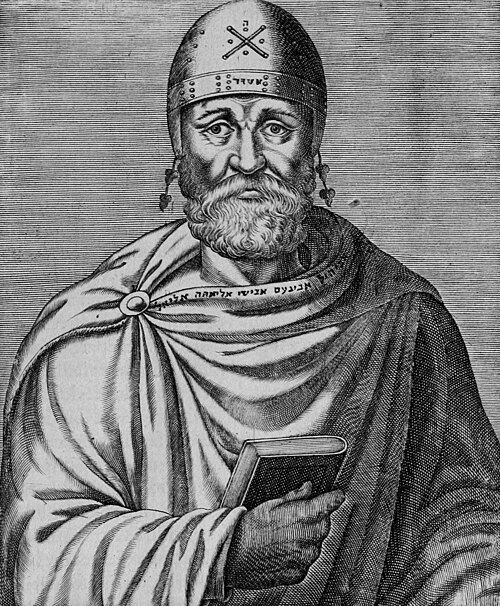
Philo, a Hellenistic Jewish philosopher writing just around the New Testament, also condemned pagan mystery cults and also used the language of “mystery” in articulating his Jewish theology. He spoke of the “Great Mysteries of Moses,” using the language of initiation to describe the soul’s allegorical ascent to God. Christian writers used mysterion as a vehicle for first descent, then ascent to union with God.
Our secret place is not an escape from reality; it is where we enter and have a first-hand experience with the ultimate reality of God’s present kingdom. In solitude and private practice, we learn to stop performing, grasping, producing, hiding, and pleasing people, to simply be our naked self before God. In relationship, we learn to walk and participate in such a reality together.
“The Christian life, true spirituality, can never be seen as a set of external rules… The Christian life begins in the internal realm—in the mind and in the heart. If it does not exist there, it does not exist at all, no matter how impressive the external performance may be.”
— Francis Schaeffer
Mysterion in the New Testament
“When Paul talks about ‘the mystery’, he doesn’t mean something secretive, reserved for a small elite of initiates… He means the divine secret, hidden for long ages, which has now been openly published and made known to the world.”
— N.T. Wright
When Jesus was walking around Israel, His primary topic was the Kingdom of God. As He teaches about it, He’ll refer to the full realization of His teachings as “mysteries,” things that can be understood but usually take work. This is one of the primary reasons Jesus used parables. There is a clear distinction between spatial/inward hiddenness and revealed secrets.
In the Greco-Roman world, a mystērion was a guarded cultic secret reserved for initiated members. The New Testament subverts this concept by flipping it right-side up and open-sourcing it. Rather than functioning as esoteric knowledge reserved for an initiated few, the New Testament repeatedly uses mystērion for divine purposes once hidden but now publicly disclosed in Christ.
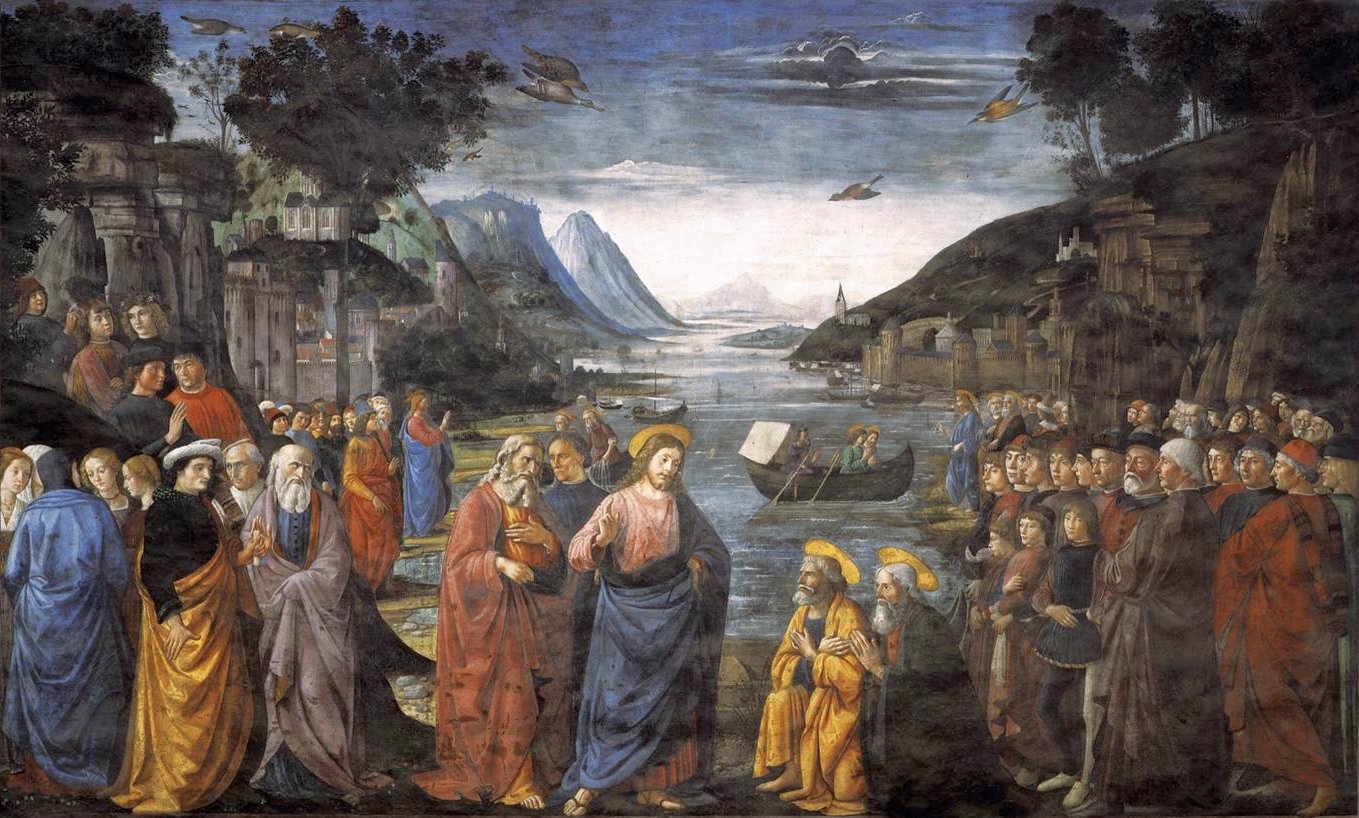
In the Septuagint’s Daniel 2, mystērion appears several times (vv. 18, 19, 27, 28, 29, 30, 47) in relation to Nebuchadnezzar’s dream. Verse 22 emphasizes that God reveals “deep and hidden things” (cf. Deuteronomy 29:29), and in verse 28, Daniel tells the king, “There is a God in heaven who reveals mysteries (mystēria).”
In the Synoptics, mystērion appears only three times in the Gospels (Matthew 13:11, Mark 4:11, Luke 8:10), each referring to the “mysteries of the kingdom.” Jesus is said to have spoken plainly about these secrets to His disciples, not as a Gnostic elite, but as a foundation for what will eventually be preached to the ends of the earth. While the general population may not have understood the full mystery, parables served as profound teachings that guided people towards it.
Paired with the term “gospel,” which effectively hijacked Roman terminology5 while also bridging Jewish Scriptures, the Gospels were a declaration of full access to the Divine for the entire world. Its declaration, narrative, and tools were all found in a single man who was that which every human aspires to become: fully alive, free, and wholly one with the Divine. In other words, just as Jesus has been called the Hypostatic Union, fully God and human, so can anyone be, if they are willing to trust Him.
In his epistles, Paul uses mystērion 21 times to declare the mystery on the move, spreading throughout the Roman Empire as little bottom-up kingdoms, not built on a top-down Noble Lie6, but on a bottom-up reality that could never go away. For Paul, the scandalous inclusion of the Gentiles into God’s covenant was the mystery they didn’t see coming (Ephesians 3:6). The indwelling of the divine in humanity, “Christ in you, the hope of glory” (Colossians 1:27). Paul serves as the ultimate anti-mystagogue. Instead of guarding the secret, he is commissioned to announce it to everyone.
“…to make the word of God fully known, the mystery hidden for ages and generations but now revealed to his saints. To them God chose to make known how great among the Gentiles are the riches of the glory of this mystery, which is Christ in you, the hope of glory.”
— Colossians 1:25b-27
Revelation uses mystērion four times, as with the mystery of the seven stars and Babylon, to denote divine symbols that require wise interpretation. This is worth noting: while there is the singular Mystery, there is also the reality of smaller mysteries, each unfolding under the ultimate reality of the Divine rather than human will, thinking, or earning.
Restoring our Hidden Places
The Greek phrase en tō kryptō (ἐν τῷ κρυπτῷ) means “in the hidden place” or “in secret,” and it’s paired with other terms that refer to places where people would hide valuables, like grain or gold.7 These words are not simply synonyms, but together outline a biblical concept of hiddenness and personal revelation. Our hidden place and a mystery aren’t the same thing: the former just takes place within the latter, until they too become one. Throughout the biblical corpus, imagery and narrative are consistently used to contrast our hidden, inward reality against the outward one on public display (en tō phanerō). Jesus uses it three times in Matthew 6 about giving, praying, and fasting “in secret.”
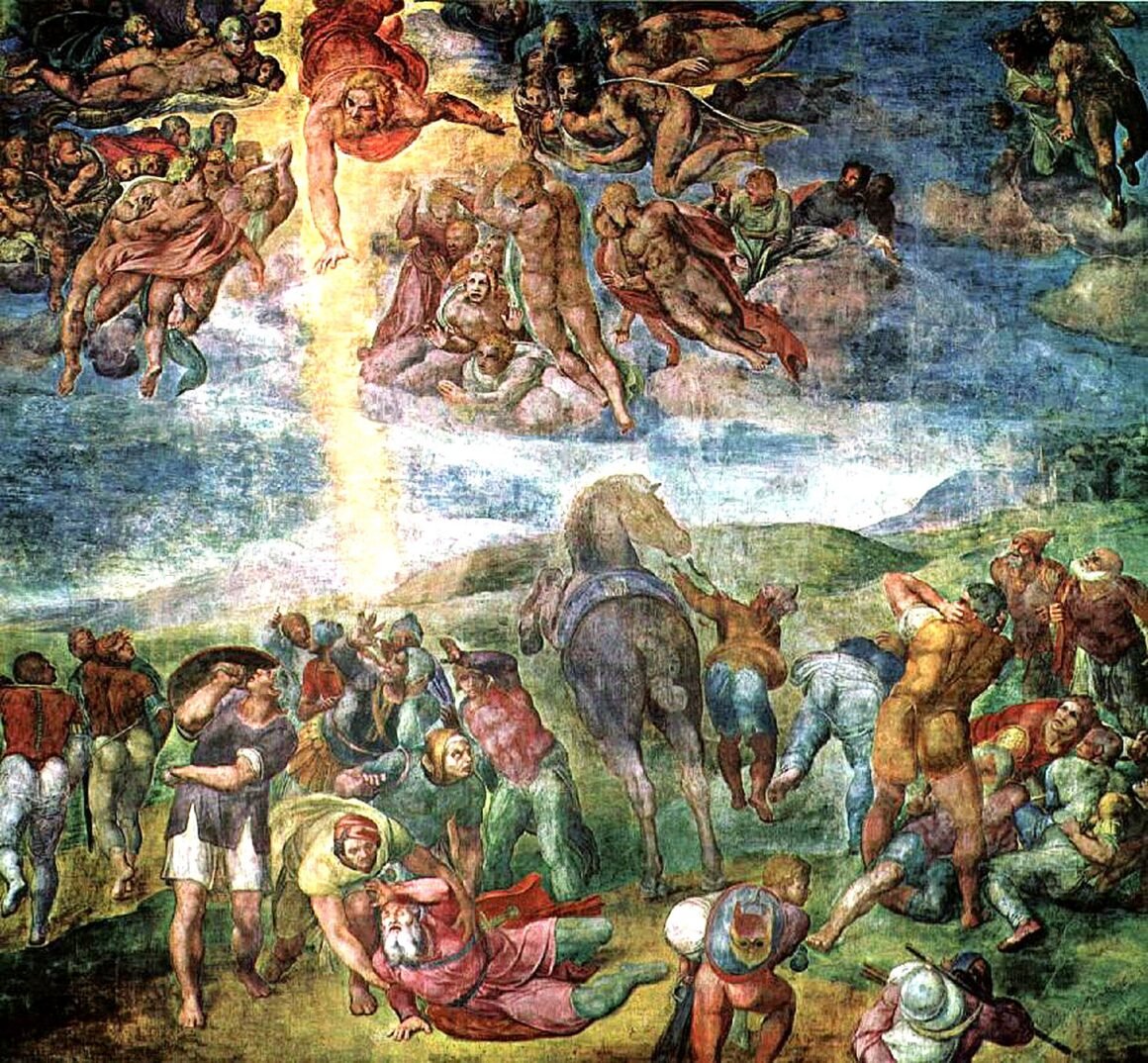
The Apostle Paul takes the language of hiddenness inward to define spiritual identity: “But he is a Jew who is one inwardly (en tō kryptō), and circumcision is a matter of the heart” (Romans 2:29). If circumcision can be experienced inwardly, apart from the external mark, then God’s salvation cannot be reduced to what is visible on the outside (1 Samuel 16:7). In 1 Corinthians 4:5, Paul promises God “will bring to light what is hidden in darkness and will disclose the purposes of the heart.”
Paul makes the movement from mystery to interior transformation explicit elsewhere: he prays that believers “may be strengthened with power through his Spirit in your inner being,” that “Christ may dwell in your hearts through faith,” and that they may ultimately be “filled with all the fullness of God” (Ephesians 3:16–19). The mystery isn’t merely something we learn. It becomes something that takes up residence within us.
1 Peter 3:4 also instructs us to “let your adorning be the hidden person of the heart with the imperishable beauty of a gentle and quiet spirit, which in God’s sight is very precious.”
Where some ancient religious and political systems used secrecy to preserve hierarchy or restrict access, the biblical tradition repeatedly moves in the opposite direction: what is hidden by God is ultimately revealed, and what is revealed becomes available for participation. The secret place transforms into a direct, personal, and universal meeting point between human identity and God (1 Corinthians 3:16).
“The Temple was always understood to be the place where heaven and earth met… For Paul, the dwelling of God’s Spirit in individual believers and in the community together means that they themselves are now that temple—the sacred overlap of God’s space and ours.”
— N.T. Wright
Stepping Back Into 2026
Jesus and the New Testament broke open the mysteries of God 2,000 years ago, teaching that these truths would take time to unfold throughout history, and that each generation could build upon what had already begun.
This mystery was fully embodied in the person and work of Jesus, accessible to anyone willing to trust its depth: “For by grace you have been saved through faith. And this is not your own doing; it is the gift of God, not a result of works, so that no one may boast.”
From Deuteronomy 29:29 to the fulfillment of Joel 2:29 on the Feast of Pentecost, the mystery of Christ, the Spirit, and God has never ceased to move behind borders, beyond human constructs, and in the shadows of our neon signs.
It is ultimately encountered when we learn to surrender to the Divine. God’s work reaches the world through transformed people, and that transformation always begins in the hidden, unexposed places of human existence.
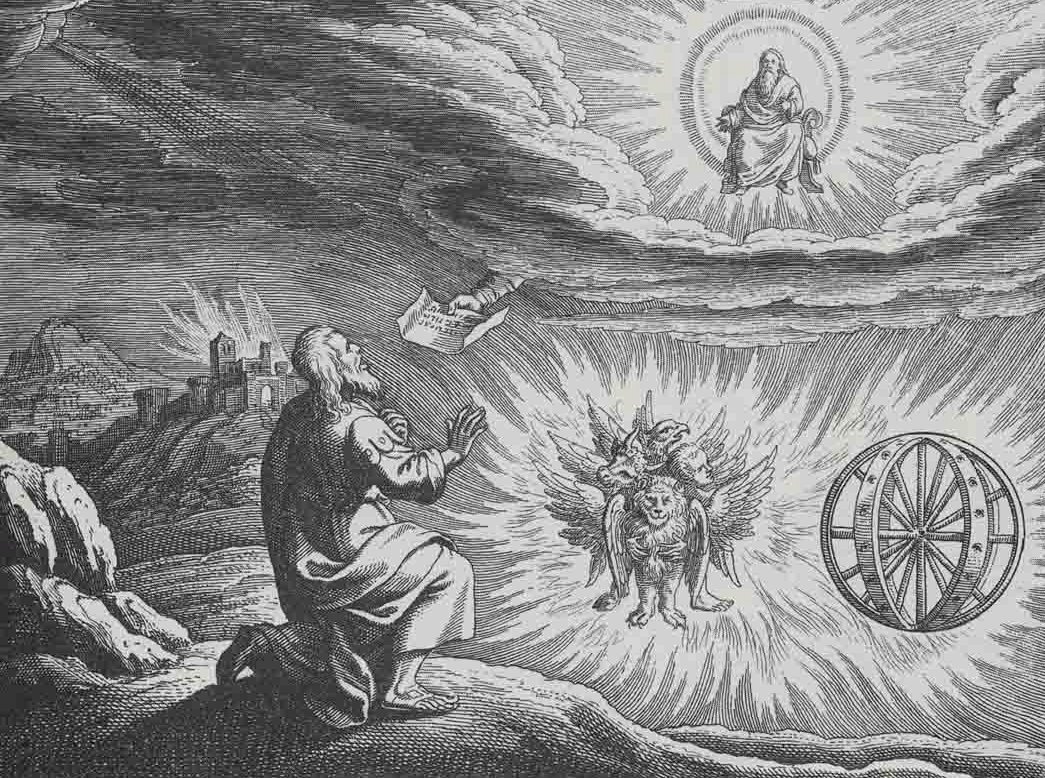
The prophets envisioned a time when the Spirit would dwell inside every human, writing the Law directly onto the heart. This is an ontological shift; it fundamentally alters our posture toward the world, reshaping everything from our speech and behavior to our underlying disposition.
Technology, civilization, and social structures become secondary human extensions. Creation—and our place within it—remains the primary baseline we were called to steward in union with Him (Genesis 1:28).
All that ever separates humanity is fear and ego.
Last updated: 9/1/2026
Footnotes:
- The biblical narrative consistently subverts the ancient reliance on physical fortifications for security. In Zechariah 2:4–5, the prophet envisions a future Jerusalem as a “city without walls” because God Himself will be a “wall of fire around it.” This prophetic imagination culminates in Revelation’s vision of the New Jerusalem descending to Earth (Revelation 21–22). The ultimate city of God is defined by radical accessibility and restoration: its gates are never shut (Rev. 21:25), and its center holds the tree of life for the “healing of the nations” (Rev. 22:2). True, eternal security is framed not as a geopolitical fortress, but as the unhindered presence of God open to all. ↩︎
- Carl Jung argued in Memories, Dreams, Reflections that possessing a personal “secret”—an unmediated, interior experience of the unconscious that is not owned or regulated by the collective—is a prerequisite for psychological individuation. Without an unshared inner sanctuary, the individual remains merely an extension of mass social conditioning. ↩︎
- Initiates of the Eleusinian mysteries were bound by a strict legal code under pain of death never to reveal the ineffable, unspoken rites. The early Church paradoxically adopted the same term while completely reversing the civic requirement: Christian “initiates” were commanded to go out into all the world and proclaim the revealed mystery from the housetops. ↩︎
- The Greek Dionysian mysteries, known in Rome as the Bacchanalia, migrated into Italy through Greek colonies in the south and Etruria around 200 BC, and became wildly popular. The Roman Senate attempted to crush them through state terror. Rome executed thousands in 186 BC (Senatus consultum de Bacchanalibus). However, the Senate quickly realized that attempting to completely exterminate a highly popular movement was politically dangerous and impossible to enforce. To neuter the threat, the Senate enacted strict regulations rather than a total ban. Over the following decades, the state successfully absorbed the sanitized version of the cult into its own pantheon. It is a classic defense mechanism of empire: when an institution cannot destroy a movement of authentic inner awakening, it attempts to domesticate it. ↩︎
- The word euangelion (“good news/gospel”) was standard Roman imperial propaganda used to announce the birth, ascension, or military victories of the Emperor (e.g., the Priene Calendar Inscription of 9 BC calling Augustus’ birth the “beginning of the good news”). When NT writers applied euangelion and mysterion to a crucified Galilean peasant, they were making a subversive political and cosmic claim that true sovereignty belonged to an inverted, bottom-up kingdom. ↩︎
- In Plato’s Republic, a Noble Lie is a fabricated myth (the “Myth of the Metals”) engineered by the philosopher-kings to ensure civic stability. It taught citizens that their social status, whether ruler, warrior, or worker, was divinely predetermined and inescapable. ↩︎
- The terms for “secret place” (en tō kryptō and tameion) were not abstract theological concepts to an ancient audience; they were rooted in lived reality. A krypte was an underground vault or hiding hole used to stash grain, oil, and gold from thieves, while a tameion referred to a private inner storeroom or lockbox where personal belongings were kept out of sight. Contrast this with eremos, a physically secluded wilderness. When Jesus used these words in Matthew 6, He wasn’t relying on high-flown philosophical language; He used a gritty, everyday metaphor to illuminate how the architecture of human consciousness operates the same way. ↩︎
& Leftovers: The Bactrian Melting Pot
Simply being aware of Bactria helps refine our understanding of the complex melting pot that was the first-century Near East. The Gospel was not birthed in the heart of Rome, but in Israel, where Egyptian, Bactrian, and other Eastern empires had influenced their environment for longer than Rome had existed.
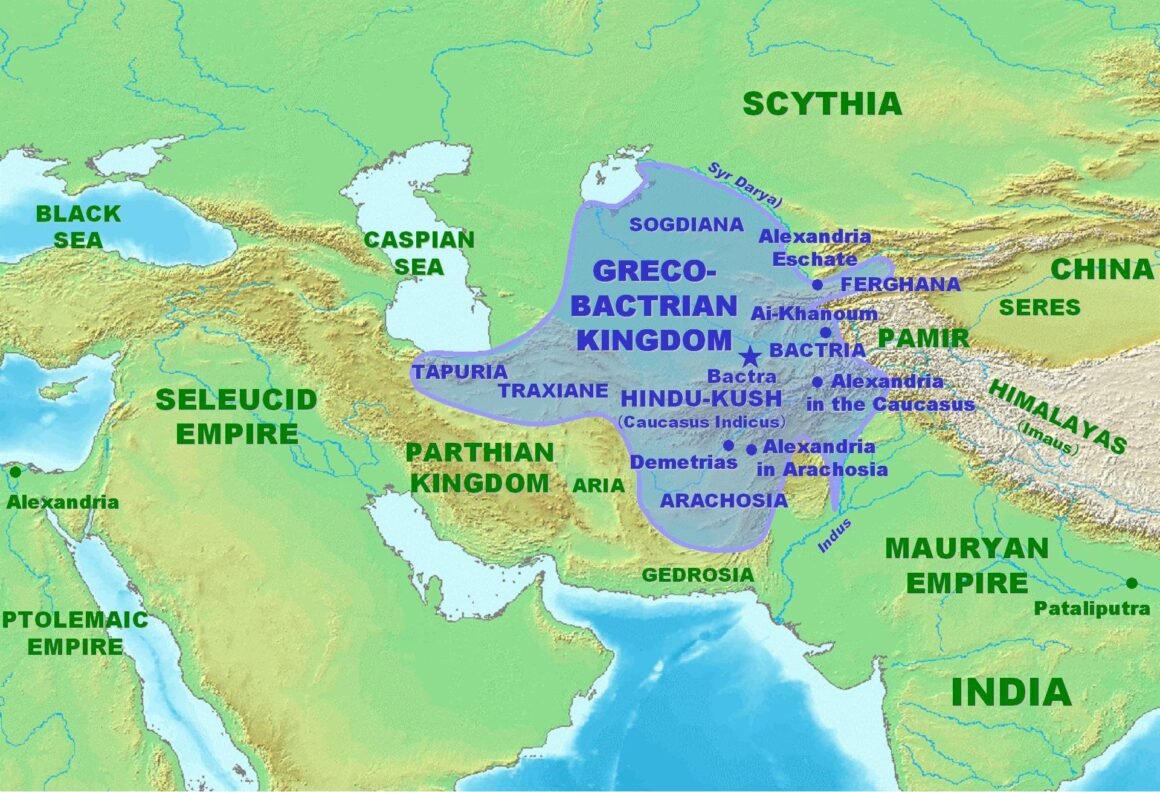
Before 1 AD, the Silk Road network across Eurasia was active, and Central/South Asia had already experienced centuries of cross-cultural exchange. Following Alexander the Great’s conquests, the Greco-Bactrian kingdom and later the Gandharan region became one of the greatest cultural melting pots in history, blending Hellenistic culture, Zoroastrianism, and Buddhism.
If a Greek traveler in Bactria spoke of a mysterion, the Buddhist philosophical equivalent would translate primarily as Guhya (Sanskrit for “secret” or “hidden”) or Rahasya (mystery/secret doctrine).
As these cultures collided, Buddhism had developed its own esoteric traditions, leading up to Mahayana sutras, which introduced the Bodhisattva path focused on compassion for all beings over individual monasticism. Similar to the Greco-Roman mystery cults, these traditions relied on Abhisheka (“initiations”) and secret transmission through texts like the Guhyasamāja Tantra (The Secret Assembly), meant only for those properly initiated by a master.
Unlike the Greco-Romans, Eastern traditions went inside of the person, instead of simply treating the outside of a vessel; Buddhism focused on interior structure and contents with mindfulness, breaking attachments, and living by the Eightfold Noble Path. It was a bottom-up system.