Table of Contents Show
“Grace is not opposed to effort, but to earning.”
— Dallas Willard
In its original context, Ephesians 2:8-9 shifts from an avoidance-of-hell mindset to an invitation out of the matrix of human cycles. Salvation restores the capacity to fully participate in reality through love, integration, freedom from destructive attachments, and a life aligned with God’s purposes.
Ephesus’ Imperial Exchanges
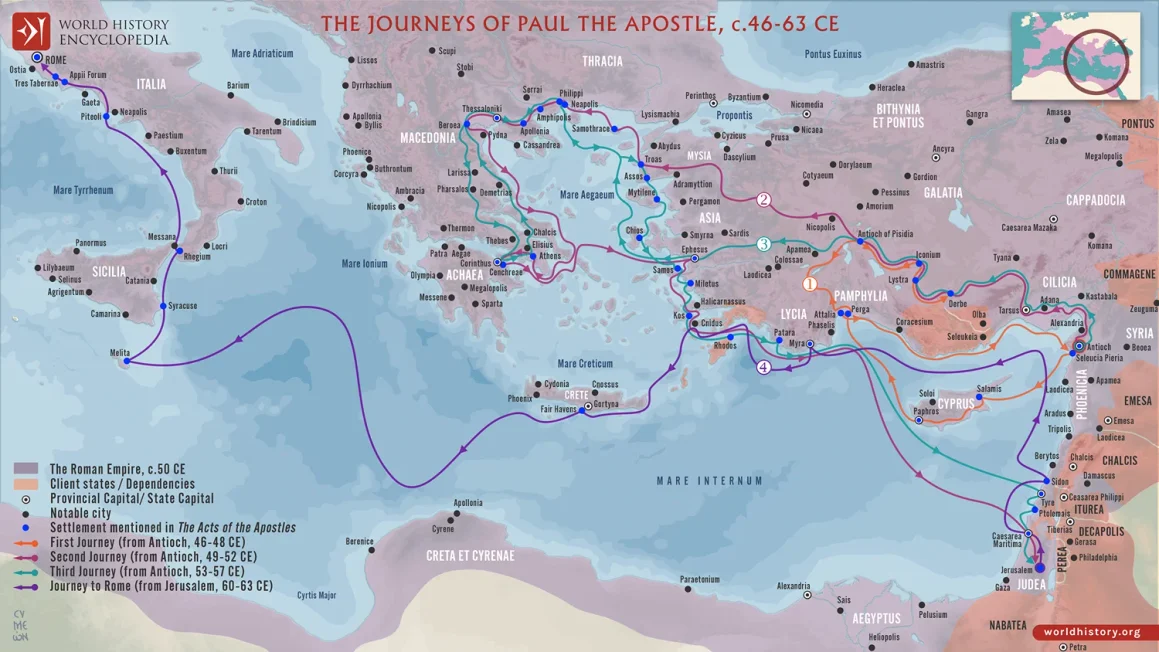
The city of Ephesus was one of Rome’s biggest cities, rivaling Alexandria and bigger than Antioch. It was on the western coastline of modern-day Turkey, facing the Aegean Sea, with Greece on the other side behind the curve of the Earth.
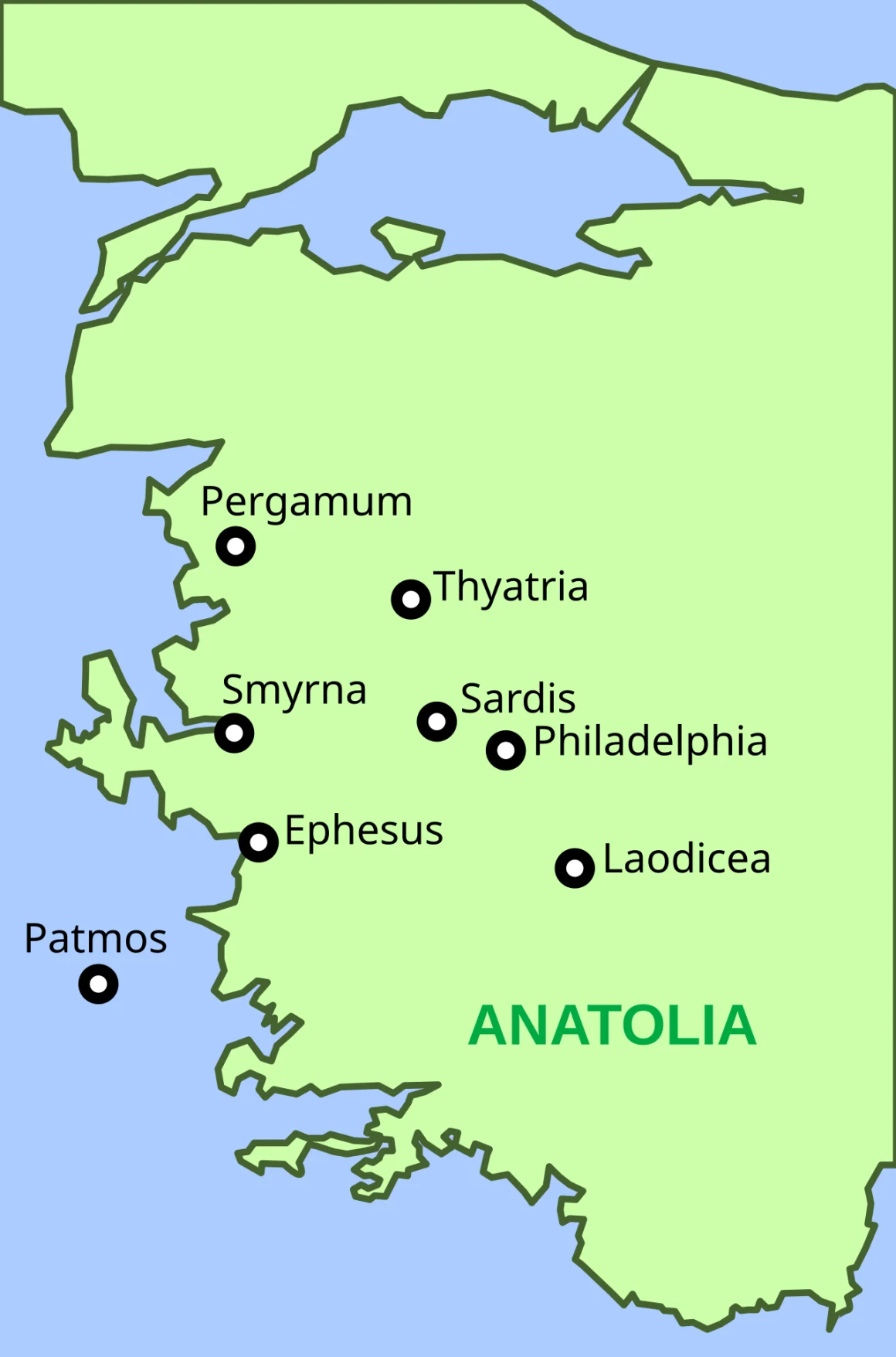
Perched on an elevated plateau steeped in Trojan myth, Asia Minor was a perpetual conquest target. Historians no longer debate if the war of Troy happened, just exactly what happened. While Homer’s Iliad didn’t exactly happen as narrated, more of it has been true than we once thought 20 years ago.
A parade of empire-builders marched through Ephesus: Alexander the Great liberated it (or so the city came out shooting to greet his arriving army), Persian satraps taxed it, Mithridates turned it into a bloodbath, Sulla extorted it, and Mark Antony used it as a lavish staging ground for his disastrous fling with Cleopatra before Octavian finally turned it into a Roman cash cow.
Every single one of the aforementioned leaders made claims to being children of God, including Cleopatra. Jesus showed up claiming not the soiled title of Divi Filius (“son of god”) but of the Son of Man. The early Jesus movement was not a safe, domesticated religion, but a counter-imperial subversion.
In The Chronicles of Narnia, humans are called “Sons of Adam and Daughters of Eve.” It’s similar to that. “Son of Man” is a title for humanity. Ezekiel was called a Son of Man over 90 times, and the pagan Balam prophesied, “God is not a man, that he should lie; neither the son of man, that he should change his mind” (Numbers 23:19). Jesus did not merely replace the emperor’s divine title with a more human one. The proclamation of Jesus reconfigures power, allegiance, and what it means to rule.
Augustus for Rome, Alexander for Greece, and Xerxes for Persia were just some of the recent demigod kings who employed emperor worship and the doctrine of divine right of kings. While the tyrants before claimed to be born of a god1, Jesus brought the Kingdom back down to Earth, good will to all humanity, and peace back to people. He was the inverse of the rulers before Him and the reason no kingdom would ever be able to take His throne away.
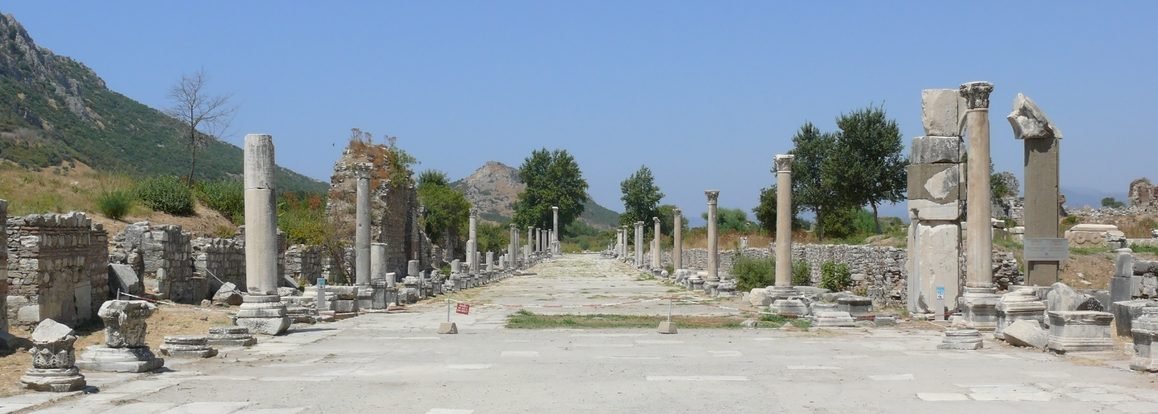
Around 52–56 AD, during the Apostle Paul’s extended stay in Acts 19, Ephesus was at the height of its economic, political, and cultural influence. Living under the relative peace of the early Roman Empire (Pax Romana), it was called “The Gateway to Asia” and was widely considered the second- or third-most important city in the Mediterranean world, alongside Alexandria and Antioch. The Temple of Artemis was one of the Seven Wonders of the Ancient World, anchoring the Ephesians’ economy, banking, and religious life. Its library, the Library of Celsus, built in the second century, may not be as famous, but it was on par with Alexandria’s.
When Paul got there, a lot happened (Acts 18:19–19:41; 20:17–38). Later, the Apostle John sunk roots in the same area. Ephesus quickly became a strategic hub for early Christianity.
When Paul writes the book of Ephesians, he’s writing from house arrest in Rome. His audience is a mix of Ephesian Jews and Gentiles who were practicing following Jesus together. And “Gentiles” were not just Greco-Romans but rather any ethnic and local variation. It was a catch-all term for non-Jewish ethnicity. While Jews made up roughly 10% of the Roman Empire, still a minority in a world where they had no political power, Christianity was nothing more than a wanna-be Jewish startup sect.
Ephesians 1: A Tale of Two Gospels
Paul attempted to do something most sane people never would try: make two different groups of people with different religious and political backgrounds get along. As one of his last letters…
“Paul taught gentile Christians to stand like a rock for their liberty in Christ, as he did in the letters to the Galatians and the Romans, [while] he did not want them to be prejudiced against their Jewish fellow Christians but to regard them as brothers in Christ.
Paul did not want to see two churches, a Jewish church and a gentile church, but one church: Jews and Gentiles one in Christ.”
— Halley’s Bible Handbook
Paul reminded Gentiles continually, as in other places, that their faith had Jewish roots. Ephesians is no different.
In general, chapter 1 is positive. Paul opens with his normal introduction, blesses them, and thanks God for the blessings they share. Verses 13 and 14 are worth highlighting for Ephesians 2:
“In him you also, when you heard the word of truth, the gospel of your salvation, and believed in him, were sealed with the promised Holy Spirit, who is the guarantee of our inheritance until we acquire possession of it, to the praise of his glory.”
We’ve found, directly carved into the gates and monuments of Ephesus and other nearby cities, the word “Gospel” that well predates the birth of Jesus. Compare this line to an inscription found just down the road from Ephesus at Priene, and it makes it clear that Paul and a small band of Christians were playing with fire in more ways than one. The Priene Calendar Inscription, dated to 9 BC, is an imperial decree issued by the League of Cities of Asia under the Roman proconsul Paullus Fabius Maximus.
The Decree of the Asian League:
“Since Providence, which has ordered all things and is deeply interested in our life, has set in most perfect order by giving us Augustus, whom she filled with virtue for the benefit of mankind, sending him as a savior, both for us and for our descendants, that he might end war and arrange all things, and since he, Caesar, by his appearance [or manifestation] has exceeded even the hopes of all who anticipated good tidings [gospels], not only surpassing those who were benefactors before him, but not even leaving to posterity any hope of surpassing him, and since the birthday of the god Augustus was the beginning of the good tidings [gospels] for the world that came by reason of him…”
These people were living an explosive message that threatened the carefully curated image of their pretend Pontifex Maximus. While the New Testament is built on and breathes the Old Testament, it isn’t shy about using the same words worldly societies use.
Caesar’s game of power, projection, and self-salvation is the exact same game humanity plays on a micro-scale through the egoic loop. The Greek and Roman epics were shadows compared with the Gospel’s offering to humanity.
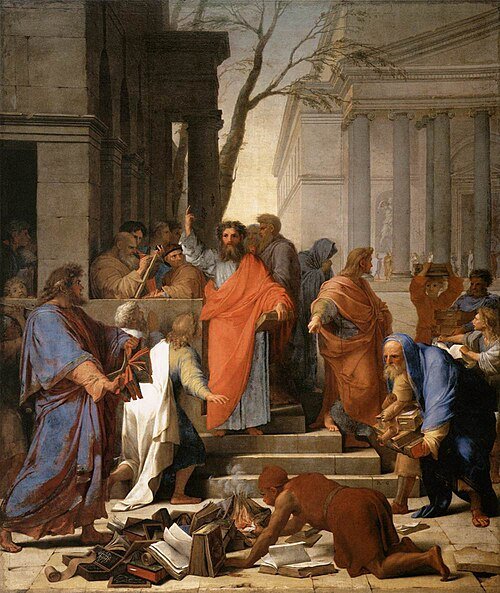
Ephesians 2:1-3 – The Human Predicament
“And you were dead in the trespasses and sins in which you once walked, following the course of this world, following the prince of the power of the air, the spirit that is now at work in the sons of disobedience— “
— 2:1-2
“Dead” is a term used by Paul to describe the effect of the sins and egoic, autopilot way of living that humanity often struggles with. To be dead in trespasses is to be burdened with the shame and pride of our motives and desires. It’s the bondage of self that so many addicts do step work to rid themselves of. In Romans 6, Paul describes that human predicament of being unable to change, stuck doing what we don’t want to do and unable to do what we want: this is what it means to be “dead.”
Our world is well familiar with this concept: we recognize when others are “asleep” and “blind,” stuck in shells of themselves. Sometimes, we can recognize it in ourselves. Every genre of music contains deep reflections on the split nature of the human condition. An immediate example is NF’s “Wake Up.”
Whenever humanity puts a person on a pedestal and extols them, they risk casting long shadows and creating a top-heavy house of cards. Whether we place ourselves on a pedestal as princes and princesses of the World, or co-opt it to someone else so we feel better about our lives, it’s still the same game.
Ephesus was colloquially known as the neokoros (warden/keeper) of the Temple of Artemis (cf. Acts 19:35), but it lacked the prestigious political neokoros title of the Roman Emperor. In 29 BC, Augustus granted permission for the provincial council of Asia to construct a temple for the imperial cult dedicated to Roma and Divus Julius in Ephesus, and a provincial temple to Augustus himself in Pergamon. Ephesus did not achieve its first official neokoratos title for an emperor until 89–90 AD under Emperor Domitian when it built a massive temple overshadowing its agora.
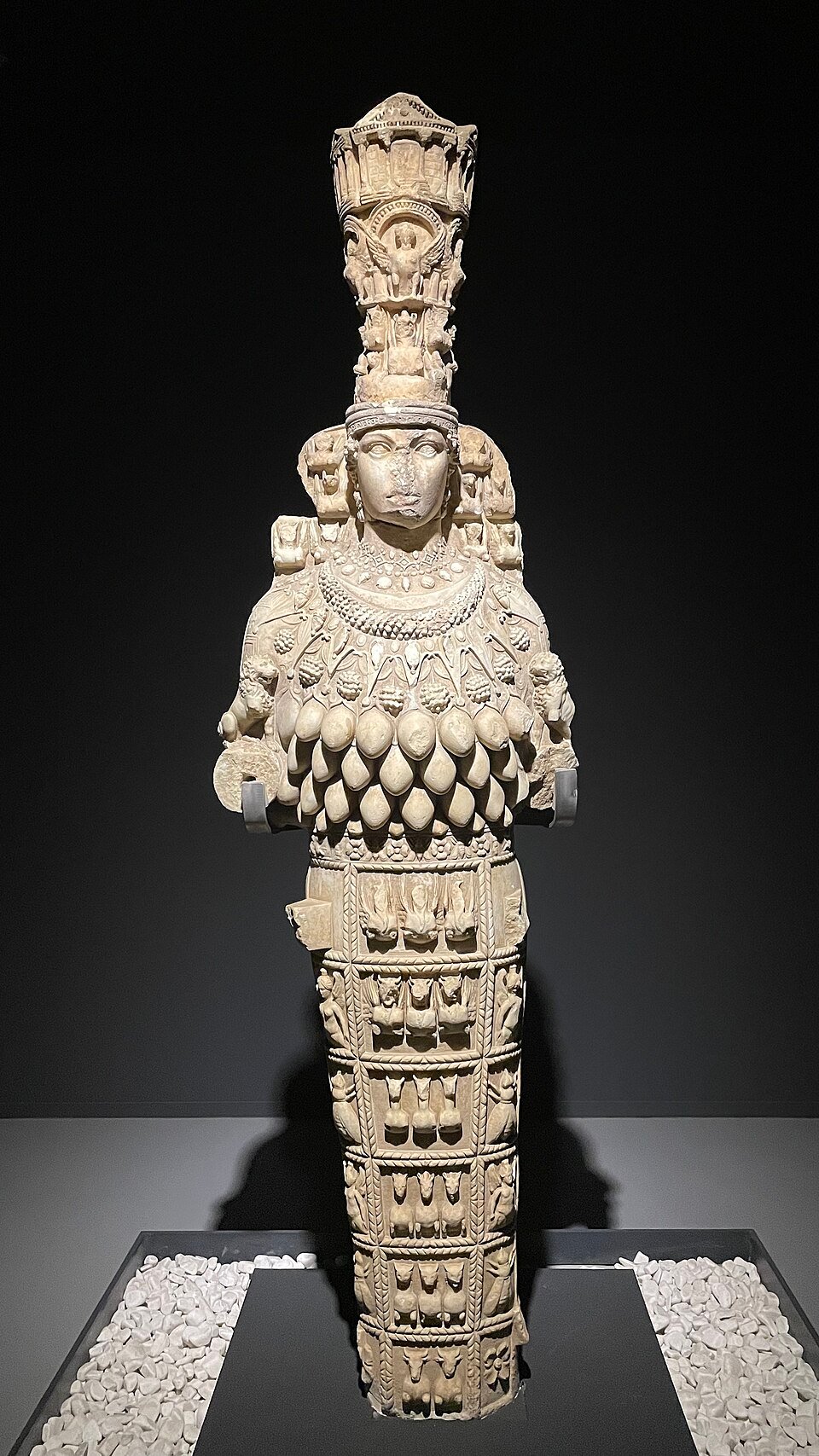
Particularly in a region shaped by imperial power and in a city with the cult of Artemis, “the prince of the power of the air” would have had nuanced meanings. While Ephesians 2:2 is not generally understood as an unambiguous reference to Caesar, the audience’s context left it open.
While we like to look for bigger reasons at play behind news headlines, people’s leaders typically embody the traits their masses idealize or at least accept as truth. Effective leaders employ and reinforce spiritual realities and powers at play that drive economies, politics, and egg prices. Everything trickles up. Caesar is more than a possible application, as the office was referred to in a similar way by contemporary writings.
Inspired by a Biblical term for coastal westerners (Genesis 10:4), the Qumran community used “The Kittim” as a code word for the Roman military machine and its rulers. The Sibylline Oracles—a collection of Jewish and Christian apocalyptic literature— use “Fugitive of Rome,” “The Dragon,” or “The Bloody Tyrant” to describe Caesars. It’s a craft that the Apocalypse of John, Revelation, used masterfully.
While “the prince of the power of the air” might mean the Devil in verse 2, it could easily be seen as an allusion to Caesar. The Roman world survived through power, propaganda, and privilege. Rome promised the world only if you bent the knee and turned it over to them first.
Spirituality is always a personal thing, and the battles and struggles we feel on the ground level, especially within large civilizations, are not isolated from the context, environment, and culture we operate within daily. Trusting in God rather than in good works or government was a struggle in the Old Testament as well as the New.
Whether it was a tyrant or a sin a person couldn’t break, the Gospel promised real freedom and peace for people dead on the inside and chained down by fear and desires.
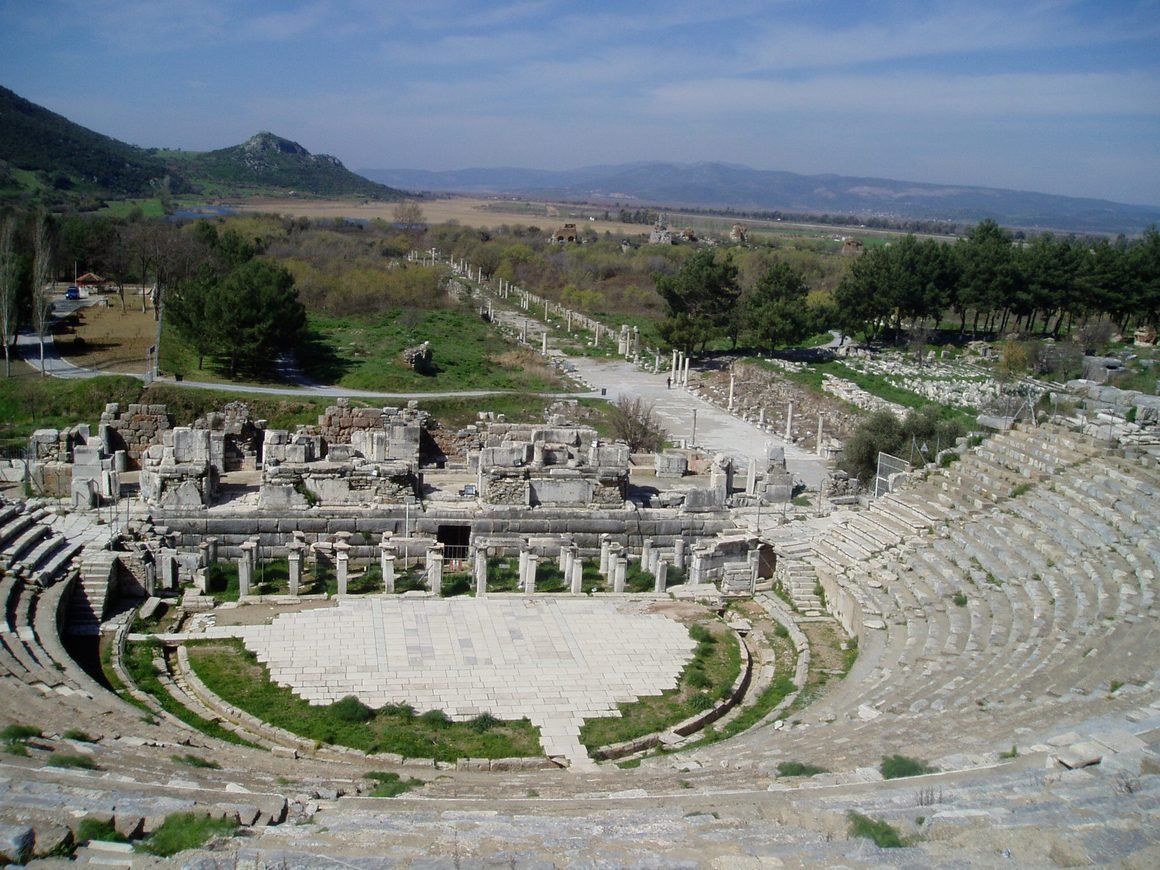
“among whom we all once lived in the passions of our flesh, carrying out the desires of the flesh and the mind, and were by nature children of wrath, like the rest of mankind.”
— v. 3
Rather than a simple finger-pointing, Paul reminds the Ephesians that they too were no different than anyone else. There are two different words for “desire” in verse 3, both connected to the body (sarx): first epithymia (“passions”) and then thelēma (“desires”). Epithymia means desire, craving, and longing, while thelēma refers to our wishes and will. It is not intrinsically sinful in every context. Thelēma is also not inherently a sinful or a bodily term.
While desires are tied to the body, our will is also tied to our diánoia, or our understanding and thinking. Diánoia was a word used for our understanding and minds. Diánoia is used positively elsewhere, and its negative force here comes from its relationship to the surrounding language of the flesh and desire. While the mind and body are unique from each other, they do not live separately from each other.
Desires are not always something inherently sinful; it’s what we do with them that births sin: “Then desire when it has conceived gives birth to sin, and sin when it is fully grown brings forth death” (James 1:15).
Our bellies and appetites can dictate more of our life than our will, and our will can get in our way, let alone cause havoc for others. In our need to satisfy ourselves, we can trample over and neglect others. Scripture makes the comparison to people being driven by their bellies as a metaphor for their cravings.
Poiountes means doing or carrying out a purpose. The passage describes people as operating from this base level of desire and automatic will. Paul says that before Christ, they too were stuck in their ways, driven by desires and wishes that governed their lives, leading to stale darkness and making them, by nature, children of wrath.
The ESV moves children directly before, but the Greek literally reads:
τέκνα φύσει ὀργῆς
“children” (tekna) “by nature” (physei) “of wrath” (orgēs)
“Of wrath” is debated among scholars. For language nerds, “of wrath” is genitive and can indicate possession, character or nature, quality, or source. Paul goes out of his way to add “by nature” beforehand to clarify as an adverbial qualifier. Jesus told the Pharisees they were children of Satan: we are that which we embody, not what we say we agree with.
An external judicial ledger with an internal, self-inflicted performance will only produce the results we expect from the ledger we either meticulously manage or bury away.
When sin breeds within us, we naturally become the wrath we wish to avoid.
Wrath is a natural sociological and psychological consequence of human egoic loops, projection, unbridled desires, and iron wills. When humans live in such ways, anger must be contained and channeled outward, something René Girard would later break upon the modern world (something explored often here). Whether it is in a ledger of resentments, striving for the myth of more, or slowly dying on a hamster wheel, tension and blame are projected outward, and accountability avoided.
Addiction is an obvious example of this run amok, but it need not be reduced to substance abuse. Recovery serves as an easy-to-understand analogy, and its lessons apply to the whole of healthy living. Modern society is built for addiction, cravings, will, comfort, and blame. If we want to see what Paul means by “by nature children of wrath,” we only need to look at the social media feeds.
And, like an alcoholic walking into an AA meeting for the first time, Ephesians were no longer stuck without a solution to their spiritual malady.
“Earning is an attitude. Effort is an action.”
— Dallas Willard
The Divine Interruption (2:4–7)
“But God, being rich in mercy, because of the great love with which he loved us, even when we were dead in our trespasses, made us alive together with Christ—by grace you have been saved— “
v. 4-5
After implicating both Jews and everyone else as being in the same boat with the same human condition, Paul drops a big “but.” “But God” introduces mercy and love where human earning and expectation can’t manufacture new life. It reminded them that they were a part of something much larger and grander.
God is relentless, unstoppable, and unmovable in His love. Even when we hold on to a life we want to let go of, God continues His work for our eventual turning back. We can be in the most broken, dead, and distant state, and yet God’s presence can be most profoundly and irrevocably experienced even there, especially there. Jesus’ Beatitudes and Prodigal Son teachings remind us of such a merciful truth: God is with the broken and meets us in pig pens.
Later church saints captured these truths in writings like the famous Dark Night of the Soul. The process of becoming something different than we once were is often not a comfortable one. Suffering and pain, as well as humbling and healing, are par for the course in spiritual transformation. Agreeing with a doctor is much different than being treated by one and trusting their direction.
In the rooms of AA, little and big moments are shared of people either running smack into God and finally surrendering in His love, one day at a time. A moment of confession here, a testimony of courage there, and, afterwards, some chains are left behind in the room. Once heavy drunks walk out a little lighter.
Grace is not simply a feeling of being loved. Divine action makes alive with Christ, raises disciples in Christ, and seats them with Christ. The language is participatory and communal as well as personal.2
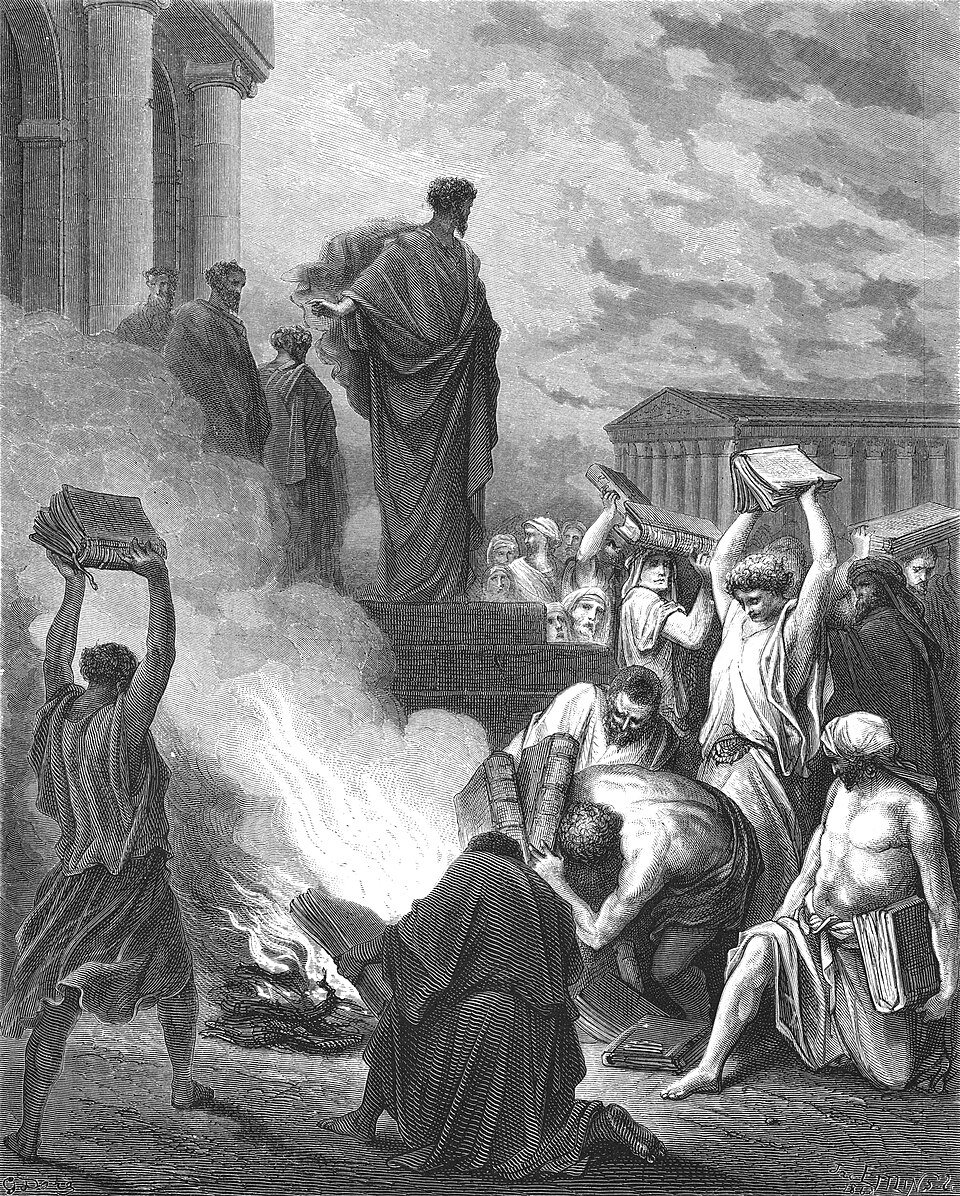
“and raised us up with him and seated us with him in the heavenly places in Christ Jesus, so that in the coming ages he might show the immeasurable riches of his grace in kindness toward us in Christ Jesus.”
v. 6-7
Every first-century person around the Mediterranean was familiar with earthly throne rooms through the imperial propaganda of Caesar and others before them. Paul states that slave and free, Jew and Gentile can all have access to a realized status of being and position, and the process is through being “raised…up with him.”
“In the heavenly places” occurs five times in Ephesians: 1:3, 1:20, 2:6, 3:10, and 6:12, connecting believers’ participation in Christ with the powers and authorities that Paul discusses in this letter. The repeated use of “in Christ” and “heavenly places” language places this status within the relationship to Christ. Scripture is not offering each believer a private elevated position.
The verb is an aorist (past tense), presenting the action as a whole completed. Its tense suggests believers are already made alive, raised, and seated with Christ, which strongly supports a present dimension, not an awaited afterlife. The context cements it.
Resurrection is always a part of the conversion process and movement from sinner to saint. Jesus broke open the full mysteries of the first century and made them accessible to anyone through the sheer process of trusting Him enough to die to self. While worldly schemes and agendas often assume competition and self-protection, the way of Christ is one of descent to ascend.
In Romans 8, Paul says that through Christ we can become “more than conquerors” (Rom. 8:38). About once a lifetime, every major city could experience a new conqueror. The battles of Julius Caesar and Agusuts, as well as Alexander the Great, were all retold tales. Through the love of Christ, a person can experience true conquering through breaking the bondage of self that kept us stuck in insane cycles:
“For I do not do the good I want, but the evil I do not want is what I keep on doing. Now if I do what I do not want, it is no longer I who do it, but sin that dwells within me…
— Romans 7:19-20, 24-25
Who will deliver me from this body of death? Thanks be to God through Jesus Christ our Lord!”
The greatest enemy we will face, and the most persistent one, is ourselves. It’s also over ourselves that we only ever experience any true sense of victory.
The Results of Grace (2:8-10)
“For by grace you have been saved through faith. And this is not your own doing; it is the gift of God, not a result of works, so that no one may boast.“
v. 8-9
Salvation is a gift, and the transformed life is its intended expression. There is no transactional ledger or human formula.
Like in Romans 7, doing good works for the wrong reasons produces sin within our guts, bones, and minds. Good works never establish a basis for boasting in God’s Kingdom because good works were always the intended expression of creation. The contrast is not between grace and action, but between God’s saving initiative and human attempts to make themselves the source or grounds of their own standing. Grace can only be known through experiencing it. To be saved is to rest freely in God’s reality.
Grace (charis) can refer to favor, grace, graciousness, or a gift, depending on context. In Ephesians 2:4–10, the emphasis falls on God’s mercy, great love, kindness, and saving action, not human ego. Grace is the undeserved blessing of God, already evidenced in our breath and existence, declared at the birth of Jesus: “Glory to God in the highest, and on earth peace among people with whom He is pleased” (Luke 2:14).
From the beginning of Genesis, God has been about blessing. It was humanity who brought the Curse in and fractured our human ego from our shadow, through our desires, projections, and fear. The Gospel helps humans move back there, to the Garden, where we once were able to walk in the light together.
Salvation is a gift, not an achievement or a means of securing status over others, but in the sense that life itself is already a gift. When a sinner repents, it is not through more of the same ill will and prideful motivation, but through surrender and acceptance.
To be saved by grace is not only to realize that striving, grasping, earning, and proving are failed games in the end, but to live in grace. It means to be unburdened by former attachments, calculated expectations, character flaws, curated performances, and internal conflicts. Salvation frees humans to fully live in this life and not sell out for cheap alternatives. It’s to participate in reality without pretense and fear, to meet Life on its own terms, and be able to dance well in the face of Death. Salvation is fighting the good fight against our own ego, flesh, and unforgiveness. The promises of Scripture are only separated from this lifetime by a lack of faith.
Paul says salvation is not “through your own doing” because it is not some formula to be debated and controlled, or something one gains through the same means that kept humanity stuck since the dawn of history. It’s to finally let go and accept life as it is.
Rather than a disembodied evacuation into a postponed afterlife, a Gnostic idea, salvation is for today and this life. One cannot claim to have accepted the Gospel of Jesus and not also attempt to walk in His way. The imagery of baptism is one of going through the deep oceans of the unknown, what we fear, and those things we’ve stored away in our subconscious. To be baptised and experience the promised fire is not to go through the purging and purification of spiritual transformation that Jesus drags His disciples through.
Frederick Nietzsche, in the 1800’s, imagined a coming ideal human who would be able to meet life and reality with complete enthusiasm. Looking forward to our time, he proposed his concept of the Übermensch — the Superman. His formula for humanity to get there was “will to power,” which was just more of the same old human ego and striving. But Nietzsche was on to something.
Viktor Frankl later proposed “will to meaning” as being the actual basis of human will, love the indisputable meaning of existence, and developed Logotherapy around it. I contend this is more than an option but a pathway into a truer way of being. Turn your “will to meaning” over to Christ, and watch Jesus mess with your personal understanding of meaning.
God makes people alive with Christ, raises and seats them with Christ, saves them by grace through faith, and recreates them for good works. The plot, initiative, and aftermath belong to God: boasting is excluded.
“God wants us to be fruitful. God wants us to be experimental. God wants us to be innovative.”
— N.T. Wright
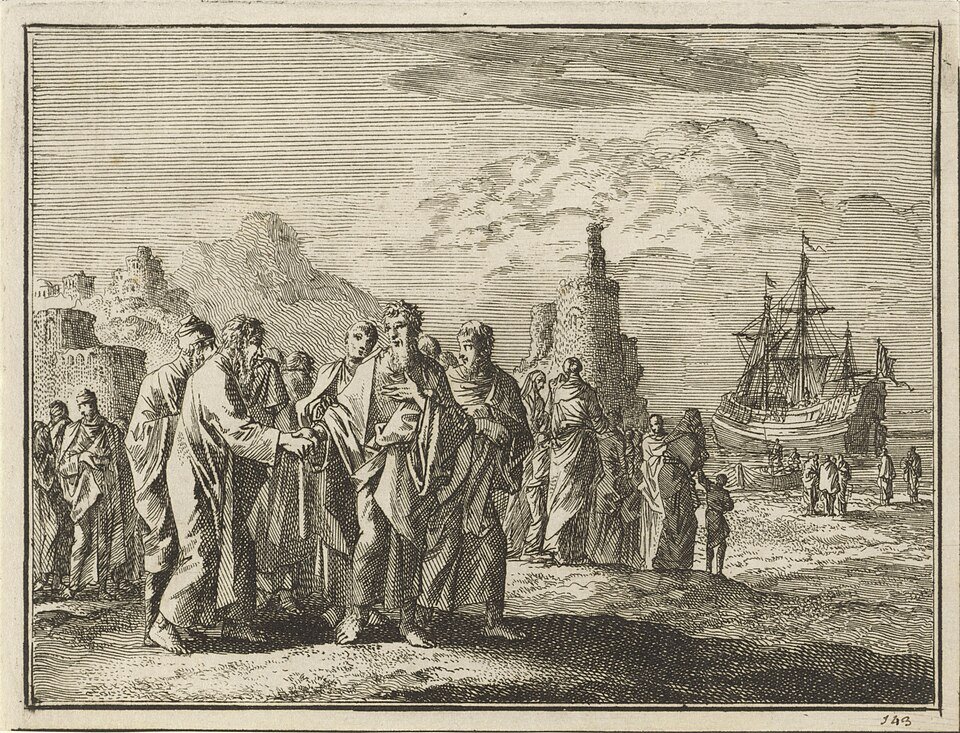
God’s Intended Telos (2:10)
“For we are his workmanship, created in Christ Jesus for good works, which God prepared beforehand, that we should walk in them.”
v. 10
Paul has some gorgeous writing here that is a bit lost in translation. Rather than striving and human performance, Paul flips the picture and uses an art metaphor, describing God as a craftsman. Rome and ancient societies had entire crafting industries, valued ornate decorations, and promoted works of art, from colossal statues to written epics.
Paul tells these Ephesian Christians that they are God’s craftsmanship, His works of art He’s been working on since time began to make more works of grace. The word Paul specifically uses for “workmanship” is poiēma (ποίημα), and it’s different than mere production of labor.
In the first century, poiēma (ποίημα) referred to crafted work. The word means a thing made, work, or workmanship. It only shows up in one other place in Romans 1:20, talking about “the things that have been made” by God in Creation.
In the backdrop of Roman statues and monuments, no city lacked examples of poiēma. Romans attempted to match the masterpieces of Greece. Derived from poiein (“to make”), the term carried multi-layered connotations across the Greco-Roman world: while philosophical and literary traditions linked the process of creation (poiēsis) to the wild, eccentric flash of divine inspiration (mania) or the Muses, the word poiēma itself represented the enduring, concrete artifact left behind when that ecstatic energy was channelled through refined craft (technē).
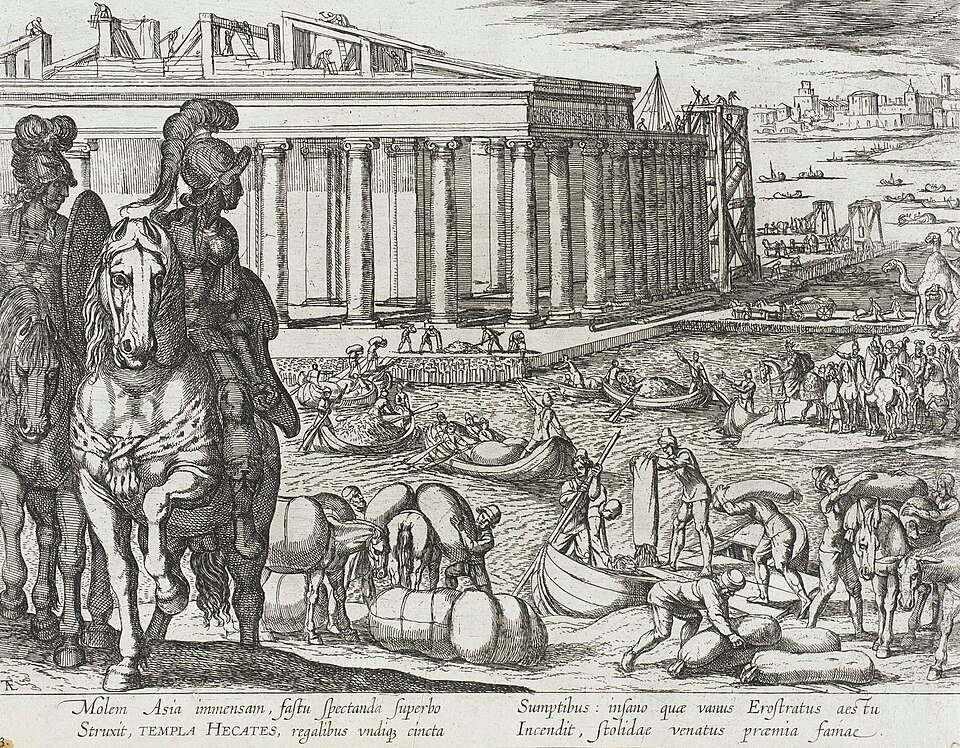
Whether describing a meticulously polished poem, a polished epic plot, a sculpted statue, or an intricate piece of craftsmanship, a first-century audience understood a poiēma as an intentional expression of its creator’s inner vision—a synergy where inspiration met skill to form a unified work of art.
Rome manufactured monuments to immortalize human egos; God crafts poiēmata in us. Humans are to God works of art and grace, a choreographed epic.
There’s a beautiful plot to Paul’s words: we, having been lost in darkness and dead in our previous sins, are being worked on and for even then. When a sinner finally gives in and bends the knee, they do not find a new unknown world, but realize their old world was not what they had thought.
God will use us, whether despite us or with us. There are easier, softer ways to live, which help keep an edge and strength where it belongs, in “love, joy, peace, patience, kindness, goodness, faithfulness, gentleness, and self-control” (Galatians 5:22-23). Take it from one sinner; we don’t have to keep fighting God, the world, or each other. Bad habits can die hard, which is why we have a solution to our dilemma in the way of Christ. This is where faith is tested, not in loyalty to doctrine, denomination, politics, ego, or flesh.
Ephesians 2:11–22 continues with the reconciliation of Jews and Gentiles into one new humanity and a shared dwelling place for God.
May we continue the same work.
*Footnote (& Leftovers)
- This cycled in Roman history, with Sol Invictus being the popular god just before Rome switched its assimilation strategy toward Christianity in the 300s, the new popular religion. This tactic was also far from unique to Rome. Assimilation and cultural influence was an ongoing strategy for empires by the time of Babylon. ↩︎
- For what it’s worth, I’ve learned more about life, ministry, and spirituality from sticking with the program of AA. AA is a fascinating case study in many things, and one of the greatest is that of what it means to be saved by grace and not human effort. Like local churches, groups and regions have their own collective DNA and quirks. Groups differ, outcomes differ, and not everyone finds twelve-step programs helpful. It is a bunch of recovering alcoholics somehow managing to sustain an active ecosystem of recovery that has changed lives in ways the Gospel also points to. I’d recommend every minister to find an AA (or another 12-step service-led community) and sit in enough meetings as a non-participant until you see some miracles happen and how they happened. ↩︎