Table of Contents Show
Worshipping Jesus isn’t nice. It’s good medicine.
As I’ve learned with a lot of things, what matters in worship is the how, not so much the what. As a concept, worship exists both as a way of life and as a discipline. As with any discipline, the discipline makes the practitioner bend to its way.
Bit by bit, Jesus has become an undeniable anchor who began changing me from the inside out. For a while, I felt like C.S. Lewis: the “most reluctant of converts.” All summer, Jesus has been calling me out on it.
Over the last few years, having a morning time with journaling, Scripture, meditation, prayer, and worship has been one of the most transformative parts of this journey, along with honest conversations with others.
In these times, something can change, be healed, confessed, or surrendered. Things from life come up in God’s unconditional light. Mornings have become a time to die to self to be reborn again, just a little more.
“Nothing can inform, guide, and sustain pervasive and radiant goodness in a person other than the true vision of God and the worship that spontaneously arises from it.”
— Dallas Willard
An Intellectual & Emotional Warning
We’re exploring the intersection of neuroscience and spiritual experiences, which is a better description of what happens on the inside than a prescription. I’m exploring this more in depth in the recovery and the power of mental practices in the Architecture of Surrender series.
What we aren’t doing, necessarily, is talking about actual praise and worship. In some sense, none of this article is needed if a human being is already in a state of worship. In worship, we turn the self toward something worthy of attention.
Worship cannot be reduced to either cognitive performance or emotional regulation. When we genuinely praise something, we aren’t merely making a positive statement about it. We surrender to it.
So, look at Him and let Him look at you. Consider God until your self is no longer the most interesting thing in the room. We’re attending to God as He is and as we are. There are no shadows in the Divine. More than just “God as we understood Him,” as AA says, we’re going one step further and allowing ourselves to be known by God. God never needed our permission to understand us, as if He didn’t already. Rather than either an emotional or logical exercise, worship is experiential and embodied.
There’s a huge difference between “I want God to fix things and feel better about myself,” and “The beauty, love, power, holiness, and reality of God are overwhelming.” We’re going to explore the mechanics and theory so the cognitive, top-down part makes sense, and then suggest an experiment anyone can try that helps bring it from the bottom up1.
“Worship of the God revealed in Jesus Christ is what makes us human; it renews us in our image-bearing vocation.”
— N. T. Wright
The Neuroscience of Spiritual Experiences
A keyword is neuroplasticity: our brain’s ability to heal and rewire itself. Learning and reading give the brain material to grow with. Studying was important. My alcoholic brain needed good ideas to work with, and finally learning helped me experience something more true. Learning gives us more data and frameworks, tools to work with. A book can contain an entire world we’ve never been aware of before. However, intellectualism and right knowledge are no replacement for right behavior and thinking. Nor is it a cure for selfishness and shame.
AA emphasizes the necessity of “spiritual experiences” and having “a spiritual awakening.” Like with all things, these can be faked and performed — a form of “spiritual materialism.” So the magic lies in not faking or assuming, but going through it honestly, willingly, and openly. Any person who has walked the Steps more than once understands that it’s not a one-and-done thing, but an all-in-or-nothing thing.
Carl Jung had a massive influence on AA as a whole, and “spiritual experience” was lifted directly off his lips. After about a year and a half sober, my first spiritual experience happened, and it was simply an epiphany that for a moment brought such peace and calm that I felt free for the first time. It lasted but a moment, and it became sort of a “standing stone,” a memory I could never forget. I wanted more peace, wholeness, and love.
Through things like meditation and worship, more spiritual experiences brought further self-realizations, epiphanies, and sometimes visions. Without my permission, Charismatic and Pentecostal-like things started happening. Eventually, in the course of studying, I realized “spiritual experiences” was not a fuzzy word, but a definable human one.
— Romans 12:1-2
“I appeal to you therefore, brothers, by the mercies of God, to present your bodies as a living sacrifice, holy and acceptable to God, which is your spiritual worship. Do not be conformed to this world, but be transformed by the renewal of your mind, that by testing you may discern what is the will of God, what is good and acceptable and perfect.”
Spiritual Experiences & Pivotal Mental States
Unsurprisingly, Pivotal Mental States (or PiMS) is one of my new favorite subjects, and that’s the frame the rest of this article plays in. PiMS are basically AA’s “spiritual experiences,” states when our brain has increased psychological flexibility and rapid belief updating. During these states, our brains enter a more neuroplastic state. A common trait of PiMS is collapsing assumptions and holding paradoxical truths at once. These are moments like when we realize something about ourselves we can’t unsee or maybe a hard lesson we grew from. You’ve had them in moving worship moments, the birth of a child, or a well-timed, perfect word from someone when you needed it the most.
Deep spiritual experiences, prolonged focused prayer, or bodily worship can act as paths for spiritual transformation. Momentary disorientation, like emotional crisis, deep grief, or total ego exhaustion, can open a window of neural plasticity where ingrained patterns, like those in the default mode network (DMN), which is involved in self-referential and autobiographical processing, where our inner narratives and thought patterns like to hide, temporarily disengage. This suggests that some of the conditions associated with these states can be cultivated intentionally. Where PTSD is, so is Post-Traumatic Growth. These states challenge what our brains are used to.
PiMS are neutral, or “outcome agnostic.” This is, in some sense, why having safe containers, healthy leaders, and grounded social settings is critical—and how these same hyper-plastic states can otherwise be exploited to foster destructive delusions or psychosis.
On the ground level, the fingerprints are left not just in the fruit the person can bear now, but in the neurological blueprint: new neurons being formed while old ones die off. The mind must change, and Pivotal Mental States describe such moments when significant change occurs. They can be useful in understanding both healthy and true experiences as well as destructive and fabricated ones. For example, traumatic experiences and abusive relationships could qualify as PiMS.
During a PiMS, the brain is uniquely capable of rapid cognitive restructuring. What theology calls metanoia (“repentance”, lit. a radical change of mind and life) appears as the neurobiological rewriting of core belief architectures during such a window. PiMS is something that happens, not the things that go into making it happen. The human being at the center of it is “where” a Pivotal Mental State occurs.
“If an angel appears in the middle of nowhere and no humans are around, did it appear?”
Prepping Our Soil
One of the simplest entry points into a pivotal mental state is good old worship. True worship forces the ego to stop rating, judging, or dissecting the moment—moving the soul out of its head and into pure presence, simply being seen by the One who already sees you.
Worship creates a context in which I can stop defending myself against what is already there and surrender it to Christ. Like Job’s Whirlwind, authentic worship strips our excuses and assumptions, leaving us to only wonder at the mystery of the Divine and Creation rather than being self-appointed judges and rulers of either. I’m continually reminded that I am a part of Creation as God is a part of me.
A few things you’ll need if you want to experiment with worship as a possible doorway into a pivotal mental state:
- Willingness to surrender the ego before Jesus.
- Space, time, and something to worship along to: The specific choice matters, but options are endless. What actually counts is that it redirects praise back to Jesus and recenters the ego so the experience can do its work. Stay open to new sounds—they’re often the freshest tools.
- Solitude: Doing this alone* helps you catch yourself when you start seeking validation, looking for distractions, or worrying if you’re “doing it right.” Comparison is a thief of joy. When those parts of you surface, just notice them and hand them straight to Christ. Watch what happens when you do—He doesn’t turn away from our noise; He keeps His gaze fixed right on us.
*On doing it corporately: The same principles apply, so when you find yourself faux-worshipping, holding back, performing, avoiding, etc, just notice and stop. Meet God as you are, where you are: naked. In time, shame, resentment, fear, and more are exposed until His light can transform them. Ultimately, we can all not just stand in the presence of God, but dance together in it.
A few of my personal go-to artists right now are:
- David Crowder
- Josiah Queen
- I Needed This Dave (uses AI)
- JoshM
When it comes time to praise and worship Jesus as Lord & Savior, offering everything to Him, like no one is watching and like everyone is. Let go of all conclusions, assumptions, and expectations. Not in a forced, cliché, or performative fashion; in fact, the opposite: if and when there is any moment of performance, you acknowledge and give it to Him: change an action or stance, maybe.
The objective is to be completely naked before God’s light and love, and it’s no trivial thing. To behold God’s glory with an “unveiled face” (2 Corinthians 3:17–18) requires no masks, armor, or assumptions. The ego and False Self are at best vehicles for surviving the first half of life. Worship is a daily practice of stepping out of the dualistic calculating mind into the naked now, as Richard Rohr points out (cf. Colossians 3:1–3).
This is not prescriptive: What’s described is a practice others have practiced, just my own contextualization from a second-story apartment in Missoula. It is a recognizable human experience, one that ancient spiritual traditions, including Christians, intentionally cultivated in their practices and rituals. To enter the presence of God is to invite complete exposure. God’s presence is never distant; it’s always right there. We can build up layers and conditions between us and His supremacy. You and I, the seekers, are the ones who bring our cares before the Divine, and then He prescribes our next steps.

To approach the throne is less about inviting His eyes on our lives than about finally being willing to see with Him, rather than dictating to Him. Scripture teaches that it is possible to approach His throne with confidence. We don’t have to clean ourselves up first; we bring what is there into His light. There are no excuses, games, or bloated expectations within the Divine. To be one with Him is to allow Him to be one with all of your life.
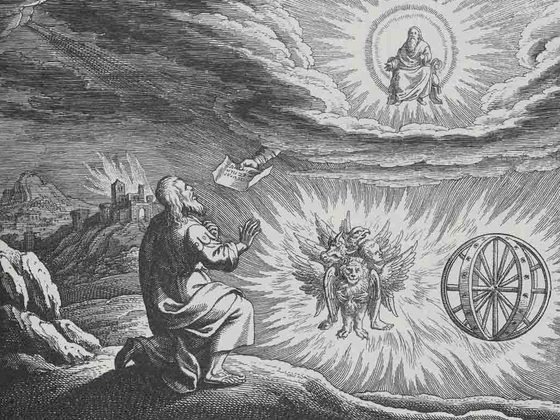
Sin struggles to be in the light of God, as Jesus reminded us in John 3. The prophet Isaiah had a visceral, first-hand experience with this fundamental truth. He realized that even his own speech was tainted by the people he lived with, until God and his messengers cleansed it away so Isaiah could be present for what God was really interested in. I often wonder about what Ezekiel’s experience with the Divine must have been like. Whenever God meets a person, something changes, and they can’t see the world the same again.
Carl Jung also noted that we’d do almost anything, no matter how absurd, to avoid our own souls, and that’s exactly what God has His eyes on. So, when in doubt, be willing to look absurd and move closer to God by doing something with your body until worship starts working and ego breaks. The soul is soil that must be tilled if the Word of God is going to take root deeply. That’s a polite way of saying it is not God who is getting in the way of healing and peace in our lives.
“At all events, religious teaching as well as the consensus gentium [“agreement of the people“] always and everywhere explain this experience as being due to a cause external to the individual. The numinosum is either a quality belonging to a visible object or the influence of an invisible presence that causes a peculiar alteration of consciousness. This is, at any rate, the general rule.”
— C. G. Jung, Psychology and Religion
Our Bodies
Use your whole body, mind, heart, and soul to worship. I’ve found both the mind and body to be physical manifestations of heart and soul. If I worship with my soul and heart, I will worship also through my body and mind. If I can get my mind and body aligned in worship, my heart and soul become alive.
The body can hold unconscious defenses, and even memories, as physical tension. I once shrugged at such a concept until I tested it. Now, I’m a believer. Posture is not an expression of a state already felt; posture is an agent that can shift the nervous system into a different state. A common phrase I hear in AA is, “Change a thought by changing an action.”
Bodily shifts, like raising hands, kneeling, and lying prostrate, or deliberate stillness and singing, can send signals up the vagus nerve to the brainstem, giving our brain input we may often neglect. By taking the posture, our minds can be more open to what it expresses.
Do the things you love to do. Or do the thing you don’t want to do: like raise your hands, or if you’re on the other side of the spectrum, stay silent and still. Sing if you’re afraid to—be silent if you love the sound of your own voice. Sing in joy and freedom if that’s where the Spirit is meeting you. It’s what is appropriate and good medicine in the moment. Worshipping in silence forces the nervous system to process suppressed bodily sensations without resorting to cognitive and physical distraction.
When I can let a song move through me without me getting in the way, mindful of the Divine, and more than simply observe without judgement, but join in without control and give back to it for the Divine, is when the Spirit does its work in me.
There’s a stillness, even amongst my noise and brokenness, a sense of no longer running, a Presence without words, that is relatively common across the diverse expressions that I’ve experienced. Sometimes they’ve been painful and full of sobbing, especially early on. Other times, they’ve been delight and joy, dancing and singing with arms raised, and usually still crying. It kind of depends on what I, as the seeker, am carrying that day.
“The body is the primary site of human spiritual formation… Redemption does not touch us until it touches our body.”
— Dan Allender
Our Minds
Mental chatter is fodder for transformation: Where there is resistance, there is an opportunity for worship. When thoughts arise, notice and acknowledge them, but do not give in to them: surrender to observing and participating in worship. Insanity is logic run on a loop: worship breaks such patterns.
Unconscious shame, grief, or anger surfaced by worship rhythm are not obstacles—they are the material meant for surrender. Bringing the Shadow directly into worship turns internal conflict into the primary engine for transformation. Express what you need to, get out what is on the inside, and make as much room on the inside for God to do His work.
Rather than suppressing “distracting” thoughts, label them and observe them: “I see me trying to control this moment.” Instead of fighting it, turn it over to Christ: “Thank you for trying, but you can step back; Jesus is holding this space.” Christ becomes the ultimate Source—the steady, compassionate center to which all our internal parts surrender their burdens.
It’s worth it, before worshiping, to pray and meditate, maybe spend some time reflecting on life and taking honest stock. However, when worship happens, it happens.2
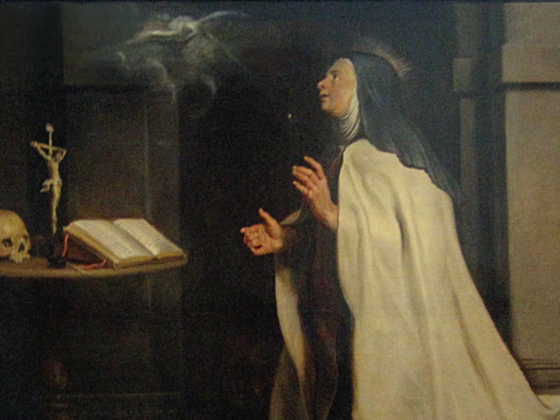
“Mental prayer in my opinion is nothing else than an intimate sharing between friends; it means taking time frequently to be alone with Him who we know loves us.”
— Teresa of Ávila
On Visualization & Concept
Visualization is a real aspect of the human imagination, and one that can be developed and run crazy. Worship provides a time when our imagination can be cleansed and expanded.
Visualizations aren’t needed, but they can both happen and help. The concepts can be held without mental images, and often images will come up on their own. What matters is the soul’s posture. By posture, I mean that internal relationship we have with something: it’s the difference between how we think and what we think. How matters more than what here.
This is one such visualization practice I’ve used that often both crushes and heals me, so I offer it sincerely and with a caution about approaching it humbly. It works, and it’s biblical.
Before the experiment, the concept: the New Testament teaches about becoming sons and daughters of God through Christ (Galatians 4:6–7; cf. Romans 8:14–17) and that we can be restored to the image of God by Jesus, one with Him and one another (John 17:21). By this, we become heirs and “more than conquerors.” No matter your unique theological bent, if you can track with that logic, you can imagine it.
For this, Crowder’s “Lord of All,” “By Our Love” by for KING & COUNTRY, “I’d Do It Again” by Andrew Ripp, and anything by JoshM are some of my go-tos. Pick a few or an album. A lot of songs work well, and personal preference matters in the consideration.
Try your tested-and-true ones, or be a bad-ass and try some songs you hate until you can get past all the parts you hate and still worship. That’s a grueling and long way about it, but Jesus can be found anywhere by any seeker wanting to find Him.
Sing what you can, unless you know you need to shut up and listen.
A Suggested Experiment
Now, for this meditation, we’re focusing on the full redemptive work of the Gospel and envisioning what Scripture promises about Heaven, but here and now.3
- Step 1: Before you begin worship, clear your mind and invite Jesus to have full access. Then, as the songs play, close your eyes and worship Jesus. Keep your eyes on Him the whole time.
While doing so, imagine a crown on your head and “Christ in you, the hope of glory,” embodying your bones, heart, hands, feet, and mind. Do this until your mind can rest in the image of it as you worship. Meditating works well if singing isn’t. Be in the music and let what comes up pass through with you. If done right, it might bring up what it needs to, and a living sacrifice can be made. Repeat like taking daily medicine. - Step 2: Once you can embody this while you praise, comfortable with its weight and implications by grace and faith alone, the next step is to imagine the entire world, every head with a crown and fully alive in the Spirit. Imagine your family, friends, and peers with the same.
- Step 3: Once through that, imagine willingly throwing your crown on Earth before Jesus, in the presence of the world. And worship Him there.
A personal note: If you try this experiment—the crown, the surrender, the world, the stillness—I’m curious about the results. Please consider sharing.
“The fact is that certain ideas exist almost everywhere and at all times and can even spontaneously create themselves quite independently of migration and tradition. They are not made by the individual, they just happen to him—they even force themselves on his consciousness. This is not Platonic philosophy but empirical psychology.”
— C. G. Jung, Psychology and Religion
Worship is a Discipline
I’m pulling an old pastor pattern and plopping in one more thing:
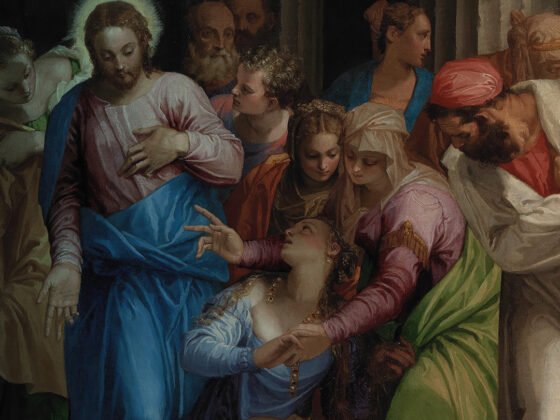
Jesus approached a man in Jerusalem waiting decades for healing. I think there was a chance Jesus had seen this man many times before. Jesus walked to him and simply asked, “Do you want to get well?” and the man gave an excuse, not an answer (John 5).
Jesus has asked me many times, and like that man, I too gave him excuses about being alone and unable. And Jesus’ words to me were, “Get up! Pick up your mat and walk.”
If I may suggest it, I think this is a universal lesson from this scripture. No matter if the mountains should tear apart and tremble, or if enemies shout threats, no matter if the skies tear open, Jesus is my Lord of All…Do I want to get well or not?
It’s from that posture His healing comes, no other.
So, do you want to be healed?
Like meditation, it takes practice. “Living sacrifices” have to get off the altar, back to Creation, and back to work the next day. That too is their sacrifice. The altar, these moments become practice for the rest of life, not the proof of it. We are instructed, whether we eat or drink, to do it for the glory of God, and to remember Him as we rise and fall. What matters in life is “to do justice, and to love kindness, and to walk humbly with your God” (Micah 6:8).
God reveals more in time, one step along the way.
Don’t try to explain or define that which hits you, but wonder, accept, and worship. Your ego and shadow can be the very things you worship with, and in so doing, they change.
It’s there; in those moments, decisions and choices are made: “Change a thought by changing an action.” This is where worship really happens. If the living sacrifice doesn’t walk away changed, walking differently, it hasn’t worshiped.
“It won’t always be easy, but it will be worth it. There is an old saying, ‘The truth will set you free, but first it will make you miserable.’ Meditation can reveal truths about yourself that may be hard to face. But it’s in facing these truths that transformation occurs.”
— Richard Rohr
Last Updated: 10/23/2026
Footnotes (& Leftovers)
- For those familiar with either The Body Keeps the Score or Atlas of the Heart by Brené Brown, “top-down” refers broadly to cognitive information and tools that help a person make more informed and intentional decisions. It’s more intellectual and engages higher-level cortical processing. Practices like meditation, yoga, prayer, dancing, and movement are often described as ‘bottom-up,’ working through bodily sensation, movement, breath, and other embodied inputs. In theory, this experiment creates what I think of as a neurological “pincer” move. ↩︎
- Sometimes, exposing a weak back, a fake front, and an insecure mind to the light is deeply destabilizing, for both practitioner and observer. When an experience is pitched as “prepackaged,” it implies a clean, linear, sanitized transaction. Real integration is gritty, and it requires the community to hold the line when the initial experiential high wears off, and the real work begins. Models and songs, performances even, can work for a time, but God is not “in” those. ↩︎
- Stay tuned for more on the blog and the Worship page. Any passage and song can be embodied this way and practiced in times of worship. There are a few that have been unforgettable for me; we’ll cover many of them in the future. ↩︎