Table of Contents Show
This is a three-part series. The first part covers the intersection of theology and modernity, while the next part explains some of the ancient origins of the divide between the two, and finally what it means. The thesis circles around two things: your soul and the word “ontology,” or what it means to be and have being. If it sounds nerdy, it’s because it is, and also spiritual AF.
At the risk of committing the same sins covered here, I recognize that, even in a long article divided into three parts, we cannot fully contextualize or explore every distinction I cover. This is interdisciplinary by necessity. The irony is that any attempt to contextualize reality as a whole for each reader can itself become reductive—and perhaps even foolish to attempt. The aim, instead, is to describe key concepts and events accurately enough for readers to wrestle with them and investigate them for themselves. Perhaps each reader can find their own point of departure: not a final account, but a starting point from which to examine, challenge, and engage with the framework presented here.
As usual, we’ll cover history, psychology, philosophy, and Christianity. Grab a drink if you need one and avoid reading this on the John.
“Most of us as individuals, and world society as a whole, live at high-speed, and often with no clue to whether we are flying upside down or right-side up.”
— Dallas Willard
Western culture has developed a problematic relationship with interiority. America’s political polarity is a clear and screaming example of this. It’s in the gap that is growing where the answers everyone is looking for can be found. Our modern cultures expose an objective contradiction in how people construct, experience, and defend their accounts of reality.
The conventional narrative of Western history positions Classical Greece as an isolated cradle of pure rationality and treats Christian theology as a clean break from mystical ideas toward clear, systematic truth. There’s a skepticism of human interiority and of mysticism, even though they are used daily by all of us.
However, historical, textual, and comparative evidence demonstrates that Classical Greek religion and philosophy were deeply indebted to Near Eastern and Indian influences, while Protestantism reappropriated Enlightenment and mystical vocabulary to construct rigid dogmatic systems that severed interior illumination from its mystical roots.
Ultimately, because pure intellectualism and self-reinforcing loops of dogmatic reasoning inevitably fracture under the pressure of humanity’s motivations and subconscious desires and fears, as well as their own structural limitations, direct contemplative experience and mysticism remain not merely optional stylistic choices, but the unavoidable direction of the religious desires of all seekers.
It’s a myth that our inside is something to be avoided, that emptying ourselves is somehow dangerous (it’s dangerous for others’ assumptions that they want us to buy into for their own comfort). Much of the intellectual rejection and dishonest polarity is an attempt to avoid one’s soul and a prayer that what one already believes and assumes must be true enough.
At least, that’s the thesis we’re trudging through. I’m trying to establish that:
- Greek religion and philosophy developed through extensive engagement with older Eastern cultures.
- Western Christianity and Protestant thought increasingly distrusted or restricted interior spiritual experience.
- Rationalist and dogmatic systems eventually encounter limits that point toward mysticism.
To do so, our map of inquiry will be:
- Section 1: Western Binaries & The Suspicion of Interiority — Examining how Western scholasticism and post-Enlightenment thought categorized internal divine encounter as either natural cognition or demonic vulnerability.
- Section 2: The “Orientalizing Period” & Borrowed Greek Canon — Tracking the migration of Near Eastern scripts, deities, and philosophical asceticism into Archaic and Classical Greece.
- Section 3: Biblical Context & Co-Opting Enlightenment Vocabulary — Analyzing how the linguistic shift from Hellenistic/Jewish mystery terminology (like photizo, logos, mysterion) to Protestant systematic categories preserves both mystical and Enlightenment language, while disagreeing over definitions, mechanics, and semantics.
Section 1: Western Binaries & The Suspicion of Interiority
Western intellectual history is defined by a persistent division: the separation of empirical science, institutional religion, and human spiritual experiences. Rather than viewing the human interior as a sacred space for immediate divine union, post-Scholastic and post-Cartesian Western thought transformed subjectivity into a dangerous, uncalibrated landscape requiring external governance, rational verification, or dogmatic containment.
For context, nominalism is the philosophical position that universals, such as goodness, truth, beauty, or human nature, have no independent existence apart from the particular things we use those names to describe.
Rather than existing as real features of reality that particulars (an item versus a universal quality) participate in, universals are understood as names, concepts, or categories we construct to organize our experience of individual things. Historically, medieval nominalism challenged the realist view that universals possess a genuine basis in reality, raising enduring questions about the relationship between language, knowledge, and the world itself. It’s like arguing with the existence of images in a mirror.
The interior of the soul became a static object caught in moral audit and cultural debate, rather than a deep well, and life a game of rules rather than a process of shared being.
The Construction of the Dualistic Mind
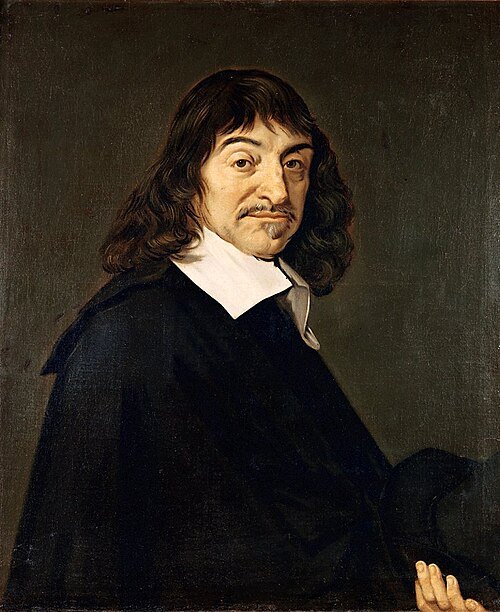
The split didn’t begin with René Descartes. Its intellectual roots reach back well before medieval debates over nominalism, universals, and divine will. Such debates shaped Western Enlightenment questions about the relationship between human reason and the underlying structure of reality, questions that thinkers like Descartes and Kant would approach in different ways. Descartes and others were wrestling with many ancient philosophical questions that Western Europe was still millennia behind.
Logic is but one mode of exploring deep truths, a mode that doesn’t exist in isolation from other human ones. In other words, “I think, therefore I am” is not the foundational basis of human being. “I am aware, therefore” is much closer to the bottom.
Western Christianity has been an active role player in this too, as Francis Schaeffer and others have documented. Western Protestantism assumed a division of Spirit and Science, despite Jesus’ 2000-year-old mandate that God seeks such worshippers who use both. While modern Christianity both depends on and uses science selectively in its defense, they also reject logic and science in other areas for its assumed spiritual dogmas. This is the inverse image of Western scholarship: they reject the spirituality while assuming pure Western logic. The irony is they’re both right and wrong—it’s in their common ground that one can find the gravitational pull of the truths both are looking for.
In The Divine Conspiracy, Dallas Willard talks about how modern Christianity views reality upside down, like an airplane flying upside down.
“Recently a pilot was practicing high-speed maneuvers in a jet fighter. She turned the controls for what she thought was a steep ascent—and flew straight into the ground. She was unaware that she had been flying upside down. This is a parable of human existence in our times—not exactly that everyone is crashing, though there is enough of that—but most of us as individuals, and world society as a whole, live at high-speed, and often with no clue to whether we are flying upside down or right-side up. Indeed, we are haunted by a strong suspicion that there may be no difference—or at least that it is unknown or irrelevant.”
We’ve bolted our seats to the roof, not the floor, and relabeled the entire inside of the plane. His diagnosis of Christianity 20 years ago was already severely impending:
“What is truly profound is thought to be stupid and trivial, or worse, boring, while what is actually stupid and trivial is thought to be profound.”
Francis Schaeffer was beating this same drum in the 1960’s, clearly outlining in his famous “Trilogy,” showing how the human temptation is to divide reality into two halves: an upper and lower story. In The God Who Is There, he diagnoses this same line within secularism and Christianity:
“Theology has been through the same process as philosophy, though several decades later. Prior to Hegel, rationalistic man was still trying to draw his circles to encompass the whole of life. Then came the line of despair. Naturalistic theology has followed this very closely.”
And about Christianity, Schaeffer said,
“I suppose no discipline has tended to think more in fragmented fashion than the orthodox or evangelical theology of today.”
Throughout his Trilogy, he’ll break down this Upper & Lower Story false dichotomy like this:
| Upper Story The nonrational & nonlogical | Religious faith, meaning, and hope are detached from rational verification. | A crisis or first-order experience; faith becomes an optimistic leap without verification or communicable content. |
| Lower Story The rational & logical | Rational inquiry is separated from the religious meaning and hope people still seek. | Scripture is treated as full of mistakes; the result is pessimism about its ability to provide truth, meaning, or certainty. |
Immanuel Kant, on whom much of Western theory is built, danced at length with this same division. “Kant’s Gap” refers to his conclusion that the upper story can’t be known. He erected an epistemological firewall between the phenomena (empirical lower story) and noumena (transcendent upper story). Phenomena are objects as they appear under the conditions of human cognition; noumena (a thing as it is in itself), considered apart from those conditions, cannot be known theoretically as things in themselves. Christianity provided a means to cross this gap experientially, one that wasn’t simply the lower story pointing up and at others.
So, what happens when the limits of one mode of knowing are treated as the limits of knowledge itself?
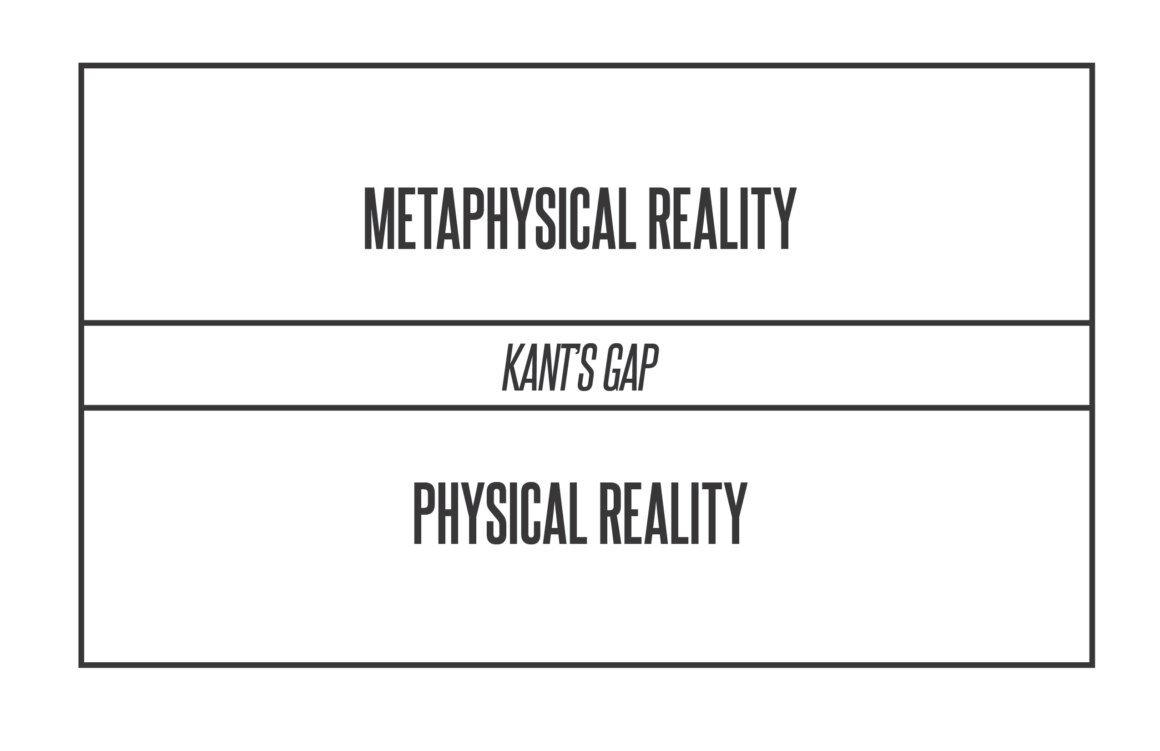
I’ve covered at length here how that is an incorrect conclusion: the sheer fact that there are other options exposes its reductionism. That is not to say Kant was wrong about everything—far from it. He did incredible work, synthesizing the greatest minds of his time. The irony still is that one of his greatest contributions to Western philosophy, his “Categorical Imperative,” was just the Golden Rule repackaged, a pattern we’ll see in the next part. Kan’ts Imperative is: “Act only according to that maxim whereby you can at the same time will that it should become a universal law.”
This division that we’ve all danced around can be broken down this way:
A Binary Split
| External Realm | Internal Realm |
| Objective Reality | Subjective Experience |
| Empirical Observation | Unmediated Contemplation |
| Dogmatic Norms | Divine Illumination |
| Result: | Western Intellectual History (Suspicion of Interiority) |
In America’s political division, the Left and Right may not map perfectly along upper and lower story lines, but can be clearly seen in how battle lines are drawn and engaged. The parallel lies in the temptation to turn partial truths into total explanations. When competing systems fight for exclusive custody of reality, the human being becomes the territory being contested rather than the person both systems ought to serve.
| Political Left | Political Right | |
| Commonly emphasized concerns | Equality, identity-based inclusion, social protection, and reform | Tradition, social continuity, order, and personal or institutional autonomy |
| What these concerns can protect | People excluded or disadvantaged by existing arrangements | People and communities threatened by destabilizing change |
| What happens in isolation | The pursuit of justice can become ideologically rigid, apathetic, dismissive of trade-offs, or overconfident in favored solutions | The defense of tradition can become resistant to necessary reform, dismissive of exclusion, or overconfident in inherited solutions. |
| The resulting conflict | Opponents become obstacles. | Opponents become threats. |
| What gets lost | The complexity of human needs, limits, relationships, and unintended consequences | The complexity of human needs, limits, relationships, and the consequences of preserving existing arrangements |
A person is not an ideological territory, and reality is not made whole by winning a fight over which fragment gets to rule. Over time, this “line” shifts and moves across different lines as human societies evolve.
An everyday way of summarizing it is that we humans like to point to exterior things to determine truth, and then become dependent on our relationship to what we think is true. Humans can exhaust themselves managing this. We split our lives into categories and social roles to maintain an exterior equilibrium, which is about maintaining our internal perceptions and behaviors. At the end of the day, however, every human, no matter their belief system and religious thought, must actually walk in the fullness of reality, not just one story. We’re all created mystical, spiritual, and physical beings existing in a much bigger universe than our own mind.
Every human being has an interior life and has access to contemplative awareness. Even if a person isn’t good at it, or uncomfortable with it, it is still there. Even a reaction against it points to a subjective interiority, a much more complex being than mere rationality or materialism.
Theological Taboos Against Contemplation
If we are built for this fullness, why did history hand us a rigid, split box?
Within Western orthodoxy, particularly following the Middle Ages and the Counter-Reformation, unmediated contemplative practices, ecstatic states, and internal silent prayer were often viewed with institutional skepticism. Silence and inward emptying were often reframed as dangerous spiritual passivity.
Esoteric and mystical practices fell into a Western category of witchcraft, and anything that opened one up to the spiritual was a possible gateway for the Devil. In this process, Christianity, by the time of Constantine, had fallen for the same temptation as the Pharisees. A movement that spread on its own without the government had now also become tied with earthly powers and top-down hierarchical structures. The Kingdom of God Jesus proclaimed in everyday commoners’ and sinners’ midst was now relocated to an upper story.
Of course others have used mystical and magical experiences for mixed and less than holy motives, but so did God’s people use God’s teaching and tools. Scripture is replete with warnings. If witchcraft is dangerous, then Christianity, held and performed from an incorrect mindset, is anathema. In fact, religious thought has often been a tool for manipulation and propaganda, for games and control, the type of sorcery, whether micro or macro, Scripture advocates against.
While everything “non-Christian” was lumped into one demonic category, from Tarot cards and Ouija boards to Eastern meditation and yoga, Christendom became a whitewashed tomb. Instead of ministries of reconciliation, it formed games of social competition and finger-pointing. “Going to church,” and the right kind, became more important than “being” the Church. How we use things can be demonic, not the things themselves, “and no wonder, for even Satan disguises himself as an angel of light” (2 Corinthians 11:14).
Contemplative practices aimed at transcending discourse were accused of leaving the mind unguarded, vulnerable to demonic deception, or open to heresy. Grace was redefined as a substance mediated through sacrament, correct doctrine, and rational loyalty, rather than an immediate, direct realization of the Indwelling Presence. Salvation was moved to an afterlife, and God’s will was declared as already known by mankind.
When an organic, decentralized movement becomes state religion, unmediated internal experience becomes a direct threat to the empire. Grace is turned into a transaction mediated by clergy and correct doctrine.
In the course of church history, movements would be birthed from this tension, as well as persecutions of one Christian over another, violating the one core command of Jesus: to love one another as He loved us (and died for us). The Gospel became a point of division and argument rather than forgiveness, healing, and restoration. Narcissism of small differences took over, in the midst of ongoing historical changes, until the core thesis of Christ was lost. The exteriority became the Kingdom of God again, not the human heart.
Scholastic Boundaries: Thomas Aquinas & the Limits of Knowing
In the Summa Theologiae, Thomas Aquinas systematically examined the relationship between human cognition and divine reality. His position was more nuanced than a simple rejection of direct encounter: human beings cannot comprehend God’s essence through their natural intellectual powers, yet divine grace can elevate human knowing beyond its natural limits. In ordinary embodied life, the intellect works through sensory experience and imagination. Aquinas wrote:
“In the present state of life in which the soul is united to a passible body, it is impossible for our intellect to understand anything actually, except by turning to the phantasms.”
— Thomas Aquinas, Summa Theologiae, I.84.7.
“Phantasms” means mental representations derived from sensory experience, not supernatural apparitions. Aquinas argues that embodied human cognition depends on these representations, even when we reason about realities that cannot themselves be seen or touched. His position is not that God can only be encountered through external authority, nor that divine illumination is impossible in this life. He explicitly distinguishes natural knowledge from the more perfect knowledge made possible by grace.
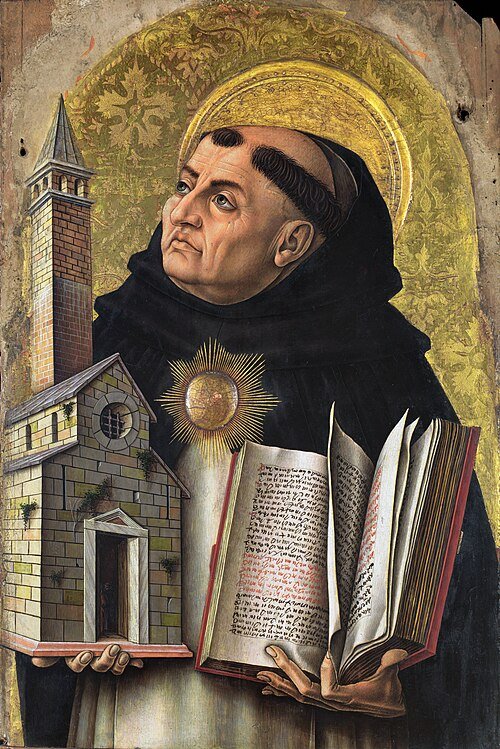
Aquinas places limits on what the natural human intellect can know of God directly, and he distinguishes our present knowledge from the vision of the divine essence associated with ultimate beatitude. Thomas’ ultimate beatitude, called the visio beatifica or the Beatific Vision, is the final, supreme end of human existence, where a person achieves complete and lasting happiness. According to Aquinas, the Beatific Vision is for the next life, not this one.1
The question for our purposes is what happens when theological distinctions become cultural boundaries: when a legitimate account of the limits of ordinary cognition becomes a reason to distrust the possibility of immediate interior encounter.
Western theology can acknowledge divine illumination while still privileging authorized interpretations, established categories, and mediated forms of knowing. The issue isn’t whether Aquinas personally rejected interiority. He didn’t. He was arguing for a particular kind of interiority and the way human beings must come by it—all of which are mystical processes to undergo and results to be had. The issue is whether later Christian systems have sometimes turned distinctions about how we know God into restrictions on how we are permitted to seek God.
Meister Eckhart as a Radical Counter-Strike
Meister Eckhart, a German Catholic priest and mystic from the late 13th and early 14th centuries, offers a different emphasis from within the same Dominican intellectual tradition. Rather than treating the soul’s relationship with God primarily as a question of the limits of human cognition, Eckhart presses toward detachment, the unknowing of God through ordinary concepts, and the divine ground beyond the distinctions through which the ego ordinarily understands itself.
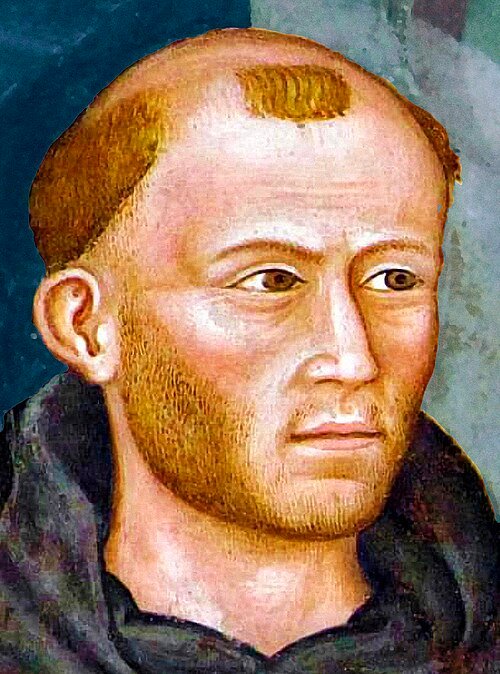
In one of his sermons, Eckhart said:
“God is nameless because none can say or understand anything about Him.”
— Sermon 96, in The Complete Mystical Works of Meister Eckhart
Eckhart’s point isn’t simply that language is inadequate, and we should stop talking. He argues that our concepts cannot contain the divine, and even our most exalted ideas about God can become obstacles when we mistake them for Godself. The only true option is to experience it, which is far from purely logical. The soul’s deepest transformation requires detachment from the possessive impulse to grasp, define, and control the divine through thought. It’s also through this that transformation of the mind comes.
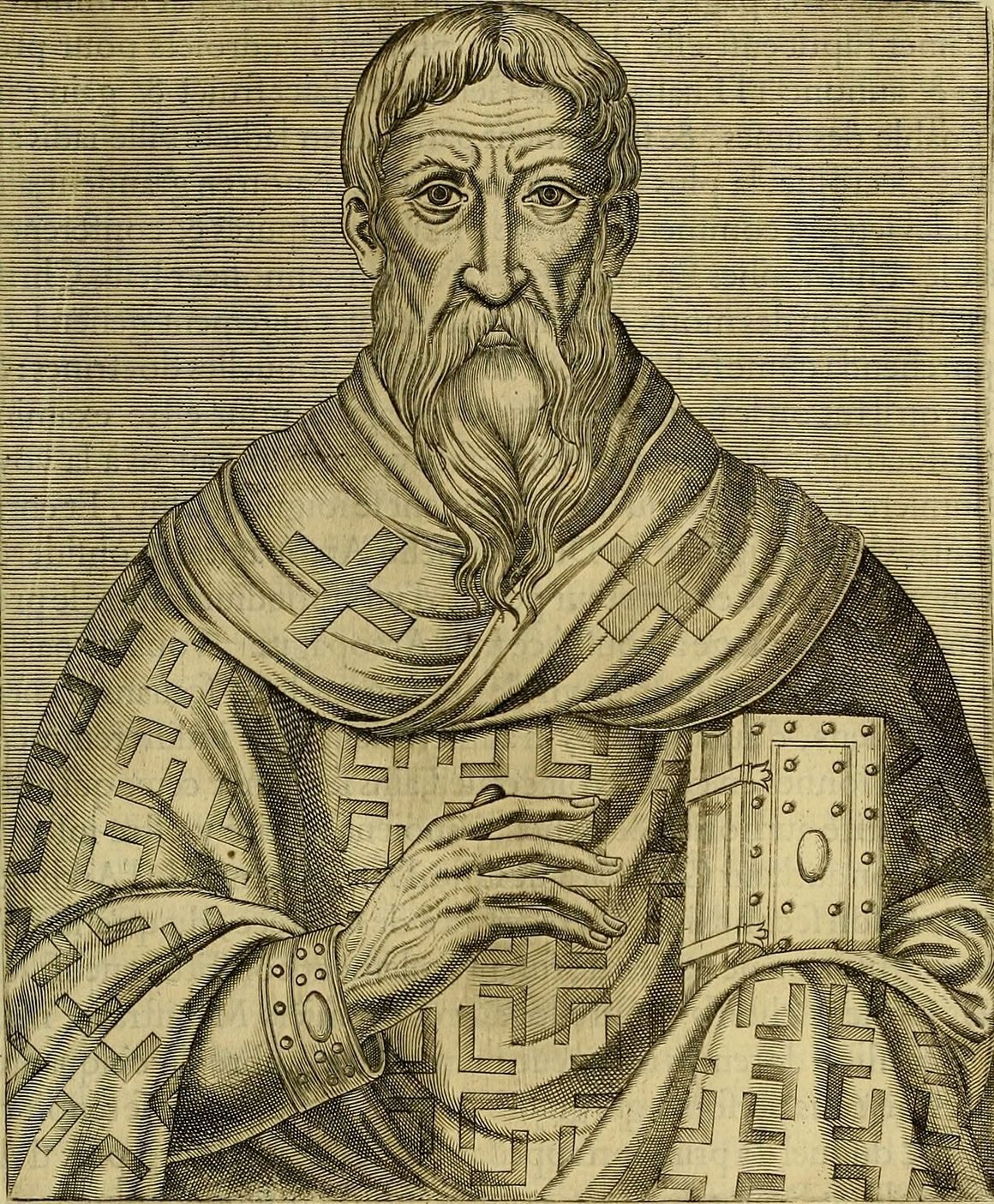
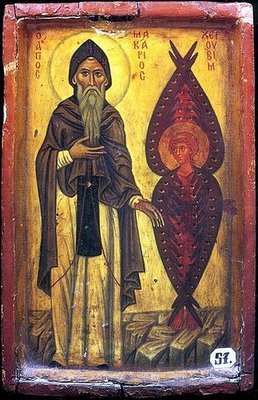
Meister Eckhart held to an old apophatic tradition, a way of approaching God through the recognition that God exceeds our concepts and descriptions. Ancient Christians like Pseudo-Dionysius and the Desert Fathers preserved and practiced such spiritual technologies. Eckhart’s language of the divine ground presses this beyond an intellectual acknowledgment of mystery toward a radical transformation of the soul’s relationship with God.
Where scholastic distinctions can be used to establish the limits of what the intellect can claim, whether inside or outside of a religious topic, Eckhart asks what happens when the seeker relinquishes the demand to possess God through concepts at all. His answer is not the abandonment of reality for subjective fantasy. It is the possibility that our habitual, self-centered way of perceiving reality must itself be transformed.
Aquinas and Eckhart should not be reduced to opposing teams, but they offer a clear contrast of the concepts at play. They share a theological history together, and both recognize the limits of ordinary human knowing before God. However, Eckhart’s language of detachment and the divine ground brings a dimension of interior transformation into sharp relief. He challenges any religious framework that confuses its descriptions of God with the living reality those descriptions attempt to name.
Epistemological Fallout
A larger problem emerges when the distinction between knowing about God and being transformed in our relationship with God hardens into a division between external religious knowledge and interior experience.
Christianity can preserve sophisticated doctrines, correct terminology, institutional authority, and carefully reasoned arguments while losing sight of the transformation toward which they are supposed to lead. The map becomes the territory. The description becomes a substitute for participation. The seeker learns what to say about God without necessarily learning how to become receptive to the reality those words point toward.
This is not a problem unique to scholasticism, nor can the history of Western Christianity be reduced to a single decision to choose Aquinas over Eckhart. In truth, reductionism might be one of humanity’s original sins. Western Christianity also produced rich contemplative traditions, and Eckhart himself emerged from within them. The historical tension is more complicated than a clean separation between reason and mysticism.
Christianity’s complexity strengthens the central question: What happens when a religious tradition increasingly treats its authorized account of reality as more trustworthy than the transformed interior awareness through which that reality is lived?
The problem isn’t reason, doctrine, or theology. Each can illuminate. The problem is when the tools for understanding reality become substitutes for participation in it, and when the human interior is treated primarily as a threat to be managed rather than a dimension of the person capable of transformation.
All mystics expose the limits of that arrangement. They insist that knowing God cannot be reduced to possessing the correct concepts about God. At some point, the seeker must confront the difference between describing the divine and being changed by the encounter. That is where the Western binary begins to break down, and where the possibility of a more integrated understanding of human existence begins to emerge.
How Early Can We See the Divide?
In general, this divide can be felt, no matter what denomination or worldview one finds themselves in, albeit maybe with different labels and categories and from different lived contexts.
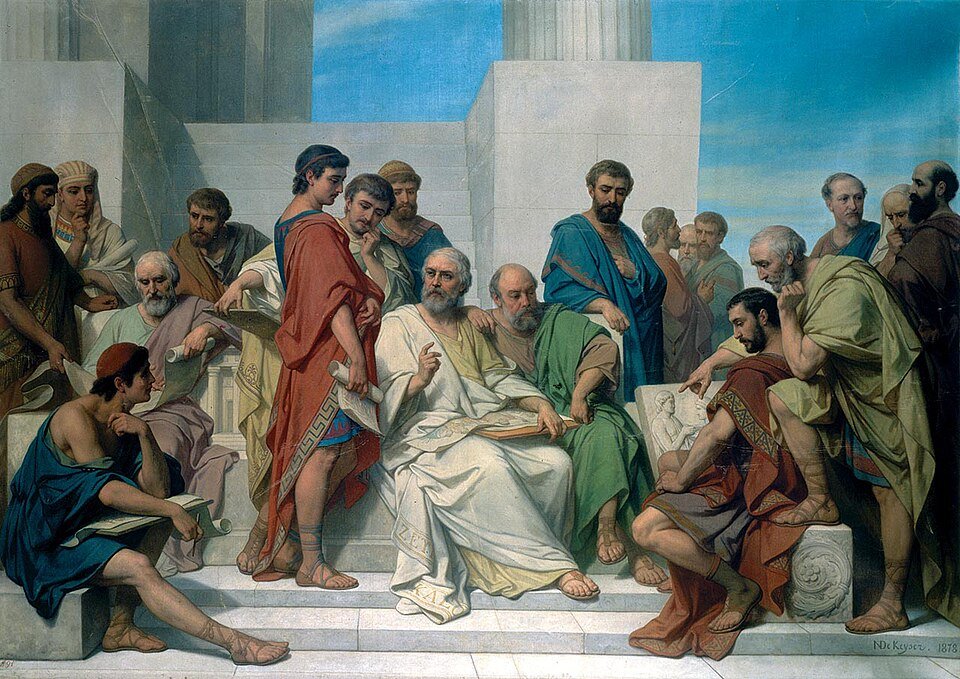
To see how old this line is, and what the alternative is, we’ll go back to Greece’s Enlightenment and its origins. Our modern society claims much from this era, and by looking at it accurately, we can also get a clear glimpse of the world Christianity overtook with a much deeper and truer truth, one that claims all humans are inevitably in the same boat.
This line runs down the heart of every human, and what we do with it determines a lot.
That’s where the second piece will pick up. Its anticipated publication is next Sunday.
- There’s an inherent risk with a worldview that projects its fear of mortality and atonement into an afterlife. It’s, in essence, kicking the bucket down the road. ↩︎