Table of Contents Show
“And he made from one man every nation of mankind to live on all the face of the earth, having determined allotted periods and the boundaries of their dwelling place, that they should seek God, and perhaps feel their way toward him and find him. Yet he is actually not far from each one of us…”
— Acts 17:26–27
This is a field trip. We’re going to see what Acts 17:26–27 looked like on the other side of Rome’s Eastern border: geographically, theologically, and otherwise.
The question here is not “What caused what?” That question matters, but the evidence is often thin and contested. So, another useful question is: “What do we see?” What patterns emerge? Where do structures begin to resemble each other?
We’re going east to a world Western accounts barely map. When we get there, something comes into focus: multiple religious traditions developing within the same ecosystem, traveling the same trade routes, translating across the same languages, and, in some cases, arriving at strikingly similar structures. One of those trajectories was absorbed into the Roman Empire and formalized into law. Others continued east, embedded in trade networks and local cultures, and survive today only in fragments of the historical record.
The TLDR: Christianity didn’t develop as a single linear tradition but along multiple trajectories, including an eastern, Syriac-speaking stream that operated within Silk Road networks. Religious transmission followed existing commercial infrastructure rather than centralized institutional planning.
“For many centuries, the Christian heartlands lay not in Europe but in Asia and Africa.”
— Philip Jenkins, The Lost History of Christianity
Bactria & Cultural Crossroads
Bactria, modern Afghanistan and Tajikistan, was a hinge of the ancient world. From the 1st through 3rd centuries AD, it sat at the crossroads of the Roman Empire (via Parthian and Persian trade corridors), Han Dynasty China, and the Indian subcontinent. The Silk Road wasn’t one road. It was a web, and Bactria was a key junction.
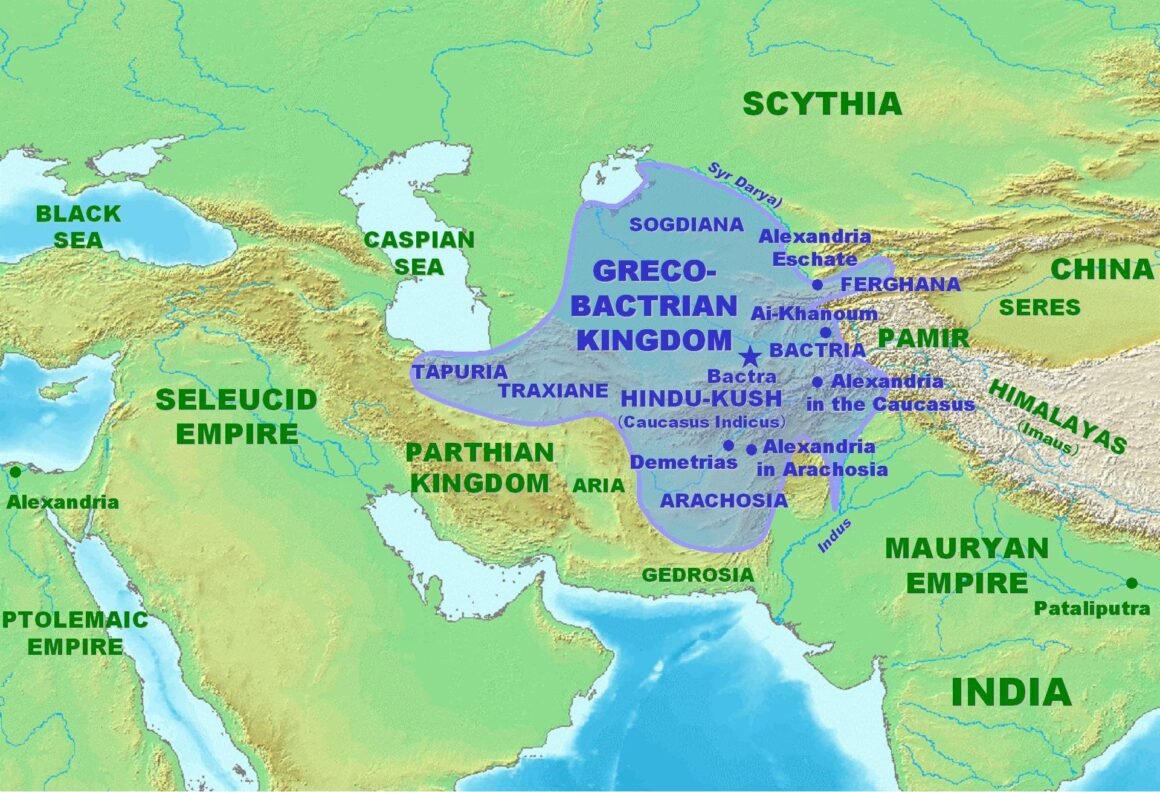
Under King Kanishka I (c. 127–150 AD), the Kushan Empire sponsored Buddhism while minting coins that depicted Greek, Zoroastrian, and Hindu deities alongside each other. Rather than merely religious confusion, it was the logic of a trade empire. When an economy depends on commercial coexistence, you produce currency legible across cultures.
Alexander the Great’s earlier campaigns had already set this in motion. Greek intellectual culture interacting with Indian philosophy produced Greco-Buddhism: The first anthropomorphic statues of the Buddha, sculpted in the Greek himation robe, with Apollonian features, appeared. Prolonged cultural proximity rendered the Buddha in Greek aesthetic categories.
The linguistic infrastructure helped make it all possible. For centuries, Greek, Aramaic, and Sanskrit/Prakrit coexisted in the same markets. Translating across those languages wasn’t just a labeling exercise; it was a crucial infrastructure for commerce and foreign policy. More importantly, words functioned as cargo—carrying cultural neighborhoods back and forth across borders. Translation imports and exports conceptual frameworks into preexisting operating systems.1
The Eastward Direction & Other Apostolic Ages
One standard account is that after Jesus, when the apostles spread into the Roman world, Paul went west. Then, Christianity became Roman and then European.
One of the few things that account skips is that, while Christianity expanded westward in Greek, a parallel stream expanded eastward in Syriac, a dialect of Aramaic which Jesus spoke fluently. This was also not a fringe movement. It was organized and theologically serious. The Silk Road was a commercial infrastructure that happened to carry information along with the goods. And Christianity branched and spread into the Eurasian continent up through Constantine.
One launchpad was Edessa (modern Urfa, Turkey), where a Christian community was established by the mid-1st century. From there, Syriac Christianity traveled east along established Jewish Diaspora trade networks, routes that already connected Antioch to Babylon to Bactra. No central planning required; the infrastructure already existed. The Gospel hitchhiked with the spices.
Thomas & the Twin
Tradition places the Apostle Thomas in the Indo-Parthian Kingdom by 52 AD, interacting with King Gondophares, a historical ruler, confirmed through coinage and inscriptions2. The Indo-Parthian Kingdom was essentially a successor state of Greco-Bactria.
A primary source is the Acts of Thomas, a Syriac text from the early 3rd century, and not to be confused with the Gospel of Thomas.
“Thomas” in Aramaic and “Didymos” in Greek both mean Twin. In the Gospel of Thomas and related Syriac traditions, Thomas is framed as the spiritual twin of Jesus — not physically, but in the sense that the disciple, through encounter and realization, comes to recognize the same divine nature in himself that Jesus embodied, a distinct theological claim about the nature of salvation (soteriology) and Christ (christology).
In contrast to the Eastern frame, Roman soteriology framed the human problem as legal: we owed a debt we cannot pay, so Christ pays it; salvation and status were regulated by institutional teaching. The Thomasine frame was cognitive (epistemological): it dealt with innate being and mindsets. The problem was not a broken law, but a blurred vision, ignorance of one’s own nature. The Teacher’s function is to awaken, not to transact. One model required institutional mediation. The other did not.
It was from this branch and almost lost tradition that the Church of the East was born, involving millions, set apart before the Roman Catholic Church could fully coalesce.
The Church of the East
“Buddhism and Christianity are much closer than most people think when both are understood at their deepest levels.”
— Richard Rohr, The Universal Christ
The Church of the East, often called Nestorian, though that label carries political baggage, operated along the Silk Road for centuries and looked almost nothing like Western Christianity, with no grand basilicas. Their model was clinics, schools, and monasteries. Key academies were at Edessa and Nisibis, Turkey. Missionaries traveled as physicians and translators, not as colonial administrators.
One documented stop along that eastward route was Taxila, a premier Buddhist university in the Gandhara region (modern Pakistan). Syriac Christian missionaries were present at a major center of Buddhist scholarship. The idea that no philosophical exchange occurred there requires an implausible level of insulation.
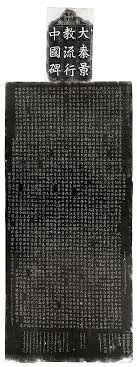
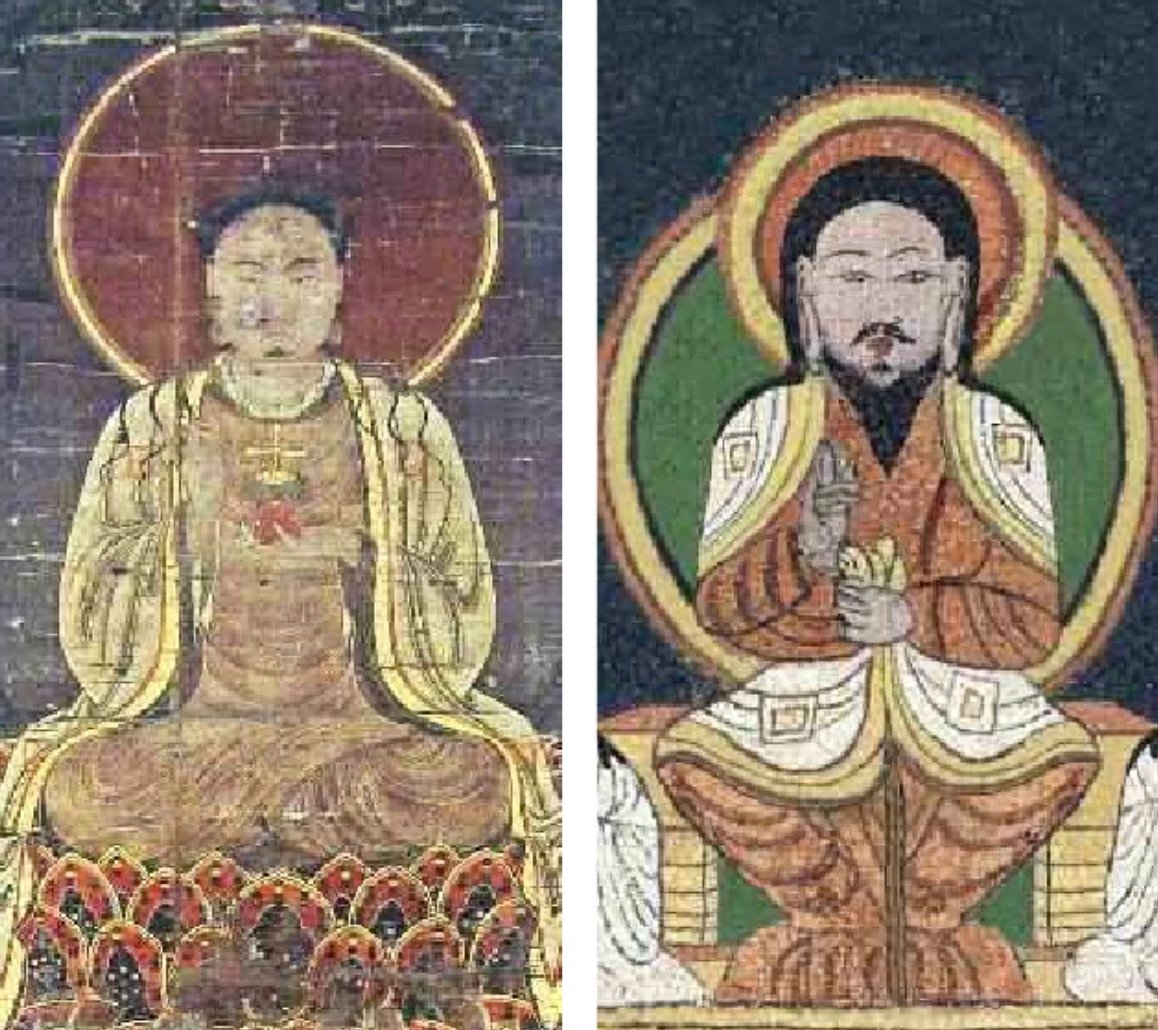
Downstream evidence of this is found in the Jesus Sutras, documents produced by the Church of the East when it reached Tang Dynasty China in the 7th century. In them, God’s teachings are called the “Dharma.” The Holy Spirit was the “Pure Wind.” An artifact called the Xi’an Stele summarized Christianity’s “luminous” faith in Chinese3. Artwork of Jesus portrayed as a new Buddha sprang up.
Missionaries were not losing track of their tradition. They were sophisticated translators, translating truth across linguistic frameworks. They used existing Chinese philosophical vocabulary (including terms also used in Buddhism) to express Christian concepts. The implications are that translation is never neutral. Language is an operating system. When we change the vocabulary, we shift the architecture of how the idea is held in that linguistic world.
“Christianity is probably the most translatable religion in the world.”
— Andrew F. Walls
Manichaeism
Mani (c. 216–274 AD) was raised in a Jewish-Christian sect in Mesopotamia, and what he built was a deliberate synthesis: Zoroastrian archetypes, Buddhist monasticism and reincarnation, and Christian messianism. His movement packaged his teachings in texts translated into local languages wherever its missionaries traveled.
Manichaeism’s reach was extraordinary: from North Africa, where St. Augustine practiced it for nine years before his conversion, to Central Asia and China. It was one early attempt to synthesize a Christian-Buddhist-Zoroastrian framework. The movement was later suppressed by multiple imperial systems, including Roman Christianity. Its erasure is not a small detail.
The man who once practiced Manichaeism was later canonized by the tradition that outlawed it.
Arianism & Armenia
By the 4th-century, the Arian controversy erupted, centered on a specific question: was the Son coequal and coeternal with the Father, or a created being subordinate to and proceeding from the Father?
Arianism held the latter. A divine Son who is an emissary and teacher, not ontologically identical to the Source but proceeding from It, bears a structural resemblance to the Bodhisattva concept that is worth noting.
The careful framing matters. There is no evidence that Arius studied Buddhist texts. The more precise claim here is of structural isomorphism: Step back and look at these few hundred years as a whole, and both models were developing within a Silk Road ecosystem. One favored Teacher/Template architectures over Imperial/Legal ones. Different traditions, same environmental pressure, with convergent structural solutions.
Armenia is an important data point. It was also the first nation to officially adopt Christianity as a state religion (c. 301 AD, beating Rome). Armenia sat at the military and cultural fault line between the Roman and Persian/Sassanid empires. Its theological character was shaped in that position, never quite Roman, never quite Eastern, while absorbing and filtering both.
This independence required its own infrastructure. In 405 AD, Mesrop Mashtots invented the Armenian alphabet specifically to translate the Bible, ensuring that their theology wasn’t just a Roman import, but a localized reality. This geographic and linguistic independence made Armenia a significant node in the transmission patterns this field trip is tracing.
Aksum: An Ethiopian Parallel
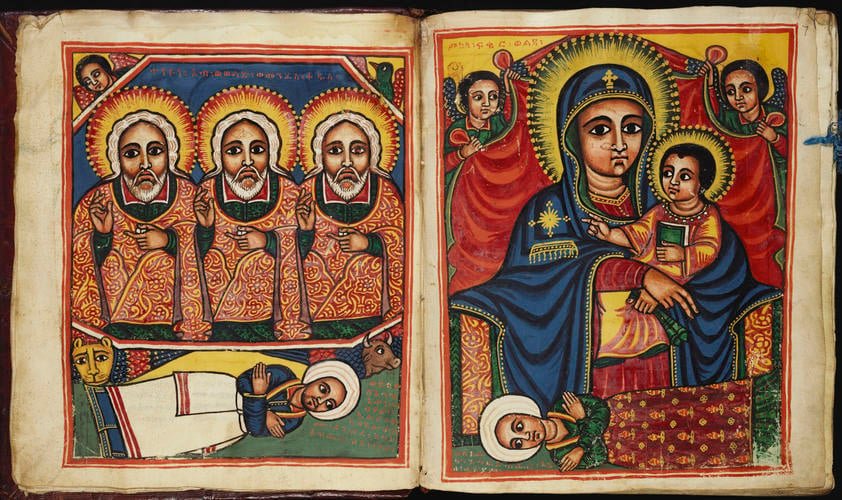
The Kingdom of Aksum, modern Ethiopia and Eritrea, was a southern parallel to the Armenian node. Aksum’s official adoption of Christianity under King Ezana (c. 320s–360s AD) occurred in the same generation as Nicaea, yet developed entirely outside Roman imperial control.
The line of transmission ran through the Red Sea trade routes and Alexandria, not Rome. Archaeological evidence from Ezana’s reign shows a sudden change: royal inscriptions shift from invoking traditional deities to explicitly Christian language, and coinage begins to display the cross. Like Armenia and Edessa, Aksum required its own infrastructure, developed liturgical language (Geʽez), and established a unique canon and theological emphasis independent of Latin or Byzantine standardization.
The broader pattern of Christianity was not diffusing outward from a single Roman center. Instead, multiple regional powers were formalizing the religion in parallel.
“There was a continuous and complex interaction between Greek and Indian thought.”
— Thomas McEvilley, The Shape of Ancient Thought
Another Pre-Nicaean Christian Nation
Well before Constantine, Abgar was the ruler of Osroene, a small buffer kingdom between the Roman and Parthian Empires. His capital was also Edessa. His reign is generally dated from 4 BC to 7 AD and again from 13 AD to 50 AD. Excavations in Şanlıurfa have uncovered royal tombs, mosaic floors, and coins bearing the image of later Abgarid kings, specifically Abgar VIII.
According to legend, King Arbar wrote to Jesus, asking for healing. Jesus supposedly wrote back, praising Abgar’s faith, and declined the request, explaining that His earthly mission was almost finished and He was about to return to His Father. Jesus promised that afterwards, He would send one of His disciples to heal the King and bring life to his people. The Apostle Thomas sent Thaddeus to Edessa and healed King Abgar, who then converted the city to Christianity.
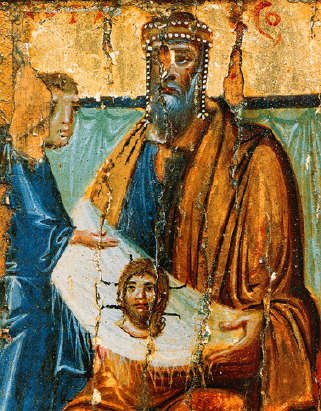
The story first appears in the Doctrine of Addai (a Syriac text) and was popularized in the West by the church historian Eusebius of Caesarea around 325 AD. Eusebius claimed to have visited the royal archives in Edessa himself, where he found the original Syriac documents and translated them into Greek for his Ecclesiastical History.
Early definitive evidence of Christianity in Edessa comes not from Abgar V (the contemporary of Jesus), but from Abgar VIII, who reigned 177–212 AD. Coins from earlier in his reign show the King wearing a traditional Parthian-style tiara. Later in his reign, coins appear where the King is wearing the same tiara, but it is adorned with a distinct Christian cross. The Chronicle of Edessa, compiled in the 6th century from older archival records, recounts how a flood of the Daisan River in November 201 AD destroyed the royal palace and, also, “the church of the Christians.” Also, Bardaisan (154–222 AD) was a high-ranking official and intellectual at the court of Abgar VIII, a scientist, poet, and “heretical” Christian thinker who wrote in Syriac.
By the time of Eusebius’s writing in the 4th century, it’s difficult to say if the legend of King Abgar was myth, legend, propaganda, history, or a mix.
The Constantine Era & Information Loss
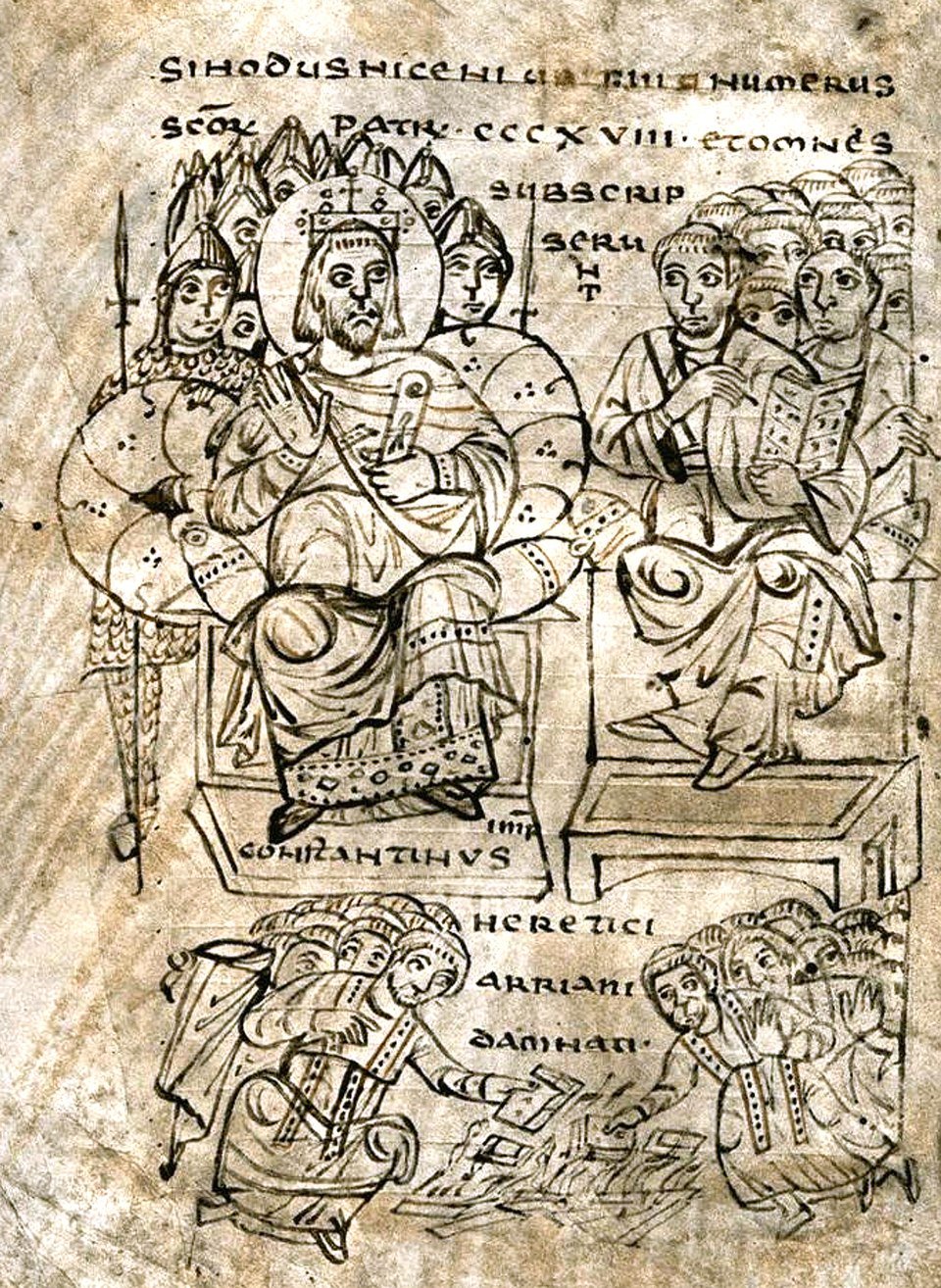
In 325 AD, Emperor Constantine convened the Council of Nicaea. The theological debate about the nature of Jesus became civil and political. The Arian controversy was genuinely destabilizing for Rome. The council was a Roman imperial project. Constantine needed a unified ideological framework for a fracturing empire. The council’s output was more than creedal: It was constitutional, a perimeter and premise: inside was Orthodoxy, outside was Heresy, and heresy now grounds for imperial enforcement.
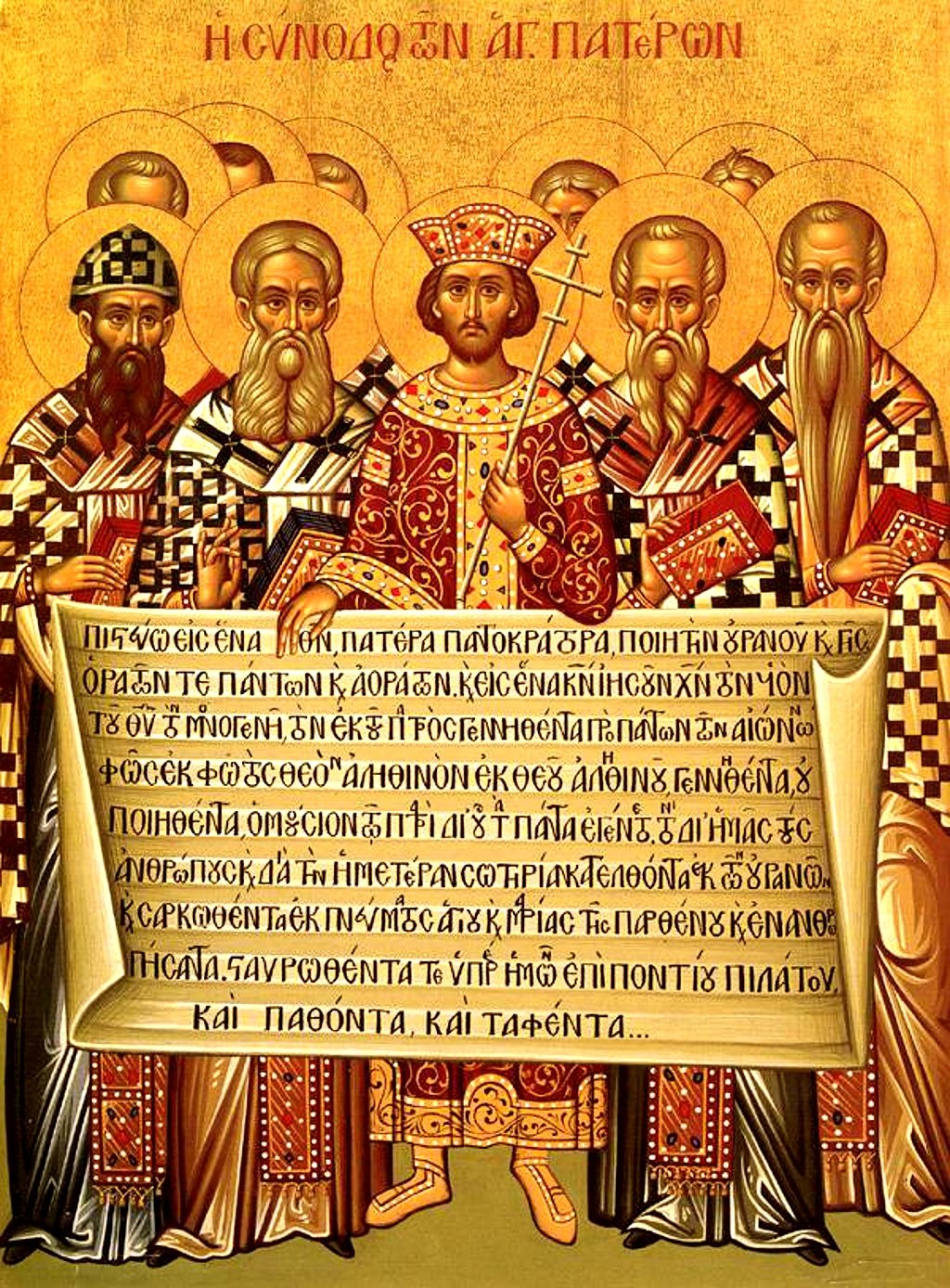
What followed was systemic. Several mechanisms are worth citing specifically:
- The coercion of the Donatists: Constantine’s handling of the Donatist schism in North Africa moved beyond debate into coercive state action. The Emperor ordered arbitration. Persecution from 317 to 321 failed, and some Donatists were killed while their churches were being confiscated.
- Reported execution of Sopater of Apamea (c. 330 AD): A Neoplatonist philosopher associated with Constantine’s court, Sopater appeared in later hostile traditions as a victim of imperial suspicion. Eunapius recorded that someone (Ablabius) deceived Constantine into thinking Sopater used magical arts to detain a grain fleet bound for Constantinople, and Sozomen preserved a polemical report that Constantine once asked Sopater for purification after Crispus’s death.
- The trial and beheading of Priscillian of Ávila (385 AD): Under Emperor Magnus Maximus, the precedent for state-led execution was established. Priscillian, who practiced a rigorous asceticism emphasizing personal spiritual realization, was tried in a secular court at Trier. Crucially, he was for maleficium (sorcery). By charging him with magic, a capital crime in the Roman penal code, the state bypassed theological nuance to achieve a physical result. His execution, along with several followers, was the first time the Roman legal perimeter was successfully used to terminate a “heretic,” transforming the “Teacher/Template” tradition into a terminal offense.
- Destruction of texts: Following the Council of Nicaea, Constantine’s Letter to the Heretics, recorded by Eusebius, not only banned meetings but also ordered the immediate confiscation of their property and the surrender of their books. In 448 AD, Theodosius II and Valentinian III issued an edict specifically targeting the writings of Porphyry and Nestorian texts, commanding that they be sought out and committed to the flames. The local market and the private library turned into a zone of state surveillance. Conceptual frameworks were systematically outlawed by their source.
- Taxonomic reclassification. The Theodosian Code (Book XVI) contains over 60 edicts specifically targeting “heretics,” defining them as anyone who “deviates even a hair’s breadth” from the Catholic faith. The decrees, spanning almost a half-century, took complex Eastern practices, such as rigorous asceticism, concepts of inherent divine nature, and proto-gnostic enlightenment models, among other things, and collapsed them into a single legal category. To keep its old bones, the proto-Christian language became Roman property while Rome shed its old Greco-Pantheon and mystery traditions, turning on its ancestors and implementing old tactics of assimilation and co-opting religions to preserve its Divine Right of Kings: Heresy. The labels were changed, while the containers remained the same, maybe a little shuffled. Once you have a single illegal label, you don’t have to engage the arguments. You enforce the category.
- Institutional survival bias. What Rome found theologically useful was a salvation model that required priests, sacraments, and institutional mediation. A theology of direct gnosis — suggesting unmediated access to the divine through personal realization — had no institutional constituency. Nobody builds a cathedral around a personal awakening. The cognitive model had no advocate inside the power structure, and no advocate means no archive.
- Nag Hammadi Library: Discovered in Egypt in 1945, the Nag Hammadi collection survived because monks sealed the texts in clay jars around 367 AD and buried them. One theory is that they were hiding them from Athanasius of Alexandria’s purge, possibly a similar impulse to the earlier preservation of the Qumran texts. Athanasius’ 39th Festal Letter standardized the 27-book canon and rejected apocryphal, “secret” texts, acting as a “cease and desist” order. The Nag Hammadi collections were one of many diverse texts. These works add bits of color, contrast, and depth to the picture of pre-Nicea Christianity, tracing an outline around evidence censored by Rome.
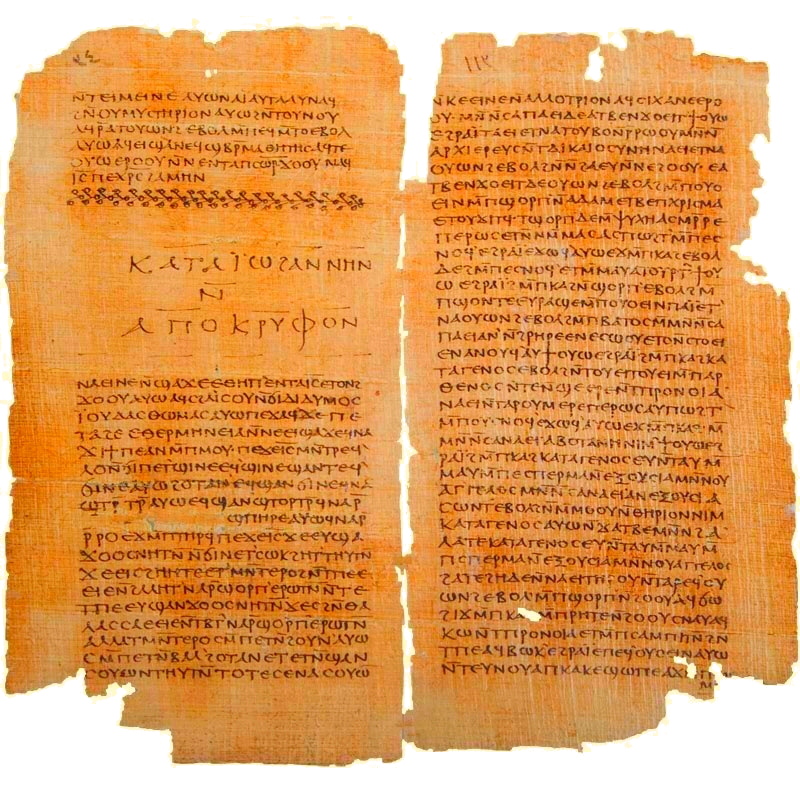
Many of these traditions persisted in the East. As one example, Merv, a city in modern Turkmenistan, was a major intellectual and commercial center along the Silk Road and survived successive Persian and Byzantine conflicts. By the early 13th century, Merv was arguably the largest “library” city in the world, a hub of Syriac Christianity, and serving as a center for translation and preservation, boasting at least ten to twelve massive public libraries.
In 1221, after the city surrendered, the Mongols slaughtered most of the population. The libraries were burned, and their sophisticated irrigation systems (the Murghab dam) were destroyed, turning a lush library oasis into a wasteland.
The technical term is survival bias. Unlike the slow “survival bias” of Roman censorship, the Mongols performed scorched earth.
We study what survives. Even silence speaks.
“Christianity is not about changing God’s mind about us; it is about changing our mind about God.”
— Richard Rohr, The Universal Christ
Two Architectures: One Source
This field trip ends before the split and fall of Rome, before the Greek Orthodox church and Constantinople was a second Rome in the East. Only a handful of stops were made, and some sights were pointed out just in passing. Similar field trips could be taken in different directions, looking at different times and contexts.
As we step back into 2026, Western and Eastern divisions still plague, while Roman and Orthodox debates circle. Pulling back from the chronology, depending on who you are, the structural picture comes into focus. History reveals not a single Christianity that spread uniformly, but one that eventually split along East/West divides with two different soteriological architectures, two different directions to questions of human nature and the Divine.
One could argue that modern Western divisions, including the current polarized landscape, are downstream tremors of this same tectonic shift. The deconstruction that accelerated during the Reformation was, in part, an attempt to recover what was lost when the “Imperial” model overrode the Source.
This field trip likely answers fewer questions than it births. My contention remains that modern theological debate is too modern; the architecture of the conversation was active pre-Nicaea. It is time those debates were revisited—not with the sword this time.
“Why do the nations rage
— Psalm 2:1-4a
and the peoples plot in vain?
The kings of the earth set themselves,
and the rulers take counsel together,
against the Lord and against his Anointed, saying,
‘Let us burst their bonds apart
and cast away their cords from us.’
He who sits in the heavens laughs;
the Lord holds them in derision.”
Works Referenced:
- The Shape of Ancient Thought by Thomas McEvilley
- The Lost History of Christianity by Philip Jenkins
- Living Buddha, Living Christ by Thich Nhat Hanh
- The Universal Christ by Richard Rohr
*Footnotes (& Leftovers)
- A couple of other examples readers can chase include the translation “Logos” into Sanskrit and, later, the Buddhist “zero” into Greek and Latin, which revolutionized Western math and accounting. Translation helps move entire conceptual worlds. ↩︎
- His name appears on inscriptions at Takht-i-Bahi, a Buddhist monastery founded in the 1st century. Written in Kharosthi script, it dates to roughly 46 AD. Before its discovery, King Gondophares was known mainly through the Acts of Thomas, which records a story of Thomas baptizing the King. ↩︎
- The Xi’an Stele (or Nestorian Stele) was erected in 781 by the Church of the East. The stele commemorated the introduction of Christianity (Jingjiao) into China, documenting 150 years of Christianity. Composed by a monk named Jingjing (a priest and bishop), the calligraphy was executed by Lü Xiuyan. It was buried around 845 during a religious persecution. ↩︎