Table of Contents Show
“It seems as if the set of pictures in the Tarot cards were distantly descended from the archetypes of transformation, a view that has been confirmed for me in a very illuminating lecture by Professor Bernoulli.”
— Carl Jung
I remember Sunday school teaching me that emptying ourselves was dangerous, and that a lot of things were gateways for evil spirits to enter, like Ouija boards and yoga.
I also remember being prayed over to receive the gift of tongues, a gift that never did come.
There were also debates about eternal security, hymns versus choruses, and the inspiration of the Holy Spirit.
These things might seem unconnected with Tarot cards, but they share a fundamental nature: Mysticism.
We’re Going East
Christians can hold a stigma towards AA, partly for this very reason. It’s not well understood, and becomes strange and is cautioned against as dangerous. Many devout believers aren’t sure what to make of it: it feels like a good thing, just not the Kool-Aid flavor they grew up with.
In AA, mysticism is the “spiritual experience” we needed to start breaking our ego and letting go of old ways. The Big Book, AA’s pseudo-bible (a very real phenomenon), clearly and repeatedly brings things back to a Higher Power, “psychic change,” and surrendering. It encourages prayer and meditation to “improve our conscious contact with God.” William James’ The Varieties of Religious Experience influenced Bill W.’s formulation of AA, grounding it in pragmatic and psychological mysticism.
The Western church’s discomfort with AA is related to its discomfort with its early Christian origins. With a little historical research and cultural studies, it is not hard to grasp that the Bible was an Eastern book and the New Testament came from the most eastern people in the Roman world.
Human beings are inherently mystical creatures. Mysticism is not something anyone can divorce themselves from. Humans experience mystical states in movie theaters, bedrooms, video games, and well-orchestrated worship environments
Today, magic is everywhere in children’s books and the MCU. Meanwhile, the church often compartmentalizes the mystical, embracing it in Narnia or Middle-earth, in its own morning services, while being suspicious of it in other spiritualities, recovery, or tangible practices. Yet, many ordinary Christians still expect God to work in almost magical ways.
The Bible can become a talisman, prayers can become incantations, the Spirit can be commercialized, and Jesus can be treated like a shortcut rather than a person to follow.
That’s closer to Gnostic thinking than to biblical discipleship.
What Made Me Take The Leap
“To have faith is precisely to lose one’s mind so as to win God.”
— Søren Kierkegaard
The more the Bible taught me, the more I’ve realized just how far Christianity’s understanding of its own Scripture had drifted from its ancient origins. The Bible was far from understood as it really is, and what it symbolized to humans was more important. Scripture was reduced to propositions and frameworks, rather than encountered as a symbolic and transformative narrative. Then these became the mystical centers of American Christianity.
Along with society, much of modern Western Christianity marginalized Eastern sciences, traditions, and practices in favor of existing rationalistic frameworks. However, in the last decade, a resurgence has grown from integrative psychology and medicine, trauma-therapy, psychedelic research, and many other areas.
Tarot cards are the same way: misunderstood by many, plenty of potential for abuse, and also an extremely helpful tool when used well. Anything, by the way, a human can wield and control is the same.
Gradually, with meditation and cognitive behavioral therapy (CBT), it became more and more a part of me. After studying magic from a psychological perspective, mysticism only grew more present in life.
And then over a year ago, I started learning Tarot cards and including them in my daily practices. There was too much evidence pointing me that way. Internal Family Systems (IFS) was a therapeutic model I came across early in sobriety, and it helped with panic attacks. IFS relies on identifying “parts” of our psyche and subconscious. Its concept of the Manager, the Exile, and the Firefighter functions like archetypal roles.
The Fool’s Journey
“If you want to improve, be content to be thought foolish and stupid with regard to external things. Don’t wish to be thought to know anything; and even if you appear to be somebody important to others, distrust yourself.”
— Epictetus
When I learned that Tarot follows a similar pattern that Joseph Campbell later described as the Hero’s Journey, I had no choice but to finally ask for a deck (they’re better gifted).
The Hero’s Journey is, if you’re unfamiliar, a common pattern in human narratives and myths, and popular in modern films. It’s the main protagonist of a story going through a character arc while overcoming the enemy of their world. In the end, the hero must overcome themselves to accomplish the task and restore hope for his or her community.
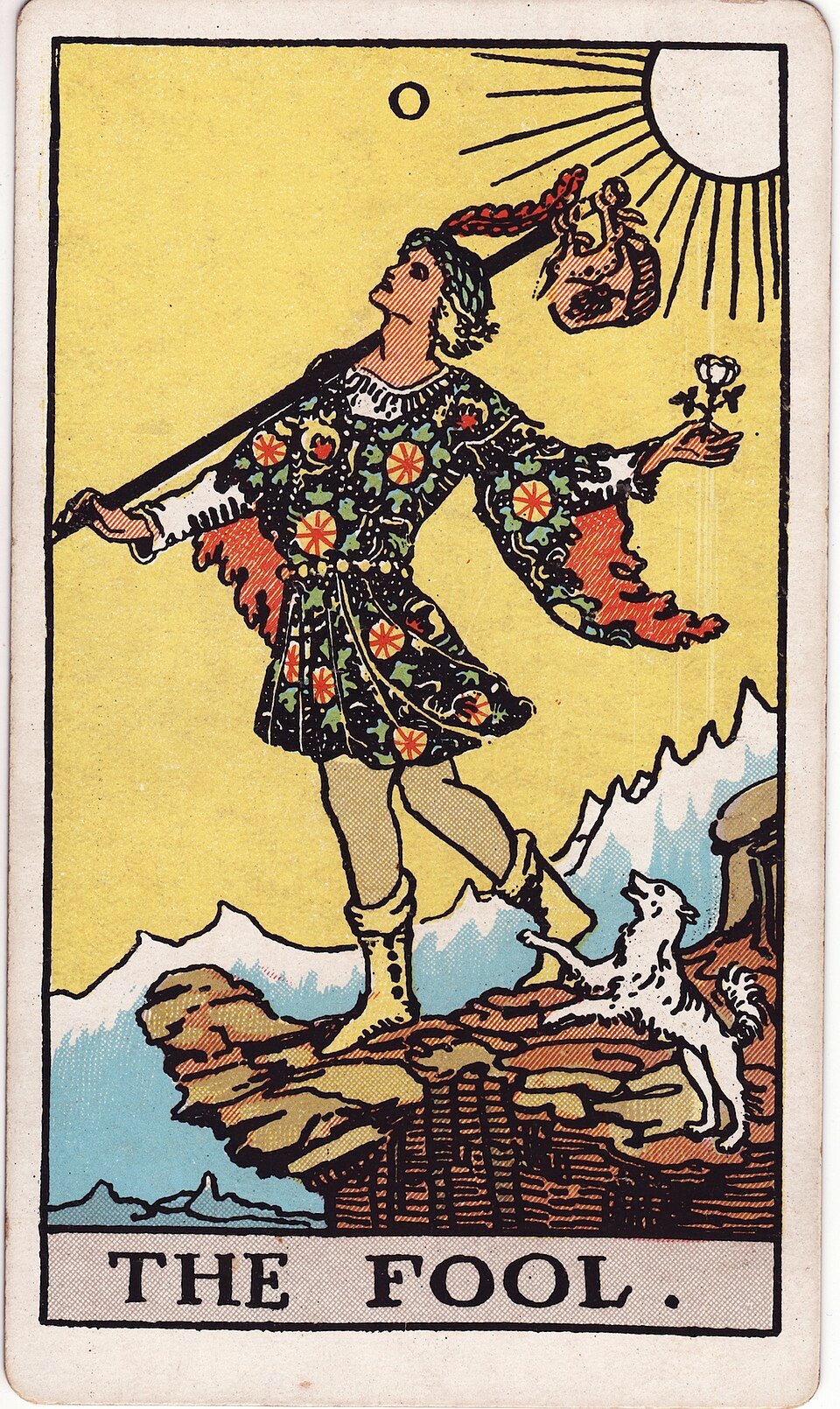
The Fool’s Journey is basically the same thing, just a little different. In Tarot, The Fool represents stepping into the unknown with absolute faith, pictured often stepping off a cliff. This parallels the Christian concept of stepping out in faith and walking the path before us.
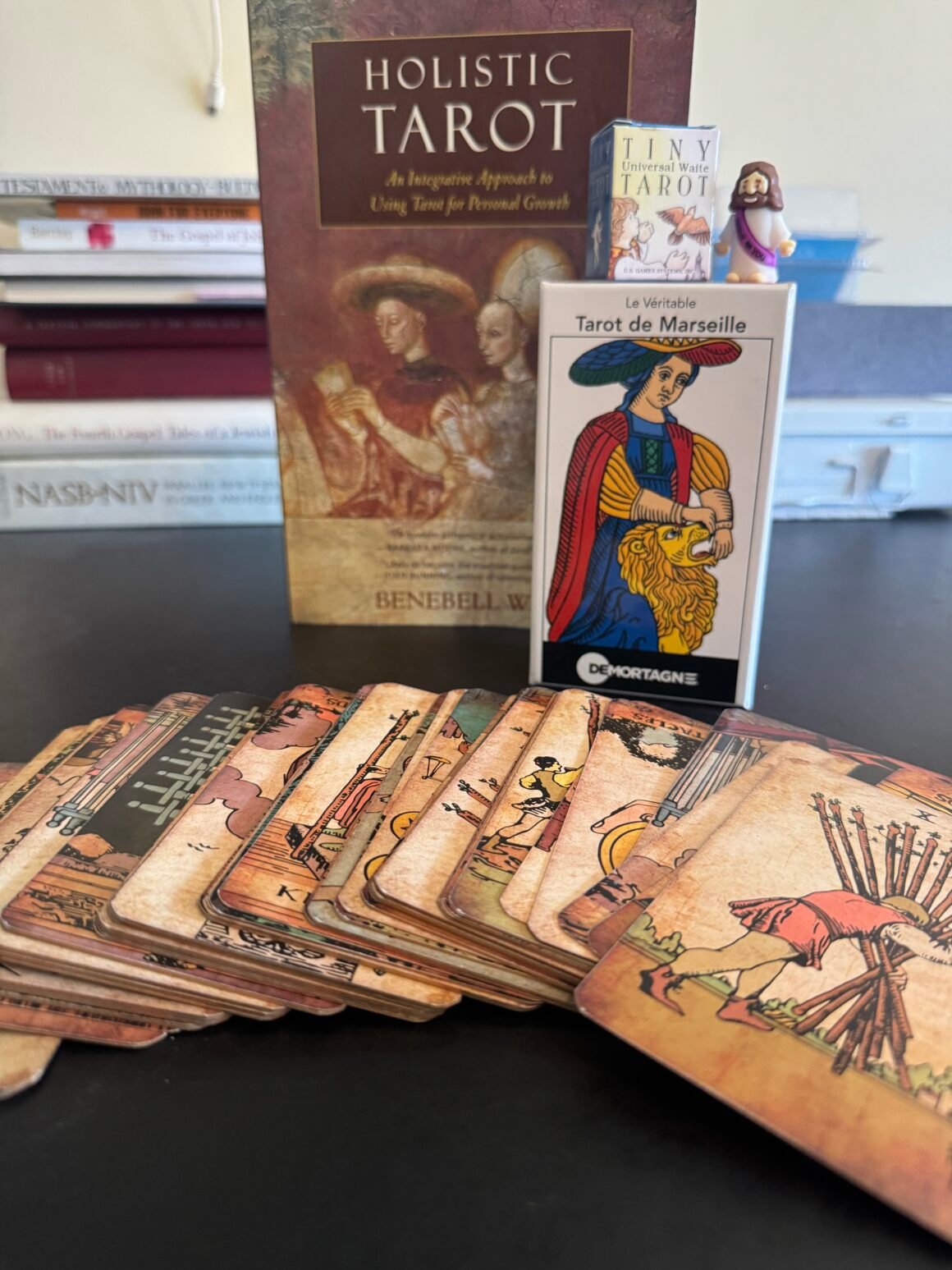
Tarot originally started as a game and developed over time into the practice it is now. Tarot decks are usually broken down into Major Arcana (the Fool’s Journey) and Minor Arcana. The Major Arcana are macro-archetypes of life, and the Minor Arcana is a collection of ordered psychological symbols and situational lessons.
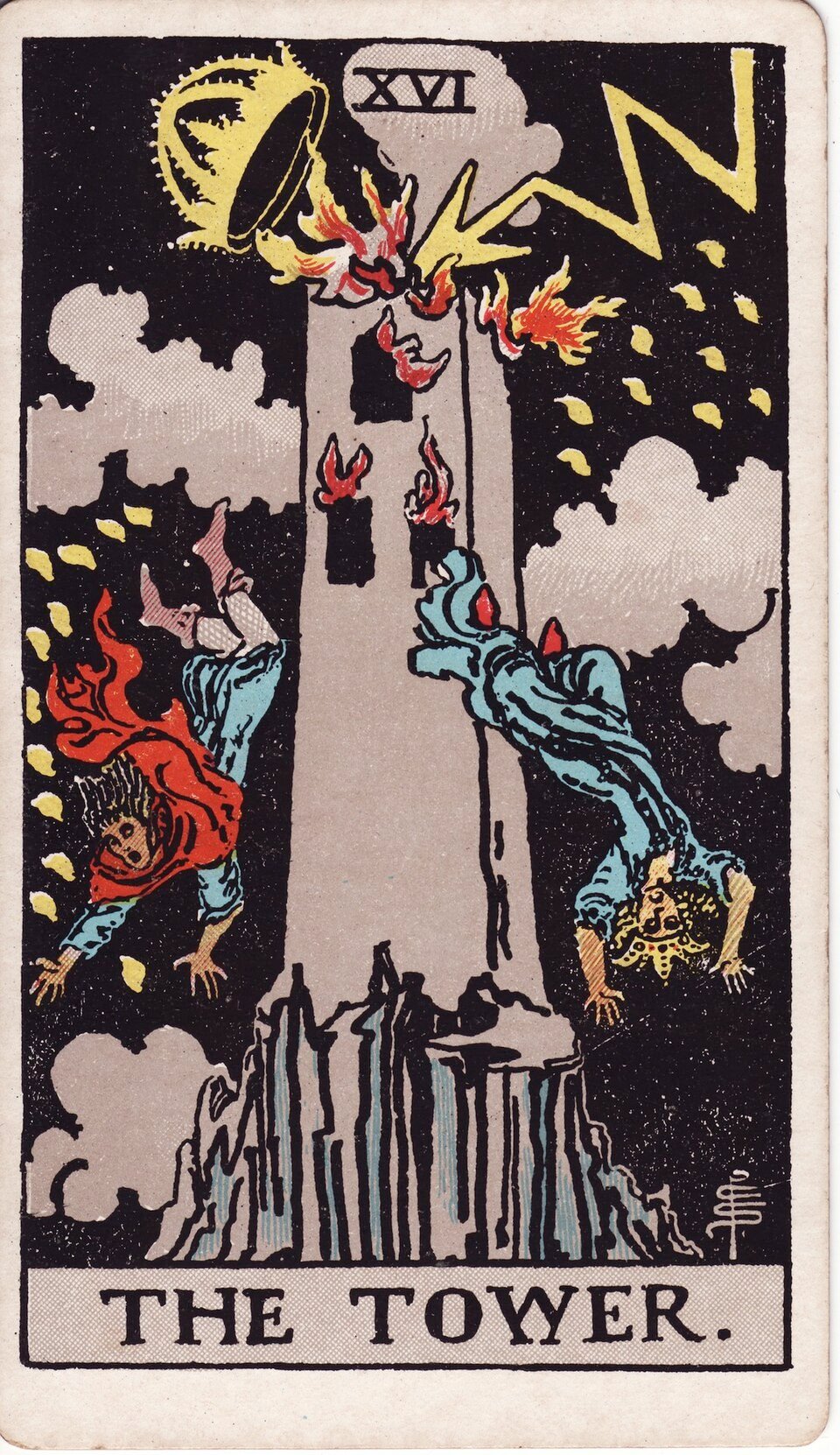
Here are a few examples:
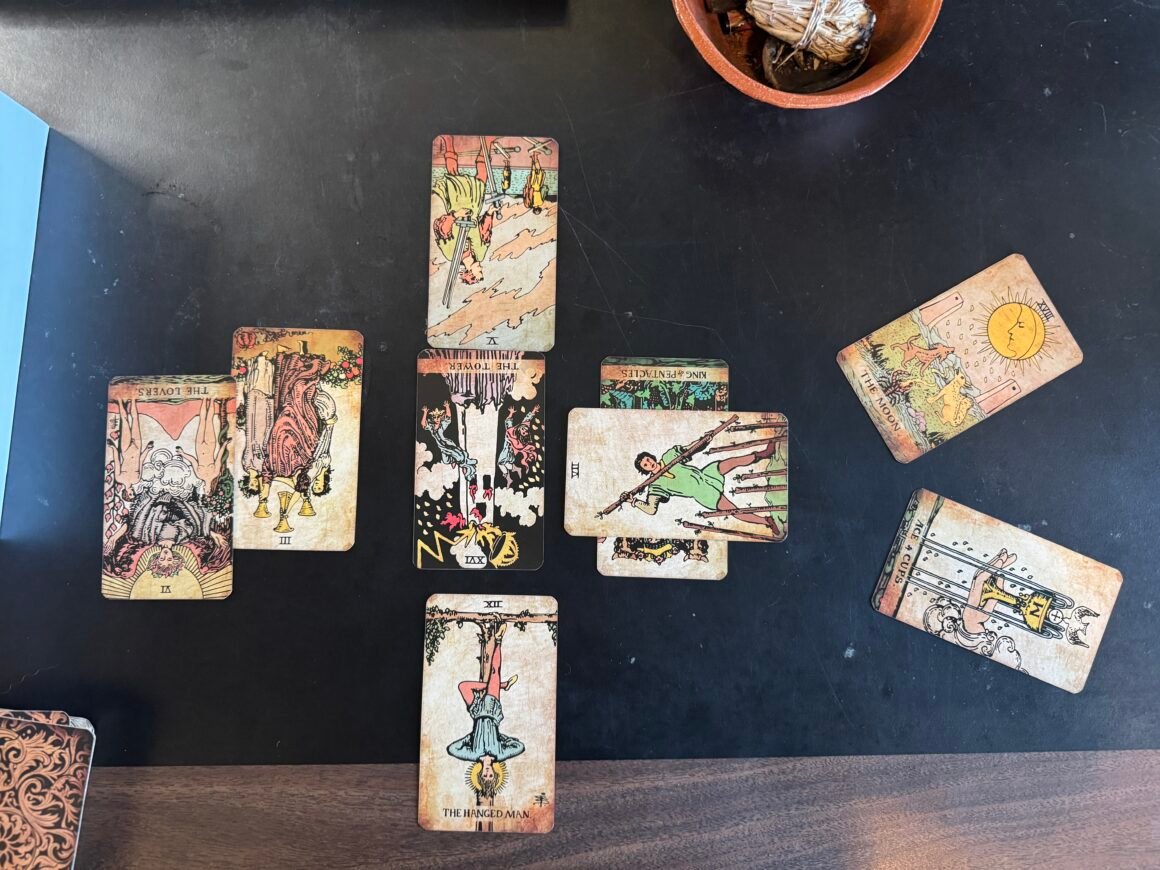
- The Fool (0): One biblical overlap to the Fool is Abram leaving Ur (Hebrews 11:8). There are times when life includes risking looking like a fool. Stoics and modern leaders have also pointed out the same truth. Pushing against culture, learning new things, and changing oneself in any context can cause false assumptions. Humans can be selfish, judgmental, and assumptive, and faith calls us to step out despite that, to trust something more true and good.
- Tower (16): This is the card that forces hard, honest conversations about the situations in life we sometimes like to avoid. It can be those times when our games fall apart, when we finally have to face consequences, or when someone’s chaos falls on us. It also reminds us that an end is on the other side and more is coming in our stories.
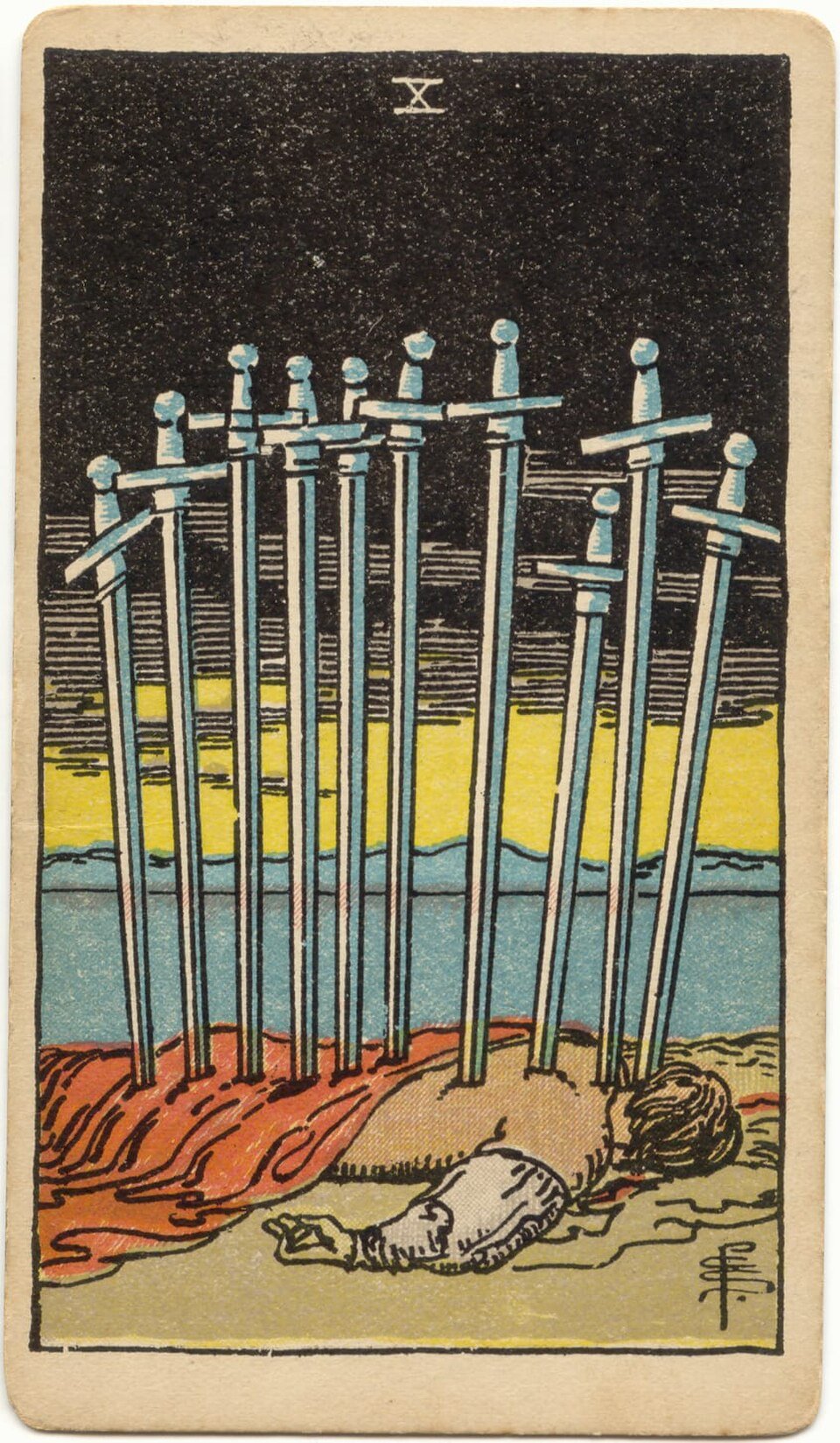
- 10 of Swords: Swords often deal with intellect, hard realities, and decisions. This mirrors the breaking of ego AA is designed for, and, biblically, it aligns with Jesus’ betrayal, death, and Holy Saturday. The stripping and suffering of Job also hold profound personal lessons for rock bottom moments. In life, we will find ourselves on both sides of this sort of lesson, both in the times we lash out and betray someone, and those times someone does it to us. Misunderstandings, drama, and conflict are guarantees. Resolution and happy endings are not.
- 2 of Pentacles: Pentacle cards are often about the material plane of life, which includes our careers and finances. The 2 of Pentacles is a special mention because it has called me out so much on trying to do too much. Balance, temperance, self-control, and restraint were not my strong suits. Tilting my cards more, I needed this one little lesson all over my life, from people pleasing and defensiveness, to anxiety and distractibility through codependency. A biblical parallel is the story of Martha and Mary (Luke 10). Martha is anxious, distracted by many tasks, juggling the demands of the house, while Mary chooses the “one necessary thing.” It can be easy to be distracted by noise and the waves of our little worlds, while we hustle around with our needed routines.
Sacred Symbols & Dangerous Tools
“Your shadow is what you refuse to see about yourself, and what you do not want others to see… The shadow is not evil; it is just hidden.”
— Richard Rohr, Franciscan mystic
Psychologically, these symbols are things any human can relate to, especially after having enough life in them. So, the magic happens in what it calls out of us and how we wrestle with them. It’s a process, a tool for paying attention to our subconscious and internal states.
In clinical psychology, the Projective Hypothesis describes how humans tend to project their unconscious biases, fears, and structures onto ambiguous experiences and subjects, which also relates to stigmas and scapegoats (*cough*). Tools like Tarot or Rorschach inkblots act as blank screens onto which our subconscious projects its internal states, hidden biases, and repressed emotions.
Once it’s out, we can do something honest with it, like letting it go.
How we approach them matters, because self-deception and delusional thinking, self-centered narratives can turn such tools into both masks and monsters that sway not only ourselves but anyone we might use them with. If any tool becomes a dependency or a shield from reality, if any tool or medicine doesn’t restore and reveal, but is used instead to conceal, manipulate, or perpetuate self-deception, the “sickness” it brings is self-inflicted. It has to be but one tool among a healthy and preexisting life. And any and every human can live without it too (there’s enough in reality for the Spirit to keep on its whispering).
This is also why taking sabbaths and fasts are effective (more things on my improvement list). They help reset and break comfortable dependencies. By stepping away and taking breaks from anything, while learning to overcome our desires, we can make sure we’re not missing anything and clear out some old junk along the way.
In theory, a healthy tarot card practitioner should be able to walk away and live a healthy, good life. This, also, is what therapy, counseling, and discipleship are interested in producing.
Playing With Fire
“The first principle is that you must not fool yourself—and you are the easiest person to fool.”
— Richard Feynman
Anyone can come up with a dozen situations where such a thing can go wrong, and that’s just the nature of things. We don’t freak out about someone having a driver’s license, unless they’ve been plowing through crowds of people. We don’t freak out about dangerous things that currently fit inside our comfortable narratives and worlds of pre-agreed-upon knowledge.
The same is true with Scripture, leadership, substances, parenting, sex, and, in our time, cell phones and AI. How we use things matters, which means these things are meant to change and help form character, spiritual depth, and honesty, and keep the “seeker” on the path before them. Christians need enough theological maturity to distinguish between idolatry and imagination, divination and discernment. Sacraments are not superstitions.
The concern has always been: Does this practice move humans toward truth, repentance, love of God, and others? Or toward illusion, enslavement, and self-deception?
Holy Fire
“Every one of us is shadowed by an illusory person: a false self. This is the man that I want myself to be but who cannot exist, because God does not know anything about him…”
We live in different times with tools and knowledge available to us. Tarot is an option for some. Off point a bit, but IFS has its own deck sometimes used in therapy. It illustrates how there already is a plethora of possible tools at our disposal, and how spiritual practices and disciplines can help ground and mature us when applied right (2 Peter 1:3-10). Meditation alone is enough to bring about deep transformation. And all of the above is always best in the context of honest and stable relationships.
Cognitive bias and ease, groupthink, and justifying egotistical thinking are just a few things to be wary of. Tarot can help disrupt our fast, automatic processing (System 1 from Thinking, Fast and Slow) and force us into slow, deliberate reflection (System 2). And it can also become toxic as fast as a human can.
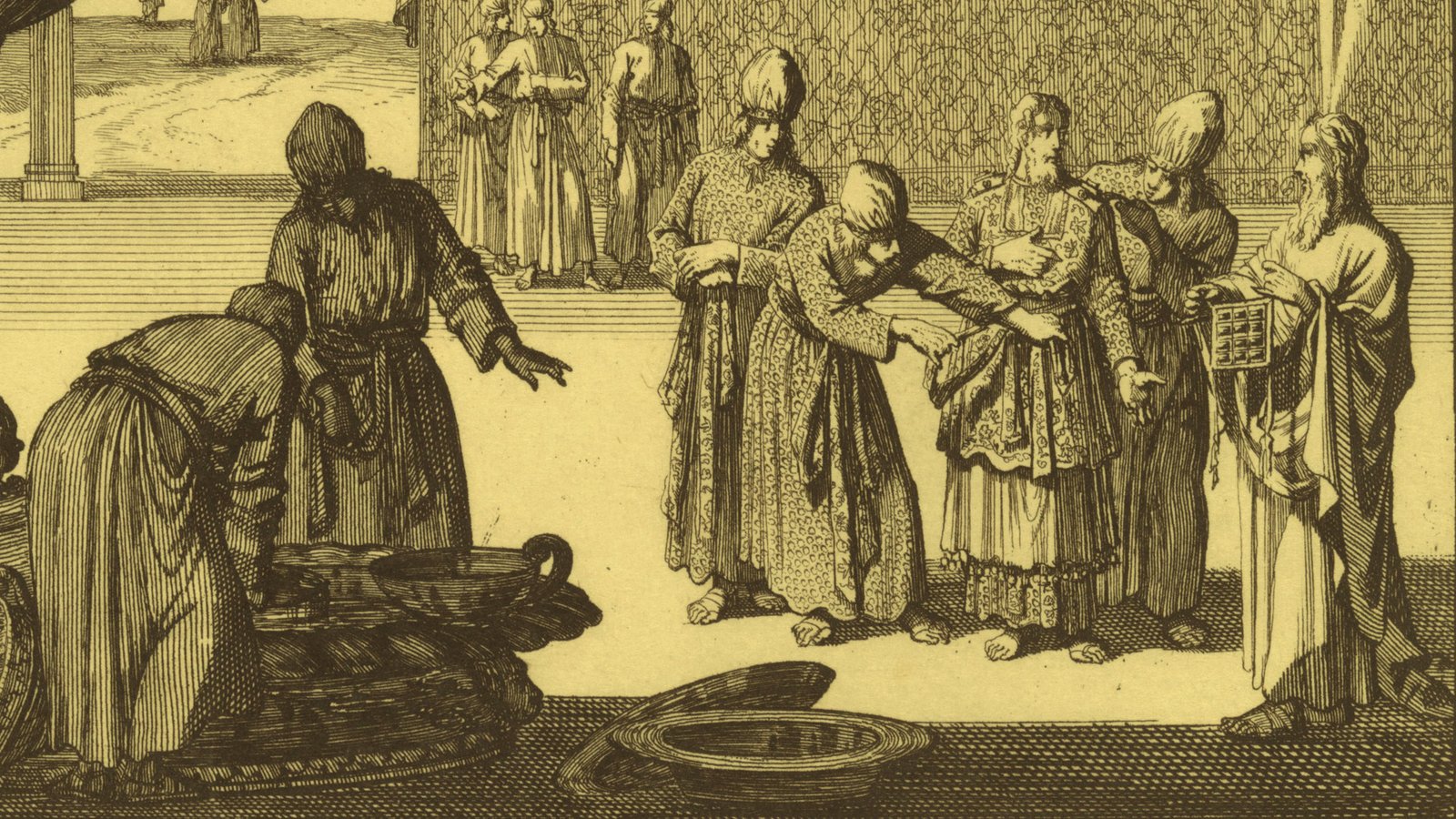
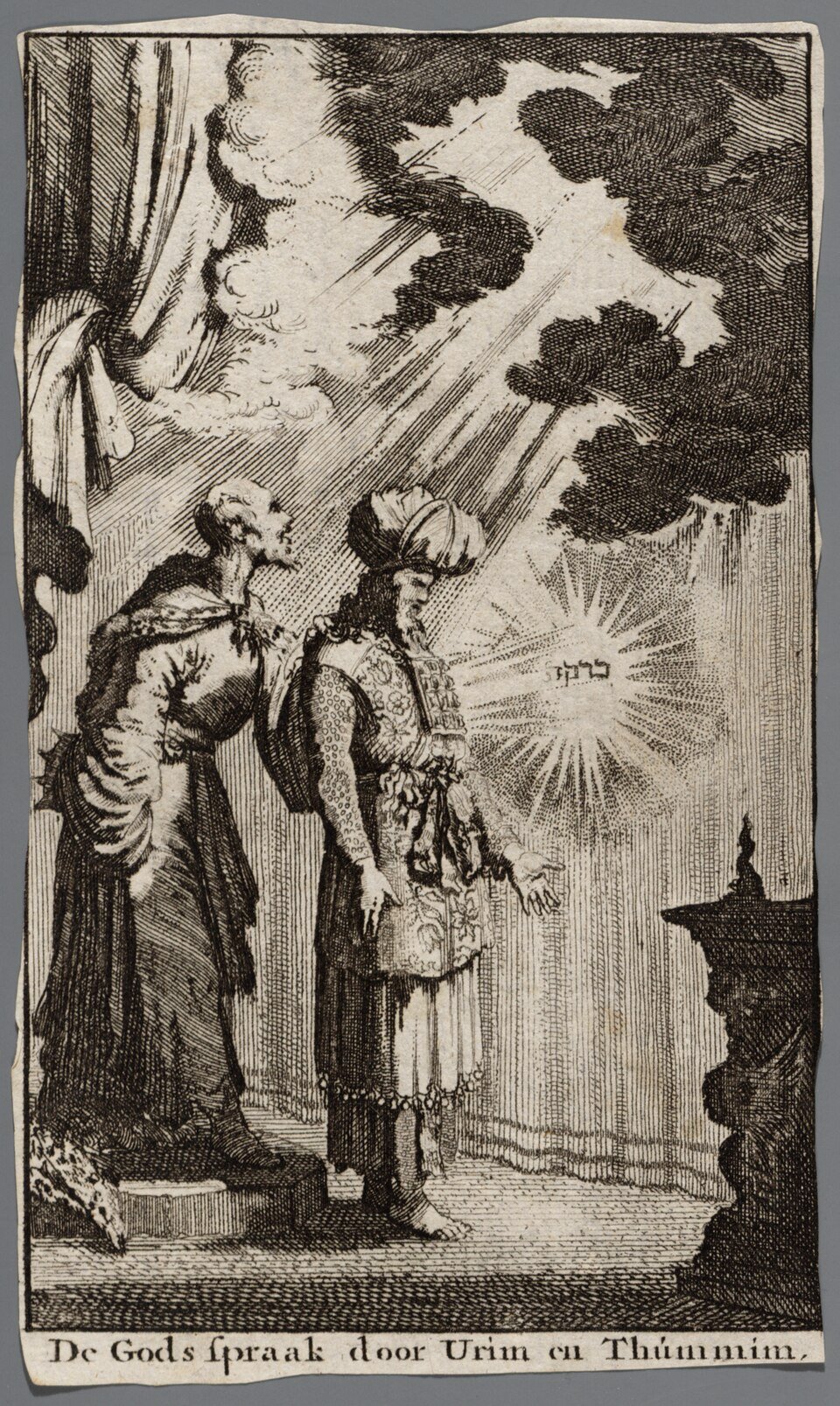
This danger of self-delusion is why ancient Israeli mysticism had structural guardrails in the Old Testament. The Urim and Thummim, translating roughly to “Lights and Perfections,” were elements worn in the breastpiece of the High Priest (Exodus 28:30). They functioned as sacred lots used to determine the will of God in binary or situational inquiries (e.g., 1 Samuel 14:41). Many scholars believe they were either a sort of Yes/No device while others have speculated they were lights that shone from behind the priest’s breastplate. In other words, we actually don’t know how they worked. No matter the case, the priesthood underwent rigorous consecration, systemic accountability, and strict ritual purity.
And, even from the beginning, it often didn’t work out well (Leviticus 10:1-2; Numbers 3:4; Numbers 26:61).
To add another level of depth here, it would be doubtful that public society would have been aware of such practices and not also copy-catted them. In fact, there is ample evidence of magical and divination practices both outside of the Jewish context and within the holy and instructed context of Scriptures. Rabbis referred to Scripture as an Elixir that could either drive one insane or bring about spiritual renewal. From talismans, incantation bowls, prayers, rituals, and chanting, the human psyche is always looking for a mystical foothold and handle.
The Tabernacle tools were restricted not because the objects themselves were inherently powerful, but because interpreting the Divine requires a grounded, integrated character. God is in the business of making holy vessels who are not self-interested, delusional, and broken on the inside. Without a mature internal structure, divination tools can easily be co-opted by self-centered narratives and delusional thinking.
What the Bible Condemns
“...My false and private self is the one who wants to exist outside the radius of God’s will and God’s love—outside of reality and outside of life.”
— Thomas Merton, Trappist monk & theologian
This is in large part why traditions and people have also felt the need to warn about Tarot. They are not completely wrong.
The question is not whether Scripture rejects divination—it does. The question is whether every symbolic practice is inherently equivalent to the kind of divination Scripture condemns. In its priestly code, priests were taught to distinguish between holy and unholy, as well as clean and unclean. Christians are still called to the same task.
Scripture repeatedly condemns divination, sorcery, mediums, omens, and attempts to seek supernatural knowledge apart from God (Deuteronomy 18:9–14; Isaiah 8:19; Acts 16:16–18). These prohibitions deserve to be taken seriously in their context and then applied today. Their wisdom should not be dismissed or explained away simply because modern culture has become either comfortable or uncomfortable with mystical language.
The human condition loves to replace Divine trust with clothed certainty. We like guarantees, secret knowledge, control, comfort, status, and shortcuts around surrender. Biblical faith is not opposed to mystery; it is opposed to illusion.
Throughout the Bible, God permits or instructs the use of symbolic objects. Scripture itself contains numerous examples of God communicating through dreams, visions, symbolic actions, sacred lots, and other mystical means.
Divination was not simply the use of an object but an attempt to obtain supernatural knowledge apart from a faithful relationship with Elohim. The issue was not mystery, stones, or lots. Scripture alone contains plenty, as does the reality God created. The Bible warns that the human heart can turn these into idols and then uses them to obscure reality. Symbolism becomes idolatry, and performance becomes manipulation.
The Bible itself employs symbolic devices. Even words are basically symbols. Nathan confronted David with a story about a stolen lamb and brought the king to a point of self-awareness that he couldn’t get out of. The biblical question is what authority we assign to symbols and how we use them in our lives.
If someone trusts a deck of cards while their own house of cards is collapsing around them, something went wrong a long time ago.
Symbols function as mirrors, rather than oracles, and prompts for honest self-examination, prayer, repentance, and reflection. As images of God, we humans are the oracles who decide on what meaning we trust and live out. Symbols occupy an inner awareness and possible outward direction, an entirely different category of use from standard, worldly use.
There is no power in Tarot cards. They’re just good about calling out what is getting in our way with whatever might be going on within us. Symbols do not create truth; they reveal what is presently happening within the person encountering them.
Shameless Ending
Tarot cards, as with other things, can be used for spiritual growth and discipleship, especially if Jesus is included from an authentic, integrated biblical worldview. CBT, IFS, and Scripture were not minor parts of my journey. They play an important role in my life and are key to how I approach tarot. Personally, it has helped me learn to “test the spirits” that can rage within me (1 John 4:1). Christians need an integrated theology robust enough to discern tools and symbols rather than simply fear them.
If you’ve heard me say it before, I’ll say it again: I needed every tool along the way.
Its lessons and archetypes have helped me sort through inner messes so I could better navigate the world. Tarot was just one part of a program that helps me to see repeating patterns. Simply learning to slow down and check myself was something I was never good at before, and tarot helps.
The moral, then, is not “mystical” versus “non-mystical,” but truth versus deception, surrender versus pride, and participation versus control.
I end with sharing about a project that has been on my mind’s back burner for a while: a Christian tarot deck that is biblical AF.
Early this summer, I was able to share a list and concepts with some others for feedback.
It’s still a backburner project, and one that will be pieced together eventually.
If that interests you, and you’d like to support its creation, stay tuned for future updates when progress happens, and consider supporting my work here on Patreon. Regardless, I’d love to hear your thoughts, interests, or input.
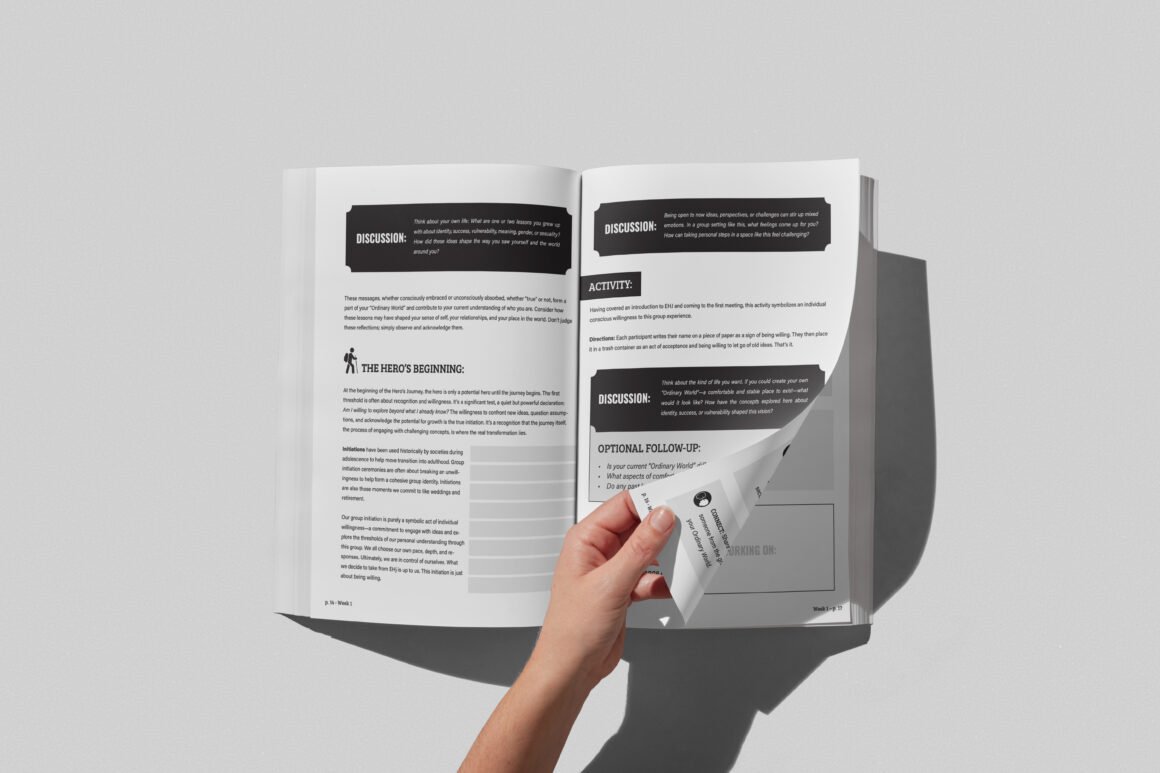
One thing that is ready to go is Every Human’s Journey. It engages similar concepts and is currently designed as an individuation group. If you or your faith community are interested in trying it out, reach out or learn more at www.everyhumansjourney.com.
*Updated: 7/20/2026