Table of Contents Show
One of my favorite Bible stories is the Samaritan Woman at the Well in John 4. While she is unnamed, later traditions called her Photini — The Luminous One — because she was the first person in John’s Gospel to recognize the Light and bring others to it.
Photini may have been inspired, in part, by John 1:9 in the opening preface of the Gospel: “The true light, which gives light to everyone, was coming into the world.”
The word for “gives light” in the ESV is φωτίζει, from φωτίζω (phōtizō), and means:
- to shine / give light
- to illuminate something or someone
- to bring something into the light, hence reveal, make known, teach, or give understanding
A Greek-English Lexicon of the New Testament and Other Early Christian Literature (BDAG) includes the definition:
- “to make known in reference to the inner life or transcendent matters and thus enlighten”
John took a common word with an established spiritual meaning and said Jesus is a worldwide source of illumination. The Samaritan woman was the first in John’s Gospel to bring Jesus’ light to others, and thus one of the first to see it.
The question is not whether φωτίζω can mean “enlighten.” It easily does. The exegetical question is what kind of illumination John intends, and what “every person” means in its context. The personal implication is simple: wake up, check one’s eyesight, and walk in the light.
John did not invent this association between light, sight, understanding, and salvation. To understand what he was doing with φωτίζω, we have to go backward before we go forward.
“The new way of being human has been unveiled.”
— N. T. Wright
Light In the Old Testament
By the first century, φωτίζω was not merely a word for physically shining. Greek usage already extended from illumination to disclosure, instruction, making hidden things known, and giving understanding. The Septuagint (Greek translation of the Old Testament, LXX for short) is particularly important because it repeatedly uses φωτίζω both for literal illumination and for the Hebrew conceptual world of teaching and enlightened eyes.
“As a general principle, when expressing the Hebrew construal of the concept of light, the Greek lexical roots ΦΩ- and ΦΑ- appear to be used synonymously.”
— Joel D. Ruark
The Hebrew root אור corresponds in the LXX to the larger Greek pho (φω) family.
The World Behind the Word
A reason the Greek matters is that John was writing in a world where Jewish Scripture, the Greek language, philosophy, politics, and religious practice were already interacting. The vocabulary of illumination and philosophical inquiry did not belong to one isolated tradition.
When looking at the Greek LXX, it helps to understand that ancient Judaism was already participating in a larger Hellenistic world, building on a much older dialogue with the cultures of the ancient Near East.
Clement of Alexander argued that Greek philosophy was in great part derived from its own barbarians (outsiders), saying that “both [Plato] and Pythagoras learned the most and the noblest of their dogmas among the barbarians.”
In another place, he said, “Thus philosophy, a thing of the highest utility, flourished in antiquity among the barbarians, shedding its light over the nations. And afterwards it came to Greece” (Stromata, Book I, Chapter 15).
History seems to support it. I’ve written more about the East-West exchange of ideas in Emperor & Pyre. It’s all the same human narrative: semantics and ego account for most of our misunderstandings.
The conceptual relationship between light and instruction was pre-built into the Scriptural narrative.
Some other LXX examples include:
- Ezra 9:8 — “that our God may brighten our eyes and grant us a little reviving in our slavery.”
- Psalm 119:130 — “The unfolding/revelation of your words gives light.”
However, Isaiah 60:1-3 in the Greek Septuagint doesn’t explain enlightenment—it shouts it:
“Be enlightened, be enlightened, O Jerusalem…”
The ESV translation still captures the idea well, while showing enlightenment’s relation to salvation:
“Arise, shine, for your light has come,
and the glory of the Lord has risen upon you.
For behold, darkness shall cover the earth,
and thick darkness the peoples;
but the Lord will arise upon you,
and his glory will be seen upon you.
And nations shall come to your light,
and kings to the brightness of your rising.”
The language is about a group of people waking up and becoming a nation of priests, a “city on a hill.” It does not erase the darkness, but shines in it.
Giving light and giving instruction are semantic neighbors within the Jewish Scriptures that form the foundation of Christianity’s New Testament. The same vocabulary was also used significantly in the Book of Sirach, a popular Jewish wisdom writing at the time of Jesus.
Gentiles and Jews were both being challenged to become the ideal essence of their own teachings, one with God, by Jesus’ Gospel that was infiltrating every empire and illuminating every shadow.
Jesus said that entering the Kingdom of God is like being born again, and Jesus points a Pharisee back to his Scriptures to make the point. The language of enlightenment does not exist only within the immediate canon of Protestant Scripture but also within the generations of Christians and traditions that emerged from its Source.
And it was one voice among others already talking about enlightenment.
Christianity spread through a world of religious pluralism, political tyranny, and competing claims about how to live. As it spread, people described their experience of entering and living within this new Way using the same Gospel language: illumination, awakening, knowledge, transformation, and new life.
“If we are even to glimpse this new world, let alone enter it, we will need a different kind of knowing, a knowing that involves us in new ways…”
— N. T. Wright
Enlightenment & Early Christians
By the second century, φωτισμός is explicitly used with baptism. Justin’s First Apology gives the clarifying statement: “this washing is called illumination.”
Justin immediately explains why: those being instructed in Christian teaching are illuminated in their understanding. In other words, illumination was not merely about a single act of baptism.
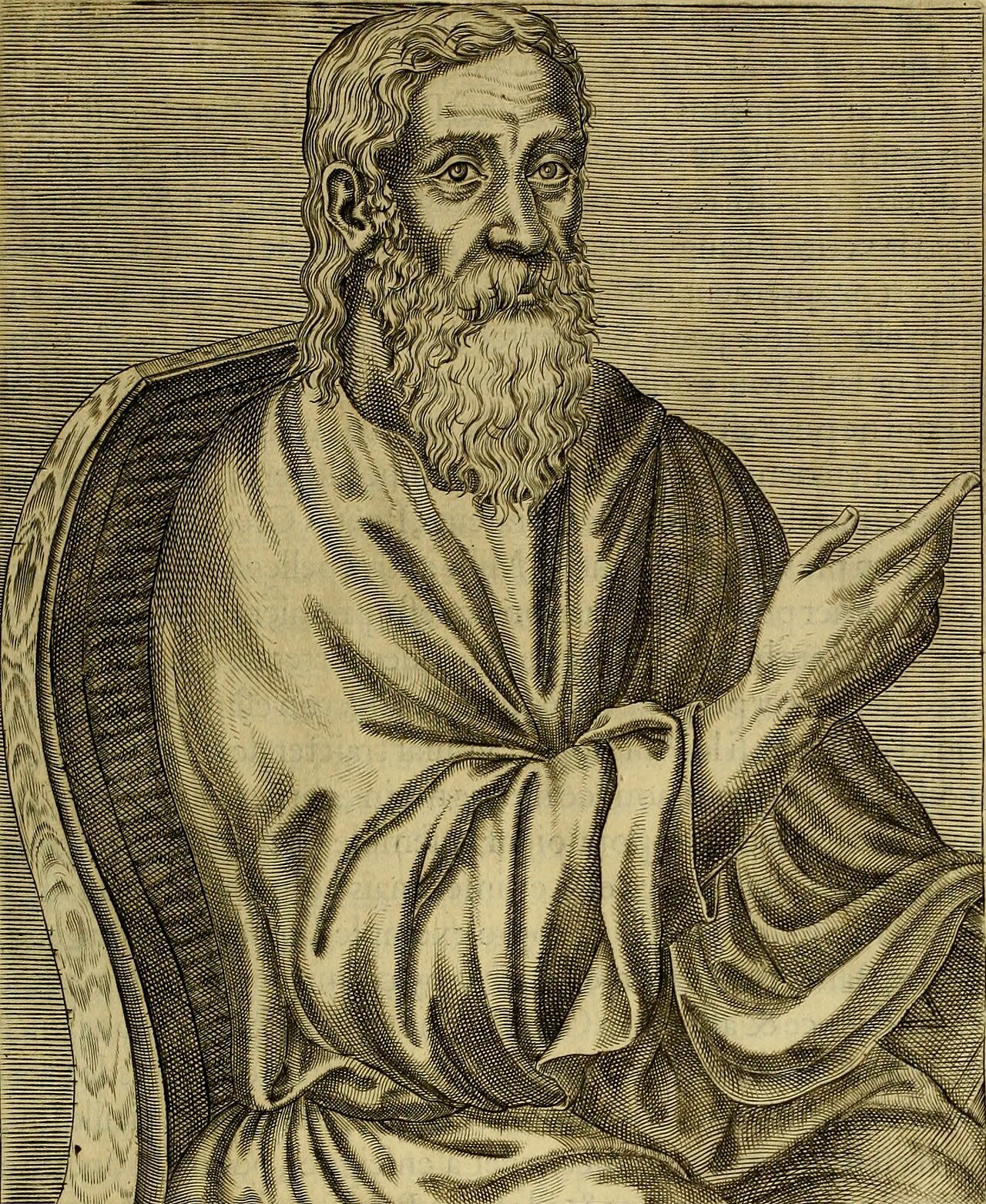
Clement of Alexandria makes the connection more explicit here:
“For this reason instruction, which reveals the hidden things, has been called illumination.”
Instruction reveals what was hidden, and this is called illumination in Scripture. Clement continues by describing illumination as that by which the divine is clearly seen, and explicitly connects illumination with knowledge.
Baptism was not merely an act but part of a process of transformation, a topic that’ll be explored in the future.
From Illumination to Formation
For the early Christians, illumination therefore described something larger than a moment at the font. It belonged to a whole pattern of formation: learning, fasting, prayer, baptism, communal life, Eucharist, repentance, and the gradual transformation of the person.
Christianity emerged in a world where initiation, ritual meals, sacred instruction, ascetic discipline, communal identity, and claims about transformation were recognizable religious forms.
The parallels, however, need to be handled honestly. Similar rituals do not automatically prove dependence, and the old “Christianity copied the mystery religions” model is considerably more complicated than it once assumed. Christianity never simply copied mystery religions: It freed them. Early Christians understood Christianity as something anyone can enter, learn, practice, experience, and be transformed by.
Initiates into Christianity were entering a path of spiritual transformation, one that changed their dispositions, perspectives, and understanding of themselves and the world of humanity.
Rather than simply agreeing to a set of propositions and assuming belonging in a herd mentality, early Christians were moving through the motions of the Gospel and learning how to become more like Christ and experience the promises of his resurrection in real time.
The result was a people who understood themselves as transformed, radically different from civilization’s ordinary and often-justified norms, and a movement that spread across the Roman world.
Eucharistic Medicine
Illumination was not the only place where early Christians described salvation in embodied, transformative language. The Eucharist offers another example.
Ignatius of Antioch (c. 33-108 AD), in Ephesians described communion in medicinal language that would have echoed in mystery cults, “medicine of immortality,” and called it an antidote against death, so that believers might live in Jesus Christ.
Clement elsewhere calls the whole Gospel “the medicine of immortality.”
The terminology is significant: φάρμακον (pharmakon) and φαρμακεία (pharmakeia) are related. Pharmakon can mean medicine, remedy, drug, poison, or potion, while pharmakeia belongs to the broader semantic field of drugs, potions, and eventually sorcery.
Communion is a place we go to die, remember Him, and experience the newness of life that the Resurrection brings. It is the Gospel in one practice, much like baptism is. Mystical practices and experiences are standard operations for the human experience and are never excluded from Christianity. In fact, they are encouraged, fostered, and disciplined.
Magic was never the sin. Distortion, dependency, and delusions were. Pride, greed, lust, envy, gluttony, wrath, and sloth are black magic’s heads. Over time, I’ve become convinced that the biblical word for “faith” (pistis) is equivalent to what we usually mean by good magic.
While early Church Fathers rejected “black magic,” they did not shy away from magical discussions. Jesus was greater than anything in the world. Christianity offered an authentic, supernatural reality that accomplished what ancient people hoped magic would do: heal, transform, conquer death, and liberate.
Whether we call the experience medicine, illumination, salvation, magic, or something else, the underlying Christian implication remains clear: human beings can actually change.
Prayer was similarly understood in transformative terms. A text attributed to John Chrysostom (c. 347–407 AD) said:
“Prayer is illumination of the soul, true knowledge of God … physician of the passions, an antidote for diseases.”
The language is the same: illumination, knowledge, healing, and transformation are placed together.
Fasting belongs in the same larger pattern, not that early Christians commonly called fasting “illumination.” It was preparation for listening. Fasting, prayer, instruction, baptism, Eucharist, and disciplined practice were part of a larger process of becoming capable of seeing and living differently.
“A disciple, or apprentice, is simply someone who has decided to be with another person, under appropriate conditions, in order to become capable of doing what that person does or to become what that person is.”
— Dallas Willard
Illumination as Lived Christianity
Aside from experiencing it themselves, early Christians discussed illumination because it was already embedded in the New Testament’s narrative.
After Mary’s song in the opening of Luke, the priest Zechariah prophesied:
“…to give knowledge of salvation to his people
— Luke 1:77-79
in the forgiveness of their sins,
because of the tender mercy of our God,
whereby the sunrise shall visit us from on high
to give light to those who sit in darkness and in the shadow of death,
to guide our feet into the way of peace.”
Illumination was no mere doctrinal point but a personally experienced and collectively modeled phenomenon early Christians went through. The Apostle Paul placed awakening, salvation, and light into the same movement: “It is already the hour for you to wake from sleep, for salvation is nearer now…The night is far gone; the day is at hand… [put on] the weapons of light.” (Romans 13:11–12).
Clement of Alexandria’s Paedagogus (“The Instructor”) was written in the late second or early third century, probably around AD 190–200. Clement was a Christian teacher in Alexandria, Egypt, and his work presented Christ as the divine Instructor who trains converts in how to live.
In Paedagogus, Clement wrote:
“Being baptized, we are illuminated; being illuminated, we become sons; being made sons, we are perfected; being perfected, we are made immortal.”
And:
“illumination, by which that holy saving light is contemplated, that is, by which we see the divine clearly.”
Clement was not waxing poetic. His language maps the same biblical pattern as Paul, who had his eyes dramatically opened by Jesus. In Ephesians 1:17–18, Paul uses that language but for the Ephesians:
“that the God of our Lord Jesus Christ, the Father of glory, may give you the Spirit of wisdom and of revelation in the knowledge of him, having the eyes of your hearts enlightened, that you may know what is the hope to which he has called you, what are the riches of his glorious inheritance in the saints,”
The imagery is remarkably consistent: the eyes are enlightened so that a person may know. Later, in Ephesians 5:14, Paul said, “Awake, O sleeper, and arise from the dead, and Christ will shine on you.” The immediate subject is walking as children of light rather than participating in darkness.
This is the pattern throughout the New Testament:
dead → alive
darkness → light
blindness → sight
ignorance → knowledge
asleep → awake
That is why salvation can be understood, in part, as this movement itself: being dead in sins, blind to reality, and then becoming awake and alive, finally beginning to see, and learning to keep growing and walking in what has been seen.
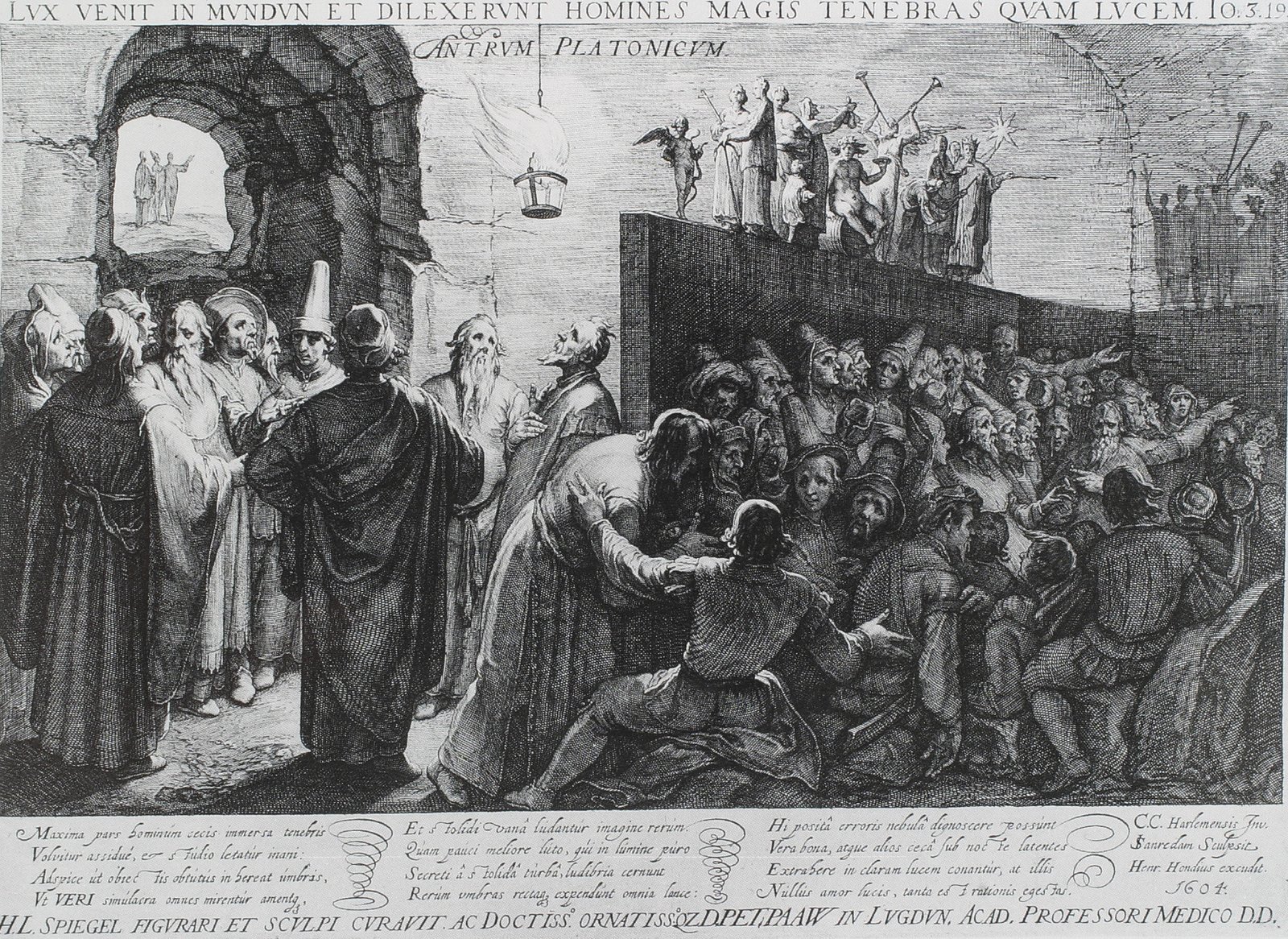
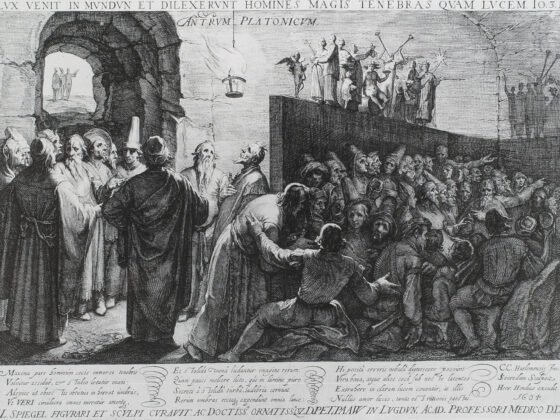
Plato’s Cave is usually presented as a philosophical metaphor for moving from illusion toward reality. The New Testament repeatedly uses the same vocabulary for a similar movement: from darkness into light, ignorance into knowledge, death into life, and sleep into wakefulness. The only difference is that one was an allegory and the other the Way.
The New Testament is a guide for those stuck in Plato’s Cave. The easy part is comprehending the allegory. The difficult part is going through with it.
Seeing differently has a cost, especially for people deeply entrenched in other ways of living (Luke 14:28). Illumination exposes habits, attachments, assumptions, and patterns that were easier to maintain while they remained in the dark.
“It is well-nigh impossible to grasp Christianity through and through without knowledge of these cults.”
— Martin Luther King Jr.
Christianity Forgot Its Own Language
There is a modern stigma around the word enlightenment, because many Christians immediately associate it with Eastern religions, New Age spirituality, or other traditions. The irony is that Western science has, or at least used to, done the same thing. It has at least learned its lessons and started integrating Eastern teachings and practices. For example, Dialectical Behavior Therapy is largely derived from Buddhist traditions.
The same conceptual frameworks from the first century now flood our social media feeds.
Historically, that reaction is difficult to sustain. Philosophically, it’s a false dichotomy. God is always looking for those who worship him in spirit and truth (John 4:23–24). There is no divide between Science (i.e., knowledge) and Spirit. The real question is not a matter of logic or Scripture, but of faith.
Enlightenment vocabulary is deeply embedded in Christianity’s Scriptures and early traditions. It’s not its fault if Western society is just waking up to it.
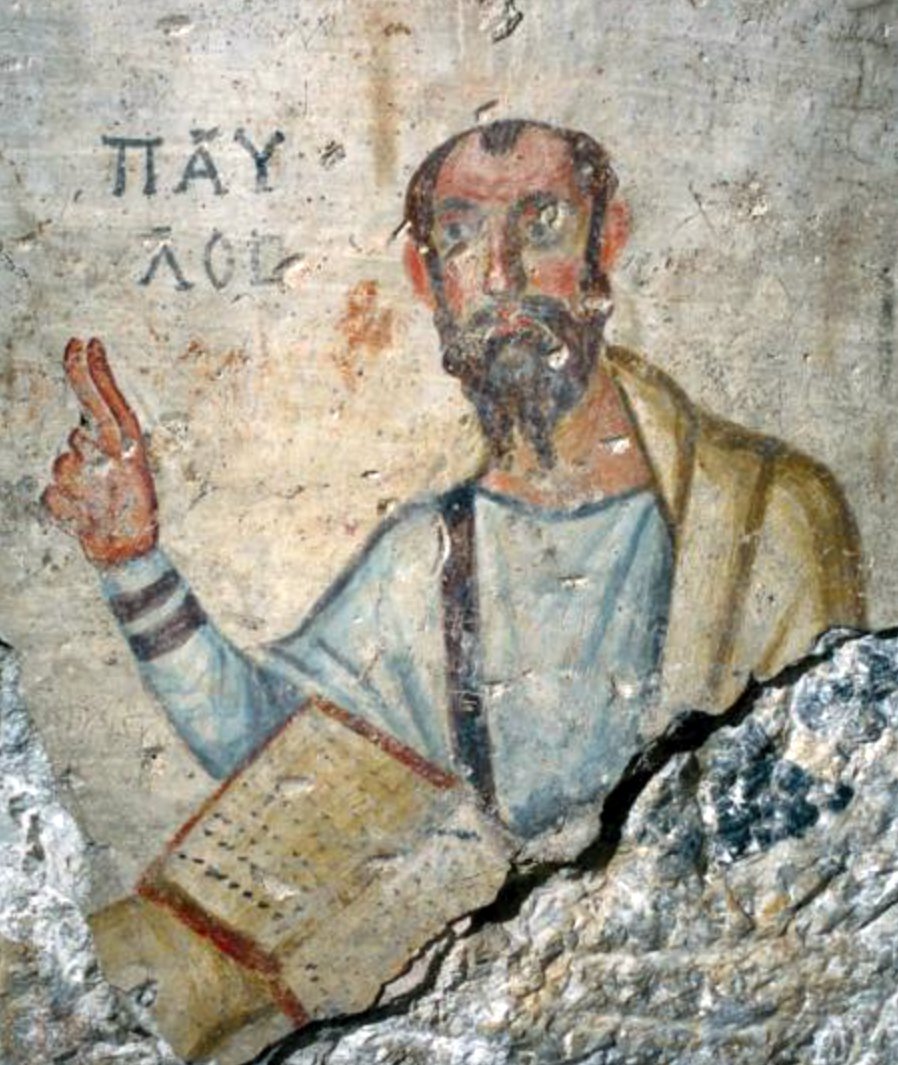
Paul warns Philippian Christians to work out their salvation with fear and trembling (Philippians 2:12), suggesting that salvation is neither passive nor assumed. Hebrews treats enlightenment as one of the concrete experiences of participation in the Christian reality and describes apostasy as a reversal after that experience:
“For it is impossible, in the case of those who have once been enlightened, who have tasted the heavenly gift, and have shared in the Holy Spirit, and have tasted the goodness of the word of God and the powers of the age to come, and then have fallen away, to restore them again to repentance, since they are crucifying once again the Son of God to their own harm and holding him up to contempt.”
— Hebrews 6:4–6
The Christian life is not merely intellectual agreement or rote performance. Since enlightenment is something experienced and transformative, falling away is described as a profound reversal. If a person has been enlightened, tasted the heavenly gift, shared in the Holy Spirit, tasted the goodness of God’s Word, and the powers of the age to come, and then somehow falls away from all of it, it’s essentially going right back into the cess-machine that put Jesus on the cross in the first place and pretending as if nothing happened.
Christian enlightenment is learning to see reality in the light of Christ, to recognize what was previously hidden, and then to learn how to live according to what has been seen. It means to see Christ in the stranger and our enemies, to love without condition, and to live not according to the patterns and schemes of the world.
Not Backing Out of The Light
To bring the whole thread back to where we started: John 1. The Light is not merely an idea, a doctrine, or an experience reserved for the spiritual select. John says the Light came into the world and brings light to every person.
It’s not a question that enlightenment is Christian. It’s a question of whether we are willing to listen to what Scripture says.
There has never been a time quite like 2026 to fully find out what Jesus meant. “Every person” can experience what Jesus meant. It doesn’t matter what beginning point or angle one may approach it from; every path eventually crosses the same threshold where Christ meets us.
Salvation is worked out in a human life, and the first illumination is never the end. It is the breaking of dawn after a long sleep, the cracking of a door. It is the beginning of learning how to walk in the light.
It is the same concept of becoming “a kingdom of priests” (1 Peter 2:9) to be “all the nations of the earth be blessed” (Genesis 22:18). The Bible is the same story, told over and over again until it starts happening to us.
“You normally have to let go of the old and go through a stage of unknowing or confusion, before you can move to another level of awareness or new capacity.”
— Richard Rohr