Table of Contents Show
“Hear, O Israel: The Lord our God, the Lord is one. You shall love the Lord your God with all your heart and with all your soul and with all your might. And these words that I command you today shall be on your heart.”
— Deuteronomy 6:4–6
Recovering Pastor’s Morning-After Note:
“This is so me, Paule, trying to have some faith and fun while working on writing. A while ago, I told someone that maybe I could finally stop overthinking things. That was a lie—there were still hanging chads that needed to be wrapped up, like the Elijah & Elisha piece, so I could move on to the “next right thing.” This hunch had been gnawing on me, trailing behind, and it feels good to have it out there.
“So, if you don’t have a love for nerdy and philosophical interdisciplinary explorations that all connect, this might not be for you, and may not make it far. I get it. Recovery and spiritual transformation are interlinked, and this is an example.
“I needed to work this thing: hold it a bit, feel it, and let it do its work on me. The label of Deconstruction I always avoided, and always will. But, now, it has become a tool as well as Reconstruction—tools that lead us back into trusting the Mystery of the Divine so we can breathe with Spirit and love one another again.
I no longer hold to the notion that the promises and blessings of Scripture are too extravagant.“
Manuscript evidence of early-Christian practice gives a solid historical backdrop: the Gospels (and other scriptures) were being read aloud, discussed, handled in codices, marked for oral use, and treated as communal teaching texts. Didaskalia (διδασκαλία) in the Greek means teaching and instruction, and is similar to where the word “doctrine” comes from.
Scripture was memorized, practiced, and embodied. Early house churches were small groups of community; catacombs do not really support a picture of stage-based lectures and concert halls, since they were often burial, memorial, and devotional spaces.
What follows then is a Biblical puzzle. Scripture is known for tucking meaning and lessons inside of things. We’ll discuss some bible study (exegesis) tools, provide a few literary devices to look out for, and we’ll not only be able to test the thesis of a recovering pastor’s musing, but also see the telos (i.e., the design or goal) of what Jesus and Scripture have been pulling towards since the beginning.
First, we’ll cover some tools for this gardening party, and then trace the roots. It’ll end with a fill-in-the-blank and a bit more contextual hints to help chase it down.
As a fair warning: It helps to approach this as a human, not with labels, camps, or positions to protect. This has to be chewed, not thrown out or reacted to. Don’t worry, it’ll be like peanut butter, maybe chunky. Digesting the Text, on the other hand, can be a ride.
Gathering Some Scriptural Tools
Exegesis is a fancy word for how to study something, and not just the Bible. Whether we read the news, fiction, Sophocles, the Bhagavat Gita, or Scripture, we do not force our perspective. We read it from theirs, in their setting of life, especially with ancient texts. This is everyday literary and structural analysis, which we unconsciously employ when we enjoy a good movie.
The Bible employs tricks and devices, and draws long-converging threads and loops. As one “simple” example, if a minister has not heard of chiasms and is using them regularly in their sermon prep, they and their congregations are missing out. Chiasms (or chiasmus) can be found on every page of Scripture, spanning entire books.
These tools and devices make the reader of Scripture have to wrestle with its arguments and commit to the process as an initiatory process; one of ego breaking and will bending, where the word of God can sink its roots in the soil of our souls.
And for this hands-on Bible experiment in exegesis, we’ll only need a few tools, and maybe a dash of intellectual and spiritual courage.
“Such devices draw the reader into participation in the movement of the text.”
—David Wead, The Literary Devices in John’s Gospel
Tool #I — The Enthymeme
David Wead’s book, The Literary Devices in John’s Gospel, was one of many books that I needed 20 years ago. It’s short and well done.
One of the devices Wead unpacks is the Enthymeme: A syllogism where one of the premises or the conclusion is unstated but implied. John uses them to draw the reader into a “spiritual realization” by making them complete the logic. Think of it like a rhetorical question, or filling in a puzzle, but leaving the last piece for the person watching so they have to do it themselves.
One short example from John is “If I am not doing the works of my Father, then do not believe me; but if I do them… believe the works” (John 10:37-38).
“The reader is expected to supply the missing part from his own knowledge… it is a device of persuasion which seeks to involve the audience in the movement of the argument.”
— David Wead, The Literary Devices in John’s Gospel
Tool #2 — The Law of the Omitted Detail
“The Torah does not record every detail of a conversation or an event, but only that which is essential to the purpose of the narrative… leaving the reader to fill in the rest by logical deduction.”
— Cassuto, Commentary on Genesis
Cassuto was another scholar who took what I thought I knew and showed me “a whole new world.” His work on Genesis and Kings, in many ways, makes a case for reading the Old Testament as a hybrid of mythology and psychology interplaying with Jewish philosophy.
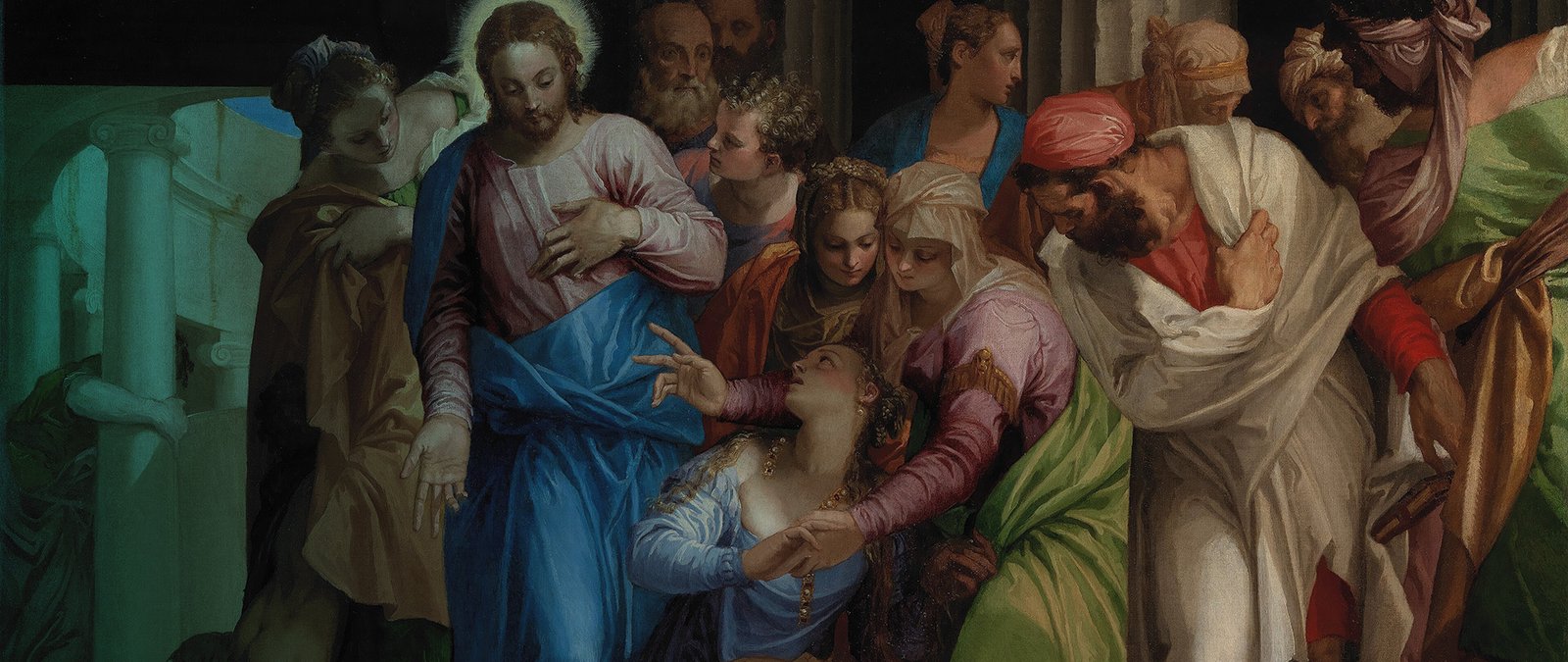
He covers how the Old Testament is a literary masterpiece that leverages narrative, names, symbols, and language to tell a much deeper story than just events and commandments. It loves leaving things out on purpose. John does this when the adulterous woman is brought to him, and instead of answering, he simply bends down to write (John 8:6-8). In Genesis, an example is Cain brings “fruit of the ground,” and Abel brings “firstborn of his flock” (i.e., Cain just brought some fruit while Abel brought the best).
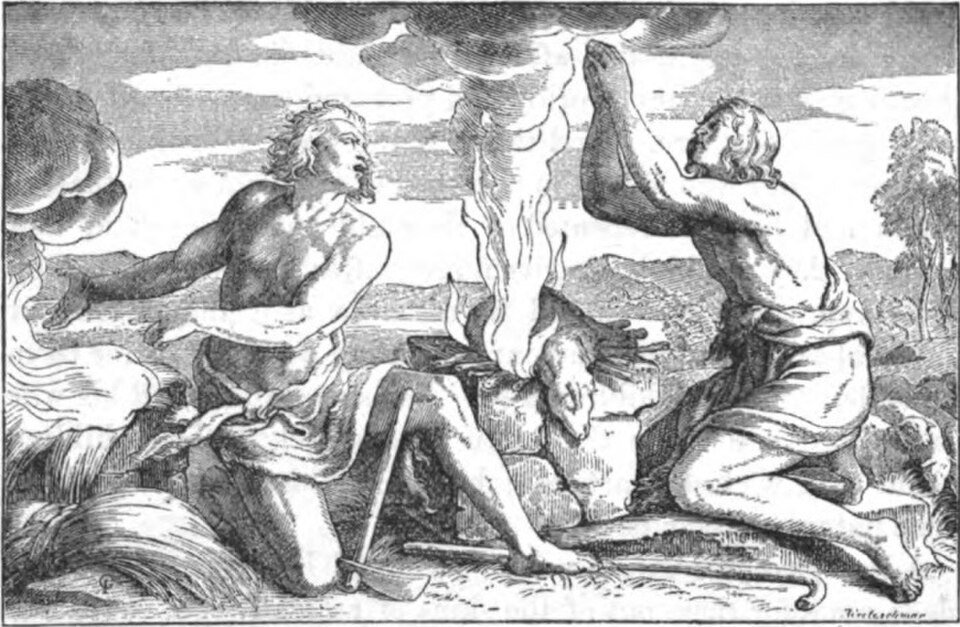
This is the Law of the Omitted Detail. Like saying “1+?=3,” the biblical narrator omits details that are either obvious from the context or significant enough that silence speaks louder than words. This Law focuses the reader on the essential moral or ontological truth without redundant explanation.
Cassuto was not the creator of this; just one of its discoverers. Wead also talks about the same concept with different terms. Apparently, the undisputed modern king of this was Robert Alter.
“The biblical narrator characteristically reveals only the essential details of the story, leaving the rest to be inferred by the reader.”
— Robert Alter, The Art of Biblical Narrative
Tool #3 — Kal V’Chomer (Light & Heavy)
Say it with as much phlegm as possible: Kal V’Chomer. I first learned about this “most basic hermeneutical methodology” from Marty Solomon about a decade ago. It’s pretty basic: If it’s true in the small sense, then how much more in the big sense? Like a spectrum of extremes, it pushes logic to its ultimate conclusion (its telos). If a rule applies in a “light” (lesser) case, it must apply even more forcefully in a “heavy” (greater) case. The conclusion is a “rhetorical gap” that the listener must jump across.
The first Kal V’Chomer is Genesis 44:8: “Behold, the money we found in the mouths of our sacks we brought back to you from the land of Canaan. How then could we steal silver or gold from your lord’s house?“
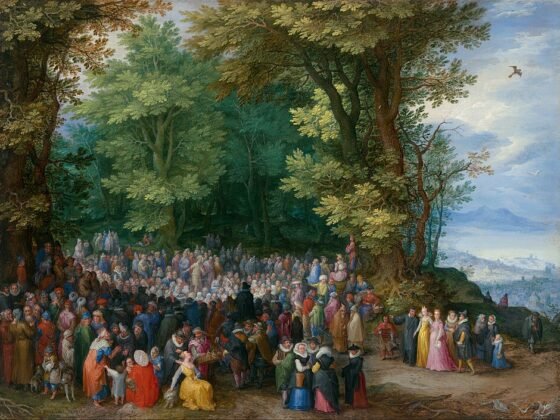
Applied to God, if earthly parents merit a certain level of posture and weight, the Divine Father merits an infinitely “weightier” one. In the Sermon on the Mount, Jesus applies inverse logic to reveal God’s goodness as a Father:
“If you then, who are evil, know how to give good gifts to your children, how much more will your Father who is in heaven give good things to those who ask him!“
— Matthew 7:11
*Free Online Resources – Added 5/5/2026
Original languages and historical context matter. The Bible is not a Western book but an ancient Eastern one. In today’s world, all the data is at our fingertips. Some of my online resources for Bible study include:
- www.blueletterbible.org (for original languages with the translations)
- www.sefaria.org (for the entire Hebrew Bible)
- www.biblegateway.com (for the Bible in the ESV and other versions and cross references)
For historical context, nothing beats books and research. There’s honestly plenty of good historical context between YouTube, podcasts, audiobooks, and Google Scholar. AI can be useful in research, but it really depends on the platform, and a user has to fact-check and be mindful of what’s behind the veil of AI. Do not fall into siloes or make AI your go-to. Test things with others, read a book here and there, listen to humans who know their stuff, and be able to separate interpretation from facts. Digest everything.
Digging for Wholeness
With these tools alone, any Scripture can be explored. So, let’s skip Sunday School scripts and pre-canned sermons to get into the weeds. We’re tracing the roots to see if we can find the shape of the gap the Bible leaves behind—and has the nerve to dare us to leap across.
The Blueprint: Genesis 1:2, 26–27 (Creation)
“The ‘Us’ of Genesis 1 is the first hint that the Divine is an eternal community of mutual honor… humanity reflects this only when the duality of male and female is held in a singular image.”
— Peter Leithart
Genesis opens with the Ruach (“Spirit”) already moving over the face of the waters, fluttering like a bird (merahefta). The Spirit is there before shape, division, land, and humanity (cf. Matthew 3:16-17; 23:37).
On the sixth day, God speaks: “Let us make man in our image, after our likeness.” The “us” is plural, and not explained. The first hint in the Hebrew of the plurality of God was in Genesis 1:1. The Hebrew word “god” is elohim, and in the plural (el is singular). The verb attached to it, bara (created), is singular. The Spirit “of God” was present from the beginning (v. 2). Genesis assumes the reader will catch this. Ancient Hebrew scholars view the plural Elohim and “Let us” either as a “plural of majesty” (royal “we”) or an address to the Divine Council (heavenly host, cf. 1 Kings 22:19).
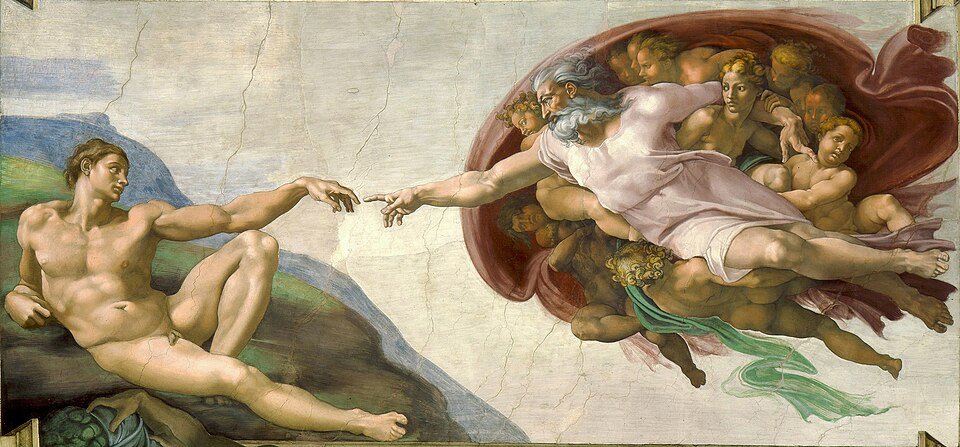
The Ruach being included in the “us” was not dictated. It was an inference: If the Ruach is already active in verse 2, then the “Us” includes the Ruach. The Spirit is a feminine noun, and sits inside the creative agency of the Divine. The speech of God rises out of the oneness already existing. Not fragmentation or competing parts, as in other ancient Near Eastern myths.
After, in Genesis 1:27, God does what He spoke:
“So God created man in his own image,
in the image of God he created him;
male and female he created them.”
Then the human being is made from adamah (soil) and filled with ruach (spirit). Adam can literally mean “Earth-creature.”1 Human is a combination of Earth and Divine, soil and spirit, physical and spiritual. And much more: Male and female are in God’s image, implying the Divine is both male and female, and each is still entirely different (“holy”).
A hint at the “feminine side” of God can be found in Proverbs. Wisdom is presented as a woman (Proverbs 1:20-21), and a guide to the “son” (2:1-2ff). She speaks as a personified co-creator with God before the earth was made: “Then I was constantly at his side. I was filled with delight day after day, rejoicing always in his presence” (8:30). In Hebrew, chokhmah, and in the Greek translation (the Septuagint), sophia, both are feminine. Proverbs ends with an “oracle” from the mother of Ling Kemeul describing a wise woman (31:10-31).
Another hint at God’s “soft side” is that a common Old Testament word for God’s compassion or mercy is rachamim, the plural form of the root word rechem, which translates to “womb.” When Hebrew writers wanted to describe the visceral mercy of God, they used the biology of a mother’s womb—a space of incubation, protection, and life-giving sacrifice. When God is described as “compassionate” (Psalm 103:13), the Text says God acts with “womb-like” love (cf. Proverbs 31:1-2).
The Created Order itself begins in this kind of oneness of space and being, of shared life and shalom. Genesis 3 would fracture the Story. But, just before that, humanity’s created state was described as: “And the man and his wife2 were both naked and were not ashamed.”
“The place to start is with the doctrine of creation…”
— Doug Wilson
The Foundation: Exodus 20:12 (The 10 Commandments)
The 10 Commandments were on two tablets, and there’s some debate on how the actual order was. The Talmudic Jewish tradition3 and the Reformed tradition4 divide the tablets into 5 and 5. Scholars have also observed that the first table contains commands related to God, and the other contains commands related to others.
If true, this means the fifth commandment, “Honor your father and your mother, that your days may be long in the land that the Lord your God is giving you,” is on the God-side.
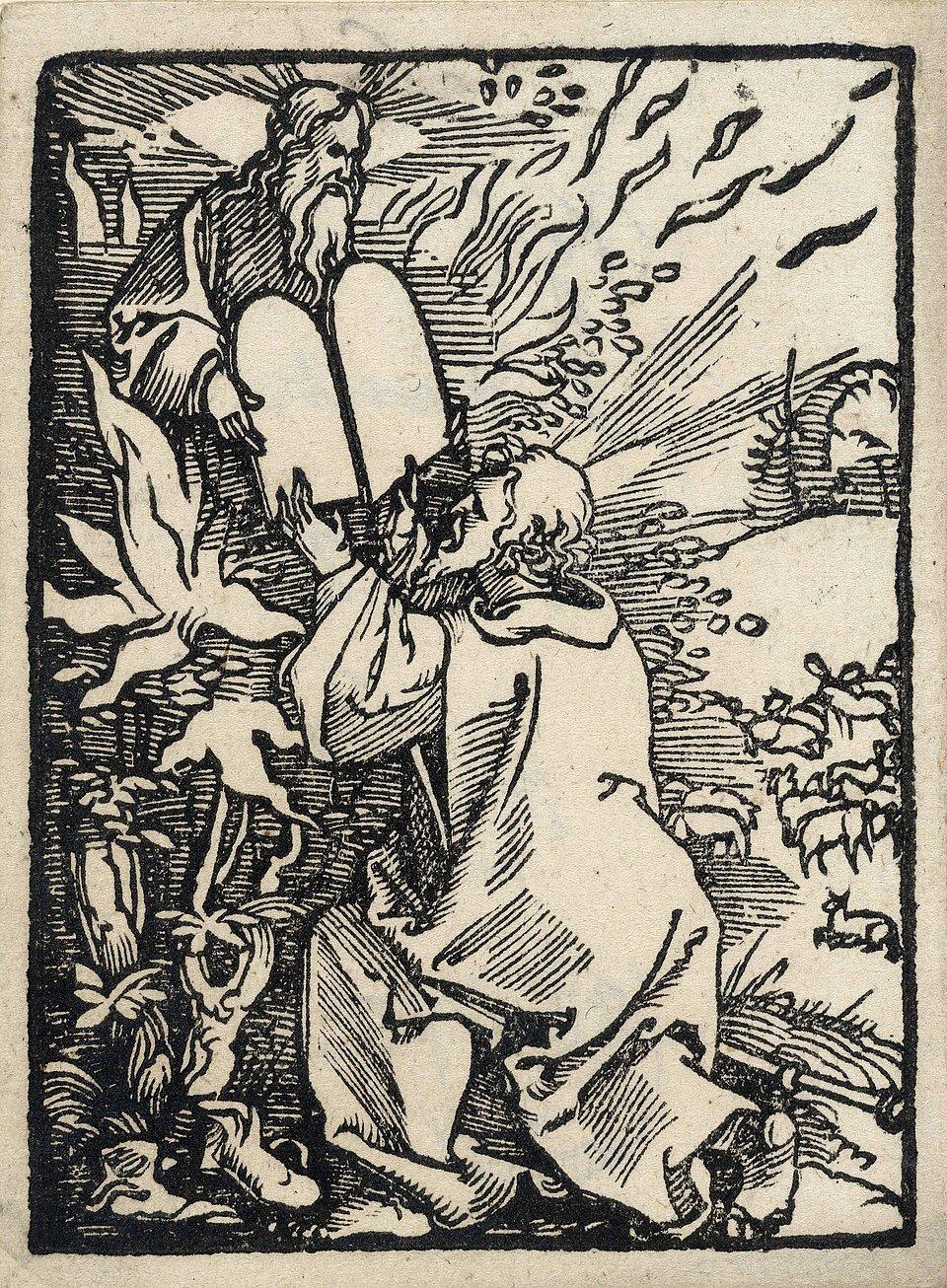
Honor in English doesn’t mean the same thing. The word for “honor” is Kabed, from the root meaning “to be heavy.” It means to respect and hold value. It does not mean submit or fake praise. Psychologically, this makes a lot of sense. Kabed can also mean in the negative sense of “hardening,” as in when Pharaoh made his own heart “heavy” (Exodus 10:1).
To not make the fifth commandment lighter, kabed’s dual-meaning invites worshippers back into the same Parental/Child relationship: “Those who honor Me I will honor, and those who despise Me shall be lightly esteemed” (1 Samuel 2:30).
It’s also interesting that “love” is not used in the 10 commandments, probably because it’s assumed and covered in other places. Honor is the act of ascribing “weight” or “gravity” to a person’s existence and authority. If a child is to become all and more of what their parents were, “kabed” implies empathy, respect, understanding, and service. IMO, it also implies growing up and no longer living in their shadow.
“To honor parents is to honor the structure of reality that God Himself established as the primary school for honoring Him.”
— Dallas Willard, The Divine Conspiracy
The Crux: John 10:30
Jesus’ favorite title for Himself was the “Son of Man,” often used with layered meanings. Jesus does not center his identity on the title “Son of God.” He consistently reframes it—redirecting the conversation back to the “Son of Man” (Mark 14:61-62; John 9:35). “Son of God” (divi filius) was an overused term in His time. God called Ezekiel “son of man” over 90 times, and the New Testament uses this term to frame a redeemed and awakened humanity.
In Matthew 26:63–64 and Luke 22:70, the high priest and council ask whether Jesus was the Son of God, and Jesus answered with an indirect affirmation: “You have said so… you say that I am.” John chiastically scatters the confession of “Son of God” across the human arc:
- The witness speaks first when John the Baptist testifies that Jesus is the Son of God.
- A man speaks it next, when Nathanael confesses, “You are the Son of God.”
- Jesus Himself answers under accusation in John 10:36 (He agrees and doesn’t assert it).
- A woman speaks it in Martha’s confession.
- And then the telos of the Gospel arrives when John says these things were written so that the reader may believe Jesus is the Christ, the Son of God.
John did not hand the title to one type of person only, but threads it through witness, Israel, Jesus himself, woman, and reader, until confession becomes participation.
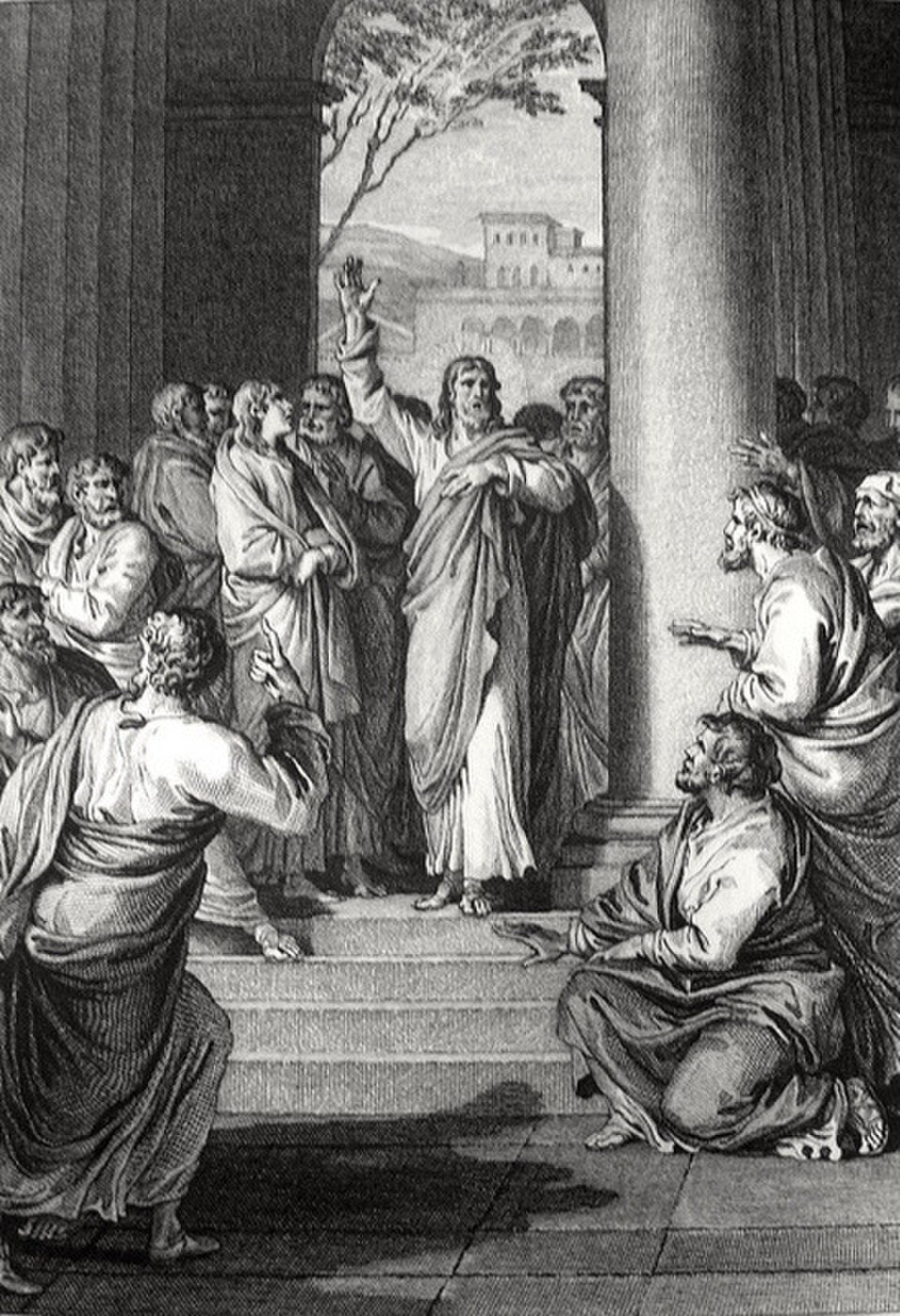
Connecting this back to the root, the Septuagint (a popular ancient Greek translation of the Old Testament before Jesus) used the word timaō for the same weight idea. Jesus uses it in John 5:23, “That all may honor (timaō) the Son just as they honor the Father.“
One of many things that got Jesus killed was Him saying, “The Father and I are one.” This verse has some real interpretive history. Quickly then, the Greek word for one means “one.” Jesus was ἕν (neuter for one, instead of the masculine heis) with the Father, meaning at least in being, will, purpose, and holiness (c.f. 1 Peter 1:16). If He had used heis, he would be claiming to be the same entity as the Father (a heresy called Sabellianism). By using hen, He instead established distinct parts sharing a unified weight and existence.
In John 14, during the Upper Room discourse, Jesus invited His disciples to be one with Him as He was with the Father, by being one with one another. His “one commandment” answered how to abide in Him, as He abides in the Father: love.
“In John, Jesus is not just claiming to be like God; He is claiming to be the space where the ‘Oneness’ of God finally intersects with the ‘Oneness’ of humanity.”
— N.T. Wright
Paul’s Application: Galatians 3:28
Originally called Saul, he was a Pharisee and a persecutor of Christians, called the Way then. After his conversion, and some time in Arabia and meeting with the Apostles, he became Rome’s most fierce missionary, spreading a Gospel whose weight (kabed) would ultimately crush and outshine Caesar Augustus’s.
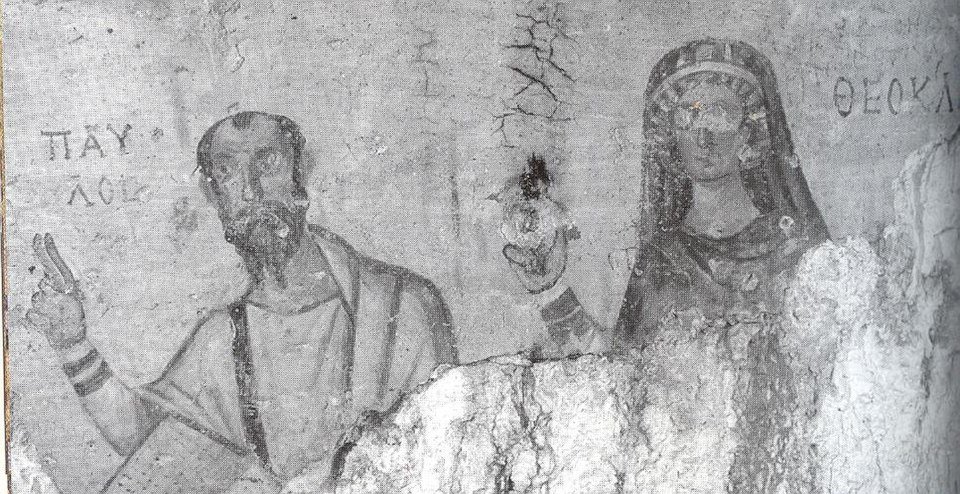
As a disciple of Christ, in every town he spent time in, he taught a common message about dying to self and being one in Christ. Over and over again, he’ll say things like: “There is neither Jew nor Greek, there is neither slave nor free, there is no male and female, for you are all one in Christ Jesus.”5
Our relationship with the Divine, with our parents, and with the same and opposite sex is where union and oneness come from, as well as healing and reconciliation.
Paul applies the “Oneness” of John 10:30 to the human order. If the Father, Son, and Spirit are “One,” then those in the “Image of God” (Genesis 1:26) would reflect that same “Oneness,” regardless of gender, status, wealth, etc.
As Jesus was, humans can wholly be, fully back into the love of God we’ve run from. It takes dying to our old selves.
The Math: “…that God may be all in all.”
Here’s the front-facing math: Jesus + Father = 1.
So…where is the Feminine? Would an ancient “good” Jew, raised on the Tanakh (the Hebrew Bible), wonder about where the mother from Exodus 20, or the “female” of Genesis 1, fit into all this Gospel stuff, especially with the commonality of first-century cults?
More directly, if God is the Source of both Male and Female, would not Jesus also be One with the “Divine Feminine”? Would Jesus also have been willing to say He was one with the Mother if the story was a ego-driven matriarchy?
If Jesus is One with the Father, and God created both Male and Female, what is the logical and Scriptural limitation of including the Mother?
And maybe that’s yet another point. Being one with Creation and the Feminine, as with the Masculine. All in All. God is One.
Allow me to double down on this dichotomy collapsing didactic.
Chaser #1: The Subversion of the Male Ego (Nicodemus vs. Women)
“Woman, believe me, the hour is coming when neither on this mountain nor in Jerusalem will you worship the Father… the hour is coming, and is now here, when the true worshipers will worship the Father in spirit and truth, for the Father is seeking such people to worship him…”
— John 4:21-26
John stages the contrast as a verdict.
Nicodemus enters the Gospel with everything the religious world counts as weight (John 3). He is a Pharisee, a ruler of the Jews, and a teacher of Israel: credentials, status, rule, education, public authority. And yet, he comes in the secrecy of night. The man carrying social gravity cannot see what is in front of him. Jesus speaks in the language of birth and spirit from above, of rising and descending, and Nicodemus responds from the level of Pharisaical literalism. He could manage doctrine, but he could not move with the logic. He vanishes from the scene unresolved (until later).
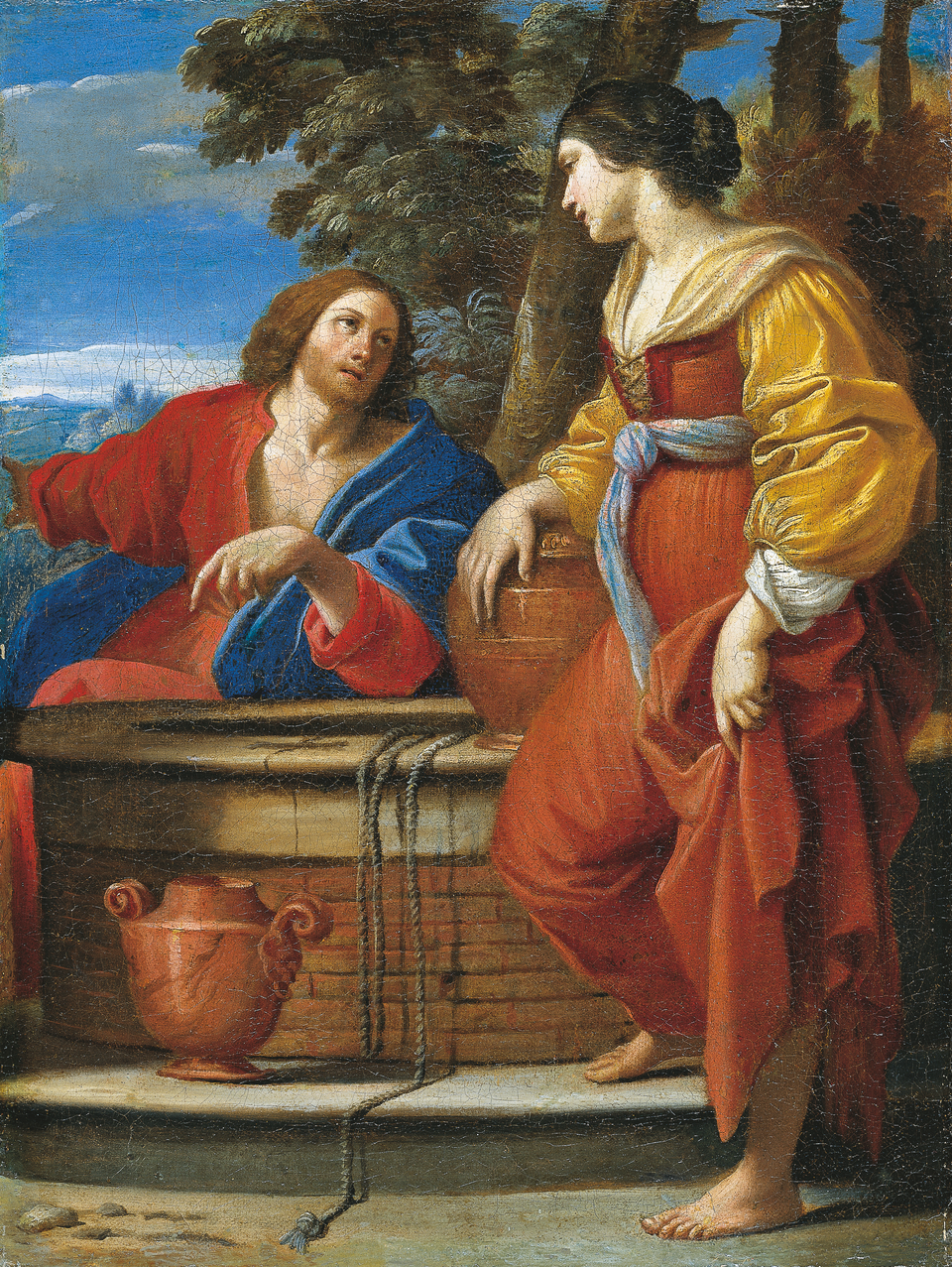
The Samaritan woman was the opposite kind of witness. She comes with no prestige to defend, no religious title to protect, or certainty to perform. She engages with the argument and dances with Jesus. Jesus starts with water, and she follows the movement. From Jacob’s well to living water, from thirst to spring, from earth to spirit, from the ordinary vessel to the eternal source. She is the first person in John to stand inside the revelation and actually answer it. The Samaritan female was not just the first to recognize Jesus as the Christ, but also led more people to him, well before the early church, which is why the Greek Orthodox called her Photini (the enlightened one) and recognized her as an “Equal to the Apostles.”
Jesus gave her the identity statement that Nicodemus couldn’t receive in full, yet. It’s also to her that he speaks 1 of the other 7 “I am” statements in John: Literally, “I am the one speaking to you.”6 A woman is the first clear bridge between the earthly sign and the divine self-disclosure that lands in the mouth of a woman, beside a well, in a conversation the religious world would have considered unimportant.
Then, Mary Magdalene.
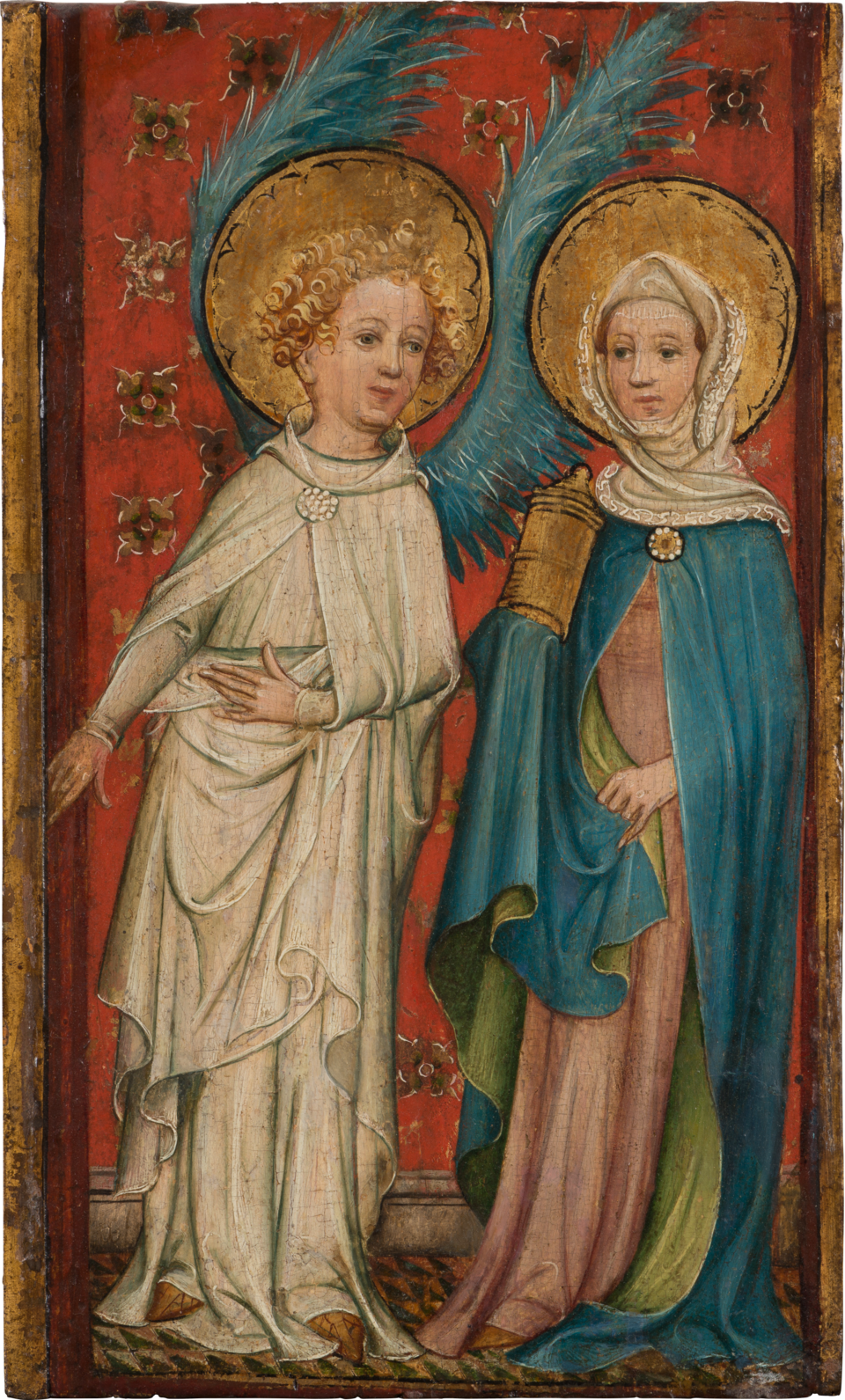
The Resurrection scene carries the same logic again, just heavier. In the first-century world John is writing into, a woman’s testimony held little public weight, yet Mary becomes the first commissioned witness of the risen Christ. She sees, hears her name, believes, and is sent to men who struggle to believe it at first. Resurrection begins in the mouth of a person whom the system discounted. Many Christian traditions view “Mary Magdalene [as] being the primary apostolic witness to the resurrection.”7 That is Johannine irony, another literary device of his (c.f. Wead). The lowest are the greatest in God’s Kingdom.
Nicodemus carries the ego of a sanctioned world and cannot solve the math. The Samaritan woman and Mary Magdalene first received what the hardened men missed. John keeps overturning the tables until the reader finally sees that spiritual weight belongs where God places it, not where human systems dictate.
Chaser #2 — The Witness of Creation (The Mother/Earth Link)
“The earth is not a neutral stage; it is a generative participant in the drama of redemption, waiting for the ‘Oneness’ of God’s children to be revealed.”
— N.T. Wright
Romans 1:20 says God’s invisible nature is “clearly perceived” in what has been made. Paul’s claim about revelation is that Creation itself already tells the truth. As a rabbi, Paul knew his Old Testament, from Genesis 1 through Psalm 8:1 and following: “O Lord, our Lord, how majestic is your name in all the earth! You have set your glory above the heavens.”
In Hebrew, erets (אֶרֶץ, “earth” or “land”) is a feminine noun, and in Greek, gē (γῆ, “earth”) is also feminine; ktisis (κτίσις, “creation”) is feminine as well. That does not mean “earth is a woman” in some reductionalistic sense (silly linear Westerners). But we’d better treat her like one. In Revelation 11:18, God has a court case against the “destroyers of the earth“—the physical stage He built for us, and the verdict is much like both curses humanity inflicted on the Earth in Genesis 3 and 4. When humanity gets over its “stuff,” we stop being strip-miners and return to being the gardeners of Genesis 1, before ego and empires took over. Revelation is when the chaotic noise of our world finally gives way to peace in Creation.
The language repeatedly frames earth and creation with feminine grammatical form, which opens a field of receptive, generative imagery rather than neutral abstraction.
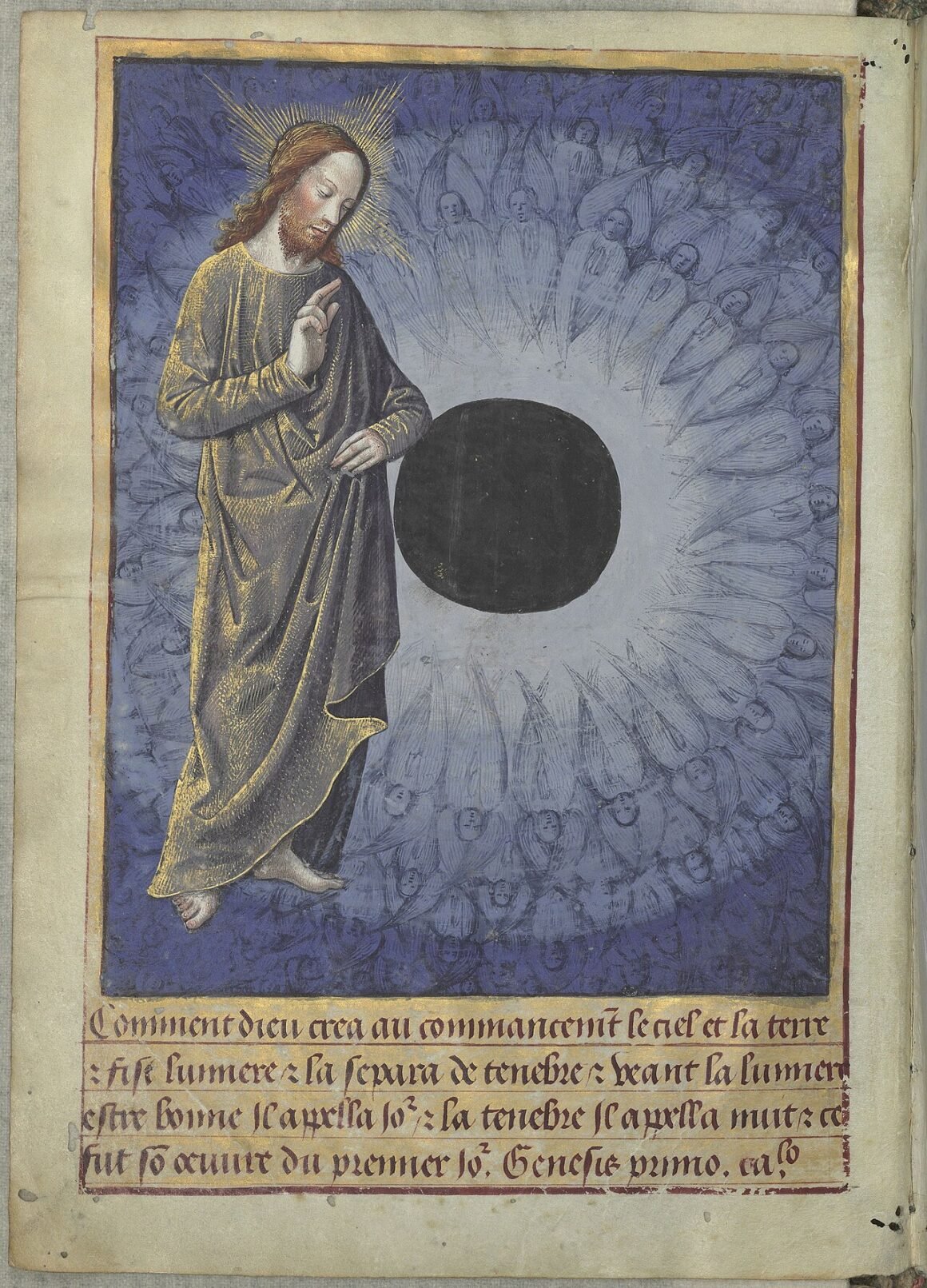
Genesis already set that direction. Ruach (spirit/breath/wind) hovers over adamah (soil/ground), and the human being is formed as a union of earth and Spirit. Earth receives and provides, breath animates, and life emerges. The created order functions as a witness: It is not dead, sitting outside God’s sovereign love, but a formed reality that bears the trace of the One who made it.
The Apostle Paul will tie Creation’s redemption directly with humanity’s in Romans 8:19-24:
“For the creation waits with eager longing for the revealing of the sons of God. For the creation was subjected to futility, not willingly, but because of him who subjected it, in hope that the creation itself will be set free from its bondage to corruption and obtain the freedom of the glory of the children of God. For we know that the whole creation has been groaning together in the pains of childbirth until now. And not only the creation, but we ourselves, who have the firstfruits of the Spirit, groan inwardly as we wait eagerly for adoption as sons, the redemption of our bodies. For in this hope we were saved.”
Scripture does not ask us to choose between spirit and earth. It gives us the logic of both held together. To honor the Father while treating creation as a commodity and disposable would be to miss the way Genesis and Romans were already talking. The Earth is not an afterthought; the World is. Creation speaks its own testimony.
“Creation itself is caught up in the purposes of God and will share in the final redemption.”
— N. T. Wright
A Recovered Pastor’s Second Sermon
“The most important thing in your life is not what you do; it’s who you become. And you become ‘One’ only when your internal world is no longer at war with the Image of God within you.”
— Dallas Willard, Renovation of the Heart
This “hunch” hit me a while ago, and I kept leaning in to it. There were a lot of meditations and visualization practices that helped me, so psychology matters here for context.
Aside from mediation, reading, and studying Scripture, a lot of healing happened with Cognitive Behavior Therapy, Internal Family Systems, and AA. These corrected behaviors and called out patterns, and continue to. The fact that Scripture contained the former and oceans more was more than “interesting” to a fractured, analytical, emotional basket case such as myself…and that’s being generous.
For about a month before this piece, I had been meditating on “My fathers, mothers, and I are one.” There was more than one parental figure in each of those roles for me, and recovery brought more.
Mothers and fathers are archetypal (psychological) and not merely confined to a single person. That includes, for me, obviously, my biological and step parents, as well as God, Creation (Mother Earth?), and the psychological concepts of anima/animus. As a 41-year-old father in recovery, this brought up a lot. This little analytical study here came after, as did the Scriptural evidence and “logic.” In this sense, it was shown to me, not through mediation only, but through God opening my eyes more.
There might be some gulps and gut reactions. If uncertainty is all you’re met with, welcome to the party. For some, it may cast questions on things: Feel and sit with them. Surrender them and see what happens. We’re much too afraid of love and God.
I stand by this because Christ saved my wretched ass and made me learn it. This is all testimony and thesis.
Now, for some swagger: this is Scripture and logic. Gospel cuts through the heart of it. Lord willing, I hope to complete a commentary on John to show it (John 19:26–27).8
I understand, better now, how long a journey it can be and how much there could be to wade through: safeguards, doctrinal fences, old assumptions, social structures, stigmas, and relationships all could potentially create a confusing mess. So, it is not with a light heart that I say, “Trust Jesus—don’t worry about the rest.” God is as good as Scripture promises. Most of it doesn’t actually go away, just changes.
Digest, give it time, and the threads become unseeable.
The real questions will be heavier:
- Do you want to see it?
- What will that weight mean for you?
- And what in the Heaven will you do with it?
~P.S. Doing this can be a bitch, which Jesus warned about (Luke 14:28-33). Just making sure to add my 2-cents.
If you’d like to see how any human can go on this kind of journey, of becoming one, check out www.everyhumansjourney.com (a bit out of date), and let me know if your church or organization is interested in a small group (peer-led) 12-week curriculum.
*Footnotes & Leftovers
- The Genesis 1-2 human was an “earthling.” But Adamah doesn’t just mean generic dirt; it specifically refers to arable, red, life-producing soil. To abuse Earth (adamah) is to abuse the material from which the human (adam) is formed, named, and sustained. ↩︎
- The word for “woman” used in the Text is Ishah, which means “woman,” the same word used in Genesis 2:22 when God makes Adam’s rib into a “woman,” and in Genesis 2:23 when the man says, “she shall be called Woman (ishah), because she was taken out of Man (ish).” In Genesis 2:24 (“hold fast to his wife“) and 2:25 (“the man and his wife were both naked“), English translations introduced the word “wife.” However, the Hebrew text uses the word ishto, which is the word ishah (woman) combined with a masculine possessive suffix (-o, to emphasize she came out of him). ↩︎
- In Jewish thought, it is taught that there are three partners in the creation of a human being: the father, the mother, and the Almighty (Kiddushin 30b). ↩︎
- John Calvin and the Reformed tradition lean into this because it reinforces vocation. They see family as a “primary school” for the soul, which is not wrong, but is not the only school. How (and why) a school operates matters as much as what it teaches (“pedagogy”). ↩︎
- In the Greek, Paul changes his grammatical pattern. He says “neither Jew nor Greek” and “neither slave nor free” (using oude), but then switches the conjunction for the final pair: “no male and female” (using kai), because he was quoting the Greek Septuagint translation of Genesis 1:27. Paul wasn’t making a “progressive” social statement for the first century; he was making an anthropological one, declaring that the fracture of Eden has been stitched back together in Christ. ↩︎
- Many scholars point to a “hidden” 8th statement in John 18:5-6. When the soldiers come to arrest Jesus and ask for him, he says, “Ego Eimi” (I AM) — the Divine name. John says they “drew back and fell to the ground,” like Moses before a bush. ↩︎
- https://theologicalstudies.net/wp-content/uploads/2022/08/48.4.2.pdf and https://churchlifejournal.nd.edu/articles/a-retrieval-of-the-traditional-view-of-mary-magdalene/ ↩︎
- In John’s Gospel, Mary only appears twice: at the beginning (the Wedding at Cana, John 2) and at the end (the Cross, John 19). It’s one of John’s inclusios, another literary device. ↩︎