Table of Contents Show
“If you want a new idea, read an old book.”
— Ivan Pavlov
The imaginary line separating East from West is a lot closer to home than many realize. In the first part, we explored how Western thought divides reality into competing categories: reason and spirit, objective truth and subjective experience, external authority and interior transformation.
Binaries shape more than theology. They influence how we understand ourselves, determine what counts as knowledge, and influence how we respond to experiences. Part One left off with this question: how early can we see the divide? Part Two looks at Western society’s primary influence: the Greeks.
Much of Western society, particularly its intellectual and political self-image, has been borrowed from and developed through the Greeks (and, in a different but equally important conversation, Indigenous political systems). People respect and revere the Greeks, and for good reason.
Their philosophy, literature, politics, mathematics, and art helped shape what we now call Western civilization. The European Enlightenment of the 1600s and 1700s drew heavily on this classical inheritance. Historians use the term Greek Enlightenment to distinguish an earlier period of intellectual ferment in fifth-century BC Greece.
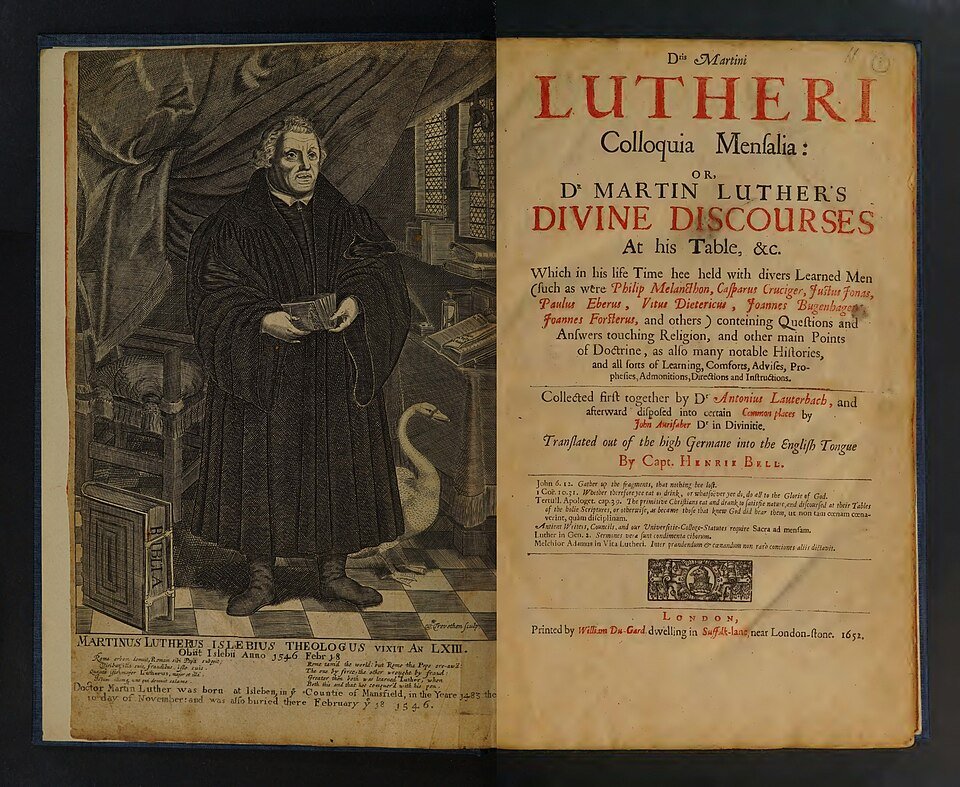
When the authority of the Roman Catholic Church and the inherited intellectual structures of medieval Europe began to fracture, European scholars and reformers returned to the sources available to them. Ad fontes, “back to the sources,” became a guiding mantra of Renaissance humanism and the Reformation. Martin Luther was one of many who looked again at the earliest available texts, languages, and sources of Christian teaching. Erasmus’s Greek New Testament, published in 1516, became one important expression of that recovery. This return to sources helped shape the Reformation and the intellectual world that followed, even as the Renaissance, Reformation, and Enlightenment each had their own histories and contributing forces.
These, however, were far from the first moments of human awakening. By 1900 BC, the Indus Valley civilization had developed complex urban centers, sophisticated infrastructure, systems of measurement, and far-reaching trade networks millennia before the European Enlightenment. There was also printing long before Gutenberg: East Asian woodblock printing and movable type predate Europe’s press by centuries (1377 AD). Later, America would experience its own period of religious fervor and revival in what became known as the Second Great Awakening (1790–1840 AD).
These examples are not identical events, and they do not all represent the same kind of enlightenment. But they point toward something that seems to run as far back as human society itself. The word Enlightenment implies seeing what was previously unseen, becoming aware of deeper truths, or watching old assumptions fall away as something more real comes into view. Human beings and civilizations have repeatedly experienced moments of discovery, reorientation, and transformation.
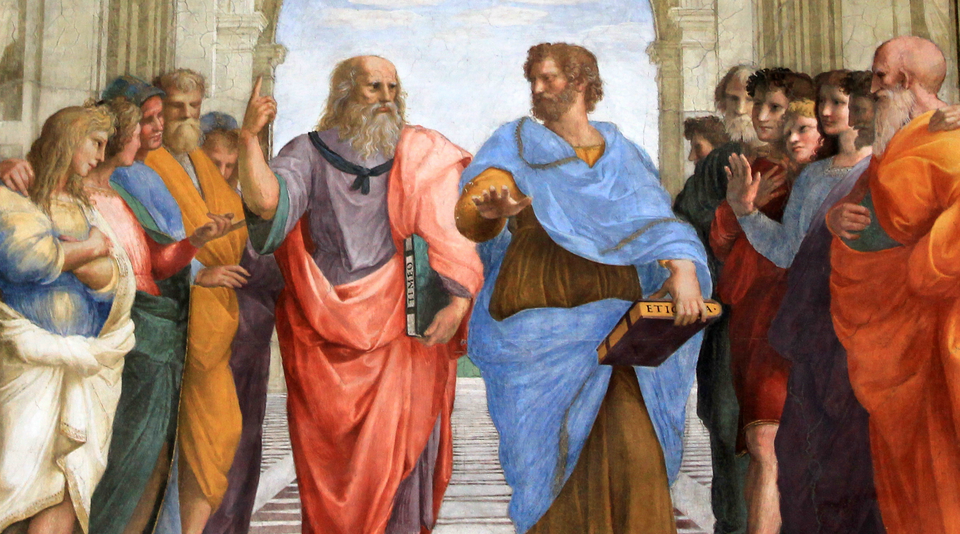
The Greeks had one, too. And interestingly, they also found sources and inspiration somewhere else. The word Enlightenment almost invites the question: if it was dark before, where did the light come from? Looking back more than two thousand years, we might imagine Greece as a refined, self-contained civilization, already possessing the qualities we admire in it. It was anything but. Greece had an origin, a beginning, a development, and an end. Its people were part of a much older and wider human story, one populated by civilizations that had come and gone long before Athens became the symbol of Western intellectual achievement.
What we explore today is the Greek genesis: its older sources, the ideas it inherited, and what Greek thinkers and religious communities did with them. The idea of Greece being a pristine, purely unique experiment that later European rationality copied ignores extensive archaeological and textual evidence. Greek religion and philosophy developed through extensive engagement with older Eastern cultures. They borrowed, adapted, reinterpreted, and sometimes copied from them. Everyone was doing it, and still does—that’s part of the point. Cultural exchange was one of the ways civilizations became what they are.
“Philosophical discourse must be understood from the perspective of the way of life of which it is both the expression and the instrument. Philosophy in antiquity was an art of living, and the philosophical school was above all a community of practice, a place where a transformation of life was taught and lived.”
— Pierre Hadot, Philosophy as a Way of Life: Spiritual Exercises from Socrates to Foucault
Archaic Greece (~1600–480 BC)
The Bronze Age didn’t develop in isolation; the Mediterranean functioned as an active maritime bridge within the Late Bronze “International Age” (c. 1600–1200 BC). This interconnected system relied on predictable seasonal counter-clockwise Mediterranean currents to move bulk commodities, goods, technologies, and diplomatic envoys across regional powers.
Before Greece became anything more than a city-state, the Minoan and Mycenaean worlds existed within this connected Mediterranean environment. Macedonia as a unified geopolitical kingdom (let alone a cultural identity interacting in this way) did not exist during the Late Bronze Age. The Macedonian Aegean interacted with Anatolia, Cyprus, Egypt, the Levant, and Mesopotamia through maritime trade, diplomacy, migration, and warfare.
What Greece was before collapsed with the entire western world during the Bronze Age Collapse, going through what historians call the Greek Dark Ages (1100–750 BC). Then, by the time Greece was again on the international stage, Greece had its own “Orientalizing Period,” undergoing a period of importing ideas from other cultures, a practice it would continue (700—600 BC).
During this era, Greece actively imported its alphabet, artistic expressions, building architecture, philosophical concepts, and religious rites, borrowing inspiration heavily from the older cultures of the Levant, Mesopotamia, and Egypt. Leading up to Alexander the Great, Greek city-states and kings would regularly import stories, gods, and art as a show of wealth and power, which would influence their own arts and sciences.
“Cultural transfer is not a passive process of absorption; it is an active appropriation… Greece was part of a larger Mediterranean-Near Eastern koiné. Hellenic identity did not emerge in opposition to the East, but through the profound assimilation of its arts, scripts, myths, and rituals.”
— Walter Burkert
Specific Deities & Comparative Genealogies
Gods in the ancient world had lifespans and evolved with cultures and societies. This can seem foreign to us in modernity, but look back far enough through history and one can see the dance of religion, state, and culture extending up to the current. In ancient times, gods could cycle as fast as the ruling family. One generation might be worshipping under Egyptian rule while the next under Persian.
While upper leadership and government may have made decisions that set clear trajectories, trade, culture, and the belief systems of the broader population were also interconnected. Along with goods, people exchanged and debated ideas across the networks that would become the Silk Road, as well as Rome’s extensive web of roads. Roman emperors, in different periods, elevated different deities and religious traditions, from Jupiter and Apollo to Sol Invictus and, eventually, Christ.
Their decisions may have reflected personal convictions, but they were also shaped by the religious landscape of the populations they governed and the political realities of maintaining imperial power (a topic hotly debated in some circles). Leaders may point down while base populations point up, and that tension is part of the problem Scripture hints at from the beginning of the human condition in Genesis 3. In the end, no emperors are wearing clothes.
Within Dionysus’ own literary corpus, The Bacchae, a popular play refers to how he was first in Eastern regions, appearing by different names and in different forms.
In Greece, they recognized that their own ideas were not purely original creations. They had roots. In mythological studies, they discuss how myths and gods evolved like family trees. While we might only think of Zeus as a singular being, he would often exist in different forms, with different titles, simultaneously across geopolitical borders. Greece’s own scholars would go on ancient field trips to chase down the historical source of something, and often reported back on their findings.
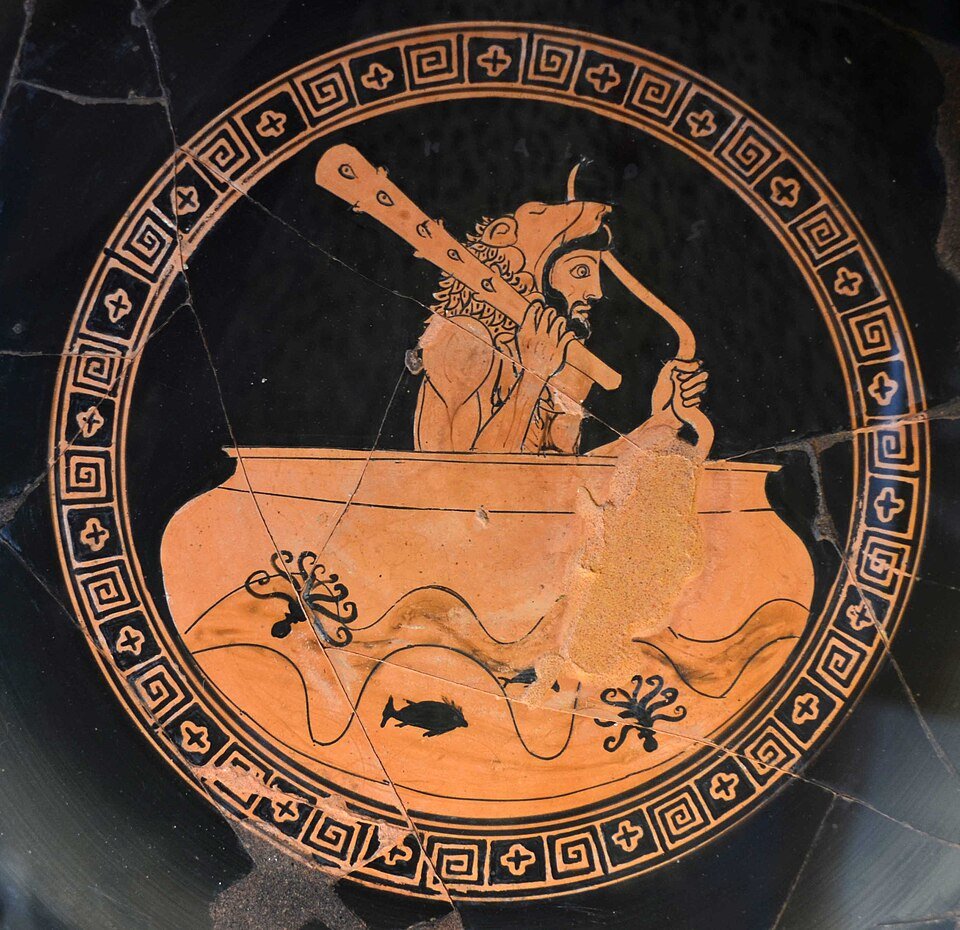
Heracles, Melqart, & Samson
As a warm-up example of how ancient stories and ideas traded across borders, consider the age and origins of Heracles (or Hercules). He existed before Greek city-states (poleis), finding our oldest source in Homeric myth, about the time of the Mycenaeans (1750 — 1050 BC) or before.
However, that’s only what we can see. Rather than assuming the myth of Heracles was a native Greek hero, classical Greek historians investigated his foreign origins. Herodotus explicitly traveled abroad to trace the roots of the Greek pantheon around 440–425 BC. In his The Histories, he wrote,
“I heard it said that Heracles was one of the twelve gods of Egypt… And wishing to get clear information on this point from where it was available, I sailed also to Tyre in Phoenicia, hearing that there was there a holy temple of Heracles [Melqart]… So these investigations show clearly that Heracles is an ancient god.”
— Book II, Chapters 43–44
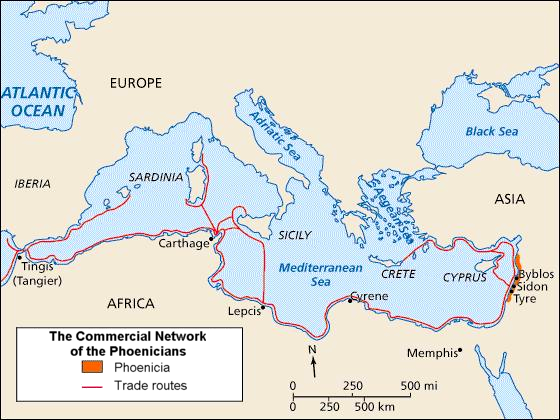
“Tyre in Phoenicia” was about 100 miles straight north of Jerusalem. The Phoenician deity Melqart of Tyre was the god of strength and heroes, called the dying-and-rising god. The Phoenicians are the Old Testament’s Canaanites and date before the ancient Kingdom of Israel.
Despite a relatively small kingdom, they were known for their naval trade routes around the Mediterranean Sea, and for founding several cities around its coast. Settlers from Tyre founded Carthage, and so, when Tyre fell to Alexander the Great (332 BC), many Tyrians fled to Carthage.
Herodotus, Arrian, and Strabo all noted the temple of Melqart, which they interpreted as Heracles, had magnificent pillars of gold and green stone that never weathered. Unfortunately, parts of ancient Tyre are under the sea and difficult to excavate. So while that temple has never been excavated, the Phoenicians made others.
Gades, on the coast of southwestern Spain, over 2200 miles away, was founded by Tyrian colonists around the 12th century BC, and its sanctuary of Melqart was famous. Both Julius Caesar and Hannibal visited it to offer sacrifices.
In the Ancient Near East, strongman myths were common. Genesis even refers to the common mythos of “heroes of old, men of renown” in Genesis 6:4. Long before Heracles hoisted his club or Samson brought down the Philistine temple, the ancient Near East had an established template for the mythic strongman and hero: Gilgamesh of Uruk.
In the Epic of Gilgamesh, the king is described as two-thirds divine and one-third human—a cosmic imbalance that manifests as raw, unchecked earthly power. Ruling Uruk with absolute impunity, Gilgamesh embodies the archetype of the unchecked sovereign who exploits his subjects, demanding to sleep with brides on their wedding nights before their husbands.
When the citizens of Uruk cry out against Gilgamesh’s tyranny, the sky god Anu and the mother goddess Aruru intervene by creating an equal counterforce: Enkidu. Enkidu is fashioned from clay in the wilderness, living among beasts, eating grass, and embodying unbridled natural strength. After a fierce battle, the two become close friends and go on adventures together.
The Philistines, Samson’s main antagonists, were neighbors to the Phoenicians. Some scholars have speculated that cultural transmission may also have occurred between ancient Jews and other cultures of the Near East. There are structural parallels between the biblical Samson and Greek Heracles tradition that reveal a shared Bronze Age, Levantine archetype.
While it’s at best an interesting example, it illustrates how cultures and myth do not sit isolated in containers, but evolve with the people passing them on. The thesis here isn’t positing that Samson was either inspired by or the inspiration of Heracles. It simply shows how ancient ideas might have bumped into each other.
Aphrodite, Astarte, & Inanna
Aphrodite also was not a self-contained, isolated Hellenic invention, but the recipient of ancient Near Eastern fertility and sovereignty archetypes. Ancient sources record her arrival in the West coming through the eastern island of Cyprus. The Sanctuary of Aphrodite built at Palaepaphos, Cyprus, dates to about 1200 BC, during the Late Bronze Age, and served as her primary cult site for 1,600 years.
Classical Greek poets tied Aphrodite’s arrival to maritime trade routes with Phoenician staging posts in the eastern Mediterranean, before transitioning into the Greek pantheon around the 8th century BC.
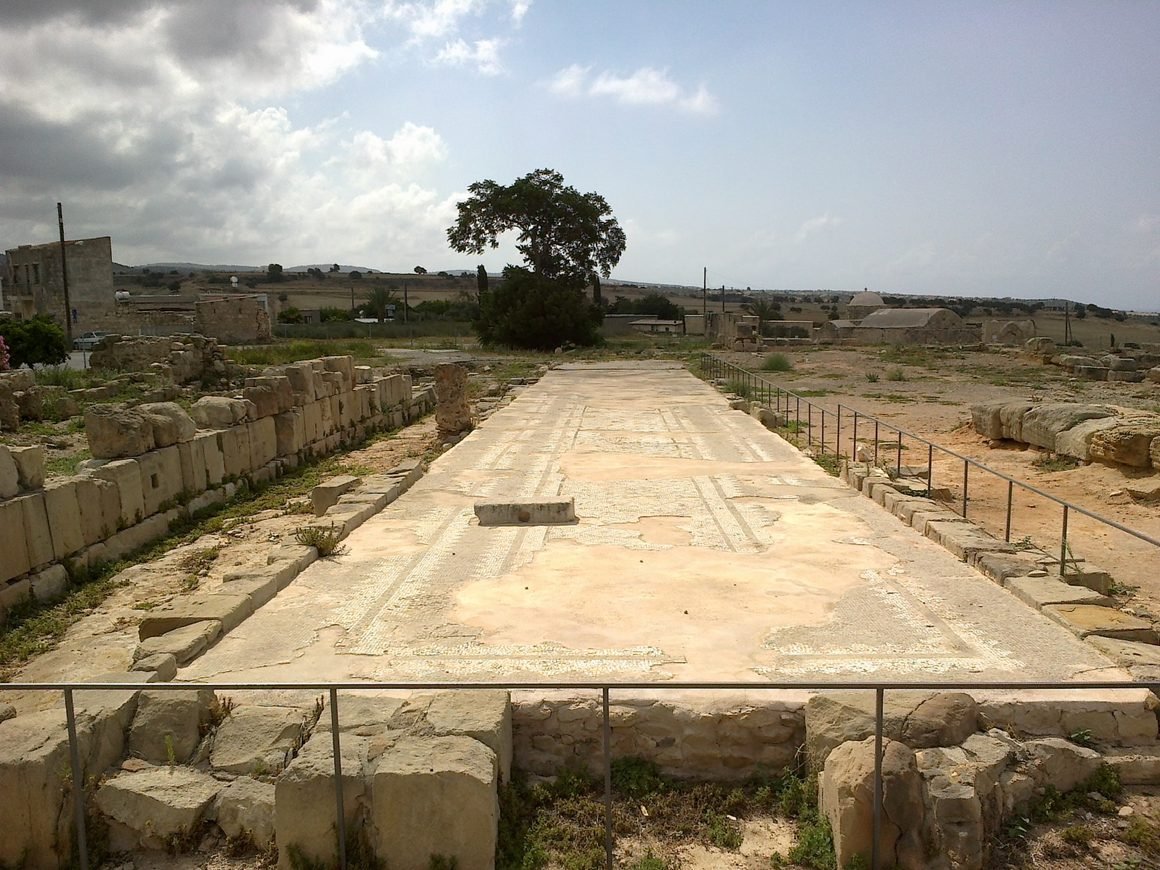
Her mythological birth emerging from the sea foam near the island of Cyprus reflects the role of ancient trade and the island’s historical role as a primary Phoenician trading post, sanctuary nexus, and cultural bridgehead connecting the Levant directly to the Aegean.
The relationship between Aphrodite and Near Eastern goddesses is substantial. Aphrodite’s epithet Aphrodite Ourania (“Heavenly Aphrodite”) resembles the ancient Semitic title “Queen of Heavens,” which was historically influenced by the Phoenician Astarte and the Sumerian-Akkadian Inanna/Ishtar deities (cf. Jeremiah 7:18; 44:17–19, 25). Aphrodite was far from the only female god of love, and she was molded and melded throughout different Greco-Roman times.
And, still, well before the name Aphrodite was attached to the island, indigenous Europeans were carving stone fertility, mother-goddess figures before written language existed, during the Chalcolithic Period (c. 3900–2500 BC). The archetype might change names and forms, but not spirit.
Dionysus, Osiris, & Ecstatic Traditions
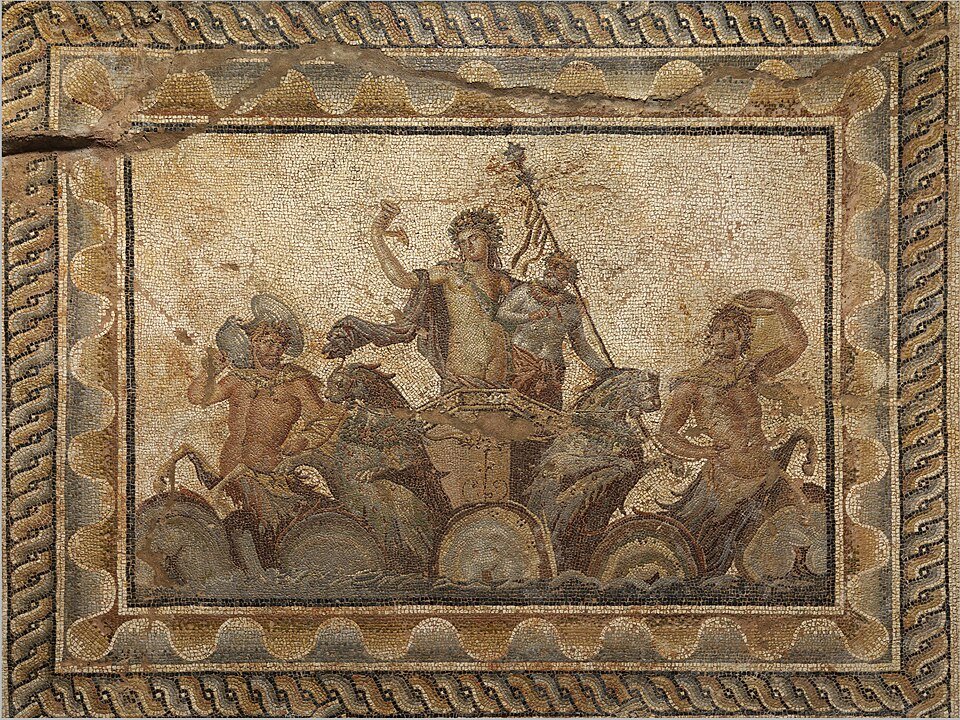
Dionysus shares parallels with Osiris, the Egyptian god who was dismembered and resurrected. The Dionysian cult incorporated ecstatic dance, wild instrumentation, ritual frenzy, and mountain-wandering (oreibasia) that trace back to ancient Anatolian and Bactrian trade networks.
Herodotus, in The Histories again, argued that the Greeks did not invent the rites of Dionysus independently. Rather, early Greeks imported the core story of Osiris and adapted it to Hellenic culture. He recorded the historical movement of Dionysian mysteries from Egypt and the Near East through people like Melampus and Cadmus of Tyre.
“For the Egyptians say that Osiris is Dionysus; and it was Melampus who taught the Greeks the name of Dionysus, his sacrifice, and the procession of the phallus.”
— Herodotus, The Histories, Book II, 49–50
Hundreds of years later, around 100 AD, Plutarch, writing to a priestess of Apollo at the famous temple of Delphi, which operated for over a thousand years, wrote: “That Osiris is the same as Dionysus, who should know better than you, Clea, who are the leader of the Thyiades at Delphi, and were consecrated by your father and mother to the Osirian rites?” (Moralia: On Isis and Osiris).
As mentioned, the Greeks recorded directly in their myths about Dionysus that he originated in the east, under different names. The earliest historical footprint of Dionysus does not appear in Classical Athens, but in Bronze Age Linear B administrative tablets from Pylos and Hania, where his name is recorded as di-wo-nu-so (c. 1250–1200 BC).
“The height of originality is skill in concealing origins.”
— C. E. M. Joad
Greco-Roman Importation of Egyptian & Eastern Cults
As the Mediterranean unified under Hellenistic and later Roman rule, cultural exchange deepened into massive empire assimilation. Greeks and Romans did not merely tolerate foreign religions; they aggressively imported them, retrofitting Egyptian and Near Eastern deities into their own religious infrastructure.
Ancient deities were sometimes used like Mr. Potato Head puppets. Following Alexander the Great’s conquest of Egypt, the Ptolemaic dynasty formally fused Osiris and Apis (Osiris-Apis) with the Greek attributes of Dionysus and Hades to create Serapis—a hybrid state deity designed to unify Greek and Egyptian worshippers under a single iconography (c. 305–283 BC). He was far from the only authority figure to mold gods for the sake of influencing people: another frequently cited example was rulers splitting one god into two.
As times, governments, and cultures changed, so did their gods. The worship of Egyptian Isis swept across the Greek world and became a dominant mystery religion throughout the Roman Empire. Its initiation rites, sacred robes, and promise of personal regeneration closely mirrored older Osirian resurrection motifs.
Two thousand years ago, there was no clear line between East and West. And, if there was, Israel sat almost dead center on it, almost as if by design. No contradiction exists between East and West when one goes deep enough into the root of reality. The division is a creation of egotistical, dualistic thinking that mistakes its own maps for the territory. When we touch the ground of being, the boundary lines dissolve.
International Exchanges: Socrates, Gymnosophists, & Eastern Encounters
History records cross-pollination between East and West not as an accidental byproduct of Alexander’s conquests alone, but as an ongoing, ancient reality recognized and practiced in antiquity. Well before Hellenistic armies pushed into the Indus Valley, intellectual and spiritual frameworks were bleeding across borders through merchants, diplomats, and wandering ascetics.
An early fragment preserved by Aristoxenus, a direct pupil of Aristotle, captures the exchange of philosophical ideas that were moving across continents. In his historical recollections, Aristoxenus records an encounter between Socrates and an Indian sage (a gymnosophist) visiting Athens:
“One of these men met Socrates at Athens, and asked him what was the scope of his philosophy. ‘An inquiry into human phenomena,’ replied Socrates. At this the Indian burst out laughing. ‘How can a man inquire into human phenomena,’ he said, ‘when he is ignorant of divine ones?'”
— Aristoxenus, quoted in Eusebius, Praeparatio Evangelica, XI.3
Eusebius (c. 264–340 AD), a Christian bishop and historian, also explicitly states that the story’s truth was not certain: “Whether this, however, is true no one could assert positively.”
His main argument was that the Greeks got much of their philosophy from non-Greek peoples, whom ancient Greek writers often called barbaroi, barbarians.1 The point of the story is the relationship between knowledge of humanity and knowledge of the divine or cosmic whole. Human beings are parts of a larger order; understanding them requires understanding that order. The origins of philosophy, the antiquity of wisdom, and the relationship between Greek philosophy and the Hebrew Scriptures were already irreversibly connected.
Greek thought was engaging with Eastern challenges before Jesus was swaddled in a manger. It also captures a fundamental critique Eastern traditions held against early Greek rationalism: much of Eastern thought saw Western mindsets as too human-centric in their logic, while ignoring the vertical, divine ground of being (ontology). An ego-centric world produced ego-centric people.
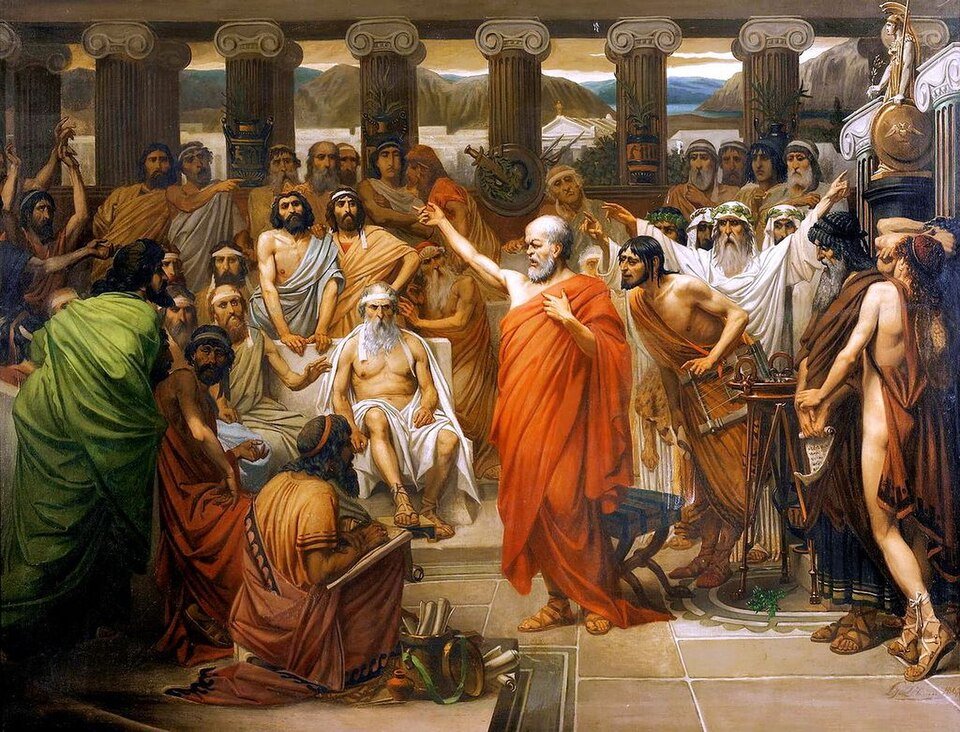
While Platonic thought is often heralded as a singular, immaculate Western achievement, it was operating within a Mediterranean conversation already saturated by Eastern philosophy. From the cross-pollinations of the Greco-Buddhist kingdoms of Bactria to the intellectual trajectory of Augustine—who spent nearly a decade as a Manichaean before his Christian synthesis via Milanese Neoplatonism—Western philosophy has continually returned to draw from Eastern wells. The myth of intellectual isolation isn’t just historically lazy; it is a defense mechanism for a culture terrified of realizing it never built anything entirely on its own.
Alexander the Great’s campaign into the northwestern Indian subcontinent brought Greek thinkers into contact with Indian ascetics known as gymnosophists, or “naked philosophers.” Plutarch recounts how Alexander sent the philosopher Onesicritus to speak with them. One ascetic, Calanus, eventually accompanied Alexander westward and died by self-immolation in Persia in the presence of his entourage. The accounts of their encounters portray sages who measured wisdom by standards quite different from those of the conqueror.¹
A similar episode occurred during Augustus’s reign. Strabo records an Indian embassy to Augustus that included an ascetic named Zarmanochegas, who later burned himself at Athens. Plutarch specifically compares his death with Calanus’s. These accounts do not establish that Indian philosophy shaped Greek skepticism or Roman thought, but they do document encounters between Indian ascetic traditions and the political and intellectual worlds of two empires.
The encounters also complicate the notion of an intellectually isolated West. Long before Christianity emerged, Greek and Roman writers were recording encounters with Indian sages whose practices and ideas challenged conventional assumptions about wisdom, power, and the good life. I explore the later episode involving Augustus and Zarmanochegas in Emperor & Pyre: A Caesar & Naked Monk Walk into Eleusis Together….
The Early Church Fathers on Greek Borrowing
Early Christian apologists and scholars were also aware of this intellectual debt. Instead of viewing Greek philosophy as an isolated, immaculate miracle of reason, thinkers like Justin Martyr and Clement of Alexandria argued that the greatest Greek philosophers had simply stolen their best insights from Moses and the Eastern “barbarians.”
Clement of Alexandria, writing in his Stromata, describes how Greece’s legendary sages sat at the feet of Near Eastern and Egyptian teachers:
“And Plato does not deny that he procured all that is most excellent in philosophy from the barbarians; and he admits that he came into Egypt… Pythagoras is reported to have been a disciple of Sonches the Egyptian arch-prophet; and Plato, of Sechnuphis of Heliopolis… [The Greeks] have no learning that is hoary with age.”
— Clement of Alexandria, Stromata, Book I, Chapters 15 & 21
A philosopher, Numenius of Apamea, summarized this ancient secret with a phrase later popularized by the Church Fathers: “For what is Plato but Moses speaking Attic Greek?” 2 (quoted in Clement of Alexandria in Stromata).
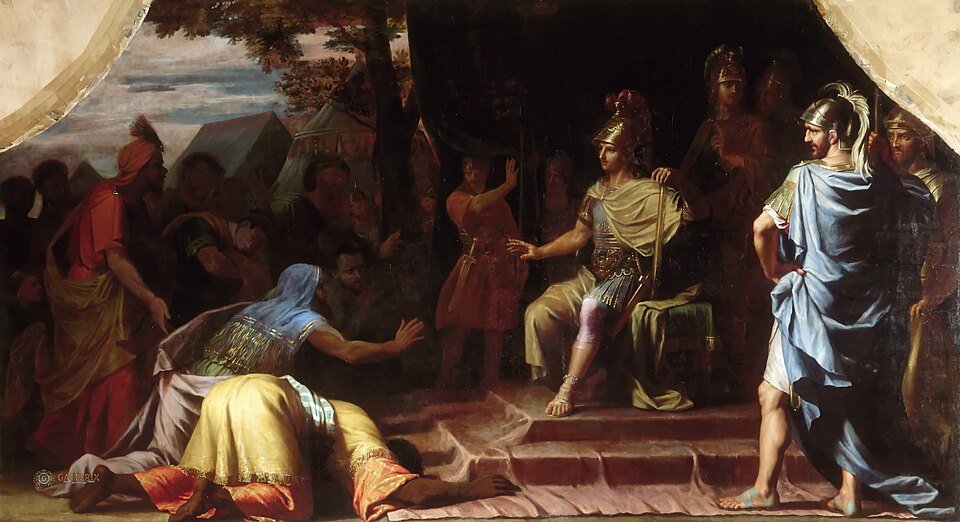
The myth of an isolated, self-generated Western rationality collapses under the weight of its own history. Greek philosophy, Roman civic religion, and post-Enlightenment systems were built on a foundation of borrowed Eastern concepts, imported mystery rites, and cross-cultural appropriation long before European institutions attempted to sanitize their origins into a clean, West-versus-East binary.
When Alexander the Great pushed his military campaign past the Persian Empire into Taxila and the Punjab region, he brought an entire retinue of historians, scientists, court philosophers, and geographic observers. Among them was Pyrrho of Elis, a painter turned philosopher who studied under Anaxarchus and traveled alongside him as part of Alexander’s inner intellectual circle. Some of Greece’s best thinkers personally encountered Indian ascetics.
Writing more than five centuries later, Diogenes Laertius, a biographer of Greek philosophers during the 3rd century 3, connects Pyrrho’s interactions with Indian Gymnosophists and Persian Magi to his philosophical development:
“Afterwards he joined Anaxarchus, whom he accompanied on his travels everywhere so that he even forgathered with the Indian Gymnosophists and with the Magi. This led him to adopt a most noble philosophy, to quote Ascanius of Abdera, taking the form of agnosticism and suspension of judgement.”
Diogenes goes on to describe Pyrrho’s rejection of conventional distinctions between the honorable and dishonorable, the just and unjust, and his contention that human actions are governed by custom and habit. Whether Pyrrho’s encounter with Indian sages actually produced these views remains speculative. But the ancient account itself makes that connection, preserving a tradition in which contact with Eastern wisdom helped shape an influential skeptical tradition in Western philosophy (Pyrrhonism Skepticism).
Long before Christianity emerged, Greek thinkers were already encountering, interpreting, and debating ideas from beyond the Greek world. The boundaries between intellectual traditions were more permeable than later narratives of a self-contained Western inheritance often suggest. Before Christianity was conceived in the person of Jesus, Western and Eastern concepts were already moving back and forth for over a thousand years. And it would continue to 4.
A Coming Imperial Swap
By the time Christianity had a name, it was an Eastern intruder that would later be adopted by the very government that once tried to stamp it out. That is where our next leg picks up.
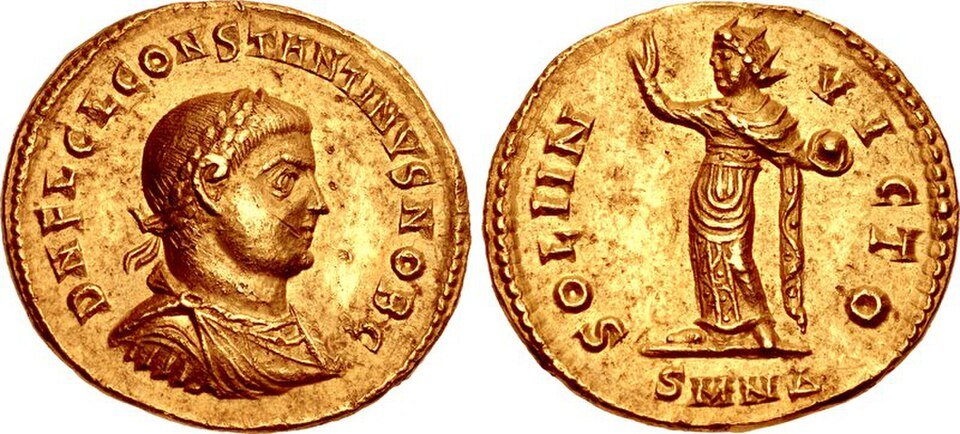
The premise is straightforward: the Roman government did not abandon its ancient playbook of administrative assimilation; it simply evolved alongside Christianity. Imperial patronage, political consolidation, theological disputes, and ecclesiastical institutionalization converged over time. Christianity became increasingly entangled with imperial authority, and that relationship transformed both the Church and its political environment. The transformation was gradual, contested, and not a simple one-for-one replacement of old Roman religions.
However, to oversimplify centuries of complicated history, Rome traded out its old state-sanctioned mystery religions for a new one it could legislate and control. They did not eliminate mystery, awakening, or transcendent experience—they co-opted and stripped them of their unmediated interiority, then retrofitted them into a top-down institutional narrative that was easier to police (after a considerable amount of bloodshed, of course).
For those interested in the mechanics of how it happened, I’ve detailed a fuller historical transition in an Academia paper, The Conversion of Christ into Caesar, and briefly covered it on the 7×3 Theses page.
Then, it is only a hop, skip, and a jump from an imperial swap to our modern, hyper-rationalized era, where we find ourselves careening right back to where we started. Modern society has pushed the West’s obsession with sterile categorization and externalized compliance so far that the pendulum has swung all the way back East.
People are starving for deep truth, genuine spirituality, and authentic interiority. And for good reason.
Read Part 3, Christ, Caesar, & Divided Hearts (pt. 3), which explores the transition from the era just before Constantine through the Reformation. It lands right back where it started. Much like its premise, it’s meant to be felt as much as understood.
“The choice of a way of life was not located at the end of the process of philosophical activity, like a kind of accessory or appendix. On the contrary, it stood at the beginning…”
— Pierre Hadot, Philosophy as a Way of Life: Spiritual Exercises from Socrates to Foucault
*Footnotes (& Leftovers)
- The Greek term barbaros (βάρβαρος) originally distinguished non-Greek speakers from Greeks, the word imitating the unintelligible sounds of foreign speech, but it acquired broader meanings with cultural and intellectual inferiority, especially in political speech. Such distinctions appear elsewhere. In ancient China, the Huá–Yí distinction separated the Chinese cultural and political sphere from peoples beyond it, with Yí often translated as “barbarian.” Chinese historical sources also called the Roman world Dàqín (大秦), or “Great Qin,” sometimes emphasizing similarities between the two distant empires.
In Sanskrit writings, mleccha could designate people outside established linguistic or Vedic cultural norms, while yavana was used for Greeks and other western peoples. In Aztec Nahuatl, chīchīmēcatl (Chichimeca) could mean northern peoples regarded as barbarous, although the term’s connotations varied. It is common for cultures to form Us-versus-Them mentalities and then label outsiders.
Against this background, the New Testament declares that there is neither Jew nor Greek, slave nor free, male nor female, because all are one in Christ Jesus (Galatians 3:28). Colossians 3:11 makes the point more clearly by including barbaros and Skythēs (“Scythian”) among the distinctions that no longer determine membership in God’s Beloved Community: “Here there is not Greek and Jew, circumcised and uncircumcised, barbarian, Scythian, slave, free; but Christ is all, and in all.” In Christ, exterior differences cease to divide and never determine a person’s standing and belonging. Grace is already the operational baseline of Creation, and it’s easy to forget. The Gospel thus confronts the tendency to turn culture, ethnicity, economic differences, and social status into hierarchies of human worth. ↩︎ - Because writers like Plato, Aristotle, Thucydides, Sophocles, and Euripides wrote in Attic Greek, it became the benchmark for classical education, grammar, and rhetoric in antiquity. After the conquests of Alexander the Great, who was taught by Aristotle, Attic Greek served as the primary linguistic base that evolved into Koine (“common”) Greek—the lingua franca of the Hellenistic world, the language of the Septuagint, and the original language of the New Testament. ↩︎
- Stoicism, one of the philosophical traditions most closely identified with the Greek and later Roman worlds, was founded by Zeno of Citium, a native of Cyprus’s Phoenician-settled city of Citium. Diogenes Laertius also preserves the famous account of Zeno arriving in Athens after a shipwreck, discovering Xenophon’s Memorabilia in a bookseller’s shop, and becoming a student of the Cynic Crates. An intellectual tradition later classified as Greek emerged from a Mediterranean world of overlapping peoples, languages, and ideas, and outcompeted Greece’s Epicureanism. ↩︎
- Apollonius of Tyana was born in 15 AD in the Roman Province of Anatolia (modern-day Turkey) and studied the philosophies of Persia, India, Ethiopia, and Egypt. He devoted himself to a Pythagorean (yes, that one) cultic way of life, which included a vegetarian diet, rejecting the evils of animal sacrifice, and wearing only linen. He stationed himself at a temple of Asclepius and became a renowned healer.
Apollonius strongly condemned Nero’s tyranny, artistic pursuits, and execution of philosophers. He faced arrest in Rome under Nero before charges were allegedly neutralized. Apollonius fiercely opposed Domitian’s cruelty and paranoia, leading to his arrest and trial in Rome on charges of treason and sorcery, from which he legendarily vanished during his defense. With Vespasian & Titus: He maintained a supportive, advisory role, encouraging Vespasian to govern justly.
He was so popular that his biography was commissioned and widely distributed: The Life of Apollonius of Tyana by Philostratus.
Roman critics argued that Jesus was just a copy of Apollonius. During the Great Persecution period between 303 and 305 AD, Hierocles, a Roman imperial official and governor associated with the persecution of Christians, wrote a work called Philalethes (“Lover of Truth”).
In it, he compared Apollonius and Jesus, saying Apollonius was at least as credible a wonder-worker. His argument was essentially that if Christians accepted the extraordinary deeds attributed to Jesus, they had no consistent reason to dismiss comparable claims about Apollonius. Jesus’s story, by contrast, was supposedly embellished by Peter, Paul, and other supposedly uneducated and unreliable followers. He also pointed out that Christians were inconsistent in how they interpreted miracles (the irony).
Christians, including Eusebius, argued back that Apollonius was a conjurer of demons. I dissent. I’d say he’s more like a Plato and a forerunner of Christ, not a competitor. Apollonius is a Neopythagorean philosopher whose religious life is framed through philosophical discipline, asceticism, ritual practice, and relationships with ancient gods. Jesus belongs to a Jewish prophetic and apocalyptic context, proclaiming the kingdom of God and interpreting his mission through Israel’s Scriptures.
Much like with the Samaritan Woman in contrast to the preceding conversation with Nicodemus, I bet these two would have had great conversations that most people can’t have today.
A fragment attributed to Apollonius’s treatise On Sacrifices survives through Eusebius’s Preparation for the Gospel 4.13. It argues that the supreme God needs no material sacrifice. The appropriate offering is the human mind and its best reasoning. Here is much common ground. ↩︎
*Last Updated: 11/8/2026