Table of Contents Show
“In the beginning was the Word, and the Word was with God, and the Word was God. He was in the beginning with God. All things were made through him, and without him was not any thing made that was made. In him was life, and the life was the light of men. The light shines in the darkness, and the darkness has not overcome it.”
— John 1:1-5
The Prologue as a Pattern Disruptor
When we examined the first five verses of John, we were confronted with John attacking the dualistic worldviews of his time. In modern times, there have been as many teachings about John’s first five verses as there have been politicians. From Jehovah’s Witnesses and Latter Day Saints to Catholicism, Orthodoxy, and Protestantism, and now today, voices like Richard Rohr or the subtle influence of Arab mystics, everyone has an opinion about John.
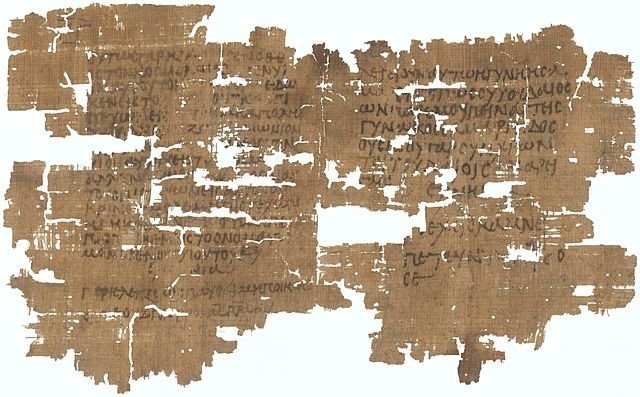
To listen to John clearly, we must first strip away our Sunday School flannel graphs, family traditions, church baggage, and organizational obligations. We must confront his text as it is: a radical, multi-layered polemical invitation. John 1:1-5 dropped as a philosophical grenade into a first-century world awash in competing visions of reality: Roman imperial propaganda, regional mystery religions, Greco-Buddhist kingdoms, and divisions between Stoic reason and Epicurean hedonism.
Modern Usage: From Dogma to Consciousness
In modern discourse, these five verses are often synthesized in ways that miss John’s subversive intent. For example, John 1:1 remains a primary theater for Christological proof-texting. Whether it’s the linguistic gymnastics over “a god” or the rigid hypostasis of traditionalism, the verse is used to shore up tribal boundaries rather than invite the narrative arc of transformation John intended.
*Spoiler alert:
We were called to be that hypostasis.
After Descartes, some filter the Logos through the “virus” of the sovereign self. Modern gurus and neo-gnostics might use the order of the Logos or discuss a divine spark, but they usually stop at the scaffolding of the ego and hold on to a dualistic cosmos, hesitating to trust where the Word leads. While I haven’t dug into Jordan Peterson’s stuff for a bit, he teaches the Logos as the “spirit of truthful speech” that calls order out of chaos. Drawing on the Genesis parallels, he argues that the world is made intelligible through the Word. It’s a functional, pragmatic Logos, similar to what Ravi Zacharias used to preach, but it often misses the mystical “union” John is driving toward.
“The Logos is the structure of reality. To live in the Word is to live in the grain of the universe.”
— Dallas Willard
Today, Richard Rohr uses these verses to point toward “Christ-consciousness” as an immanent, non-dual reality where we die to our “false self.” This is the conclusion God dragged my idiotic butt through, and Rohr is right: it changes everything.
As you look around your city and what the algorithms are feeding you, if you have that feeling like, somehow, we’re back in the first century again, you wouldn’t be alone. Our global world is shaking, and a lot of people are talking about it. Others may be in denial.
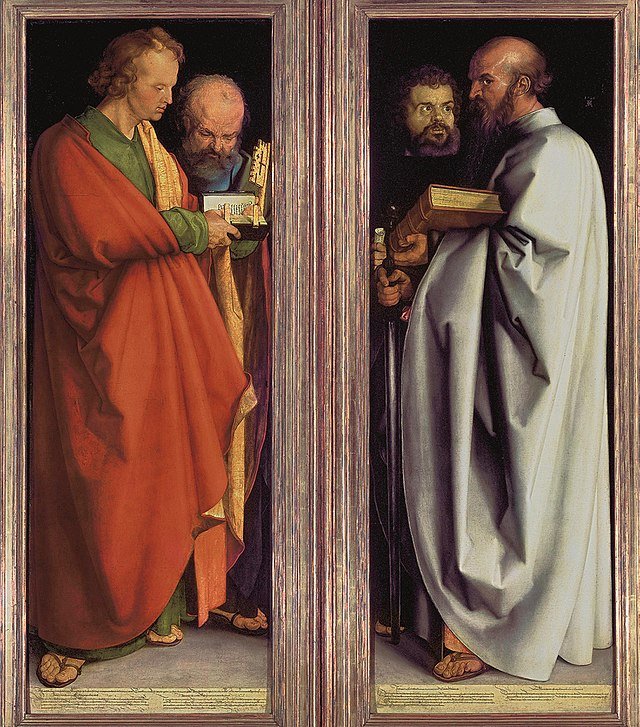
Into a similar kind of world, John subverted both imperial propaganda and the elitism of religions by presenting the Logos not as a secret for the few, but as a “revelation made flesh” for anyone to experience through metanoia (Greek for “repentance,” literally “a changing of the mind”). He gave the people of his time, and those who would come, what they were actually looking for.
In a world of digital Babel and AI Slop, the Light shining in the darkness (John 1:5) is a psychological necessity. It is the tipping point where the ego breaks, and we are forced to see the shadows we’ve ignored. The irony is that while we have more access to original languages and archaeology than any generation in history, almost no one reads. The hardest part today is ignoring the opinions we were “front-loaded” with before we even had a chance to listen to John for ourselves, just as readers of this post in Australia will have a different take than people in Rexburg, ID.
“The Logos is the mind of God made into a person. It is the bridge between the silent abyss of the Divine and the noisy streets of men.”
— William Barclay
The Inevitability of John & the Nicene Divergence
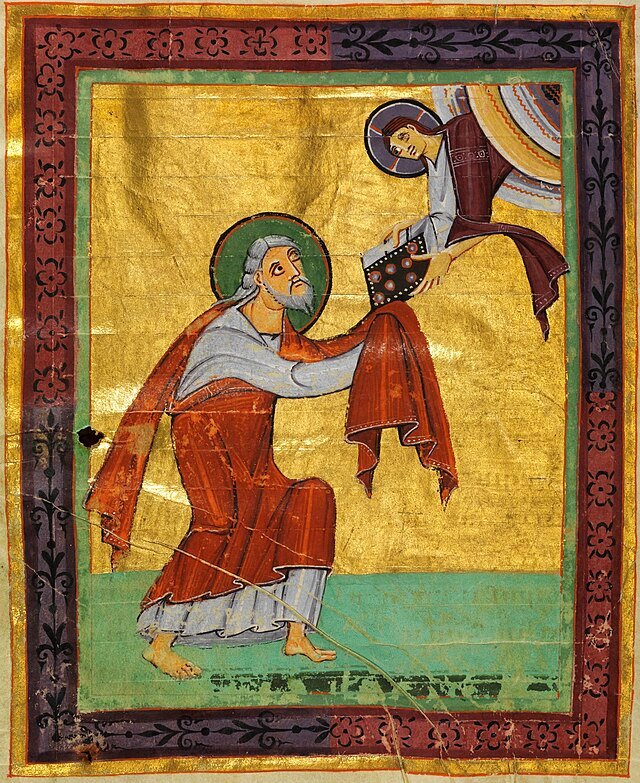
John, arriving late to the party, wrote around 90–110 AD after the Synoptics had already set the narrative baseline, and Christianity had already spread through much of the Roman Empire. Yet, his Gospel was inevitable. The ongoing collision between Jewish messianic hope and Greco-Roman philosophy demanded his unique synthesis. And he had to have fun writing it.
If John had never penned his Gospel (and assuming the other Johannine writings), the road to the Council of Nicea (325 AD) could have looked entirely different. Without John’s specific move to identify the Logos with a human person, the church would have relied mainly on the Synoptics and Paul’s epistles. The debate would have likely remained centered on agency and mission (how God acts through a vessel) rather than the high-stakes ontological substance (homoousios) that John’s “the Word was God” necessitated.
John provided more than a theological claim; he introduced human anthropology and the subconscious to the Divine and forced people to abandon simple Hebrew and Greek categories by actually trusting the threshold of transformation. He was the catalyst that turned a matter of Jewish sonship into an existential crisis for the entire Roman worldview. John’s Gospel was a teleological pattern disruptor that ensured Christianity could not remain a local sect; it made the “Word made flesh” the unavoidable center of every human history.
“The Word was not a book; it was a life. John is moving us beyond literalism into the mystery of Being itself.”
— John Shelby Spong
John 1:6-18: Repurposing John the Baptist
“There was a man sent from God, whose name was John. He came as a witness, to bear witness about the light, that all might believe through him. He was not the light, but came to bear witness about the light.“
v. 7-8
John had to no doubt mark this John as separate from the name on the front of the scroll someone would have been readingin to a local ekklesia. Of course, John didn’t have to use John the Baptist at all, or could have said something like “one like Elijah,” as the Synoptics played with, but he doesn’t. Instead, John the Gospel writer assumes his audience already was aware of John the Baptist and then uses it as an opportunity: The writer will never identify himself by name. Instead, John refers to himself as “the one whom Jesus loved.” At the end, he will identify himself, and we’ll look at it then.
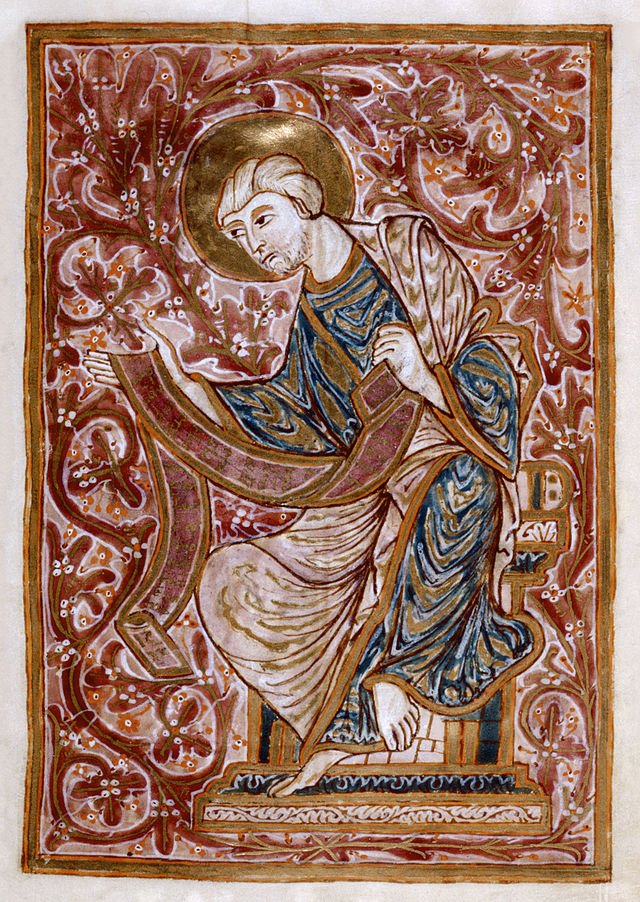
John uses assumptions and irony, alluding to things he trusted his audience would be aware of. The art of communication is built on this common ground. Scholars like David Wead have rightly picked up on this mechanic. John the Baptist’s function was to testify that people can trust the one coming after him. And, this John, the writer, is testifying from his side of history: we can trust and know Jesus personally, too, and discover what it is like on the other side.
A critical point: “believe” here, in the original Greek, is pisteuo. In the West, we may think “belief” (mental assent), but pisteuo means trust. Its adjective and adverbial forms mean faithful and faithfully, just like trusting and trustworthy. So, we all get this. It is a relational, ontological concept. One must ultimately not just believe the story, but trust the Person and follow through. In a culture skilled at enforcing beliefs and performing certainty, personal trust remains the one thing that cannot be sustained fictitiously.
As Nietzsche said, a human becomes their ideal by sacrificing themself to it, and so it was for John. This is the “leap of faith” Kierkegaard wrote about from within European Christendom centuries ago in his attack on that Christendom. For John, and the rest of the New Testament, trusting, as opposed to intellectual agreement, was the only way we could really know the Truth, or become lovingly truthful.
Logos, Light, & Life (v. 9-11)
“The true light, which gives light to everyone, was coming into the world. He was in the world, and the world was made through him, yet the world did not know him. He came to his own, and his own people did not receive him.”
John merges his favorite monosyllabic tools: logos, light, and life. The telos (fullness) of this light was entering the world, yet the world couldn’t recognize it. Note that John has not set an ethnic or geopolitical context yet. He’s writing a “syncretic” Gospel that crossed languages and stood the test of time. We all know this feeling: when our people, families, or tribe doesn’t “get” us or even rejects us. We all can understand the sting of not belonging.
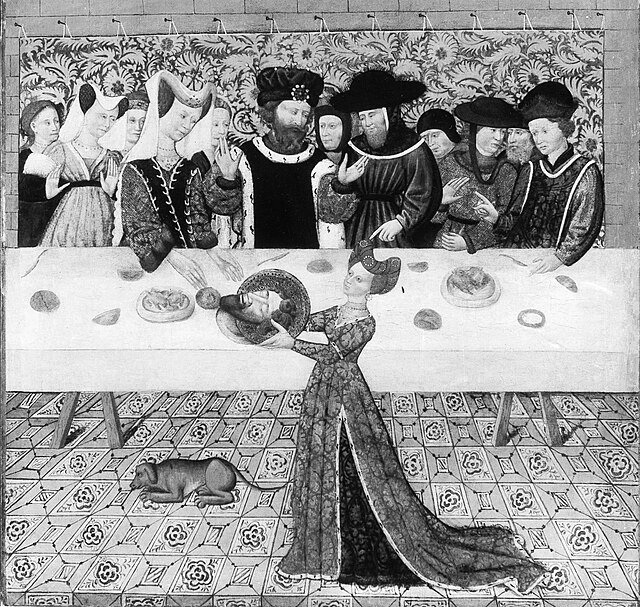
Other than John the Baptist, the Gospel of John has not set the context or assumed an ethnic or geopolitical context yet. Unlike the Snypotics, John introduces his Gospel for what he later will say are all those other people who will believe as a result of people hearing his Gospel (John 17:20-23). He was writing a Gospel that was synceritic, crossed languages, and would stand the test of time.
As humans, we get this feeling he has described: when our own people, the people we love and say love us, our families and tribes, don’t get us. We understand what it’s like to not belong and for people ot reject us. By default, we also all understand what it’s like to be in the crowd and reject others.
On Becoming Children (V. 12-13)
“But to all who did receive him, who believed in his name, he gave the right to become children of God, who were born, not of blood nor of the will of the flesh nor of the will of man, but of God.”
John defines the response to the Logos and the result (becoming “children of God“) through three distinct movements:
- To Know Him (Gnosis): This isn’t just “intellectual data.” In the Johannine sense, gnosis is experiential intimacy. While the “Gnostics” later turned this into an elitist, dualistic secret, John uses it as an invitation to a relational union that dissolves the boundary between the seeker and the Sought.
- To Receive Him (Elabon): The Greek verb elabon is active; it means “to take” or “to seize.” It’s not a passive “acceptance” like a package on a porch. It is an active grasping of a new reality. John is suggesting that the Logos is available, but you have to “take” it into your own being—to integrate it until it becomes your own life-blood.
- To Trust Him (Pisteuo): As mentioned, trust is the relational anchor, not agreement with man-made prepositions. “Belief” in our modern contexts is no longer an accurate word for “faith” and is logically inconsistent with how pisteuo’s adverb and adjective are translated as faithful and faithfulness.
“John’s Gospel is the story of the new Genesis. When he says ‘In the beginning,’ he isn’t just looking back; he’s saying the new world has started.”
— N.T. Wright
Divine Tabernacling (V. 14)
“And the Word became flesh and dwelt among us, and we have seen his glory, glory as of the only Son from the Father, full of grace and truth.“
The word for “dwelt” (eskenosen) is the same word used in the Septuagint for “tabernacle.” This is a massive Jewish idiom. The Tabernacle was never meant to be just a tent; it was a pointer to us—the images of God.
For Jews, claiming someone was the “Son of the Father” was explosive; it got Jesus killed. It was more than that, though, lest we forget Herod the Great also took John the Baptist’s head. For the Greco-Roman audience, “Son of the Father” was equally provocative. Greco-Roman society was more diverse than Judaism was. They had their own myths of divine sonship and rights of kings. If a mixed group of Jews and Gentiles were in a room hearing this, they would have looked at each other in bewilderment, only to realize that the “Word made flesh” had just leveled the playing field between them.
The Proto-Witness (V. 15-18)
(John bore witness about him, and cried out, “This was he of whom I said, ‘He who comes after me ranks before me, because he was before me.’”) For from his fullness we have all received, grace upon grace. For the law was given through Moses; grace and truth came through Jesus Christ. No one has ever seen God; God the only Son, who is at the Father’s side, he has made him known.
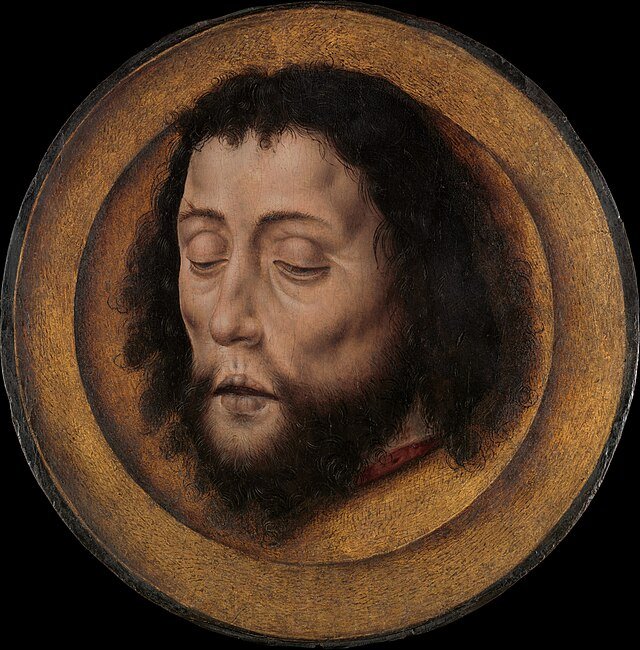
Again, John assumes and alludes to his audience’s familiarity with John the Baptist, while not wasting his ink. He never recounts the Baptist’s death; just assumes it. He uses the Baptist as the proto-martyr, the one who spilled blood for the Light before Stephen ever faced a stone. John the Baptist is only introduced here, and after the Gospel does more work with seven titles, the Baptist will come back up and offer a testimony in ch. 2, the first of seven, that provides context for Jesus’ first and second of seven signs…John was brilliant.
He marks what comes from this Christ figure yet to be revealed and contrasts it with what his audience were familar with: the law of Moses. “Grace upon grace” comes from this Gospel, unlike others. While law and order were offered to the people through Moses, and now John finally names the person who is the Logos, Jesus Christ brings both grace and truth. Others debated containers while Jesus brought the substance.
John slips in another subversive statement for his first-century audience: No one has ever seen God.
John says something like “the God only begotten Son in the bosom of the Father has declared it.” The Greek in verse 18 is notoriously debated (manuscript variations range from “only begotten Son” to “only begotten God”). This ambiguity is pregnant with meaning. And we can know one thing for sure: Caesars loved calling themselves “Daddy.” From Pontifex Maximus (“Highest Priest”) to Pater Patriae (“Father of the country”), as well as Divi Filius (Son of God) and Kurios (Lord), Caesars claimed the titles John is hijacking. This was the shadow under which John wrote. He was presenting a King who didn’t demand subjects, but offered Sonship.
v. 19ff — Jesus’ Seven Titles
David Wead and many other scholars have highlighted John’s use of chiasmus—a literary structure where ideas are mirrored to draw the reader’s eye to the center. In the first chapters, John isn’t just throwing words at the wall; he is building a “heptad;” a set of seven specific titles that introduced a “New Creation.” This use of 7 is John’s way of signaling a New Week, ordering the chaos of the human soul through seven key revelations, and he makes some claims along the way.
- The Word (Logos): John 1:1-3 identifies Jesus as the eternal Word, through whom all things were made. He is the cosmic logic linking Him to divine wisdom and the very act of creation.
- The Light: Jesus is the true Light that illuminates humanity, contrasting with the darkness (John 1:4-9). He is the conscious awareness that exposes the “shadows” of the ego.
- The Lamb of God: John the Baptist identifies Jesus as the Lamb who takes away the sin of the world (John 1:29, 36). It is the subversion of the sacrificial system; God provides the “ego-death” sacrifice Himself. We are it (c.f Romans 12:1-3).
- The Son of God: Early disciples recognize Him as the one prophesied, revealing His unique divine relationship (John 1:34, 49). This was a direct “Middle Finger” to the Roman Divi Filius (Caesar).
- The Messiah (Christ): He is revealed as the long-awaited Anointed One, fulfilling Jewish expectations (John 1:41) but expanding them to a universal scale to other claims of chosen ones and divinely appointed rulers.
- The King of Israel: Nathanael’s confession highlights Jesus as the promised King (John 1:49), but it will be a title of governance that rules from the inside out and a kingdom not like this world.
- The Son of Man: Finally, Jesus uses this title for Himself (John 1:51), connecting to prophetic imagery and His divine-human identity. As evidence that is not an exclusive divine title, see the over 90 times Ezekiel was called a “son of man.” “Son of Man” stood in contrast to the “son of god” myth and as a bridge between the divine and the human subconscious, where we could become one with God just as much as Jesus was. The Son of Man title, when Jesus uses it, he does so in double-speak, both referring to himself and all humanity, thus confusing first-century Jews and Greeks alike.
We’ll pick up these seven titles and the first sign of Jesus in the next post.
Double-Speaking & The Human Condition
“John is the master of the ‘un-said.’ By using terms Caesar claimed, he creates a linguistic insurgency.”
— Kenneth Bailey
When Jesus uses the “Son of Man” title, he does so in double-speak, referring both to himself and to all humanity. This was a “pattern disruptor” that confused first-century Jews and Greeks alike. Scholars like Barnabas Lindars and Delbert Burkett confirm that the Greek term ho huios tou anthropou (“the son of man”) is notoriously ambiguous. It allowed Jesus to claim messianic authority while simultaneously sounding like he was simply discussing “the human condition.” This is why the crowd in John 12:34 asks in frustration, “Who is this Son of Man?” The title didn’t fit their rigid categories of a Messiah.
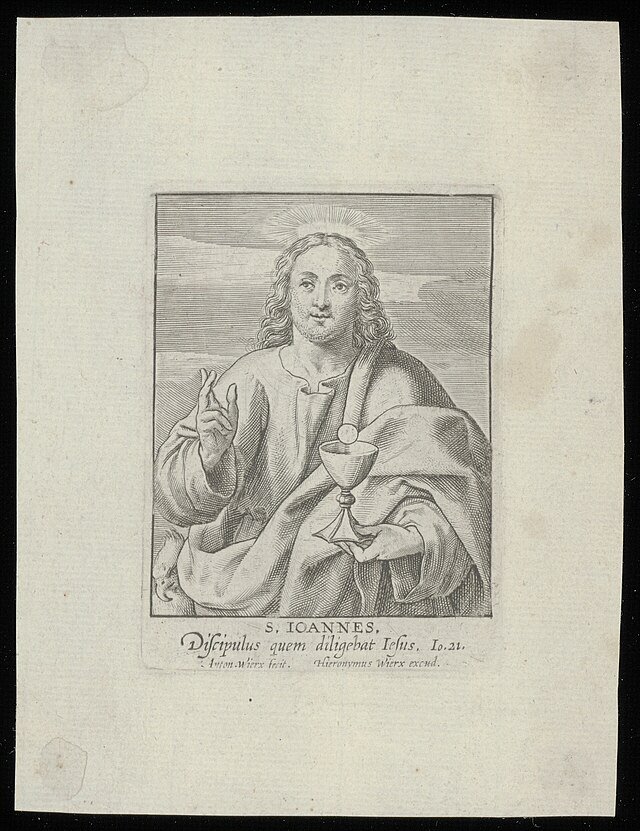
This ambiguity opens the door to Theosis (deification), a concept deep in Eastern Orthodoxy and the early Church Fathers. Athanasius famously taught, “He became human that we might become divine.” In the Gospel of John, specifically the High Priestly Prayer in John 17, Jesus prays “that they may all be one, just as you, Father, are in me, and I in you.” That was always the goal from Genesis 1 for you and I.
Of course, the inverse is true. Satan is our personified projection of evil. The devil is that which deters us from that which we know we ought to do and be—those triggers, enticements, and distractions that pull us from the center. It is when the ego becomes blind to shadows, and those shadows grow into monsters the longer they go untended. Satan is the angel of light patting us on the back, and the demons are making us look over our shoulder. He is that which we don’t see in mirrors and are afraid to name.
The Ultimate Goal: Beyond the Greek
“The Johannine double entendre is not a mere play on words; it is a pedagogical tool designed to lead the reader from the physical world to the spiritual reality behind it.”
— David Wead
What I love about John is that he says so little that it takes so much time to wonder and explore. Most of his book will be notably different than the Synoptics: long conversations, slower events unfolding, and more mystical language that cuts across language barriers. I’m not saying that one is better than the other, but John is the best of the four.
As we dig in more, we’ll see “sevens” and John’s crazy red yarn everywhere. It is a beautiful, intricate web of literary genius. The deeper we go into the Greek and Jewish context, archaeology, and literary devices, the more I hope we eventually can leave them behind and just be able to read John by itself.
We can use original context and scholarship to break some “spells,” but once they are, we should be able to walk into the Gospel according to John and feel the “Word made flesh” for ourselves. Once we get far enough, my prayer is that people will eventually be able to simply experience the Gospel. We shall see.
Next time, we’ll pick up with the seven titles again, the first miracle, and probably save the testimony of John the Baptist for another blog post. We’re working up to chapter 4, which is the Samaritan Woman, and it’s how I fell so in love with John in the first place.
“Man—every man—is an end in himself, not a means to the ends of others; he must live for his own sake, neither sacrificing himself to others nor sacrificing others to himself; he must work for his rational self-interest, with the achievement of his own happiness as the highest moral purpose of his life.”
— Ayn Rand
Updated: 2/10/26