Table of Contents Show
Last week wasn’t an easy one, and there was stuff from normal life and recovery. While preparing for the Bible in Context, Genesis 2:24–25 kept coming up in life too: “a man leaves his father and mother, clings to his partner, and the two become one flesh…,” and they are naked and unashamed. We can sentimentalize that scripture or use it for marriage advice, but it’s also doing something far more disruptive. It describes sanctification (or individuation) before union (wholeness). Leaving precedes becoming one. This is what Abram must do to become Abraham. It’s also what Joseph must do to forgive his brothers, thus resolving the conflict between good and evil that the Genesis narrative set up in Genesis 2-3 (Genesis 50:19-21).
That kind of leaving is not rebellion; it’s maturity. God is a good Father seemed to be a central point to Jesus’ messages (Matthew 7:9-11) just as much as it is in Genesis 1-2. It’s the movement from inherited identity into embodied responsibility where a person can be a blessing without expectation. Coaching, education, and parenting are about the same thing in many ways. Spiritually, it’s the moment when faith stops being borrowed from parents, pastors, camps, or conformity and becomes something a person actually inhabits. This is when they are fully mature and able to be their fully free self in the community. It’s when a person can fully walk with God, as in Micah 6:8. In other words, we cannot become “one” while still hiding behind someone else’s certainty or validation. Salvation does not require enemies.
If you’re smelling what we’re cooking, authenticity and vulnerability are not optional in this. For what it’s worth, they are also not weaknesses (c.f. Brené Brown)—that’s part of the lie in Genesis 3 and what prevents so much spiritual transformation. When Jesus says in John 10, “I and the Father are one,” he wasn’t collapsing himself into a religious camp or outsourcing his authority to tradition. He is speaking from an integrated self and as an invitation for you and me to become wholly as he is wholly. He was the telos1 of the “Be holy as I am holy.“
The shock of Jesus’ statement was not just theological, and this was the gut reaction of many; the real threat of Jesus was that it was existential. It challenged their self-justification. In some sense, Jesus was all the proverbial and religious claims of his time: He was It. Jesus is the Way, Truth, and Life…and we can be too. Whether Jesus was immaculately conceived or literally God in flesh is almost irrelevant and secondary to what Jesus’ real “doctrinal” point was2: become what Jesus is, and that means becoming one with the Father as Jesus was one. Is this not what it means to be born again and the telos of sanctification? To die to self and to walk in truth and love again through the empowerment of the Spirit. And was it not the only Christian apologetic the Church ever needed?
“My prayer is not for them alone. I pray also for those who will believe in me through their message, that all of them may be one, Father, just as you are in me and I am in you. May they also be in us so that the world may believe that you have sent me.”
— John 17:20-21
At least in practice, Jesus knew who he was because he allowed God to fully embody him. Where Jesus’ authority came from was a relationship that we can all have, and he was not asking permission to say it (c.f. Matthew 7:28-29). That kind of unity with God only comes when a person is no longer fragmented, no longer performing belief for approval. This is the rebirth of John 3 and the spiritual transformation of Romans 12:1-3. And it is a very long process, especially for big, bulky sinners like myself. According to all biblical means and measures, discipleship is a lifelong and mindset (Philippians 2:5-11) thing we are invited to embody that requires the death of the false self as a part of the spiritual discipline repertoire (1 Corinthians 15:31).3
What struck me is how easy it can be for us to fall into “bubbles” and only see things from our subjective perspectives, and then confuse that with an objective one that everyone is pretending to ignore. There’s something about belonging to a group, like a church, that helps us believe we are in fact “right” and good enough, that somehow everyone else needs to be a part of “us.”4 This isn’t a purely wrong thing: it’s kind of like a collective potential for sin that every individual is susceptible to. It still “trickles up” and out of individuals, so, of course, it can be a collective thing. In our modern, digitally fractured world, most individuals, no matter their camps or parties, are becoming aware of this too.
In some sense, such things help our communities feel safer, that you can speak the same language and maintain the rituals and community for ongoing healthy relationships and discipleship. We may want oneness with God without risking separation from the systems that taught them who God is supposed to be. However, Genesis hints, even before the protoevangelium5 (Genesis 3:15): there is no union without differentiation. John and Paul also show us that bearing fruit is a part of the process when it is lived fully (Galatians 5:22-24; John 15:10-14). Faith that never becomes our own will always need enemies to survive and groupthink for validation and social rewards.
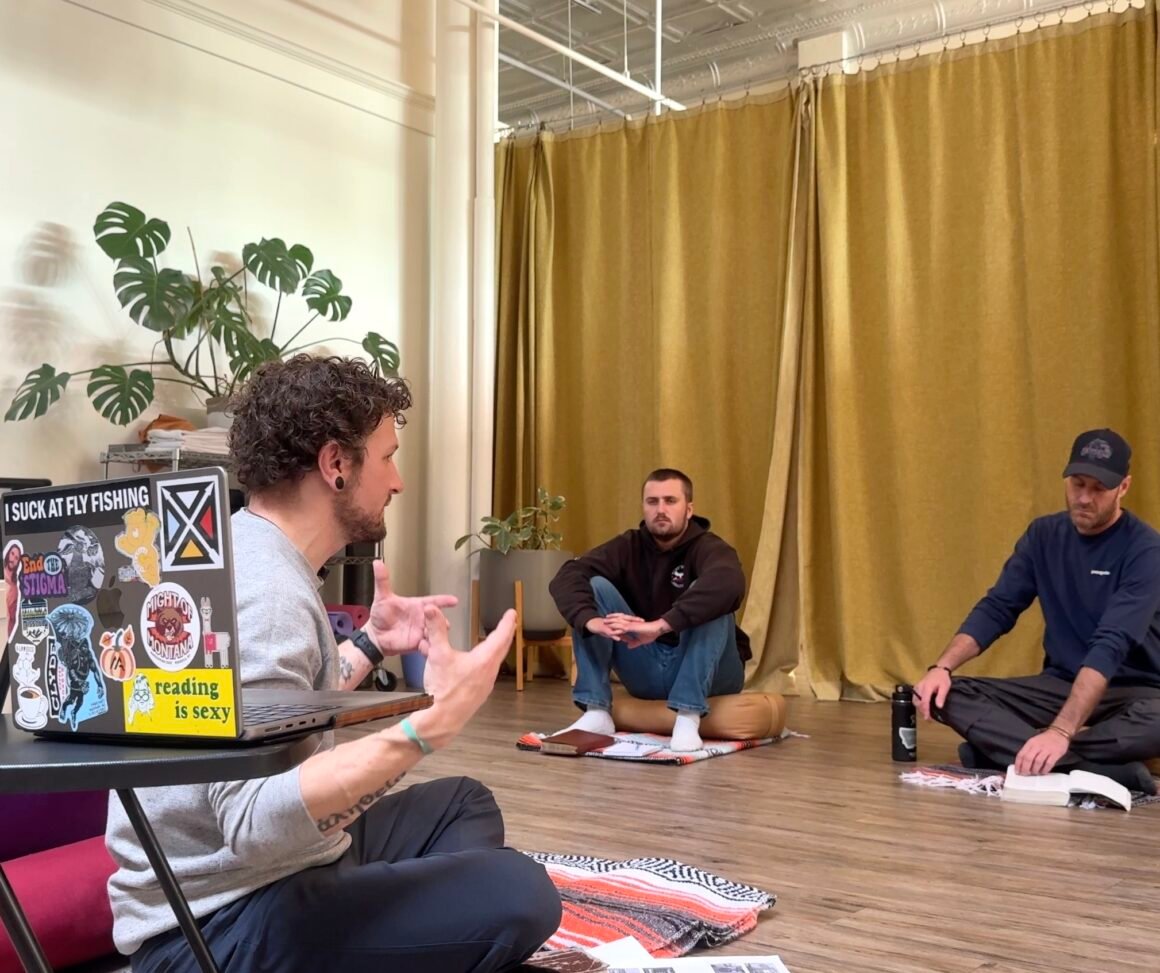
God has a way of bringing things up that are difficult to ignore. Last week was rough, and the first Bible event at Sacred Ally was on Sunday in downtown Missoula. From before sobriety or Drunk Pastor, I was aware I had beliefs that mainstream Christianity treated as heresy, and I couldn’t be honest about it. My salvation was questioned at my first rehab, while they seemed indoctrinated with “a KJV-only cult” (not my words, BTW). The senior pastor had a Trump cardboard cutout and propaganda like Christmas decorations throughout his church office. It felt rather hypocritical for these people to be questioning my salvation and faith. Looking back, it was so deserved because I was so not “saved” then: I wasn’t able to be honest about my sins and alcoholism.
As God has done work in my life over the last few years, I wrestled through many silent obstacles that kept me from trusting my faith authentically. Also, my kids have been on my mind this holiday season, and the gaping hole of not having them in my life yet. Loneliness was something I was struggling with for a while. And I was worried about the number of people who would now disagree with me and what they think about me. It was a kind of “Be careful what you wish for moment.” I worried about several things, like whether I would implode again or if this whole journey had been a mistake.

It felt like God “three times sent messengers to buffet” me and remind me of the answers He already provided. Three conversations last week showed why the existential dread I had about being called a “heretic” was real, why being prepared for it was healthy, and where I had more room for growth. Similarly, they showed how there are two kinds of gospels in American Christendom.
“A disciple is not necessarily one who does what Jesus did, but one who does what Jesus said.”
—Dallas Willard
Conversation 1: Cafe Theology
Stressed about other things, I had to get out of the house to work. I sat down at a local hangout to work on a pizza website for a client. In the booth next to me, two older gentlemen sat talking theology. One of them talked nonstop; it sounded a lot like Bible-bashing. For twenty minutes, I kept focusing while quietly asking God whether I should say something. Eventually, I was annoyed enough to stop wondering and speak.
I interrupted and said I understood some of the one man’s position. He described himself as a missionary returning from India and a “12-year implicative” theologian. The other man had not been able to get a word in, so I asked him who he was and what his beliefs were. He said, “I’m a pastor.” …of course.
I asked the pastor what the other man was trying to prove. The pastor chuckled and said, “I don’t know.” The missionary then turned to me, and we discussed theology for a bit. At some point, he blatantly questioned my salvation and authority. I answered with Scripture, logic, and the best testimony I could muster about what God has done in my life. Then, I replied with something like:
“I can give you chapter and verse, describe the fruit of the Spirit, confess my sins, and share how Jesus is the only Lord of my life, and tell you about the ways God is working in my life. Still, when I meet someone like you, it feels like your salvation depends on convincing other people they are wrong, and you are right — even if that other person is a pastor or brother in recovery. So when I share, what I share gets interesting reactions from people like you.”
At some point, the pastor touched my shoulder and said, “Paule, I like you.” He turned to the missionary and said, “This is what I meant when I said you weren’t listening to me.” We ended the conversation, and I started to pack up. The missionary told the pastor something along the lines of I was probably into “weird’ things” (he had no idea 😜). Giggling to myself as my backpack slung over my shoulder, I placed my hand on his chair, thought to myself, “I’m pretty sure people said the same thing about Jesus,” and said, “Thank you, gentlemen, and God bless.” The pastor gave me a warm departure.
Walking away, I noticed the tension in my body and a bit of old anger, and so later meditated on the encounter. I wasn’t sure if I had set it up or accidentally walked into something, but I was grateful it occurred; it marked an area of growth and clear topics that might come up in future conversations.
“If we do not transform our pain, we will most assuredly transmit it.”
—Richard Rohr
Conversation 2: Bible In Context Class
A few days later, I felt nervous about the Bible In Context event for similar reasons: worried it wouldn’t work and worried about what people would think of me. All week, I was realizing it was time to let go of attachments to some people from my past. As a man, it meant moving on from previous relationships and church camps that are no longer present realities in my life, and being more comfortable with life, recovery, and responsibilities as it is (“life on life’s terms“). Sometimes last week, it felt lonely, and it was helping me get past those old things weighing me down.
At first, I was worried no one would show for the Bible event. About seven people came; three more than I’d prayed for. We attempted an overview of Genesis. A woman began asking some typical and targeted questions that I was concerned about. As we tried to work through Genesis, her questions sharpened, and by the end, she shifted to Christ and the Holy Spirit, specifically about confessing with our mouth our sins and that Jesus is lord.
I answered from my experience, from confessing my sins and bending the knee to Jesus as my Lord and Savior on Easter of 2024, and how God led me to do Bible study, and that I used to be like her and minister with people like her. I understood where she was coming from, and it’s not as different as she thinks, and it relates to the ego. It does change everything.
She told the group she believed something different and would be praying for us “to come to know the real Jesus,” which struck me as ironic. I tried to answer calmly, “I’ll be praying the same for you.” Aside from her, people expressed gratitude and said that there is a growing group of people looking for something like this. A majority said they’d be back for the next one.
By that night, I was raw and exhausted from the week, but the event was honest and real, and there were four people there who got enough of it…So, I was “trying” to be grateful.
“The gospel is not about how people get to heaven, but about how God’s sovereign rule comes on earth.”
—N.T. Wright
Conversation 3: Checkout Judgment
That night, I ran into a young man at the grocery store, and we recognized each other from visiting his church. His church is down the road from me and definitely of the Calvinist bent. He asked if my book had been published yet. We talked about the church, salvation, and eldership outside the store for maybe 10-15 minutes. In the middle of the conversation, he abruptly decided that what I’d shared reflected a defect of my character, that I was lost and confused. Funny to me now, but it bothered me that he judged me without doing the Berean work of checking Scripture or the human work of understanding another. And it bothered me that I let it bug me.
After listening to his points, I said that pivoting and throwing my life under the bus now looks demonic and satanic to me. I shared about a time I brought friends to visit his church to see if they got the same toxic vibes I did; they did and said they’d never go back. This experience only confirmed the opposite of what he was wishing for. He immediately objected and said he wouldn’t talk to anyone who called him satanic, so I said, “Okay, well…’get behind me, Satan‘,” and walked away. I was praying all that time and asking why this was happening. But, walking away, I didn’t feel the usual shame and insecurity. I knew and didn’t need him to understand, not anymore. Still, I worried I’d handed him something to be bitter about, and those small slights used to accumulate and help turn me into the monster I once was. I also should have handled it differently.
Let’s Be Bereans
“Most Christians have never been taught how to be a person before they are taught how to be right.”
—Richard Rohr
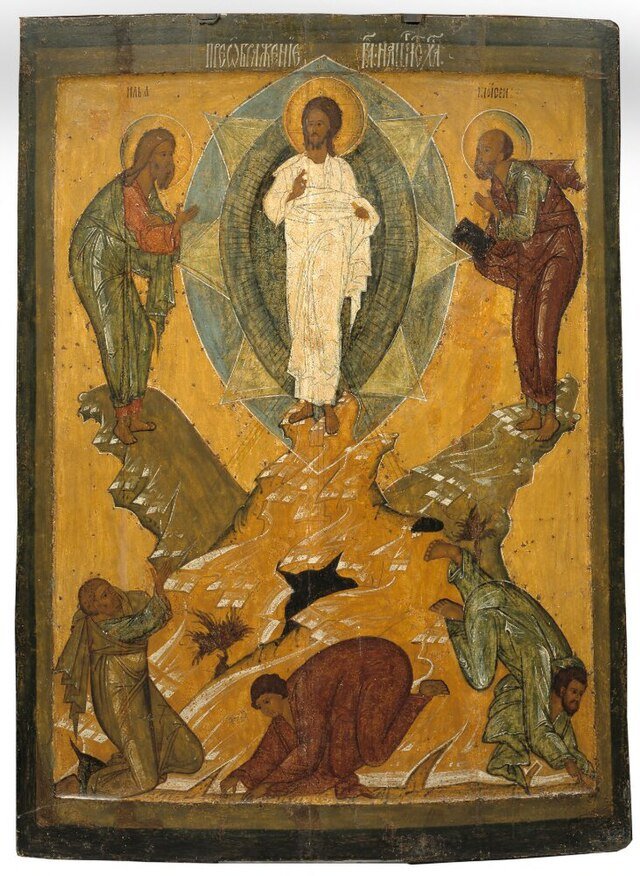
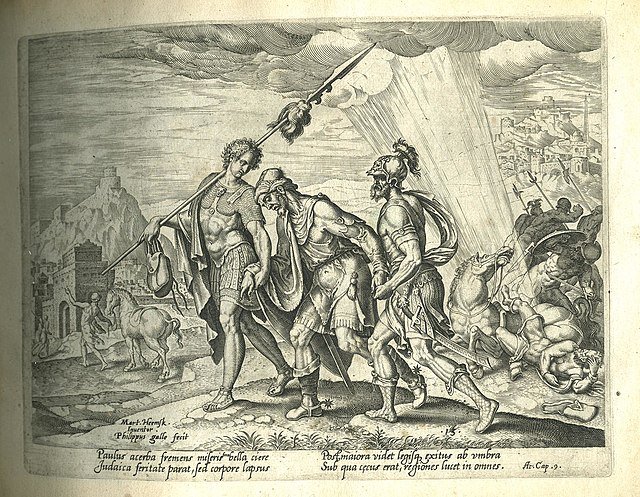
The Bereans are often held up as heroes of faith because they “searched the Scriptures daily to see if these things were so” (Acts 17:11). They must have also been loving and hospitable. What gets missed is how dangerous that posture actually was. They were people who believed they had a firm grasp on God, salvation, and Scriptures. Like everyone else, they lived under Rome’s shadow and were trying to survive with what they had. Then, someone showed up with something different. We live in a time when there are a lot more conversations needing to take place than just this, while it is also essential that we individually have working definitions of salvation, Christ, faith, sin, love, and truth.
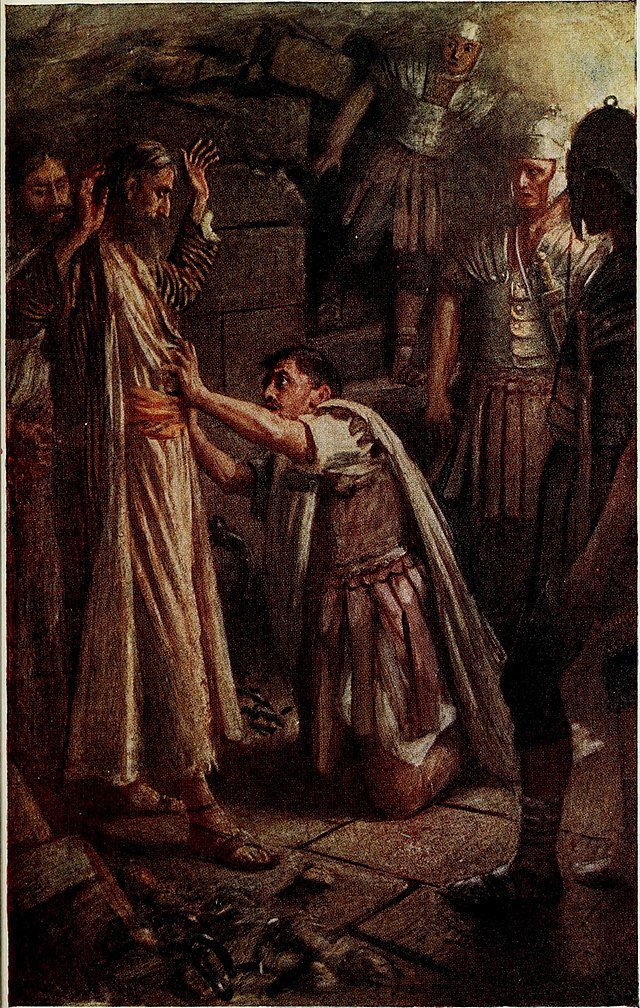
We can react defensively and with undeserved allegations. The Bereans could have protected their certainty, guarded their theological territory, and dismissed Paul as an outside threat. They could have equated disagreement with danger, or comfort with character. That is often how religious people do when conformity to a set of postulates is confused with faith. Or the Christian faith is reduced to event attendance and group participation. There is a difference between faith and belief.
The Bereans chose humble honesty over flat-out rejection and labeling. They didn’t abandon Scripture; they leaned into it harder. They did so without assuming they already possessed the full meaning of redemption or that their theology was perfect, as if man-made creeds and codes could replace the Spirit behind Scriptures. And that is an important exegetical lesson from that passage that modern Christianity can ignore in favor of the spirit of the Pharisees. This could also be another “implication” theologians may or may not gloss over in favor of other camps’ sins.
Searching the Scriptures is not an act of dominance; it is an act of vulnerability and surrender. We have to let the Scripture see us as much as we think we understand it. Scripture itself teaches that God is not owned, managed, or controlled by any person, people, or nation (Acts 17:26-27). Today, Christian Nationalism is more unbiblical and heretical than the sins they preach against, while the whole blessed world could use metanoia, and not just the people with fingers pointed at them.
What I keep sensing is not people defending Jesus, but people defending their psychological safety and entitlement to bible-bash and pretend they are better than others. And I was sensing my old habits wanting to defend against fear, insecurity, and doubt. When someone challenges our framework and assumptions, we can respond as if salvation itself is at risk. That should tell us where our “faith” actually is. That is ego (and shadow) and not of the Kingdom or Spirit. The Bereans show us a faith that is confident enough to listen, stable enough to test, and grounded enough to change when Truth demands it. Doubt had to be a part of the process.
If salvation depends on convincing others that our kingdom and tribe is right, if our faith’s proof is winning arguments and narrowing the gate to an ever-smaller doctrinal checklist, then that faith is not Jesus. If the kingdom we preach does not empower us to bear the fruit of the Holy Spirit outside the white walls of a church building, if our faith is measured by conforming to a group’s patterns and oddly specific doctrinal postures, if we mark our faith by how often we can make people feel like a sinner (and pat ourselves on our back because we have the ticket to the afterlife), then we’re not trusting the Jesus of the Gospels.
And this was something I needed reminding of, too.
Recovery has taught me something theology alone never could: authority comes from honest faithfulness, not performance or controlling a narrative from a safe distance. Confession, repentance, and humility are not spiritual failures; they are prerequisites for transformation. It means bearing the same fruit we used to preach at others, then inviting them to try a bite. Any version of Christianity that punishes honesty or rewards denial is not forming saints—it is manufacturing masks. Ignore the shadow long enough, and it becomes a monster.
Until next post, which might be the next part of John, or finally finishing one on “the myth of intelligence,” which, interestingly, this week also needed to happen for me to be ready for.
“We are not saved by the correct ideas, but by living in the reality those ideas point to.”
— Dallas Willard
Footnotes:
- “Telos” is the Greek root word from which the New Testament gets its words for things like maturity, fulfillment, end, goal, or result of something. Confusing this word with the Western idea of “perfection” has caused a lot of confusion. ↩︎
- Nor are these required points to have faith in Jesus Christ. ↩︎
- From a psychological perspective, this dynamic is well-documented. Humans are deeply shaped by social identity theory, which shows that belonging to a group provides meaning, self-worth, and a sense of moral coherence. Once identity is fused with a group, in-group bias and out-group derogation tend to follow almost automatically. This is amplified by confirmation bias, motivated reasoning, and pluralistic ignorance, where individuals mistake shared repetition for truth and assume dissenting perspectives are either ignorant, immoral, or malicious. High-control groups, cultic systems, and modern political movements often exploit these mechanisms, intentionally or not, by reinforcing loyalty, narrowing acceptable sources of information, and framing disagreement as a threat or betrayal. The result is not usually conscious deception, but a gradual psychological enclosure in which subjective group narratives are experienced as objective reality. ↩︎
- Sociology and history both show that groups strengthen internal cohesion by identifying external threats. This is not unique to churches (look around). What makes it spiritually dangerous is when salvation itself becomes dependent on opposition—when someone else must be wrong, lost, or dangerous for my faith to feel secure. Jesus does not seem interested in preserving religious identity at the cost of love, truth, or humanity. ↩︎
- Literally meaning “First Gospel,” the protoevangelium is a name given to Genesis 3:15 as the first foreshadowing of Christ and the Gospel. When I was a pastor in Moscow, ID, a fellow minister friend, and Messianic Jew, Marty Solomon mentioned that he was wondering if Genesis 2:24 was actually the “first Gospel.” Looking back, I think he was on to something. The Gospel was already in Genesis 1. ↩︎