Table of Contents Show
“Those who are well have no need of a physician, but those who are sick. I have not come to call the righteous but sinners to repentance.”
— Luke 5:31-32
In AA, we like to say “we’re sick people getting well,” not “bad people getting good.” Addiction is not primarily about substances or behaviors, but about a human pattern of avoidance, control, and attachment that expresses itself biochemically and psychologically. If a human can think about something, they can be addicted to it.
My Route To Recovery
Alcohol was what ultimately did me in. It was far from the only addiction I had, and it was far from what the actual “problem” was. It wasn’t that there was one problem…or that there was. It was just me—I was a spiritual problem with everything. What finally gave my alcoholic brain something to work with about five years ago were tools I barely could hold at first: CBT and AA. An addiction counselor and a friend working on a PhD in Integrated Psychology helped me cross the sobriety threshold. These mental health professionals, when I had my last relapse, got me into my second rehab, which got me enough tools that finally let sobriety click. Acceptance, gratitude, and meditation practices began working then and haven’t let go of me since.
Walking out of my second rehab, alcohol was curbed. It’s been a blessing not to have had the cravings and struggles. But I was far from “sober” in my thinking or emotions, or chemically. In some sense, the bleeding had been stopped, and I had no clue how much more growth was needed. Sugar and nicotine reared their ugly heads again and became a battle I’m still raging against. As the fog of alcohol kept lifting, the more clearly I could see how dependent I was on everything else.
Luckily, I was plugged into work behind the scenes of mental health work before leaving rehab: some consulting, marketing, networking, and curriculum development. I became a certified QPR suicide prevention trainer, helped write a DPHHS grant for a local mental health clinic, and spent the next year training and writing suicide prevention curriculum for faith communities in Montana. I took classes to become an ACLC (an addictions counselor candidate), which fell through during the application process. I was blessed with exposure to science, psychology, and addiction research. AA and CBT broke through my egoic fragility and manic noise enough to give me some reins to move forward with.
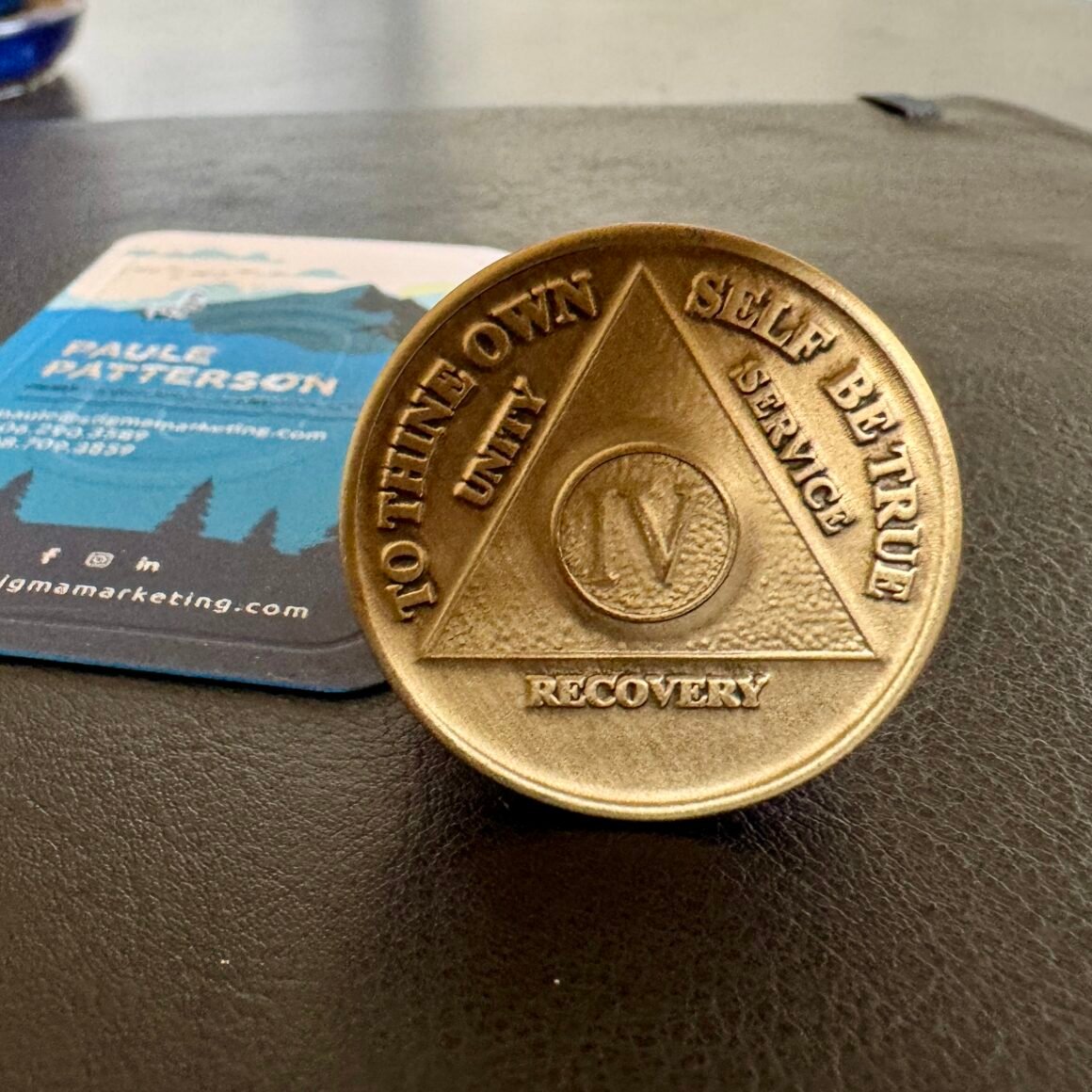
Recovery was just beginning four years ago. Before I got sober, I heard myself sharing in AA one time and heard the old me, the old Paule, faking it on a stage, and it spooked me. I couldn’t unhear that part of myself, so I shut up and started listening. Two years ago, when I was managing a fast-food restaurant, my own avoidance patterns became impossible to ignore. I realized I’d neglected what I learned from AA for a year and needed to get back to my step work.
For four years, I kept quiet and listened. Every blessed meeting felt synchronistic, divinely timed, and every share was precisely what I needed. It was all the same shit I was struggling with, but not alcohol. It was everything. In my first rehab, I was shut down, defensive, childish, turned inward, and afraid. I was a whimpering wreck of insecurity. One of the things I struggled with back then was people’s assumptions that my addiction was a salvation issue or that they had the answer for why I was struggling. I had no idea for years.
“The question is never ‘Why the addiction?’ but ‘Why the pain?'”
— Gabor Maté
What Is Addiction, Really?
AA had some stigmas, assumptions, and cult-like beliefs that were awkward for me to work around. But I was also an arrogant ass working on being honest, open, and willing. Teachable was something I was just beginning to learn. In today’s world, who we learn from and how we learn matter. I still wasn’t sure if I could trust myself, and so it was difficult to trust anyone.
From a clinical standpoint, addiction is often viewed as a chronic, progressive disease that hijacks the brain’s reward systems.1 But there are different views on recovery, and many of them are outdated. In general, I have some issues with Western and Christian perceptions around mental health, addiction, psychology, and wellness overall. If mental health doesn’t belong in the Church, then how can the church claim to be spiritual or take Romans 12:1-3 seriously? While throwing pills and pretending people don’t have to face themselves is equally as destructive. Similarly, punishing people with a life-long sentence isn’t helpful psychologically. None of this is “simple.”
The battle between the abstinence-only model, which says addiction can only be managed by total cessation2, and harm reduction, which meets people where they are, is still raging and not the only voices in the debate. Most of the time, IRL, addiction isn’t addressed until inpatient rehab is necessary. Of course, people like me who pretend there isn’t a problem don’t help. Yet, there are plenty of options if someone is ready to be honest and for change. Truthfully, a person doesn’t “need” these—what they need is a community around them to help them make the change, and that is difficult to find and maintain.
As far as recovery services go, there’s counseling and therapy, AA, church ministries, IOP (Intensive Outpatient Programs), MAT, and the “Rainbow Road” or many-roads approach, suggesting there isn’t just one path to wellness. There are mindful approaches that place a person in the “here and now,” helping them recognize the cues that trigger the desire to use before they act on them. The 12 Steps have been reworked for a lot of spiritual traditions and addictions. Alternative approaches are growing, including EMDR and psychedelic treatments. Yet, these “tools” tend to remain within closed doors and behind pay walls. Often, families don’t have the training or tools to prevent addiction before the damage is already done.
It’s because our world and society are woefully unequipped and unknowledgeable about addiction. We often think of addiction as only belonging to another group of people, but it’s time to break that myth and destigmatize an entire population wrestling with everything that lies behind a substance.
The Chemical Cocktail of Consumerism
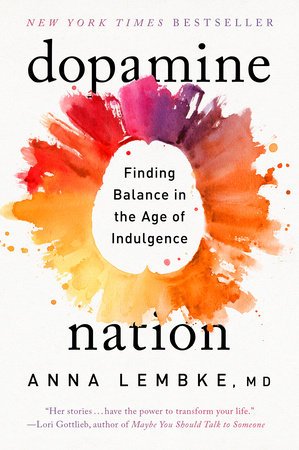
To see how pervasive the pattern is, look beyond substances to the cultural technologies that reinforce the same reward loops. Setting alcohol aside, arguably one of humanity’s first pharmaceutical discoveries, let’s consider the scope. Addiction is in a lot more places than substances, and our modern world has been escalating it (c.f. Dopamine Nation):
- Teens and smartphones: 50% of teens report feeling addicted to their phones. Those spending 5+ hours daily on screens are 71% more likely to show suicide risk factors3. This isn’t just a distraction; it’s neurological rewiring in developing brains, creating dopamine dependency patterns identical to substance abuse.
- AI addiction: If social media changed our world so drastically in 20 years, we’re only witnessing the beginning of what AI will do to human consciousness and connection. 2025 reports confirm “AI Psychosis” is real. Users are losing touch with reality, relating to AI as if it’s human, or getting stuck in their own self-reenforcing feedback loops.4
- Pornography in the church: 54% of “practicing Christians” admit to viewing pornography, only a 14% difference from the secular world.5 68% of churchgoing men view it regularly.6 Remember, these are self-reported numbers. The actual figures are likely higher. This isn’t about moral failure—we’re noticing the same dopamine hijacking in a population that claims a set of values but operates under identical neural patterns.
- Substances as gods: Caffeine, sugar, nicotine, cannabis, shopping, gambling, digital stimulation—all hijack neuroreceptors and provide stimulation, routine, altered states of consciousness, or maintain an equilibrium we grow to depend on. There are more options than ever, and even our LaCroix and meal planning can become gods. The substance is rarely the issue. The attachment is. Also, there are more chemicals than ever to choose from.
- Behavioral addictions: Media consumption, sports fandom, status, career obsession, bitterness and grudges, dating like it’s entertainment, routine, marriages used as self-medication, sex as avoidance, shopping, social media, identity campaigns and value signaling, bullies and victimhood, doom-scrolling, identity tribalism, and the need to control our personal narratives. These aren’t “soft” addictions—they’re still neural pathways and the same compulsive return to something that briefly resolves inner dissonance.
By no means is this an exhaustive list of potential addictions. The point is that to live in Western society, addiction is almost non-negotiable.
“It would seem that Our Lord finds our desires not too strong, but too weak… we are far too easily pleased.”
— C.S. Lewis
The Pharmaceutical Problem: Modern Pharmakeia
There was a student in a youth ministry who broke a law, and his entire town knew about it. He was a good guy, but what he did was dumb and mean. He was arrested and sentenced to some jail time. His parents asked me to counsel him. One of the things they did early was put him on medication for depression. I counseled against it while we were doing the work together. The last thing this spoiled teenager of wealthy parents needed was to be coddled more and medicated to avoid processing his unpleasant feelings. Nor did he need to be made to feel any worse.
Other parents brought their students to me, asking me to fix them when clearly a significant issue was the parents. Since then, I’ve kept seeing the same kind of patterns: throw a professional or a pill to fix a kid now. Parents have projected and assumed labels onto their children that were actually their own, and thus doomed the kid to a long life dealing with their parents’ unresolved issues. Additionally, the ingrained neurological wiring that medication and avoiding conversations could pathologize by giving both parents and child a false notion of identity while enabling them to persist in the sources of the “problem.” Today, we sometimes medicate children’s behaviors rooted in their family dynamics before families have done the relational work that might help resolve the behavior naturally. Also, all of this can happen without a prescription.
That’s not how this works. Parents are adults, not kids. Mental health issues, from ADHD to bipolar, are more “caught” and developed than they are innate character flaws. Yes, genetics plays a part. However, family and our own personal decisions matter more. The modern world we’ve created is more to blame for autism than acetaminophen or vaccines combined. We can learn these patterns, practice and embody them, and keep justifying them. When we medicate everything, we avoid the real issues and put Band-Aids on festering wounds.
Of course, ignoring medical science and personal responsibility isn’t what we’re talking about either. We’re talking about the human propensity to avoid the real issue and find “fixes.”
Not A New Problem
“The physician’s art is a matter of skill, but the healing is from God. The pharmakon is but the instrument of His will.”
— Clement of Alexandria
This same pattern shows up in Scripture.
When I first got AA, I caught on quickly to things I didn’t find logically consistent or practically true. There’s an unspoken code, and AA today is not what it was in the Big Book.7 In some sense, my initial recovery and experience in mental health and addiction made AA a little uncomfortable for me since they tend to see addiction through only one lens, too. At least they had a healthy perspective that worked better than what I was doing.
It can be easy to forget that people may not be as familiar with addiction sciences and recovery. Most people don’t implode as spectacularly or wander as far as some. Addiction in today’s world might seem like a relatively modern phenomenon, but it’s far from it. Both chemical and psychological addiction are covered thoroughly in Scripture. They just called it things like sin and idols. Their world was not so different than today. The line between physician and “sorcerer” was dosage, application, and context. “Witchcraft” is to miss the mark and abuse the use of divine healing.

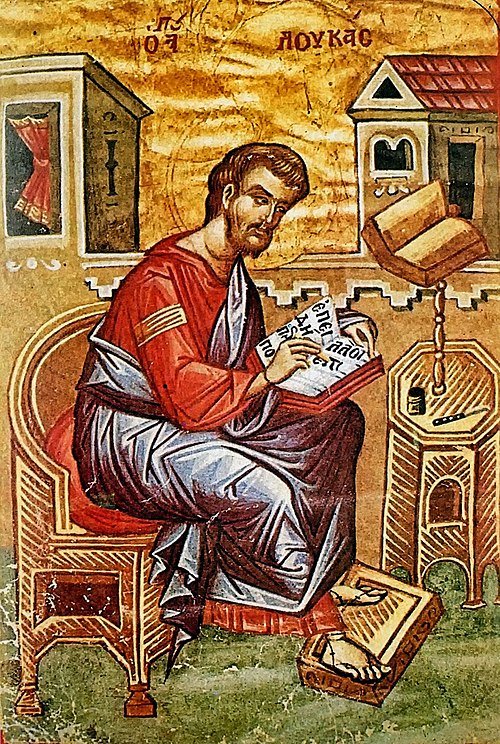
Greco-Roman doctors (iatros), like Luke (Colossians 4:14), heavily used plant and herbal medicine. As seen in Hippocrates’ extensive use of herbs, plants were central to creating medicinal infusions, decoctions, and ointments. One of the most influential works was written around 77 AD by the physician Pedanius Dioscorides, titled De materia medica. This was a comprehensive catalog of natural product drugs, mostly plant-based, and remained the authoritative pharmacopeia in the West for over 1,500 years. Naturalis Historia, in Latin, was an encyclopedic work by Pliny the Elder, also from the first century. The general study of plants was part of a broader field known as natural history.
Within this field, practical knowledge of gathering and using plants for medicine was often associated with individuals referred to as rhizotomoi (“rootcutters”) and pharmakopolai (“drug sellers”). The Greek term for a drug, medicine, or even poison was pharmakon, which is the root word for what is often translated as “witchcraft” or “sorcery” in the New Testament (Galatians 5:20; Revelation 18:23). The difference between a substance being a poison or potion was in the user and administrator, as well as the context and meaning, not just the substance itself.
Our modern pharmaceutical industry is more “witchy” than your closest metaphysical neighbor. And that is just one “industry.” Pharmakeia is a lot more common today than we might be comfortably admitting. We can’t step inside a town or look at our phone without a plethora of temptations being right there. Our cell phones, and what they symbolize, store more demons and enslave us more than our current political polarity. Meanwhile, a house divided can’t stand.
And if you’re like me, you never needed external substances to get in your own way or distract yourself. The question was never about substance. It was my relationship with myself and everything. It was about what we do with control and honesty. Back to substances, it was about why someone uses them, how they use them, and if they help bring about a fully loving and truthful life. For many recovering addicts, our drugs of choice simply can never be a choice again. It’s about who we are and the fruit of the Spirit, and avoiding enslavement, dependency, and destruction.
When we step back and zoom out, this is clearly a lot bigger than abstinence from a single chemical. AA has taught us for a while that addiction is merely a spiritual malady, the symptom of something much deeper. And “to change is easy: you just have to change everything,” or so AA says. This is in part what Scripture calls repentance or the process of sanctification.
Sin as Addiction, Addiction as Idolatry
“You see, ‘alcohol’ in Latin is spiritus, and you use the same word for the highest religious object as well as for the most depraving poison.”
— Carl Jung
This matters because addiction is much closer to home than we like to think. Richard Rohr defines sin as a form of addiction. He suggests we are all addicts to our own habitual way of thinking—what AA calls “stinking thinking.”8 Addiction is just a modern name for what the biblical tradition called “sin” or “idols.” Modern society uses the word “toxic.” Religious certainty, groupthink, and social status can be socially justified addictions. The reason AA makes alcoholics deal with their resentments and spiritual relationship with God is that hatred and unforgiveness are idols that require feeding.

Idolatry is addiction. Consider a person who returns to an abuser. This is an addiction and an idol. It’s a “trauma bond.” The brain releases stress hormones like cortisol during abuse and dopamine during the “love bombing” or reconciliation phase, making the victim literally feel addicted to the toxic cycle. This dehumanizes both individuals and mirrors the same neural pathways as substance dependency.
When we talk about cell phones, it’s not just the device—that’s too reductive. It’s what the technology symbolizes and how our lives are condensed, filtered, and controlled by one thing. Our lives are no longer just judged based on the flesh, but on the digital appearance of the flesh—on fake facades. Cell phones are an addiction portal in a fractured, global, Western world.
My struggle was never just alcohol. It was dopamine: nicotine, sugar, knowledge, digital distractions, rabbit trails, codependency. Chemical substances? There were plenty, and I never needed to take something to be an addict. That was the issue I had to figure out and get over. In the end, it wasn’t much different from what everyone was saying—it was just me.
The real addiction was to my own egoic narrative, sense of control, and avoidance of the present moment. To keep the act up, I had to sustain a manufactured misery, and that was an addiction. Alcohol was just the most destructive expression of a much deeper pattern: the compulsive return to anything that temporarily resolved my inner fragmentation.
A Systemic Addiction: We’re All in This Together
“Make a habit of two things—to help, or at least, to do no harm.”
— Hippocrates
When I think about Western society, like the culture wars, identity battles, political polarity, escalated headlines, and social media posts, I think of individuals and families caught in a systemic addiction, all of us falling in between the wheels of our machines and divisions. About 70% of Americans report that politics is stressing them out, and 80% have no friends across the political aisle.9 This is a “toxic trap” that resembles substance addiction—a bio-psycho-social-structural problem where our grievances activate the brain’s reward centers. Our children, who both notice more than we like to admit, are also falling into the same crevices and shadows.
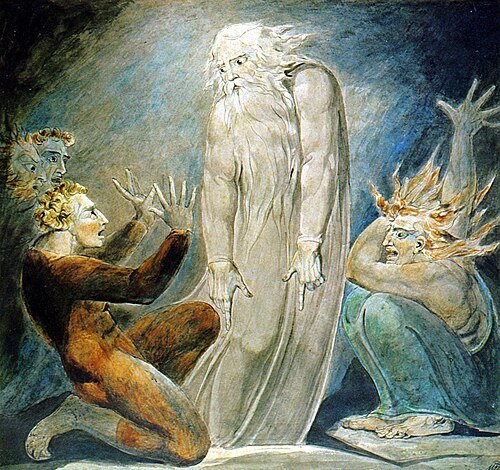
With the chaos and political climate, the system we have, we might all be addicted to it. We’re too afraid to let go of control to actually face the change we all know is needed. We’re too afraid to have that intervention with each other—to get all the issues on the table, make eye contact, realize we’re all still human, and get over ourselves.
Recovery is real work: not just getting clean from substances, but learning to be honest about all the ways we avoid reality, maintain our fragile sense of control, and return compulsively to what doesn’t serve us because at least it’s familiar.
Four years and counting now, and I’m still learning, risking mistakes, and figuring it out one day at a time. The path is about recognizing we can all be addicted to something, and that recognition is where real transformation can begin.
If this resonates and you’re wondering if you have a problem, talk to a friend, find a meeting, get a therapist, or simply begin the work you’ve been putting off. Find somewhere you can be honest, and just start.
“We are all addicts. Human beings are addictive by nature… The question for each of us is not whether we are addicted but how we are addicted, and to what.”
— Richard Rohr
Works Referenced
- What is Addiction | American Psychiatric Association, accessed December 25, 2025, https://www.psychiatry.org/patients-families/addiction-substance-use-disorders/what-is-addiction ↩︎
- Abstinence-Based Vs. Harm Reduction: Two Approaches To Substance Use Disorder Treatment – Northstar Recovery Center, accessed December 27, 2025, https://northstarrecoverycenter.com/blog/abstinence-based-vs-harm-reduction/ ↩︎
- The Relationship Between Excessive Screen Time, Self‐Harm, and Suicidal Behavior in Adolescents During the COVID‐19 Pandemic: An Integrative Literature Review | Accessed December 28, 2028. https://pmc.ncbi.nlm.nih.gov/articles/PMC12005239/ ↩︎
- AI Psychosis: When Chatbots Drive People Delusional – and AI Itself Acts “Crazy”, by Marcin Frąckiewicz, accessed December 28, 2025, https://ts2.tech/en/ai-psychosis-when-chatbots-drive-people-delusional-and-ai-itself-acts-crazy/ ↩︎
- 54% of Christians Admit to Viewing Pornography—Over Half Are Okay with It, accessed December 27, 2025, https://answersingenesis.org/christianity/christians-admit-to-viewing-pornography-over-half-are-okay-with-it/ ↩︎
- The ongoing epidemic of pornography in the church – Baptist News Global, accessed December 26, 2025, https://baptistnews.com/article/the-ongoing-epidemic-of-pornography-in-the-church/ ↩︎
- The Opposite of Addiction – Connection – AA Agnostica, accessed December 25, 2025, https://aaagnostica.org/the-opposite-of-addiction-connection/ ↩︎
- Stinking Thinking: The Universal Addiction – Daily Meditation December 9th 2019 By Richard Rohr, accessed December 26, 2025, https://gugogs.org/2025/03/21/stinking-thinking-the-universal-addiction-daily-meditation-december-9th-2019-by-richard-rohr/ ↩︎
- Outrage Industrial Complex: Research shows that polarized political discourse is actually addictive | Milwaukee Independent, accessed December 25, 2025, http://www.milwaukeeindependent.com/syndicated/outrage-industrial-complex-research-shows-polarized-political-discourse-actually-addictive/ ↩︎