Table of Contents Show
“The aim of spiritual formation is not behavior modification but the transformation of all those aspects of you and me where behavior comes from.”
— Dallas Willard, Renovation of the Heart
The book of Philippians has been called the Apostle Paul’s joy letter. It contains some of his more motivational one-liners, like “I can do all things through Christ who strengthens me.” For the citizens of Philippi, Paul’s words would have been poetically tangible. They understood that Christ is not a crown or a curse to be controlled because they were walking the same Path as the apostle.
The City of Philippi
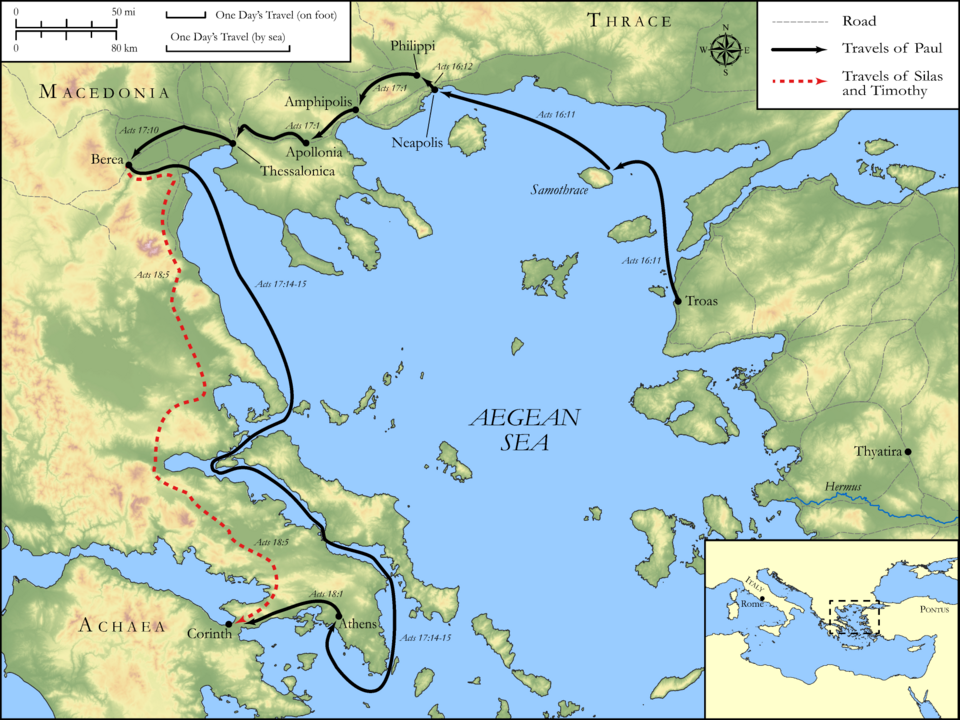
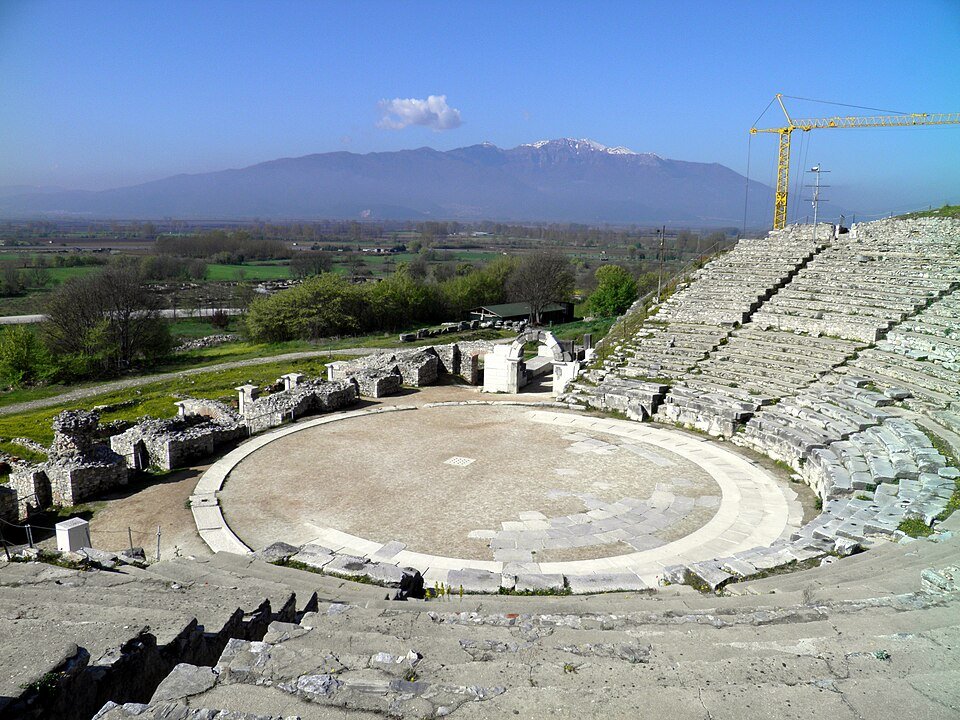
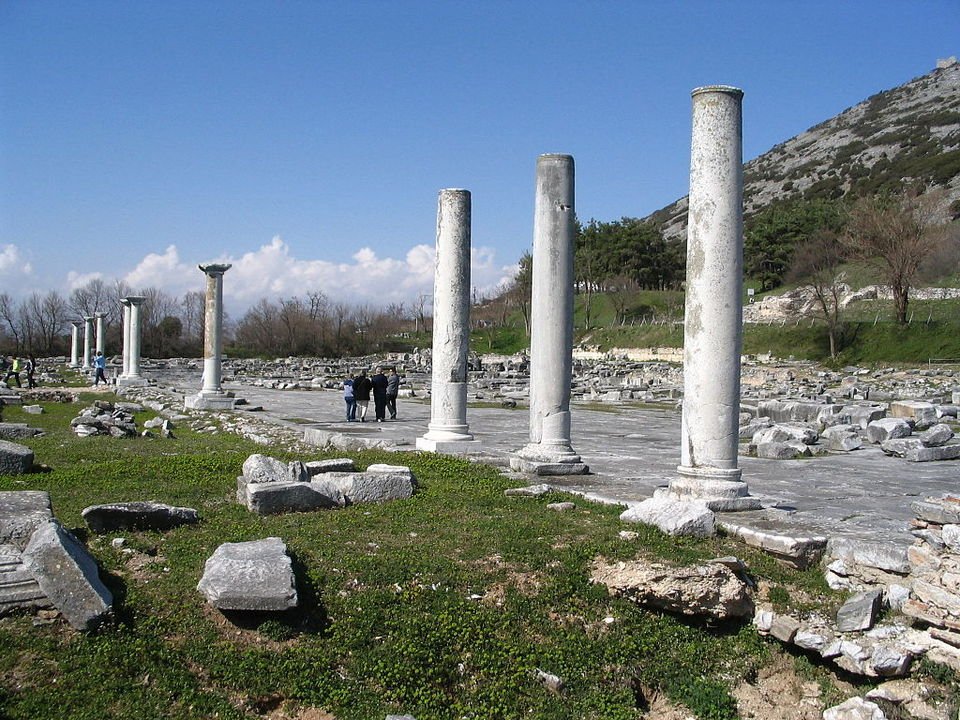
The city of Philippi was in the northwest of Macedonia, near the northern shore of the Aegean Sea. It was settled and then shortly conquered by King Philip II of Macedon in 356 BC. He took control of nearby gold mines and established both a garrison and a mint there.
During the civil war after Julius Caesar’s assassination, Antony and Octavian won their final battle against the partisans of the Republic. After which, they released some of their veteran soldiers to colonize the city, and gave the city the title of “Colonia Victrix” (lit. “victorious colony“). It’d be retitled a few times, including Colonia Augusta Iulia Philippensis on January 27 BC, when Octavian received the title Augustus from the Roman Senate.
The territory of Philippi was “centuriated” (divided into squares of land) and distributed to the colonists. It was treated like it was its own colony, with direct representation to Rome, and even called a “miniature Rome.”
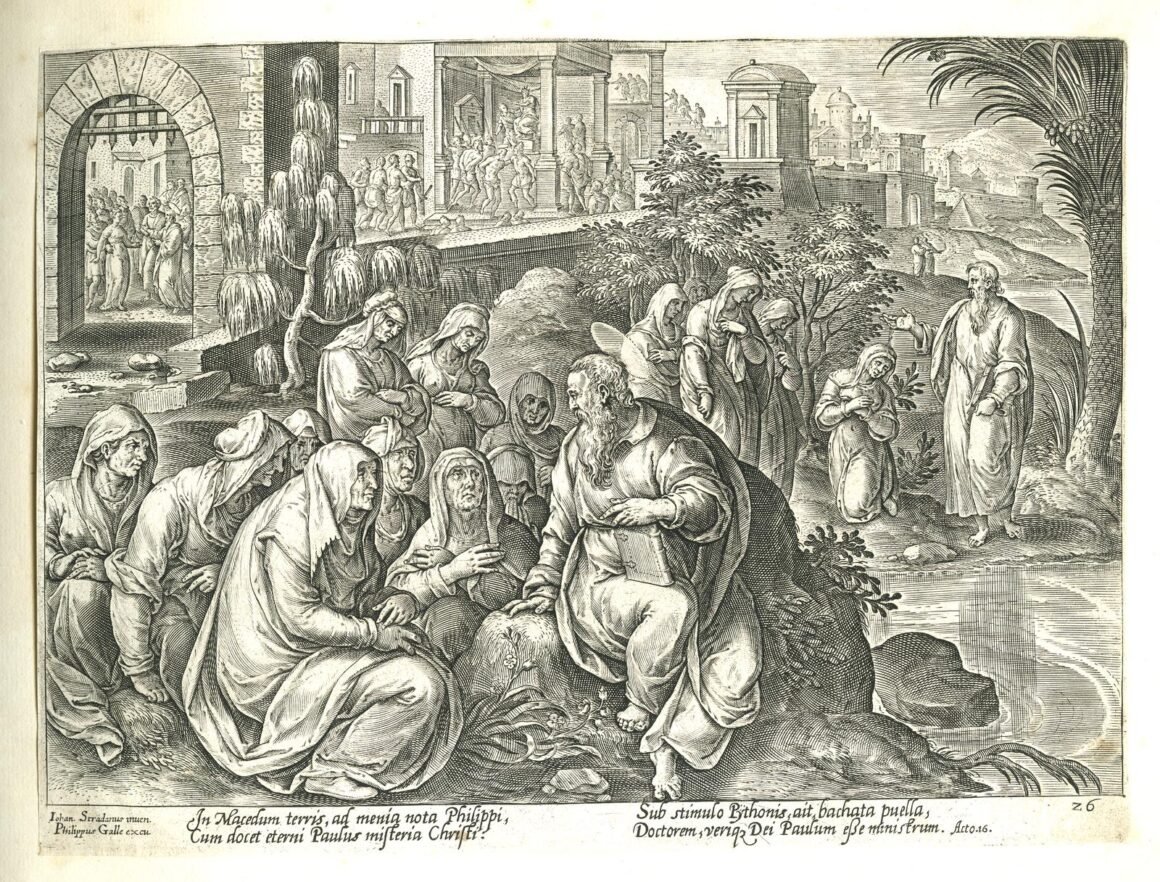
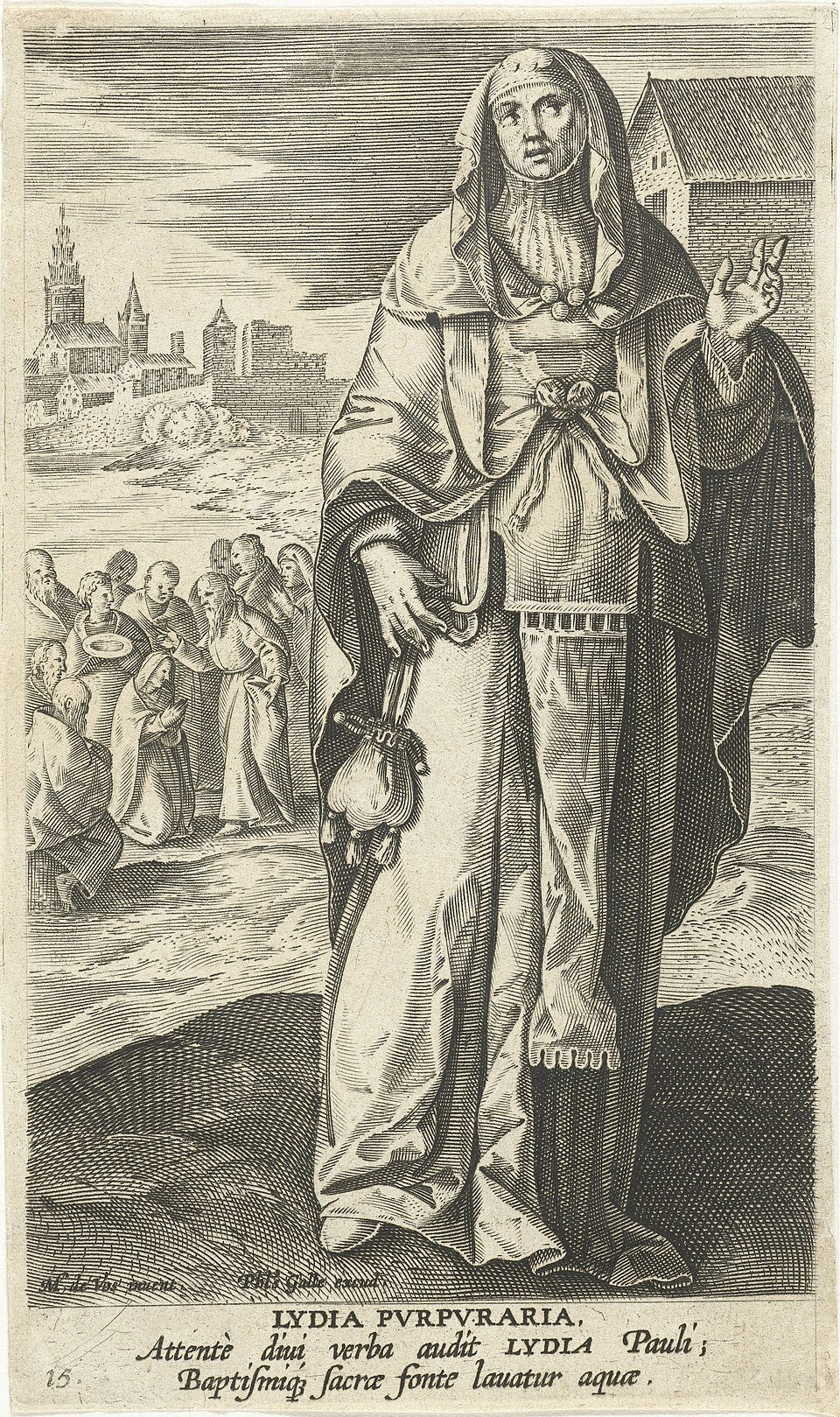
The Apostle Paul visited Philippi during his second missionary journey (likely in AD 49 or 50). Silas, Timothy, and possibly Luke were with Paul when he first preached on Greek soil. His first significant convert was a woman business owner, Lydia of Thyatira, a merchant of purple cloth, possibly for imperial purposes. He taught her and group of people outside the city of Philippi.
After establishing a church, Paul would visit Philippi twice more in 56 and 57 AD.
His letter of Philippians was likely written around 61–62 AD, maybe while he was on house arrest in Rome.
Philippians 3:7-12
— William Barclay, Daily Study Bible
“Paul is using commercial language. He has drawn up a balance sheet. On the asset side he has put all his proud boasts…And then, looking at the total, he writes Loss.”
Just before this, in chapter 3, Paul warns about a few sorts of people who might try to pull them away from the Way (v.2). In verse 3, he said, “For we are the circumcision, who worship by the Spirit of God.” The circumcision of our heart is the same as dying to self (Matthew 16:24–25) of Jesus’ first invitation to would-be disciples (Jeremiah 32:39, Deuteronomy 30:6, Ezekiel 11:19).
Then the Apostle gives a sort of resume on his religious confidence, how he had reasons to be proud and boast in, all of which were religious in nature. Paul lists off many items commanded in the Old Testament, like circumcision and upholding the Law. The most religious are often the least spiritual.
But then Paul says, “but…”.
But whatever gain I had, I counted as loss for the sake of Christ.
v. 7
Paul uses accounting terms here: “gain” (kerdos) was used in everyday and commercial life to describe financial gain or worldly benefit. Homer uses the plural form, kerdea, often to describe mental resourcefulness or clever schemes. “Loss” meant financial damage, loss of assets, or a fine. For a city whose existence was funded by a gold mine, the Apostle’s accounting metaphor was visibly layered.
If life were a scale with Christ on one side and everything else on the other, it would not even be a comparison for the redeemed Pharisee.
The Apostle Paul had a propensity for run-on sentences, and he’s about to pop off.
Verses 8
Indeed, I count everything as loss because of the surpassing worth of knowing Christ Jesus my Lord. For his sake I have suffered the loss of all things and count them as rubbish, in order that I may gain Christ
Calling Jesus his “Lord” (kurios) would have been an affront to Caesar, who claimed the same title.
When it comes to a Profit/Loss sheet, what Paul found in Christ meant everything else was a liability. Not only does he remember what becoming a follower of Jesus cost him, but he also counted it as “rubbish.”
This is one of my favorite Greek words: skubalon. It means crap, feces, and sewage. Every major Roman city had running water with public bathrooms. And these did not always operate as well as ours do. Sewage leaks, backed-up bathroom troughs, and such nightmares occurred. Philippians were smelling Paul’s drift.
While scholars debate whether it was a vulgarity, like a modern profanity, everyone notes it was a powerful rhetorical choice meant to show disgust for human self-righteousness.
In other words, it’s not just that the scale tips in Jesus’ favor: in comparison, everything else smells like a steaming pile of $h!+.1 No matter what, the two things weighed are fundamentally different.
Verses 9-11
and be found in him, not having a righteousness of my own that comes from the law, but that which comes through faith in Christ, the righteousness from God that depends on faith—
v. 9
The Apostle has been using incredibly personal language for Christ: “sake of,” “knowing,” “gain,” now “be found in,” with more to come. The Greek word means to search and find, to find for oneself, or to find through examination. It is not passive by any means. It’s as if Paul is saying that if people wanted to find him, they would have to find Christ first.
And this was the source of his new understanding of righteousness, not one through earning or self-righteous gain, but through emptying of self (Philippians 2:7) and newness of life found in love and fellowship with others.
Paul stacks a couple of clarifying definitions of the source of the righteousness he means, one that comes through trusting Christ and God rather than our external appearances and games. It is not through social markers, self-made righteousness, human status, or blind loyalty. It’s being and becoming the image of God as intended in Genesis 1.
Such a simple thing, it would seem, to trust.
that I may know him and the power of his resurrection, and may share his sufferings, becoming like him in his death, that by any means possible I may attain the resurrection from the dead.
v. 10-11
Paul uses another “know” but this time in the progressive sense. In verse 7, he spoke as if he knew Christ, and here he also indicates he has much more to learn, and every intent of seeing to it. Gnōnai is not a fact or intellectual thing. It’s an active relationship that unfolds and reveals more in time, usually as we are ready for it.
This one phrase, “resurrection of the dead,” is the same phrase that distracted the Epicureans and Stoics in Acts 17, after he had visited Philippi. It was also the phrase he would use to cause a political nightmare when he was arrested, because the Jews were divided on the topic, too. Resurrection, especially through faith in Christ, implied a higher allegiance than Caesar, and worldly citizenship was secondary (cf. Philippians 3:20). This arrest took Paul all the way to Rome, a city with hundreds of temples.
The Greco-Roman world was inundated with resurrection myths, from Osiris and Dionysus to Gilgamesh and Julius Caesar. Concepts of a fiery afterlife and eternal torment were just as common in their world. Second Temple Judaism, Persian influences, and Hellenistic writers all debated over Gehenna, Hades, and Tartarus.
Mortality is perhaps the deepest human fear. In every town, there were solutions offered: cultic rituals, economy, entertainment, libraries, and more. Gods acted like psychological carriers, symbolic vessels that represented a niche of humanity:
- Did you need physical healing? Go see Asclepius.
- Did you want revelry, ecstatic release, and freedom from civil rigidity? Go see Dionysus.
- Worried about a pregnancy or your motherly role? Go see Isis.
- Need some heroic stories to tell your boys about being brave and honorable? Go see Heracles.
- Were you unsure about your future? There were several from Apollo to Athena.
- Did you want to show loyalty to Rome and partake of all it had to offer? Go see Caesar.
Ancient gods were like our modern brands and institutions. Spirituality and human needs were not so distinct in ancient empires, nor were their governments. Much like our world, the first-century world was flooded with competing economic and spiritual options.
Verses 12
Not that I have already obtained this or am already perfect, but I press on to make it my own, because Christ Jesus has made me his own.
v. 12
Rather than a fake or forced social code, Paul’s righteousness came from becoming more whole and true in Christ.
The Apostle acknowledges his own areas of growth and deeper understanding (cf. 2 Corinthians 12:7-10), and expresses his wholehearted commitment to it. He states bluntly that he has not been made “already perfect.” Teteleiōmai (“made perfect” or “brought to completion”) comes from the Greek word telos, meaning wholeness, fullness of design, and maturity. Discipleship and spiritual formation, becoming “holy as He is Holy,” is not a checkbox or a category of life. It’s the whole enchilada.
Paul is echoing and testifying to Jesus’ teaching that our righteousness would have to surpass that of hypocritical Pharisees if we wanted to have the Kingdom of Heaven. Instead of faking a righteousness that is forced onto others, Jesus’ suggestion was to actually become righteous.
Philippians 3:13-16
Brothers, I do not consider that I have made it my own. But one thing I do: forgetting what lies behind and straining forward to what lies ahead, I press on toward the goal for the prize of the upward call of God in Christ Jesus.
v. 13-14
Even if the Apostle reached some level of “perfection,” it would have only been through trusting Christ and sticking with it. The Apostle, in some sense, nods his head to the fact that he had issues and also was not letting that be an excuse to keep them.
The journey lasts as long as we breathe and walk. Getting tied down in the past or distracted by the future, burdened by comfort and status, heavy with resentment and fear, are all sure-fire ways to drift from the path laid before us. Circumstances and consequences are not curses but blessings.
Using his relationship with them and his own relationship with Christ, he urges the Philippians to also do the same thing themselves. To the Corinthians, he’ll say, “Follow me as I follow Christ” (2 Corinthians 11:1), just as he’ll say in verse 17, “Brothers, join in imitating me.” This is the essence of discipleship and what a church community is about.
Let those of us who are mature think this way, and if in anything you think otherwise, God will reveal that also to you. Only let us hold true to what we have attained.
v. 15-16
Here, the word for “mature” is the same as Paul uses for “perfect” (cf. Ephesians 4:13). So, while earlier saying he wasn’t fully mature/perfect, here he talks to those who are. It’s a smart little way of speaking to several people at once: those who are actually mature, those who think they’re mature, and those who forgot what maturity is.
For any reader, it invites them to pause and reflect on their own heart, life, and priorities.
There are a couple of places in his epistles where he points to the reality that some truths people will understand, while others may not, at least not right away.
AA uses a phrase: “more shall be revealed.” On page 164 of AA’s Big Book, it says, “We realize we know only a little. God will constantly disclose more to you and to us.” That is what the Apostle means here by “God will reveal that also to you.”
There are true lessons, truths about ourselves and how life works, that run deep and can take time to do their complete work. Christ is no exception. We can be confident that the work God has begun in us through Christ will be brought to completion (Philippians 1:6). However, it is also this work that teaches what life has always been about. It reorients our former and false perceptions to finally match reality. To turn back from the plow would be to discredit us from the kingdom we prepare for.
Paul reminds anyone in the Philippian church to hold on to what blessings have already been revealed. Forgetting the lessons we’ve already learned is a quick way to stop learning. Going back to things that no longer serve is a recipe for servitude and generational cycles.
No matter what, Paul would say, never let go of the true love God has already revealed, that we’ve already known. In fact, trust it more and see where it leads.
A group of Christians in Philippi 2000 years ago might suggest it leads to joy.
“A disciple, or apprentice, is simply someone who has decided to be with another, under appropriate conditions, in order to become capable of doing what that person does or to become what that person is.”
— Dallas Willard, The Great Omission
*Footnotes (& Leftovers)
- Interestingly, the city of Rome and most major cities were known for smelling like human waste. Cities had to routinely clean up excrement from streets and sidewalks because people dumped their chamber pots into the streets. It serves as a potential deeper allegory for both personal sin as well as collective society’s. ↩︎