Table of Contents Show
Joshua 1:5-9 was one of the first Bible passages I memorized as a teenage Jesus Freak. It’s a challenge to be brave following the path God placed before us (Hebrews 12:1-3), implying it can be followed cowardly.
Joshua’s strength was not the raw, pagan muscle of a Bronze Age warlord. Nor was it found in earning or proving that he was another Moses. His courage had to be commanded and his strength encouraged.
“Strong and courageous,” in the biblical sense, means having the fortitude to remain entirely trusting of God while the world demands geopolitical and/or societal pragmatism, and dying to our cravings for instant gratification, comfort, status, certainty, and cake. The Beattiudes serve as a clear and difficult standard.
Modern research on vulnerability and courage, specifically Brené Brown’s work, echoes the same biblical pattern: Strength is not domination but rather remaining faithful despite fear.
“In his farewell speech, Moses exhorts the people, ‘Be strong and courageous,’ and then he gives Joshua the same exhortation ‘in the sight of all Israel, ‘Be strong and courageous, for you shall go with this people into the land that the Lord has sworn to their fathers to give them’’ (Deut. 31:6-7).“
— Peter Leithart
On-Ramp to the Promised Land
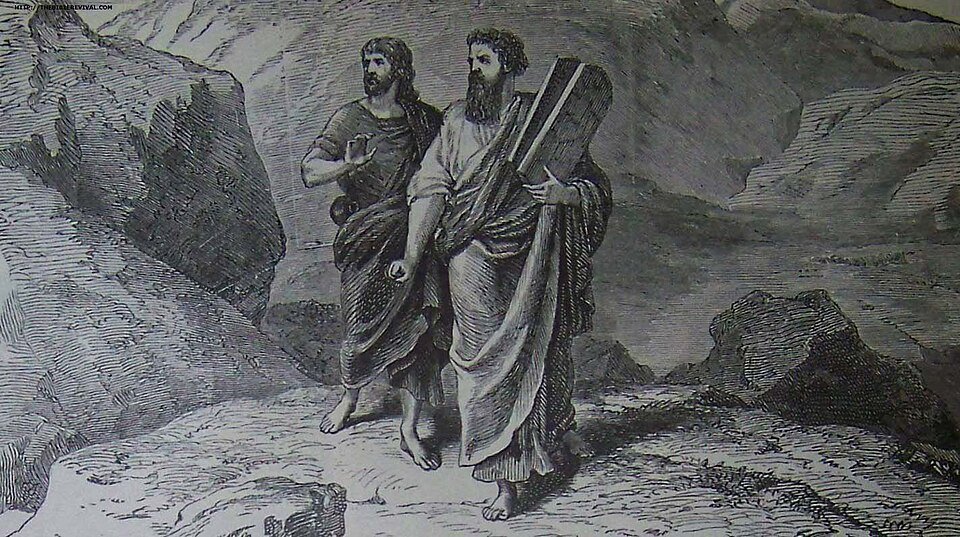
The book of Joshua picks up immediately after the death of Moses (1:1) at the end of Deuteronomy. For ancient Jews, Deuteronomy was the end of the Torah, what Protestants call the Pentateuch (the first five books of the Bible). These books set Israel’s cosmology and philosophical premise, acting as the bedrock for both the rest of Scripture and Israel’s later diversity.
After Genesis, the majority of the Torah is about Israel getting out of Egypt, then getting Egypt out of Israel, and finally establishing its national identity in Numbers and Deuteronomy. Importantly, that happens before they drive out its former occupants and possess the land.
Joshua 1 is Joshua’s commissioning, when he officially steps into the shoes of Moses, the prince of Egypt, and deliverer of Israel. It was the moment an entire generation had awaited. Now, it was here.
“God confirms Joshua as leader, likewise exhorting him to ‘be strong and courageous’ — an exhortation repeated three times in quick succession (Joshua 1:6-9)… Why all this repetition? One would think Joshua’s long career at Moses’s side, not to mention the crisis with the spies, would have proven strength and courage enough already.”
— Peter Leithart
Don’t Be Afraid — Joshua 1:5-9
In verses 2-4, God first blessed and encouraged Joshua and the people to cross over into the Promised Land, saying He would be with them just as He was with Moses. Picking up from verse 5:
“No man shall be able to stand before you all the days of your life. Just as I was with Moses, so I will be with you. I will not leave you or forsake you. Be strong and courageous, for you shall cause this people to inherit the land that I swore to their fathers to give them. Only be strong and very courageous, being careful to do according to all the law that Moses my servant commanded you. Do not turn from it to the right hand or to the left, that you may have good success wherever you go.”
— v. 5-7
God commands Joshua three times to be strong and courageous. To drive the point home the third time, God will also add, “Do not be frightened, and do not be dismayed, for the Lord your God is with you wherever you go” (v. 9).
The entirety of Joshua 1:5-9 is chiastic, making it abundantly clear that our inner strength and courage are fundamental to following after God. God is not interested in replicating fearful, passive robots (2 Timothy 1:7), but actively looks for loving, life-givers who are willing to have some faith, hope, and love, humans who are willing to trust Him. His eyes scour the earth, back and forth, looking for such hearts (2 Chronicles 16:9).
You don’t command something that doesn’t need to be commanded: in other words, Joshua may or may not have owned some brown pants…mostly may. The Israelites were often distracted, disgruntled, and disobedient. So, while Israel was about to begin a new chapter, Joshua needed to have the courage to hold on to God to become the same kind of leader as Moses: humble (Numbers 12:3). I bet Joshua was scared out of his mind: I’d be.
Whenever God meets us, His first words are often, “Don’t be afraid” (Luke 2:10; Revelation 1:17). Fear, ironically, gets in the way of humility. Instead of bowing, it flees.
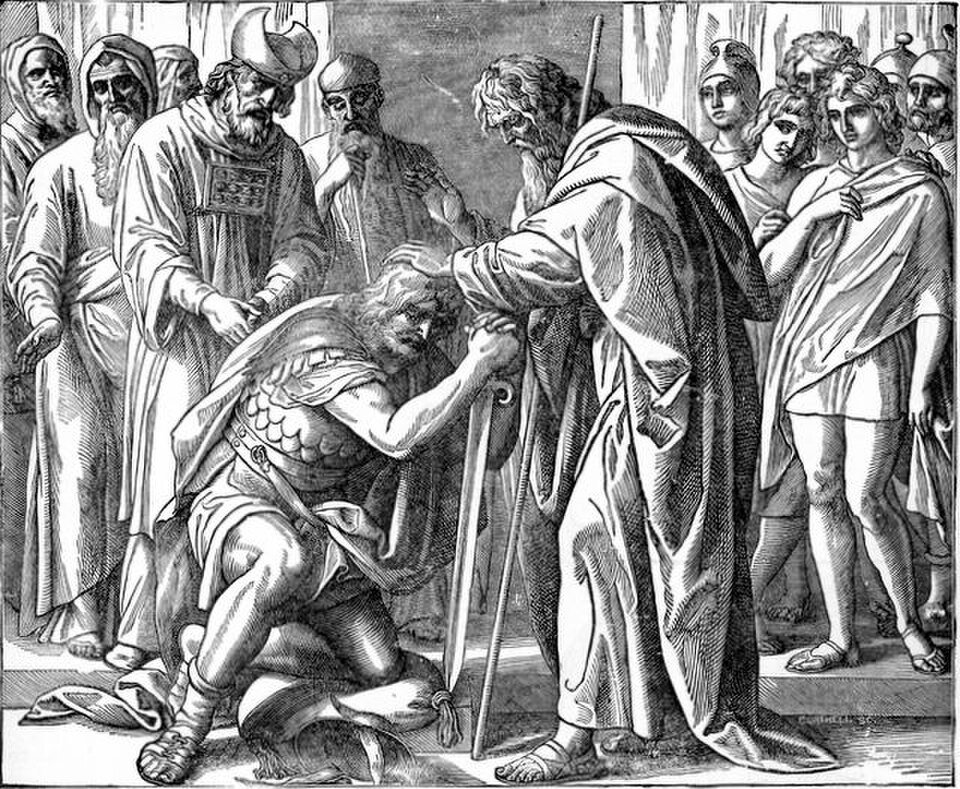
Notably, the modern concept of being a tyrannical, militant boss (“my way or the highway”) is never found in Scripture, except as a warning, nor does any leadership book worth its salt. The kingdom of God turns worldly assumptions about power “upside down” (Acts 17:6). From the beginning of Israel’s story, the character of leadership and governance plays an important role.
This Book of the Law shall not depart from your mouth, but you shall meditate on it day and night, so that you may be careful to do according to all that is written in it. For then you will make your way prosperous, and then you will have good success. Have I not commanded you? Be strong and courageous. Do not be frightened, and do not be dismayed, for the Lord your God is with you wherever you go.”
— v. 8-9
Rather than commanding Joshua on one particular thing, God commanded him to “only be strong and very courageous, being careful to do according to all the law…” (v. 7). In verse 8, God commands Joshua to have the whole “Book” in his mouth and meditate on it throughout the day. The command here is simple bravery; sometimes, the first act of faith is being brave enough to consider it. Considering it is often how we become brave. Meditating on it is how we keep walking it out.
Because the book of Joshua is part of the Nevi’im (the Prophets) and not the Torah, it was excluded from the official Jewish commandment count, 613, called the Taryag Mitzvot. Even within the books of the Prophets, there are no “new” commandments given. Instead, the Prophets serve to point people back to the principles already established in the Torah.
And, in this exact moment, God’s one command to Joshua, repeated three times, was to be courageous and strong. It was up to Joshua to follow it, and it would take bravery to follow all of the Torah, not just a systematic, topical selection.
By the time of Jesus, commandments had taken on a different tone and definition. The Pharisees, for example, famously constructed an intentional “fence” around the Torah with extra commands to protect from violating the Law. While the intention, on paper, sounds good, it failed to fix the heart issue because commandments were not the entirety of the Scripture.
Commandments should never hold more weight than who the commandments are for (Matthew 23:23; Mark 2:27). Fixating on commandments inevitably leads to what AA refers to as “taking other people’s inventory.” When that happens, spirituality is no longer a path to wholeness; it is co-opted into a religious enforcement tool.
“Joshua, now a leader in his own right and bereft of his mentor, will be confronted by a series of enormous challenges in the Promised Land, each requiring great strength and courage rooted in contemplative fidelity to God’s word.”
— Peter Leithart
Deuteronomic Detour
Instead of being a unique command given to a sole leader, “be brave” was identical to what had already been instructed to Israel. To understand how Joshua 1:5-9 applied to Joshua, and thus for us, we’ll skip the Taryag Mitzvot entirely and look at what God said about “the Law.”
Deuteronomy is sometimes considered a retelling of Exodus, but for the generation after the Exodus. It concisely reframes the entirety of what came before, but for the people who were about to enter the Promised Land as a covenant, or constitution, that would bind and hold the people together.
In Deuteronomy 11:1, God told Israel, “You shall therefore love the Lord your God and keep his charge, his statutes, his rules, and his commandments always.” Similarly, in 1 Timothy 1:6, Paul said their charge (or telos) was love (agape).
Generally, many scholars draw distinctions between exhortations or qualitative instructions regarding how one carries themselves and specific duties (i.e., “commands”). “Commandments,” meaning the 613, were only a part of the Torah. The laws, plural, were guardrails guiding everyone to the same core: Love God with all your heart, soul, and might, and love your neighbor as yourself, because Israel’s God was the God of orphans, strangers, outcasts, and sinners. Be like God—be “godly”—because He loves everyone, was the fundamental logic Israel was invited into, and the same logic Jesus taught His disciples to follow.
Later, in Deuteronomy 11:8, God says, “You shall therefore keep the whole commandment that I command you today, that you may be strong, and go in and take possession of the land that you are going over to possess.” It is the same command as Joshua’s. And, instead of “all the commandments,” God condensed it into one: “the whole commandment.”
Then, in Deuteronomy 11:18-20, God instructed individuals and households to mark their own boundaries with these commands: “You shall therefore lay up these words of mine in your heart and in your soul, and you shall bind them as a sign on your hand, and they shall be as frontlets between your eyes. You shall teach them to your children, talking of them when you are sitting in your house, and when you are walking by the way, and when you lie down, and when you rise. You shall write them on the doorposts of your house and on your gates…”
In the Old Testament, it was still an inside-out process, a journey of sanctification. Every person was a priest and a tabernacle. Together, they were to act as a church for the nations. The “words of [God]” were to be personal markers, a covenant people took upon themselves, forced inwards, not outward on and over others.
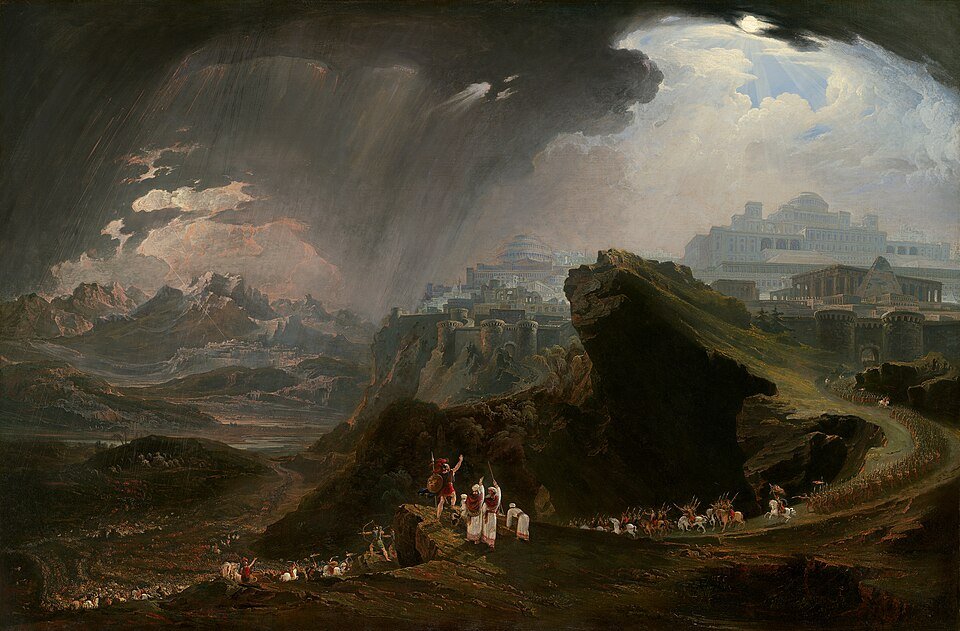
Right before Moses died and the book of Deuteronomy ended, God promised Israel that, if they trusted Him enough to follow the whole commandment, “the Lord your God will circumcise your heart and the heart of your offspring, so that you will love the Lord your God with all your heart and with all your soul, that you may live” (Deut 30:6).
Love of God and of neighbors: circumcision of the heart1. The Law was a systematic deconstruction of Egyptian and Ancient Near East (ANE) empires that cast shadows from the ancient thrones of boy kings. For the people who wrestled with God directly (“Israel”), it meant no more fake gods or ego, and learning to love in the middle of the world’s power struggles. Idolatry was always a matter of the heart and dependence, as are jealousy, hatred, unforgiveness, malice, discontentment, and pride.
God’s promise was not just that their hearts could have that sinful part cut off (“circumcised”), but that their children could also, that it could become a generational blessing producing ongoing life (cf. Romans 2:29). That is, if they chose life.
Jesus said He came to fulfill the whole Law. In the Gospel of John, Jesus gave His one “new” command: Love one another the way He loved us. All Jesus did to the old command was shift the standard, up the ante, and open the doors to the world.
Jesus’ late-to-the-party Apostle, Paul, said the whole Law can be summed up with a single word (agape), leaving off the “Love God,” and only quoted, “You shall love your neighbor as yourself” (Galatians 5:14). In 1 Corinthians 13, Paul said love is more important than even faith. In the epistle of John, loving others is the metric of our love of God. James makes serving others the metric of our faith, not what we say we believe.
It was the same lesson for the ancient Jews, just with less history and human advancement to work with.
“This book of the law shall not depart out of your mouth’ (Joshua 1:8). That’s where we need it! In our mouth. Now, how did it get in your mouth? Memorization.”
— Dallas Willard
God’s Double-Dog Dare
To make it clear to Jews just exiting a 40-year desert detour that it really was that simple, God said all of this was understandable and did not require any other mysterious source from heaven or hell to comprehend it. Then, God Almighty put the people on the stand and declared Heaven, Earth, and Himself as their witnesses.
The eyes of God and all Reality were now on the people: Would they choose faith? Would they walk in His ways?
It’s longer, with a few verses skipped, but worth the time to read from a Jew’s perspective, about to cross the Jordan.
Deuteronomy 30:11-16, 19-20:
“For this commandment that I command you today is not too hard for you, neither is it far off. It is not in heaven, that you should say, ‘Who will ascend to heaven for us and bring it to us, that we may hear it and do it?’ Neither is it beyond the sea, that you should say, ‘Who will go over the sea for us and bring it to us, that we may hear it and do it?’ But the word is very near you. It is in your mouth and in your heart, so that you can do it.
“See, I have set before you today life and good, death and evil. If you obey the commandments of the Lord your God that I command you today, by loving the Lord your God, by walking in his ways, and by keeping his commandments and his statutes and his rules, then you shall live and multiply, and the Lord your God will bless you in the land that you are entering to take possession of it.
…I call heaven and earth to witness against you today, that I have set before you life and death, blessing and curse. Therefore choose life, that you and your offspring may live, loving the Lord your God, obeying his voice and holding fast to him, for he is your life and length of days, that you may dwell in the land that the Lord swore to your fathers, to Abraham, to Isaac, and to Jacob, to give them.”
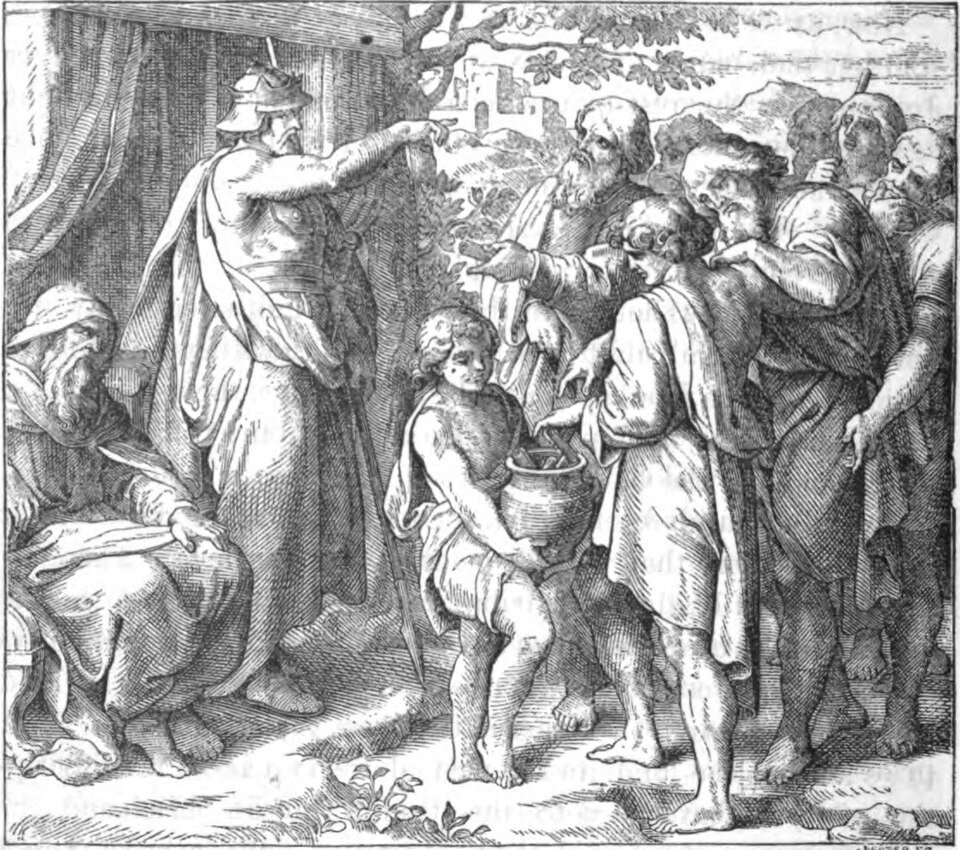
One Last Didactic
One final time, Joshua is commanded to be brave, this time by the people. In Joshua 1:18, after promising to follow Joshua just as they did Moses (which is kind of funny in and of itself), Israel’s Transjordan tribes commanded Joshua to also “…only be strong and courageous.”
Joshua’s first point of bravery was not a battle, but himself. The Law was a tutor leading people through a process of sanctification (Galatians 3:24). The greatest enemy we all face is ourselves. Epictetus, a Stoic philosopher, said, “Circumstances don’t make the man, they only reveal him to himself.” Scripture acts as such circumstances by which we can see ourselves clearly (James 1:22-25).
Joshua would then have to lead others through internal change, which is no easy task. It’s easier to convince humans to fight each other than it is to be honest with others.
Before Israel could enter the Promised Land and take its first city, God made them go through a reverse Exodus (Joshua 3) and reenact both Israel’s circumcision (Joshua 5), as well as Moses and Abraham’s. This was not incidental: it was spiritual consecration, pledging themselves to passages explored above with the anticipation of God’s promises for future generations, with all their heart and soul.
God’s exhortation to Joshua, “Do not turn from it to the right hand or to the left, that you may have good success wherever you go,” was his invitation to have the Law written on his heart. It would act as an internal compass and light, no matter where he went.
Later, Joshua would also repeat his charge back to Israel (Joshua 10:25; 11:6). Bravery and faith, as well as love and life, exist in giving and receiving, in vulnerability and trust. God shows up when His people do (He was already there anyway).
The same promises of Scripture are still true for us today. They have never gone away.
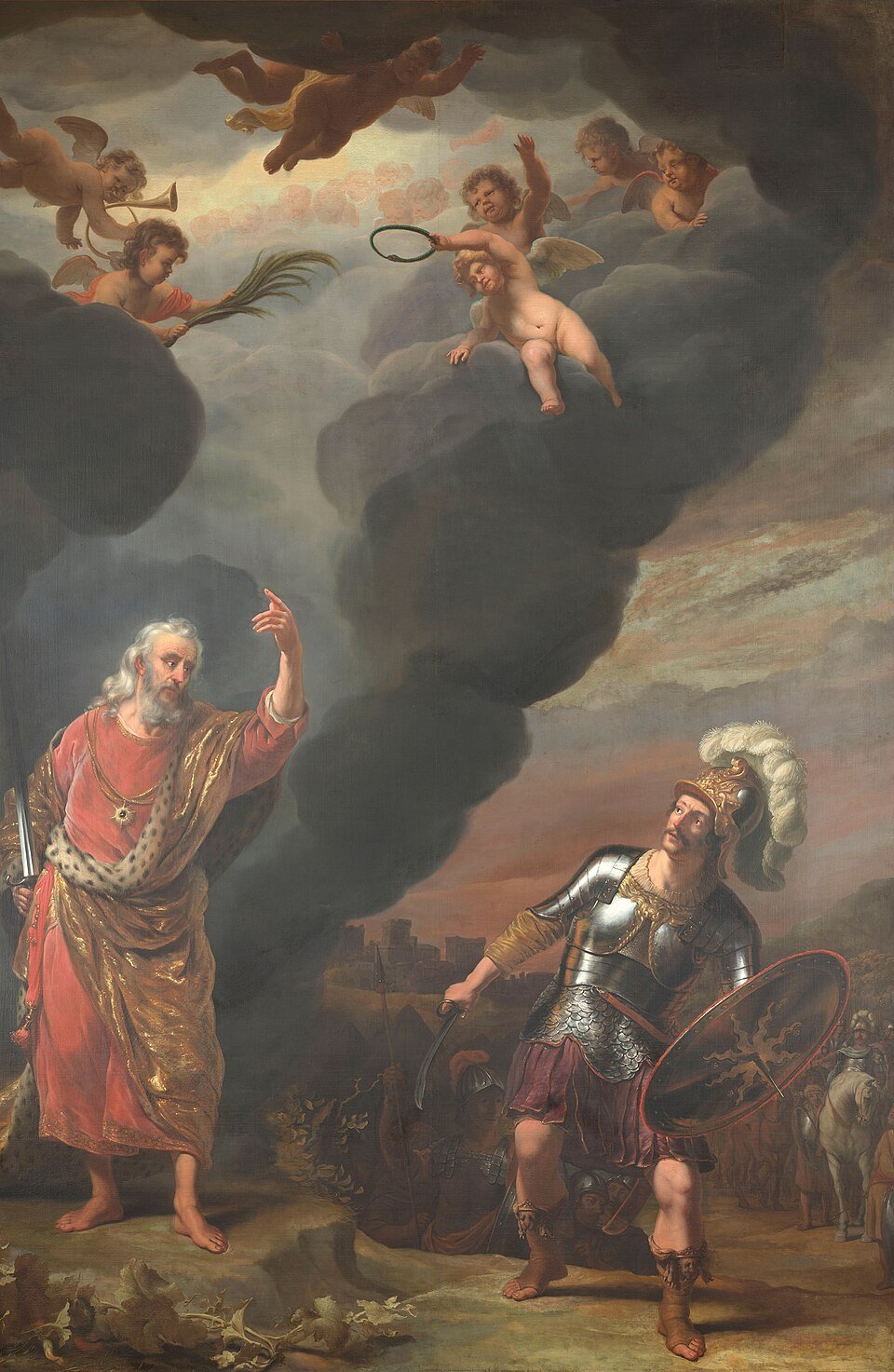
Joshua will also have to meet with the Divine personally before facing Jericho, an already famous city then (Joshua 5:13-15). Unlike Moses’ burning bush before facing Pharaoh, Joshua’s holy encounter with the Commander of the Lord’s Army cuts black, unresolved. Scripture’s silence leaves us to wonder what happened.
The point would have been the same: to humbly prostrate before the Divine and have excuses and ego stripped away. The bravest men are those broken down by God enough that they can walk with Him afterwards.
The New Testament experienced the initial outpouring of this blessing promised over a thousand years before to Israel. The ancient mystery of Deuteronomy 30 broke upon the first-century world in the po-dunk, back-country of Israel, long under Empire’s shadow. The Spirit spread into all nations, tongues, and peoples. Men and women, slaves and masters, Gentiles and Jews were no longer bound by Law but by the promises of it: circumcision of the heart, wholeness, Spirit, life, and forgiveness of sins were accessible to all people, no longer hidden by a veil or hierarchy.
An applicable question for our modern world is, “What are we waiting for?”
Updated: 4/1/2026
- Within the context of the ANE, circumcision of males carried both sexual and spiritual significance. Rather than being an Old Testament original, the practice was common in the surrounding world—for instance, Egyptian priests were often circumcised. For Israel, however, the act of cutting off a part of themselves was a commitment to the “circumcision of the heart.” It functioned as a surrender of their sexual impulses and primal identity to the Divine, reinforcing their calling as a “kingdom of priests.” When Israel later turned to idols and the behaviors those idols permitted, it was essentially a rejection of the invitation to wholeness found in Deuteronomy 30. ↩︎