Table of Contents Show
“Theology, in this view, was simply the inductive arrangement of the facts of Scripture… Evangelicals took their cue from the Scottish Common Sense philosophy. The Bible was a Baconian handbook of facts, and the theologian was a scientist who arranged those facts.”
— Mark Noll, The Scandal of the Evangelical Mind
There is no one denominational camp I was born into. Christian & Missionary Alliance, Restoration, Baptist, Charismatic, and Calvinism are some of the denominations I have skin and blood in. Entering Boise Bible College introduced me to the Restoration Movement and another world of Christianity I hadn’t been exposed to.
A 2026 Philosophical Intro to Restoration Movement
Even if you’re not familiar with it, the Restoration Movement is a singular thread of history that’s an interesting case study on what’s different about 2026, as well as how difficult dualistic Western categories are to deconstruct. No Christian alive today stands alone in a camp: we’re all part of something much larger.
Aside from hearing about its founders in college, I also read Nancey Pearcey’s book, Total Truth: Liberating Christianity from Its Cultural Captivity, then. She examines Christianity in post-modernity from a Francis Schaeffer point of view, which I had finished reading his Trilogy before. And in it, Pearcey documents the Restoration Movement’s influence in modern Christianity.
One of Pearcey’s central theses was that modern society operates on a fractured, “two-story” concept of truth. Francis Schaefer (echoed by Dallas Willard) taught that Western culture divided knowledge into two distinct spheres:
- The Lower Story (Facts): Objective, rational, and universally binding truths (e.g., science, public policy, economics).
- The Upper Story (Values): Subjective, non-rational, and highly individualized preferences (e.g., religion, morality, personal beliefs).
Pearcey argued that American Christians did not just fall victim to this divide—they actively helped create it by retreating from the intellectual sphere into the realm of private, emotional experience.
A Movement’s Founders
Rather than covering doctrinal differences, we’re going to look at some of its founders’ assessments and consider them from our broader context in 2026.
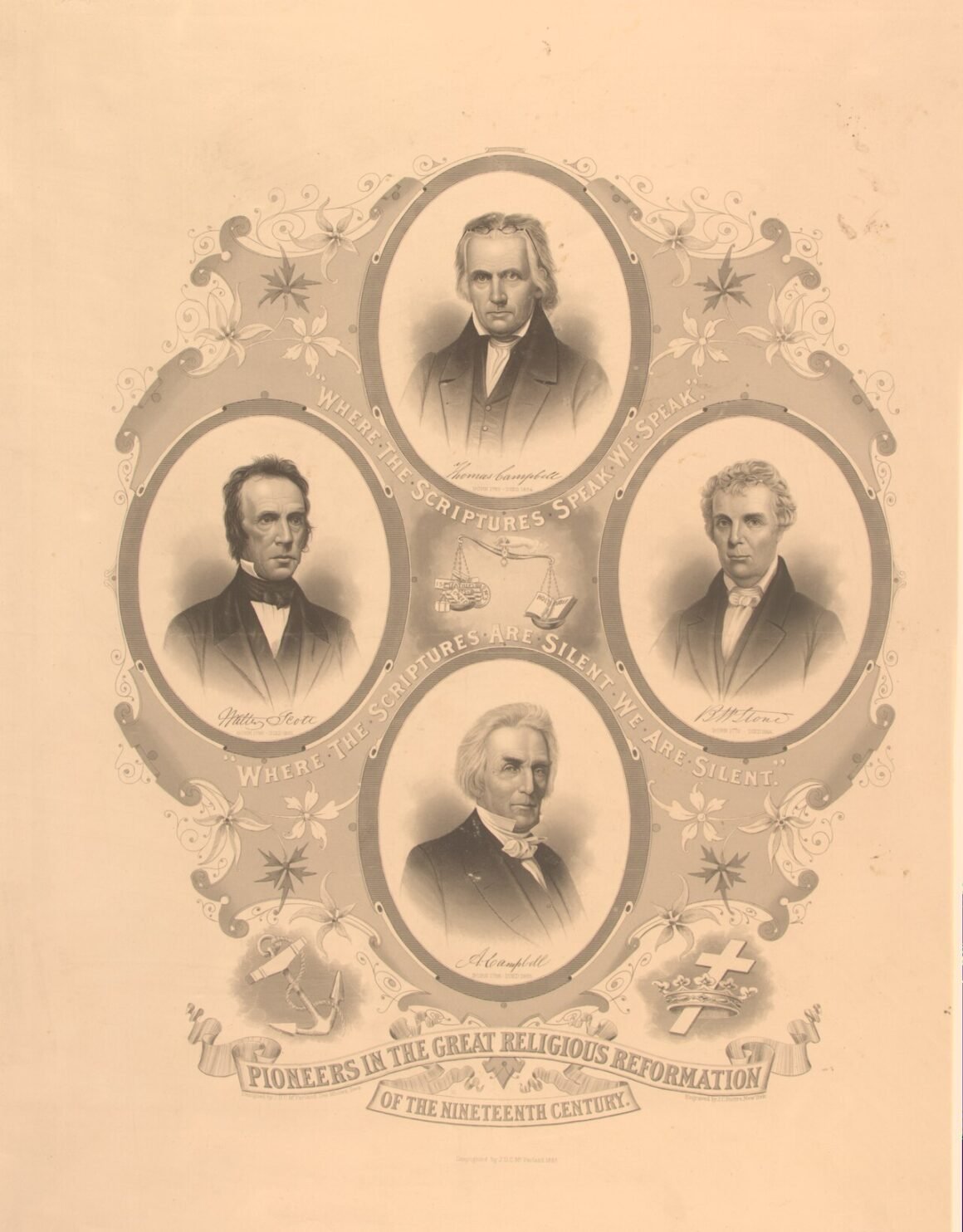
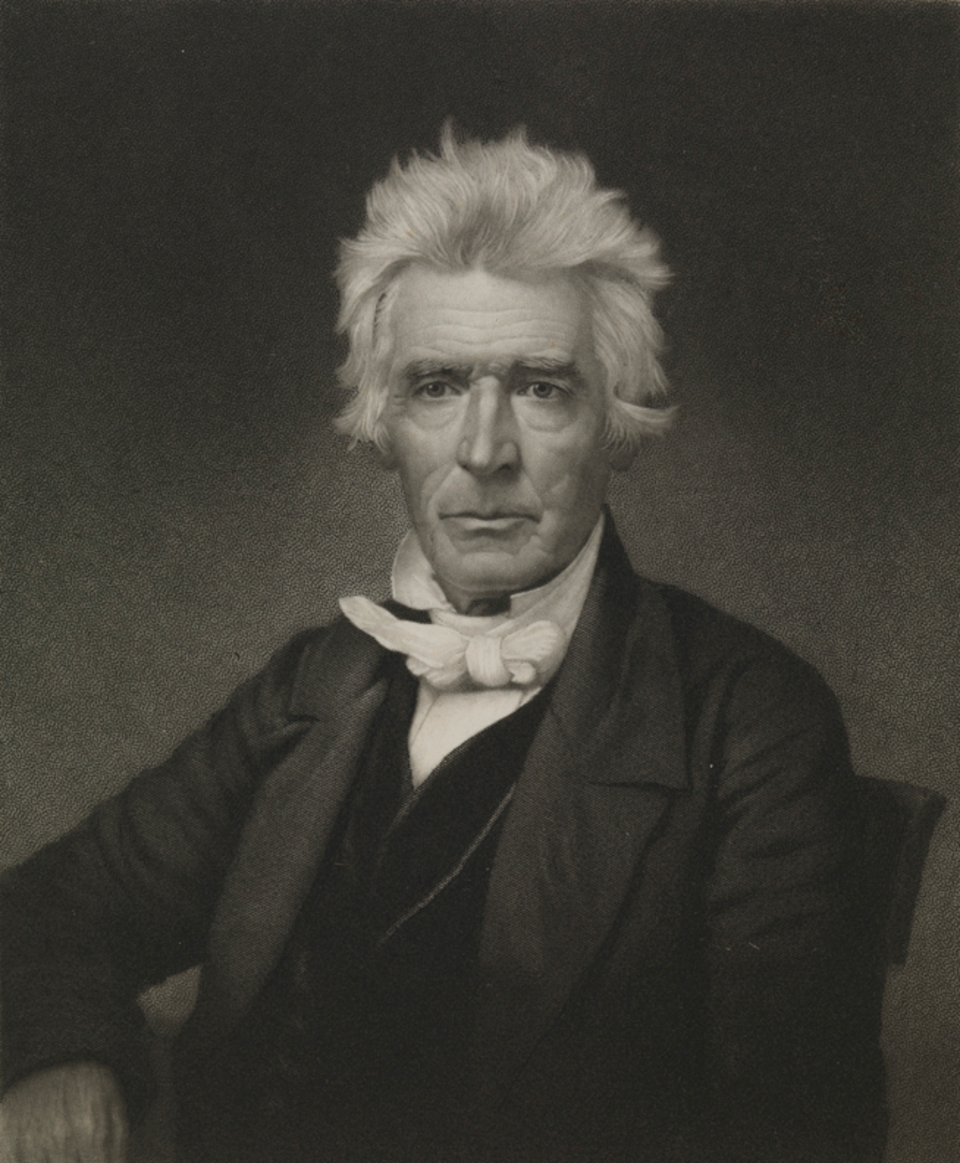
Alexander Campbell (1788-1866) was a driving, intellectual force of the movement. He read the New Testament in Greek from cover to cover, likely many times. He was a highly educated classical scholar who was deeply fluent in Greek, Latin, and French. Campbell was such a student of the original languages that he argued that, while the New Testament was written with the “body of Greek,” it possessed the “soul of Hebrew,” meaning it could not be fully understood without a deep grasp of the Old Testament.
While Alexander became a dominant architect of the movement, the “Stone-Campbell Movement” was a convergence of several independent streams. Barton W. Stone (1772–1844) was a Presbyterian minister who became the co-founder of the movement. Stone was a leader of the massive Cane Ridge Revival (1801) in Kentucky, which sparked the Second Great Awakening in the frontier.
Thomas Campbell (1763–1854) was Alexander Campbell’s father and a Presbyterian minister who immigrated to America from Ireland. He authored the Declaration and Address in 1809, which is widely considered the Magna Carta of the Restoration Movement. He coined the famous phrase, “Where the Scriptures speak, we speak; and where the Scriptures are silent, we are silent.” He originally sought to create an association to promote Christian unity among all denominations, which inadvertently morphed into its own distinct movement when the existing denominations rejected his ideas.
Robert Richardson Criticism: Intellect vs. Spirit
Richardson served as Alexander Campbell’s physician, friend, co-editor of the Millennial Harbinger, and his official biographer. He became a primary voice warning that the Restoration Movement had mastered the “letter” of the law but was entirely missing the “Spirit.” Richardson criticized excessive rationalism and thought the Holy Spirit had been neglected. He felt the movement treated the New Testament simply as “words and arguments” addressed to the brain, effectively ignoring the active indwelling of the Holy Spirit.
In 1872, Richardson published the book A Scriptural View of the Office of the Holy Spirit. In the preface, Richardson explicitly called out the movement’s trajectory: “The author has for many years contemplated, with much regret, the extremes into which men have fallen in relation to the subject of the Holy Spirit… especially those of them which rest on rationalism, a form of philosophy…”
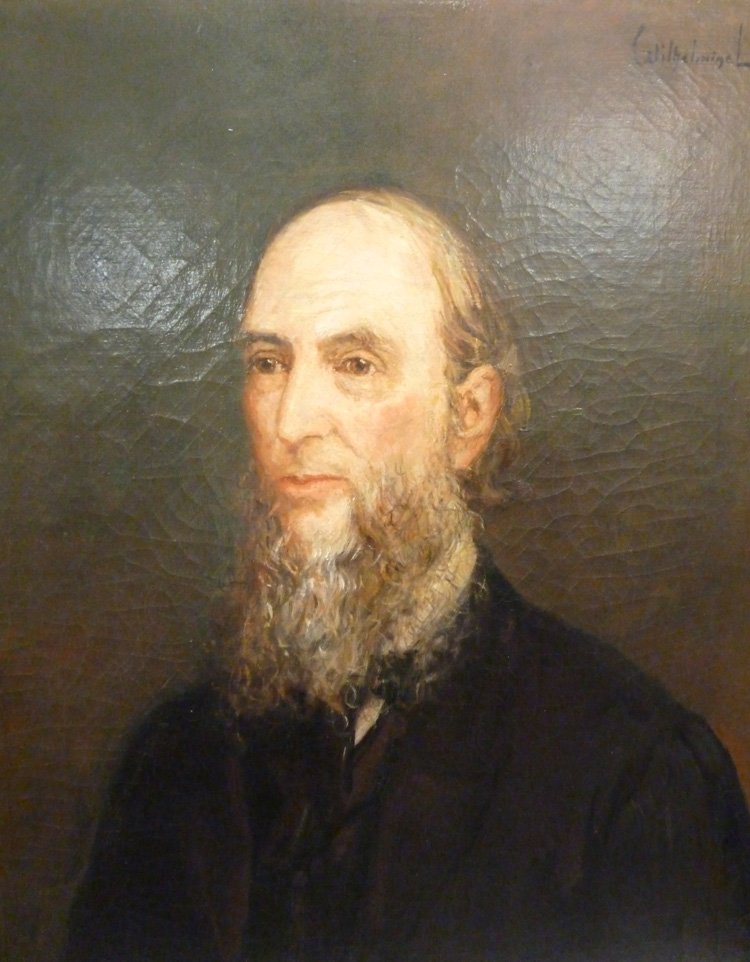
Alexander‘s Late-Life Regret: The Trap of Sectarianism
Campbell’s core driving goal was Christian unity, restoring the church of the New Testament. He was not interested in the creation of a pristine, exclusionary new denomination. Early in The Christian Baptist, he wrote: “I labor to see sectarianism abolished…”
Campbell’s later years were spent watching his followers use his restoration of the “ancient order” as a weapon to exclude other Christians, effectively turning the movement into a rigid sect.
Campbell experienced documented late-life grief over the movement’s sectarian trajectory. Shortly before Campbell died in 1866, Richardson visited him and mentioned that the Reformers and the Baptists were holding meetings to potentially unite. Campbell reportedly wept with joy at the news, telling Richardson, “There was never any sufficient reason for a separation between us and the Baptists.”
The Epistemological Engine: Baconian Induction
“Mistaking the means for the end” was a common 19th-century philosophical and theological idiom. Modern Restoration historians apply this phrase retroactively to summarize Campbell’s ultimate frustration.
The means was restoring the 1st-century church model, and the end was uniting all Christians. Campbell’s followers became so obsessed with the means (arguing over biblical forms, instrumental music, organization) that they entirely abandoned the end (unity).
The Restoration Movement was born out of the Enlightenment and the theological debates of its time, relying heavily on 19th-century Scottish Common Sense Realism and the inductive philosophy of Francis Bacon. Campbell viewed the Bible kind of like a rational textbook (a “book of facts”). He also emphasized moral transformation, believed in providence, discussed spiritual formation, and saw Christianity as participation in a living kingdom.
His assumption that the Bible was a literal manual, as a scientist observes physical facts in nature to derive universal laws, a theologian should observe “facts” (propositions) and commands in the New Testament to derive the “laws” of the kingdom of God.
His method eschewed deduction (starting with creeds) in favor of starting with the naked Text. By logically arranging empirical data points from the apostles, one would arrive at the “Ancient Order.”
“Campbell grounded his theology in the rationalistic, empirical assumptions of the Scottish Enlightenment… The great illusion of the Stone-Campbell movement was the belief that its members had escaped the limitations of human history, arriving at an unbiased, entirely objective reading of the biblical text.”
— Richard Hughes, Reviving the Ancient Faith: The Story of Churches of Christ in America
An Early Second Attempt
Back in 2004, Pearcey explained how Christianity lost its intellectual footing in the public square, as well as its cultural influence.
Driven by the democratic, anti-elitist impulses of Jacksonian America, the Restoration Movement adopted a strict “no creed but the Bible” mentality. While the founders intended to return faith to its simple, first-century origins, Pearcey noted that this effectively severed believers from historical orthodox traditions and centuries of scholarly theological development. It placed the burden of truth on the isolated, individual reader, while simultaneously locking them into a procedural checklist of prerequisites.
By reading the New Testament as a mechanical blueprint, the movement reduced the sacraments to logical, mandatory steps: weekly communion was transformed from a mystical encounter into a rational memorial, and adult immersion became a strict, systematic formula for the remission of sins. In their attempt to strip away the complex traditions of men, they inadvertently replaced the living, breathing mystery of historic orthodoxy with a cold, step-by-step manual for salvation.
In some variations, the movement rejected formal, academic theological training in favor of common-sense populism. By promoting the idea that any individual could interpret the Bible perfectly through raw common sense and pragmatic reasoning, the movement fostered an anti-intellectual approach to faith. It became more concerned with practical, easily understandable steps than with cultivating an integrated, comprehensive Christian philosophy.
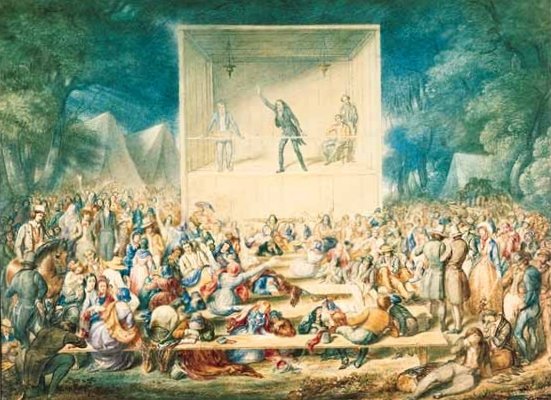
Because this populist stream focused so heavily on individual interpretation and stripped away the philosophical rigors of the broader Christian tradition, it made the faith highly vulnerable to secularism. Believers became unequipped to defend Christianity as a holistic worldview that applies to science, art, and politics. As time progressed, the movement, like many others, grew and then branched. As the generations progressed, its assumptions and misunderstandings of the early movement evolved and melded as the world also changed around it (another example of doctrinal entropy)1. Even the Restoration Movement became creedal and formed an orthodoxy, and turned into a denomination, as some of its own founders and present leaders have noted.
“If the Reformers were to make their view of baptism a requirement for fellowship, they would become sectarians with a one-article unwritten creed that excluded more followers of Christ than any written one.”
— Barton Stone
The irony of the Restoration Movement is that Campbell used Baconian induction to try to “restore” the Church, but true restoration requires bypassing that rigid outside-in form to resurrect the human as an active participant from the inside-out. As I’ve heard in AA, “It’s simple: It just takes changing everything.”
If Richardson was correct that the movement neglected the Spirit, then perhaps the experiment remains unfinished. To complete the experiment left unfinished, the human soul has to be brought back into the “formula” of the Bible: We have to become it.
When we finally realize that any of our “rational” theological heroes actually left the most vital, mystical part of the human experience completely out of their inductive study, we don’t just walk away with a few intellectual questions. We walk away with the sinking realization that we have spent our entire spiritual lives living in a half-finished house. They would have wanted us to stand on their shoulders, not live in their shadows.
The Bible was never meant to be a cold set of facts to be categorized. It was always meant to be a portal to participation.
“The system is the greatest obstacle to truth. It is the greatest obstacle because it is a delusion… [It] is an attempt to master God, to capture the Divine in the net of human logic and category.”
— Søren Kierkegaard, Attack Upon Christendom
The Ultimate Telos
Pearcey concluded that while the populist stream, which included the Restoration Movement, was highly successful at converting the masses and building large congregations, it ultimately lost the mind of the culture. By abandoning the intellectual rigor of the “lower story” to focus purely on the practical and individualistic “upper story,” these movements helped create a modern paradigm where Christianity is viewed by the broader public not as a total, objective reality, but merely as a personal, subjective preference.
Their work and reflections are not absent today. Modern churches and the drive back to spirituality and tradition are at play, and behind it is humanity’s desperate desire for the “real thing.”
Looking back, the Restoration Movement didn’t have the blessing of modern research, further manuscript evidence, and archaeological discoveries that added depth and color to the black and white of what they were searching through.
They may have had the Greek, but they lacked even what the last 20 years have revealed.
The trick of becoming what we teach, of leading where we have already been, of fully trusting (as opposed to simply “believing”) the Divine was still foreign to American Christendom. Today, it has already begun influencing much.
In 2026, the Scripture is there, as well as its context. Logic need not be erased, sanity abandoned, humanity ignored, nor the Spirit quenched. Science has driven us to the same boundaries, whether or not we have ever heard of the Restoration Movement.
People are hungry for the Spirit.
Last updated: 6/11/2026
Footnotes (& Leftovers)
- The term “doctrinal entropy” was adapted from tax entropy, or code entropy, in the lifecycle of nations. In any civilization, a tax system begins with relatively simple rules meant to fund a shared baseline. Over time, as the system grows, ages, and collides with new cultural and economic realities, it naturally accumulates layers of bureaucratic fluff, special exceptions, loopholes, and hyper-specific brackets. What started as a functional framework inevitably decays into a monstrous, unnavigable code that requires an army of legal accountants to enforce and maintain.
Doctrinal entropy is governed by similar laws of human development and organizational physics, just applied to ideas. A movement begins with a radical, elegant, and beautifully simple premise (like “no creed but the Bible” or “it’s all about Jesus/Relationships/Discipleship/Etc“). As generations passed and the movement expanded, debates and conversations grew, multiplied, and hardened. In part to keep up with a world that is also advancing, movements accumulate unwritten rules, structural assumptions, reactionary gatekeeping, and interpretive traditions to handle edge cases and internal friction. Without a robust, deliberate anchor to historical depth and present realities, the system naturally degrades from fluid simplicity into structural hyper-complexity—inadvertently manufacturing unwritten creeds and competing expectations.
At least, that’s the idea. ↩︎