Table of Contents Show
“We should not pretend to understand the world only by the intellect; we apprehend it just as much by feeling. Therefore, the judgment of the intellect is, at best, only the half of truth, and must, if it be honest, also come to an understanding of its inadequacy.”
— Carl Jung
Change
To become a manager at Arby’s, a person had to pass a test called the Wonderlic. It can be used to derive an approximate IQ. One of my employees attempted it, and didn’t pass. Watching her, it was clear she couldn’t think clearly because she panicked the whole time (test anxiety is a real thing). Normally, she was smart and quick on her feet, annoyingly so, but when it came to anything that measured her intelligence, she froze.
So, I scheduled another test, but my regional manager responded with, “It doesn’t work that way; people really can’t change their scores.” Later, that employee proved that wrong. After some basic coaching on how to approach and take the test, she passed easily.
Intelligence has been both a gift and a curse. It’s what I hid behind most of my life and never knew how to relate to it. Then, both the damage I did to my brain from drinking and the plethora of patterns and bad habits that needed to be unraveled were impressive. At some point along recovery, I learned enough rules to live by that could keep me somewhat straight, but my compass and inner parts were still fragmented, my ego was still inflamed and up my rectum. Lack of emotional control, my head was so often in the clouds or the abyss that I couldn’t feel the feet beneath me. Responsible decision-making was an entirely new skill I had to learn from scratch. Learning the hard way was my M.O.
This mini-series explores several topics while revisiting familiar ground. Rather than simply exploring pattern recognition and deconstruction, or mindset and mental habits, we’re going to zoom in on neuroplasticity and neurogenesis—our brain’s ability to grow new neurons and wiring—as a fundamental tool we all have to change our brains. To do so, we’ll focus on alcoholism, spiritual practices, relationships, and mental disciplines.
The crux of it all is that change is not only possible, but actually normal, and our society’s tendencies to resist and prevent change are bordering on the line of a pathological epidemic.
Recovering From Alcohol
Alcohol abuse was the least of my issues. My spiritual maladies, self-centeredness, toxic hiding, fear of responsibility, and insecure games were the crux of the work. If you’re in recovery, you probably get it. If not, and whether or not you’re spiritual (we all are), much of the world’s problems can be boiled down to ego. The human condition, although diverse in its manifestations, is not unique in its source.
Humans will do anything to avoid their souls while still striving for love, meaning, and truth. Intelligence is a part of every human action and ability. Every human has it and can learn at any time. Intelligence is merely an innate ability, and is often overhyped. What matters is wisdom, self-control, acceptance, lack of judgment, empathy, maturity, and love. These things are more intelligent than any book or degree, and what ultimately both should help produce.
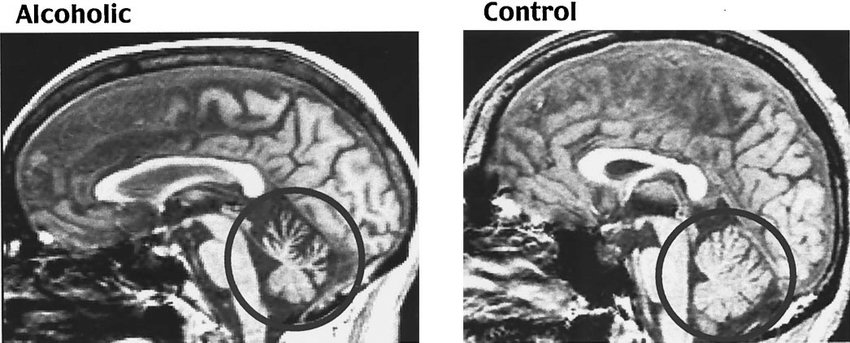
As time passed from my last drink, parts of my brain started healing and clicking together. PAWS (Post Acute Withdrawal Syndrome) documents the alcoholic brain’s gradual progress of coming online. PAWS is not limited to alcoholism. Fentanyl, meth, nicotine, video games, pornography, and all forms of addiction can lead to PAWS once the abuse has stopped.
I went through stages where new parts and memories, new layers and challenges would suddenly manifest out of the blue: pre-existing issues I was completely unaware of, I suddenly was. Between concussions, marijuana and alcohol use during middle school, then 12 years of drinking before finally ending it, my brain had plenty of damage. AA, counseling, therapy, and a daily program helped with a lot of tools and guidelines as the mush of my brain kept healing.
At one point, enough things came back online, and I had a few of what AA and Jung refer to as “spiritual experiences” (or awakenings) that I was overwhelmed with everything I was dealing with, both on the inside and how I was seeing the world with new eyes. And even after finally figuring some things out, it took a lot of time and many surprising outside influences to finally feel like I was crossing the threshold of life, finally able to grow a spine, soften my front, and free my heart.
Studying helped a lot and proved to be a method of spiritual transformation, as Scripture and other traditions promise. Neuroscience helped by giving me bits and pieces enough that I could put my finger to work on and reverse engineer. As I committed to things along the way that were working, grounded in both science, Scripture, and AA, they started becoming more of me.
Since I first dove into the deep end, trudging back out to learn how to walk among civilized folk again has been a bit of a chore, while revealing more.
Confidently, I say that it took everything, all the tools and lessons, to have what bit of sanity and serenity that are in my life now. There were moments when the weight of what I had learned and found broke me, pulling me through a dark night of the soul. As a warning, throughout my journey, these truths have continually brought everything to the surface…so it is not for the faint of heart. This will illustrate how Western science has led back to Eastern wisdom.
“The greatest discovery of my generation is that a human being can alter his life by altering his attitudes.”
— William James
Long-term Alcoholism Damage
As a beginning point, a whole-brain volume loss of 3% to 5% is common in chronic, long-term alcoholism. The damage is not uniform. It is highly targeted, while other pathways are reinforced. In the most vulnerable regions, the brain can lose 6% to 12% or more of its tissue volume. My drinking ended with a hospitalization and a BAC of .407, more than 5 times the driving limit. Many, at this level, enter comas or die.
Over the past few years, to grow and gain back parts of myself I had lost, as well as unwire broken patterns, and learn emotional sobriety, I developed an evolving toolkit that has included the following: CBT, meditations, IFS practices, Peruvian Shamanism, and Scriptural and Spiritual disciplines, ego-deflating worship and contemplation, personal study, AA, creative exploration, and somatic work. Spiritual transformation is no longer merely a topic for me: it’s a way of life that has consumed and burned through everything.
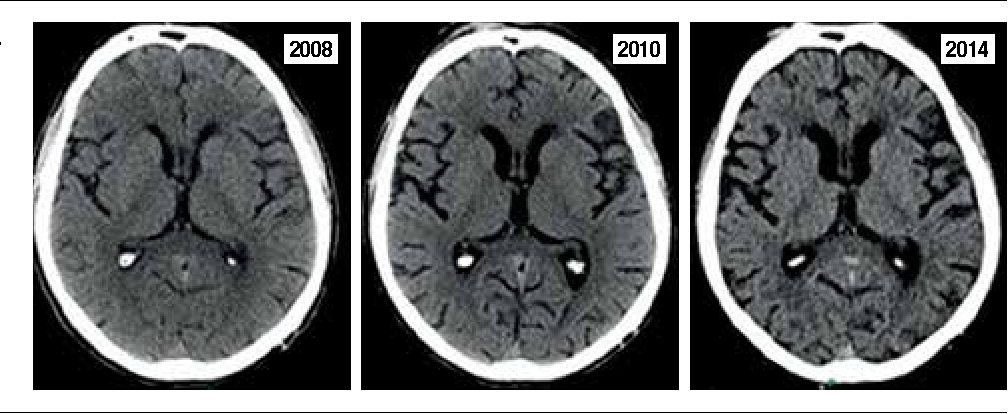
From the science angle, it is a myth that brain cells, once destroyed, don’t grow back. What follows will mostly look at the science; many of these things I have also experienced. For a nerd such as myself, it’s a really interesting topic.
Some of the neurological improvements I’ve noticed have included a former hearing problem nearly erased, a quieter, calmer mind, significantly less Imposter Syndrome, more awareness of patterns and subconscious motives, better memory and time awareness, increased creativity, more comfortable in my body, better listener, less of an inner critic and overthinker, a bit more focus and a little less distractible, less perfectionism and fixations, more empathy and awareness of others, a relationship with my body, strengths, and memory, less manic preparation, more computing power, less rigid reliance on routines and more healthy schedules while also having some of those skills now, less medication, among some other things. In short, I have been gaining a better understanding of my locus of control, especially this year.
“If Christianity is really true, then it involves the whole man, including his intellect and creativeness. Christianity is not just ‘dogmatically’ true or ‘doctrinally’ true. Rather, it is true to what is there, true in the whole area of the whole man in all of life.”
— Francis Schaeffer
The Targeted Zones: What is Damaged & Killed
Chronic alcohol exposure causes widespread brain damage, “cerebral atrophy,” through a mix of direct cell death, chronic inflammation, and nutritional depletion (like thiamine). When neurons die, they don’t just grow back when the drinking stops. It takes time, repetition, and the gradual weakening of old neural pathways while new ones are reinforced. Physical habits are hard enough to break: mental ones are where the magic lies and become a gateway to the spiritual.
My first sponsor once gave me a basic timeline of how the alcoholic’s brain recovers and told me about creativity coming back online one day. That old-timer was more than right.
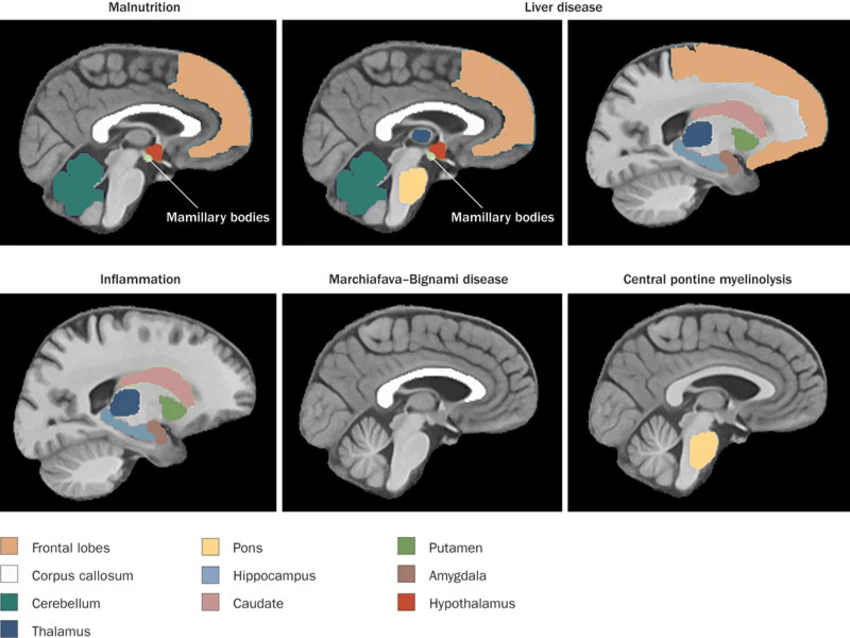
Earlier this year, he and I caught up, and he did it again: shared another timeline of where I was at and would be going through with some basic descriptions. Again, that SOB was so right it made me squirm. This year alone, the changes have again been humbling but also freeing and hopeful. Most of it came down to faith and surrender, not knowledge, effort, proving, performing, pretending, or complying. It meant getting comfortable with myself, the tools at my disposal, and the lessons God had been teaching me along the way. It has included a lot of reflecting on my life until eventually I started becoming comfortable in my current story, as it was unfolding.
“And we have ceased fighting anything or anyone—even alcohol. For by this time sanity will have returned… We will see that our new attitude toward liquor has been given us without any thought or effort on our part. It just comes! That is the miracle of it.”
— Alcoholics Anonymous, Big Book
Surrender is necessary for spiritual peace and psychological wholeness. Grasping, avoidance, and denial are forms of escape, the antithesis of surrender. Alcohol’s damage is both spiritual and surgical: recovery is not a one-and-done thing but the restoration of a whole individual.
So, eventually, the trick becomes becoming this stuff, rather than being codependent on them. There is a diversity of applications and approaches. Dr. James Holis has advised that what matters is finding what works for yourself from where you are. It’s a process, and eventually life becomes the journey: so each human needs to discover, find, and learn how to navigate life and the world from where they are.
The Prefrontal Cortex (PFC)
The prefrontal cortex (PFC) is our executive command center, where decision-making, personality, and some of our imagination are stored. It is hit early and hard, frequently showing up to a 10% reduction in volume with chronic alcoholism (see photo above).
Alcohol destroys both gray matter (the processing units) and white matter (the insulation cabling). This physical thinning directly correlates with a “decoupling” from the PFC that strips the individual of executive control, emotional regulation, and long-term planning capability. In practical terms, whether an alcoholic or not, this is in part why we can know we shouldn’t do something and still be entirely powerless to stop it (Romans 7:15).
The Amygdala & Limbic System
The Limbic System is the alert center of the brain. It can signal us before anything else. It’s composed of the thalamus, amygdala, and hippocampus. The amygdala specifically can interpret our visual input before the signal even hits our visual cortex (called the thalamo-amygdala “low road” bypass). In trauma and addiction, as well as just learned behaviors, the limbic system can run in overdrive and in reverse. Rather than the prefrontal cortex being the prime decision maker, the amygdala can act as the primary voice, hyper vigilant and fixated.
The Cerebellum
Located at the base of the brain, at the top of the neck, our cerebellum orchestrates motor control, balance, and higher-order cognitive organization. Its connection to the brainstem and vagus nerve plays a large role in regulating our internal state, emotional balance, and survival reflexes.
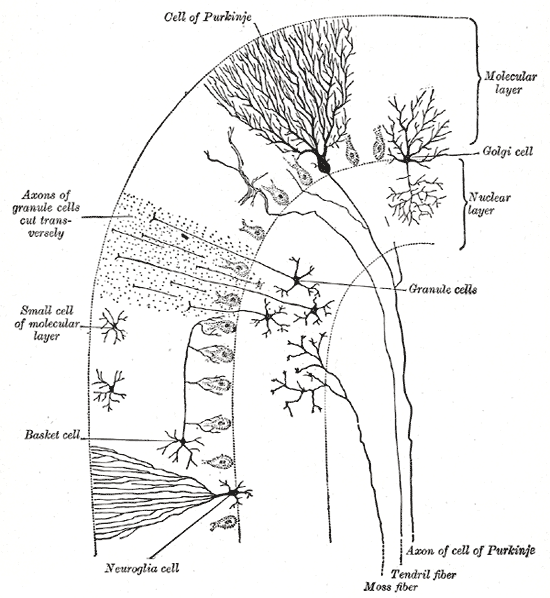
Alcohol is deeply toxic to Purkinje cells—massive output neurons in the cerebellum that serve as central processing hubs for motor coordination, balance, and learning. They integrate vast amounts of sensory data, generating the sole output of the cerebellar cortex. Post-mortem studies show that in severe alcoholism, the number of Purkinje cells in specific areas can be reduced by up to 43%.
Beyond the classic physical stumble or tremor, losing these cells causes cognitive dysmetria, a glitch in the brain’s calibration system that can cause thoughts, attention, and emotions to become uncoordinated. Alcohol degrades the brain’s ability to smoothly organize complex thoughts. Multi-step instructions become overwhelming because the brain can no longer physically sequence the information.
The Hippocampus
The hippocampus is the brain’s memory and spatial orientation hub. It doesn’t store our memories but rather acts like a database and sorting system. As a part of our brain, it can also be exercised or atrophied, with or without substances.
Heavy alcohol consumption suppresses neurogenesis in the dentate gyrus of the hippocampus and accelerates cellular death. Alcohol clouds out and dissolves these memory connections while they still exist. An alcoholic’s life necessitates a fracturing and avoidance of reality: they are often Dr. Jekylls and Mr. Hydes. Their need to control and hide, to protect and perform, bifurcates their psyches. They, in essence, become manipulative narcissists. This, too, is more than possible without alcohol.
Constant avoidance, denial, and self-justification pathologize, and the person can no longer separate themselves from their behaviors. With alcohol, the brain loses its capacity to form context-rich memories, leading to the fragmented autobiographical narrative typical of late-stage addiction. Flashes of intense shame or fear are lost in the contextual nuance of one’s present life story. The timeline of one’s identity is lost with the intensity of present concerns and fixations.
The Micro-Architecture: A Collapse of Nuance
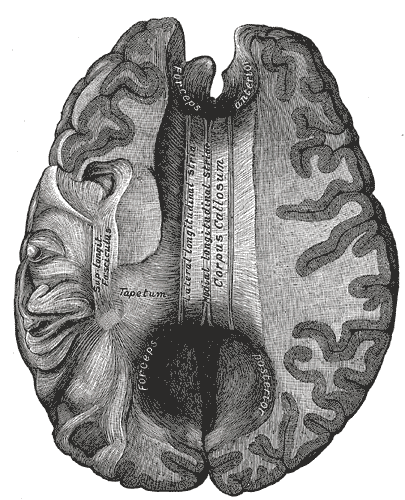
It is rarely the case with neurotoxicity that large chunks of important neurons instantly drop dead, except in extreme cases. Neuropathways are often robust and used enough to survive alcohol exposure, especially with the person reinforcing them. Instead, the toxin wreaks havoc on the microscopic architecture of the brain’s networks, while severing more sensitive regions such as the Default Mode Network (DMN) and Corpus Callosum, the interconnective bridges between hemispheres, and many of the regions explored above. Alcohol abuse also degrades the Task Positive Network (TPN) through several neurological failures.
A healthy neuron functions like a sprawling tree: a central body with thousands of dendrites (its branches) making intricate connections with other neurons. On average, a single neuron sustains roughly 7,000 of these connections, though some cells, like Purkinje cells, can support up to 200,000. With 86 to 100 billion neurons in the brain, this creates a vast, interconnected forest of 100 to 500 trillion synapses. Alcohol goes everywhere in the body, not just the brain. It acts as a systemic toxin that strips away these delicate branches and withers the twigs, effectively pruning the forest’s connectivity. It poisons the “air” in between the connections, disrupting all chemical handoffs and altering the structure of the leaves (the synaptic cleft). While the “main trunks” may survive, the brain’s overall synaptic density plummets, severely impairing its ability to process information and maintain complex networks.
The brain relies heavily on local interneurons, often smaller, inhibitory neurons that use GABA to fine-tune, modulate, and adjust the signals passing through major pathways. They act as “editors” and gatekeepers of our thoughts and reactions. Alcohol severely disrupts and damages these systems, while the alcoholic reinforces their dysfunctional patterns and maladaptive behaviors.
“When we are no longer able to change a situation,
— Viktor Frankl
we are challenged to change ourselves.”
When these microscopic twigs and modulating interneurons are lost, the brain loses its high-fidelity processing and capacity to hold space. It can no longer handle complex, grey-area computing, much less hold room for paradox and diversity of opinion. The network drops down into a blunt, low-resolution, binary state: Threat or Safety? Dopamine or Dread? Fight or Flight? Delusion or pain?
When a recovering brain begins to heal, and the gray matter expands back out, it is desperately trying to regrow those tiny “twigs” and re-establish the fine-mesh network required to think, feel, and act with nuance again. It feels like thousands of lessons learned and unlearned, and layers coming off. That regrowth is what allows for the reintroduction of wisdom, self-control, and the ability to hold two competing truths at once without panicking.

The Hollowed-Out Machine: Dopamine Downregulation
It is a misconception that alcohol destroys the dopamine pathways in the sense of physical severance, like a knife cutting a nerve. Instead, it does something more destructive: it hollows out the network through a process of aggressive downregulation.
Chronic drinking forces a massive, unnatural, and prolonged flood of dopamine straight into the Mesolimbic Pathway, heavily targeting the Nucleus Accumbens reward center. The brain, desperately seeking homeostasis, realizes this volume is toxic and unsustainable.
To protect itself from the onslaught, the brain actively reduces the number of available dopamine receptors, specifically D2 receptors. It effectively mutes the neurological inputs because the music has been blasting too loudly for too long. Any activity that produces excessive and reliable dopamine can become addictive for similar reasons.

The moment alcohol is removed, the brain is left stranded with a hollowed-out system. It has very few functioning receptors left, and the natural dopamine production is completely shot. This is why some stages of recovery can feel entirely grey, flat, and lifeless. Food, art, nature, and human connection lose their color—the physical hardware is still there, but the operational “gain” of the brain has been turned all the way down.
What happened to me was that my “lesser” addictions took off while I regained my bearings and tackled the things I could one at a time. While more distractions and dysfunctions were choked off, dopamine could be applied to other areas. At first, this felt like a runaway train in reverse. Around this year, I’ve finally felt it flipping around. Rather than complete joy and excitement, it has also been confusing, difficult, and required more vulnerability than I had before.
While dopamine is a significant factor in life and addiction, it is but one of several neurotransmitters and pathways that can go haywire in life. More of this is in the realm of our control than we often like to admit, and that is often because we simply have not become familiar with these parts of ourselves. Many relapse because of the immensity of change and how inertia and comfortable dependencies are so easy to fall back into. The adage that the opposite of addiction is connection also holds when it comes to helping a person overcome attachments, mental health obstacles, and false narratives.
“As addicts [and sinners], however, we seem to falter along the way. We never seem to outgrow the self-centeredness of the child. We never seem to find the self-sufficiency that others do. We continue to depend on the world around us and refuse to accept that we will not be given everything. We become self-obsessed; our wants and needs become demands. We reach a point where contentment and fulfillment are impossible. People, places, and things cannot possibly fill the emptiness inside of us, and we react to them with resentment, anger, and fear.
— The Triangle of Self-Obsession, NA Literature
“Resentment, anger, and fear make up the triangle of self-obsession. All of our defects of character are forms of these three reactions. Self-obsession is at the heart of our insanity.”
Pt. 2 — Reconstruction & Spiritual Surgery
If understanding the collapse is a diagnostic phase, the reconstruction is where the work of redemption, spiritually and structurally, actually takes place.
The reality of neuroplasticity means that consciousness is not a static victim of its past or addictions; it is a dynamic landscape capable of profound reconstruction.
In the future, I’ll explore the visceral, somatic experience of late-stage PAWS stitch-up, the effectiveness of pivotal mental states, sensations of paresthesia, and the mechanics of how mindfulness acts as a reset for the autonomic nervous system. Then, it’ll wrap up by looking at how all of this brings every human back to the point of mysticism.
“Every form of addiction is bad, no matter whether the narcotic be alcohol or morphine or idealism.”
— Carl Jung
Last Updated: 6/19/2026