Table of Contents Show
“If I speak in the tongues of men and of angels, but have not love, I am a noisy gong or a clanging cymbal. And if I have prophetic powers, and understand all mysteries and all knowledge, and if I have all faith, so as to remove mountains, but have not love, I am nothing. If I give away all I have, and if I deliver up my body to be burned, but have not love, I gain nothing.”
— 1 Corinthians 13:1-3
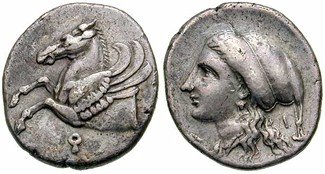
The 13th chapter of Corinthians is famous for its description of love, particularly verses 4 through the first part of 8. However, Paul’s beautiful description is not divorced from his rhetorical argument. Agape is a subject here in a larger conversation. There’s irony in that the church of Corinth, home to a famous temple to Aphrodite, the goddess of love, was not living out Jesus’ teachings.
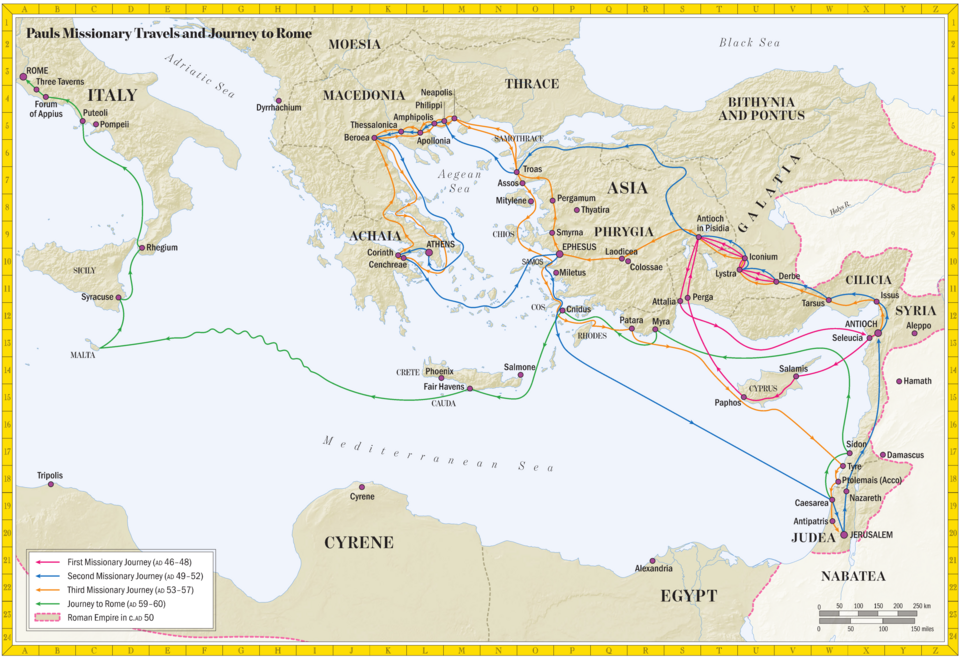
From the beginning of the letter, Paul has to deal with faux-status debates over who baptized who, sexuality run amok, divisions over spiritual gifts, and people abusing the Eucharist. The Corinthian church was a circus, despite Paul the Apostle spending almost two years with them.
At the end of Paul’s dismantling of their spiritual and carnal twisted perspectives, Paul brings it all back to the point at the end of chapter 12: “But earnestly desire the higher gifts. And I will show you a still more excellent way.”
Paul’s 2×4
So, 1 Corinthians 13:1–3 is more than a general admonition to be loving. It’s the point of his whole movement. Paul assembles a catalogue of extraordinary religious and spiritual achievements, drawing on known practices, traditions, and ideals his first-century audience would recognize. Then, he systematically strips them of their value when separated from agápē.
He takes every imaginable measure of spiritual accomplishment and declares none are worthwhile by themselves.
| Paul’s language | Theological implications |
| Tongues of men and angels | Actual multilingualism, ecstatic expression, Jewish mystical traditions, heavenly languages, mystery religions |
| Prophetic powers | Elijah & Elisha, prophetic tradition, charismatic authority, spiritual giftings |
| All mysteries and knowledge | Intellectual studies, esoteric knowledge, revealed mysteries, philosophical and religious wisdom |
| Faith to move mountains | Jesus’ own teaching on simple faith |
| Giving away everything | Radical asceticism, performative or calculated generosity, renunciation, religious devotion |
| Delivering up the body | Martyrdom, self-sacrifice, ascetic ideals, even self-immolation |
The rhetorical progression from speech, prophecy, knowledge, faith, material renunciation, to finally bodily sacrifice emulates more than simple examples. It shows that even the most devoted spiritual life can still be off base, even just be 1%, and thus miss the whole point (ie, “sin”).
When we slow down and open up each rhetorical detail, Paul’s on-ramp to his Love chapter is an existential blast off from the stupor, assumptions, justifications, and distractions that can crowd and delude our minds. Paul will strip us bare, back to Genesis 2:25, and ask if we will stand naked and unashamed in the light of God’s love.
In the end, it was always God trying to peek behind our masks while whispering to us behind them.
“Love builds up.”
— Søren Kierkegaard
Tongues of Angels
Paul had no problem holding the Light to both Gentile and Jew. Jewish traditions also explored the relationship between earthly languages, heavenly beings, and the divine order.
There is Jewish literature describing angelic languages. For example, the Testament of Job is a Hellenistic Jewish pseudepigraphal work that elaborates on the Book of Job as a dying farewell speech to his children. Written between the 1st century BC and AD, it describes Job’s daughters receiving extraordinary heavenly speech. Rabbinic traditions also preserve ideas about angelic language.

Job passes on three sashes to his daughters, and each sash endows that daughter with the ability to speak in a heavenly dialect. When his oldest daughter, Hemera, puts on her sash, this happens:
“When she had put it on, her heart was changed, her mind being exalted toward the angelic sphere, and she spoke in the angelic dialect, sending up a hymn to God regarding the altar.”
— T. Job 48:2–3
When Cassia, Job’s second daughter, receives her sash, the following occurs:
“She put on the second sash… and her mouth spoke in the language of the archangels… praising the sovereign rule of the heavens.”
— T. Job 49:2
Second Temple texts and other rabbinic traditions, like Genesis Rabbah, taught that the earth was divided into 70 nations, each governed by its own language and assigned an angelic prince, except for Israel, whose portion was Yahweh Himself.
A Talmudic teaching by Rabbi Yochanan in b. Shabbat 12b (and echoed in Sotah 33a) states:
“Whoever asks for his needs in Aramaic, the Ministering Angels do not heed him, for the Ministering Angels do not know Aramaic!”
In late Second Temple (~100 BC — 70 AD) and early rabbinic teachings, ordinary human vernacular, like Aramaic, belonged to the mundane, earthly realm. To bridge the gap to the divine, speech had to transcend everyday ignorance and match God’s language, which they thought was Hebrew, the Sacred Tongue of Eden: Leshon HaKodesh, or “the Holy Tongue” 1.
This drives Paul’s polemic across dividing lines. If first-century Jewish theology ranked languages—believing that angels operated on a higher tier and Hebrew was the language that touched the heavens—then Paul’s punchline hits twice as hard: Even if you bypass human speech and master the exclusive, high-tier dialect of the heavenly council itself, without agápē, you are just banging a bronze cymbal.
God is omnilingual, and will meet any seeker no matter their vernacular (Romans 8:26). Such is the dialect of love.
All Mysteries & Knowledge & Faith
Paul uses mystērion, mystery, throughout his writing (1 Corinthians 2:6–10; 4:1; 14:2), in part because it was something the Romans were familiar with. Even major cities were crowded with pagan mystery cults, and the emperors had their own cult that was partly integrated into Roman society and economics. Greek wisdom was only matched in esteem by Rome’s ego. And they were not alone; ancient Jews also thought they alone held the secret sauce of life and truth.
Paul effectively takes the highest conceivable level of spiritual knowledge and makes it subordinate to love.
To drive this point back home to Christians in Corinth, Paul turns to an already impressive list of traits in Jesus’ own teaching: “And if I have prophetic powers, and understand all mysteries and all knowledge, and if I have all faith, so as to remove mountains, but have not love, I am nothing.”
Even if, Paul says, one obeys Jesus’ command to have faith and becomes an uber-saint, but still somehow misses Jesus’ point about love, that person is an empty shell, a hollow sepulcher. The path that leads to life is narrow, and there are a gazillion possible ways to counterfeit it.
Giving up the Body
There is a variant in 1 Corinthians 13:3 worth noting.
- καυθήσομαι: “that I will be burned.”
- καυχήσωμαι: “that I might boast.”
Burned is in the future passive indicative while boast is in the aorist middle subjunctive. The latter (boast) is usually preferred by modern critical editions, supported by earlier manuscripts. The former (burned) is the traditional reading behind the KJV and other translations.
Meanwhile, the ESV went with a punchier version. The decision to translate “be burned” is a choice based on competing traditions. Paul’s point stands either way. We can burn our own bodies to boast about it, all in the name of faith, and that’s all we’ll get in return: ashes.
Paul isn’t dismantling actual martyrdom; he is exposing the narcissism of small differences and self-erasure. Martyrdom and bodily sacrifice cannot confer spiritual value in the absence of love. Without love, martyrdom is no different than suicide.
“Love—and the unity it attests to—is the mark of the Christian.”
— Francis Schaeffer
Diagnosing Spiritual Immaturity
Paul isn’t condemning traditions, acts, or practices. He encourages them, assuming the right mindset and motives behind them. Rather, he challenges their claim to spiritual significance when they exist without love. The practices are meant to accomplish something, and not be the ends.
As long as we seek our own spiritual profit, our own elevation, our own extraordinary religious experiences—even if we think we are seeking God—we are still looking outward. Grasping and acquiring spiritual experiences and abilities are not measures of spiritual maturity, but rather can be of the ego’s inflation. If the devil can appear like an angel, be wise around bright lights.
Love is the only measurement against heresy and also the only evidence of truth.
True love does not calculate its sacrifice, nor does it trade on its achievements; it simply loves, because it has ceased to use God or religion as currency for the ego. It breathes, dances, serves, and acts in full participation with all of reality, especially and foremost with its neighbors (1 Cor 15:28).
The practice is never the point, nor are abilities, gifts, and perfect knowledge. As soon as a practice becomes “the point,” a new tower of Babel and pillar to humanity’s egoic foundation is erected.
- A person can speak the language of heaven without embodying heaven.
- A person can exercise prophetic power without participating in the character of God.
- A person can possess extraordinary knowledge without being transformed by what they know.
- A person can demonstrate seemingly supernatural faith without embodying agápē.
- A person can surrender everything, even their life, without that surrender producing anything of eternal value.
This rounds off beautifully Paul’s preceding teachings up through 1 Corinthians 12, and provides an interesting mirror for his biography section of Philippians where he says Christ is the one thing he pursues (Philippians 3:4–11):
“though I myself have reason for confidence in the flesh also. If anyone else thinks he has reason for confidence in the flesh, I have more: circumcised on the eighth day, of the people of Israel, of the tribe of Benjamin, a Hebrew of Hebrews; as to the law, a Pharisee; as to zeal, a persecutor of the church; as to righteousness under the law, blameless. But whatever gain I had, I counted as loss for the sake of Christ. Indeed, I count everything as loss because of the surpassing worth of knowing Christ Jesus my Lord.
For his sake I have suffered the loss of all things and count them as rubbish, in order that I may gain Christ and be found in him, not having a righteousness of my own that comes from the law, but that which comes through faith in Christ, the righteousness from God that depends on faith— that I may know him and the power of his resurrection, and may share his sufferings, becoming like him in his death, that by any means possible I may attain the resurrection from the dead.”
Philippians 3 dismantles confidence in religious pedigree; 1 Corinthians 13 dismantles confidence in spiritual performance. Whether the currency is traditional certainty (Philippians) or status (Corinthians), Paul argues that any metric of superiority that leaves the ego intact—and leaves the neighbor unloved—registers as zero on the ledger. By its nature, love keeps no such accountings.
Paul uses the human body as a main metaphor. The Church has many body parts: different gifts, different functions, different manifestations. And the way of love in chapter 13 establishes the criterion by which all those manifestations are birthed, breathed, and witnessed.
“A man becomes an ideal by sacrificing himself to it.”
— Friedrich Nietzsche
Spiritual Capacity Is Not Spiritual Maturity
I appreciate how the Apostle placed himself inside his hypothetical catalogue, as if he’s willing to be the specimen. Notice how he structured the “I” (egō in the Greek) across these three verses as the achievements escalate:
- Verse 1 (Speech): “I am a noisy gong...” — our being is morphed into an irritating, unintelligible noise, ironically echoing the bronze gongs used in Corinthian Dionysian and Cybele worship.
- Verse 2 (Power/Knowledge/Faith): “I am nothing” — Despite possessing everything (“all mysteries,” “all knowledge,” “all faith”), our standing is zero.
- Verse 3 (Sacrifice): “I gain nothing” — Even at the point of total loss and physical denial, the transaction yields zero profit.
Paul sets up an inverse proportion: the higher the religious achievement climbs without love, the more completely the self collapses into noise, non-being, and futility.
Seven Thousand Ways to Listen by Mark Nepo has been a really good read, and has helped me slow down more and listen better. His observations here drive the same kind of point, but from the aspect of life:
“Meditative traditions—within Hinduism, Zen, and Christianity, to name a few—encourage a disciplined practice that helps us create still points from which to live more peacefully in the world. If lived in, any practice is eventually used up and incorporated into an authentic way of being in which practice and living are inseparable. Yet, even with the best of intentions, my efforts to practice anything—meditating, writing, reading, swimming — have often, through their own noble momentum, crowded out life. So I need to remind myself repeatedly that the goal of all practice is to help us live.”
The point of life is to live it fully. To do that means to love, and it in its fullness, not childish games (1 Cor 13:11).
And then Paul says, “For now we see in a mirror dimly, but then face to face. Now I know in part; then I shall know fully, even as I have been fully known” (13:12).
Authentic Christianity is not just a matter of external orthodoxy or superhuman spiritual gifts floating in the air. If we have the truth down to the last syllable and possess the most dazzling spiritual capacities, but do not manifest the reality of agápē, we are simply making noise. Christianity without love is a contradiction in terms.
There’s an old practice of reading verses 4 through 8 and replacing the word “love” with your name. The passage becomes a mirror for self-reflection. Over the years, our mirrors can become clouded and distorted, especially the longer we avoid them.
It turns out that the people around us are mirrors, ever reflecting back to us our own character and nature. This can turn into quite the game of managing people who reveal things about ourselves rather than examining what their presence exposes.
Love is the only way out.
“But be doers of the word, and not hearers only, deceiving yourselves. For if anyone is a hearer of the word and not a doer, he is like a man who looks intently at his natural face in a mirror. For he looks at himself and goes away and at once forgets what he was like. But the one who looks into the perfect law, the law of liberty, and perseveres, being no hearer who forgets but a doer who acts, he will be blessed in his doing.”
— James 1:22-25
- The distinction between sacred language and common took another form in Western Christianity. Latin gradually became the authoritative language of the Western Church’s liturgy, theology, and biblical scholarship, while the population of Western Europe transitioned to other Romance and Germanic vernaculars.
Jerome’s Latin Vulgate eventually became the dominant biblical text of the Western Church, and the Council of Trent (1546) formally declared the received Vulgate authentic for public use in sermons and services. Although Trent did not prohibit vernacular translations, the privileged status of the Latin text, with restrictions on unauthorized translations, reinforced ecclesiastical control over biblical interpretation.
And all of this despite the New Testament originally being written in Koine (common) Greek, also called marketplace Greek.
The parallel is worth pointing out: a language associated with sacred authority can become institutionally privileged long after it has stopped being the language of ordinary people. It is the same line as explored through the rather long-winded, three-part series, exploring the line Western societies draw between sacred and secular (read the final part here). ↩︎