Table of Contents Show
“Have you not heard of that madman who lit a lantern in the bright morning hours, ran to the market-place, and pierced the air with his cries: ‘I seek God! I seek God!’… “
— Friedrich Nietzsche
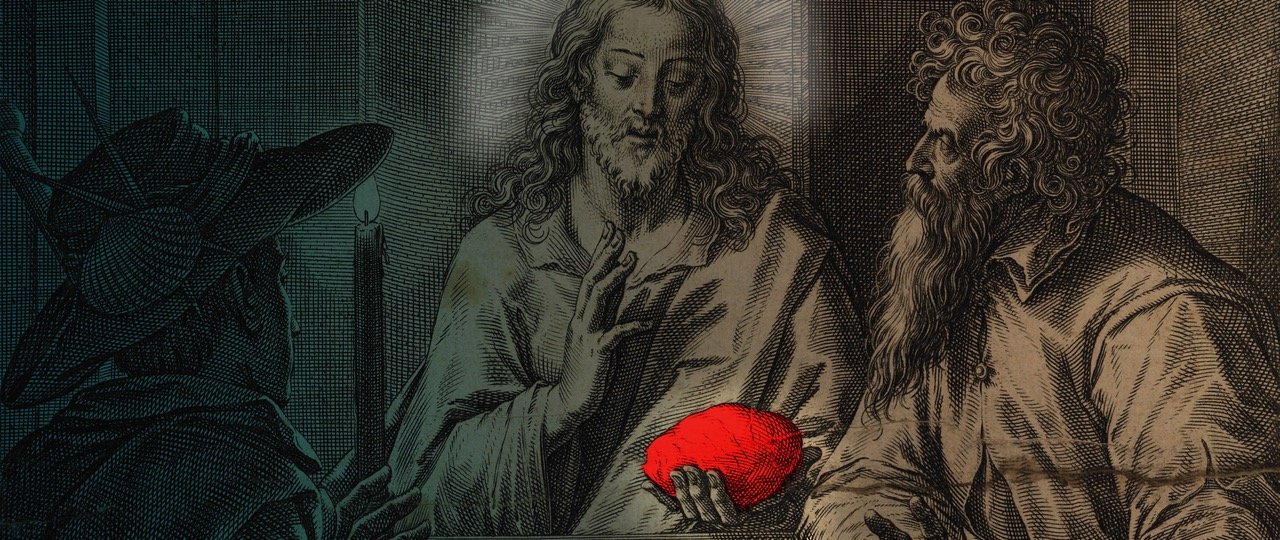
Luke 24 is a strange and disruptive chapter in the New Testament. While its story is known, its depth is not always excavated. What gets highlighted is the empty tomb, a folded linen, and the stone rolled away. The clean triumphant timeline. What can be missed is the part where the closest people to Jesus, the disciples who followed Him for three years, hear the news of the Resurrection and immediately conclude that the women are having a psychological break.
That’s where Luke 24 begins, and it’s the first step on the road to Emmaus. It’s a better story if we walk it, with another, one step at a time.
“The Babbling of Fever Dreams” (Luke 24:1-12)
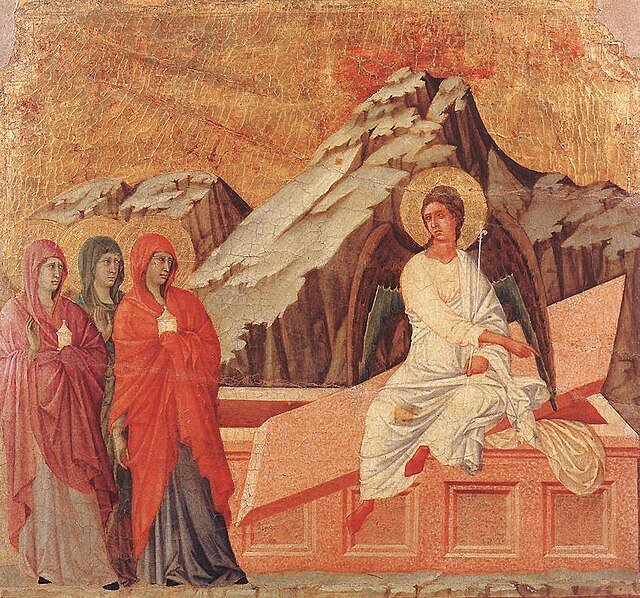
“Now it was Mary Magdalene and Joanna and Mary the mother of James and the other women with them who told these things to the apostles, but these words seemed to them an idle tale, and they did not believe them.”
— Luke 24:10-11
The Greek word translated as “idle tale” is λῆρος (lēros). The standard translation flattens it a bit. Lēros in classical Greek and medical texts meant something more clinical and visceral: the babbling of a delirious person, or a fever-dream speech1. It was the rantings of someone who has lost their grip on reality. The men hear the Resurrection announcement and diagnose the women as crazy.
In first-century Greco-Roman and Jewish legal culture, women were not considered reliable witnesses in court, largely due to perceived emotional volatility (a precursor to the “hysteria” trope). If the early church were constructing a myth with any kind of strategic intent, they would have never written women as the first witnesses. That choice would have been a liability, not an asset, if it were not also one of the Gospel’s points.
The fact that Luke includes it without apology or embarrassment isn’t just a nice detail. It is, as N.T. Wright puts it, “disruptive historicity” — the kind of thing that only makes it into the record because it actually happened. However, it implies more. The truth is that women and men can see and experience different things, and that sometimes our own sexuality, ego, and entrenched psychology get in the way.
The men assumed Christ would have appeared to them first, that they were the Divinely appointed sex of the world. This is just half the human race subjecting the other, and back to the enmity between male and female of Genesis 3:16. In modern times, the notion of the Female Race being Lords of Men has gained popularity, but it’s still the same farce.
The women who stayed at the cross while the men scattered are the ones who first go to the tomb and come with the news. Not because they’re spiritually superior in some abstract sense, but because they did the thing that every spiritual tradition recognizes as the prerequisite for transformation: they showed up at the place of death and refused to look away. It was the women who first remembered Him. They witnessed the shadow and faced the trauma. They didn’t protect their egos by running.
The men ran and hid. Men who run tend to build very confident theories about why what they ran from was never real in the first place. Not that women can’t do the same thing. In fact, in some sense, they get this easier than most men ever would admit.
This isn’t a shot, well, it is: a shot at the empire of ego, subjection of shadows, and our lack of faith in the Divine and humanity. It’s a blow to the part of all of us that constructs elaborate, systematic frameworks for what God should do, and then diagnoses reality as psychotic when God does something else. The women weren’t more emotionally fragile than the apostles. Just more available. They’d already died to the dream of a Davidic military messiah crushing Rome. The men hadn’t got it yet (c.f. Acts 1:6).
But, there’s Peter:
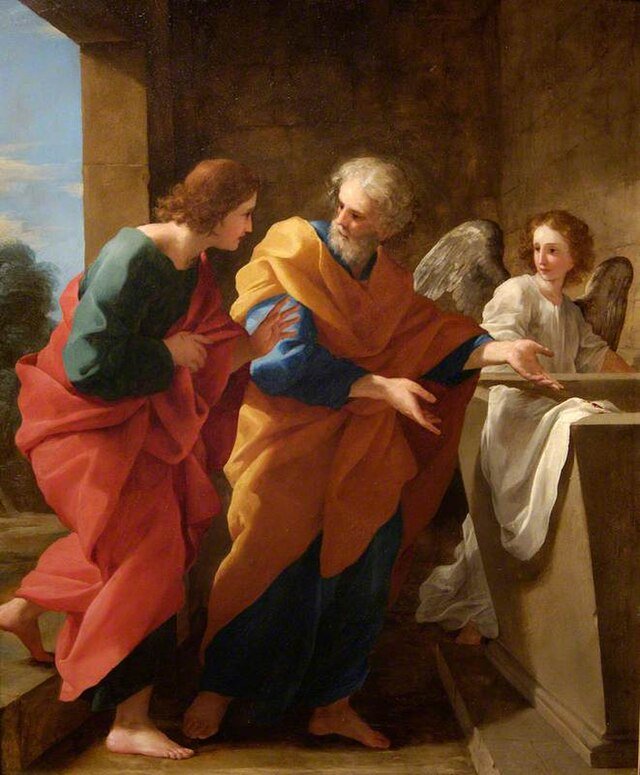
“But Peter rose and ran to the tomb; stooping and looking in, he saw the linen cloths by themselves; and he went home marveling at what had happened.”
— Luke 24:12
He goes, sees, and returns home, marveling, not trusting. Marveling. There is a pastoral tenderness to this detail that could be its own essay. Peter, who denied Jesus three times, who swung a sword at a high priest’s servant, who sank in the water because he looked away from Jesus — he is the one who runs to the tomb. He doesn’t fully believe yet, but he can’t stay put either. He is exactly in the middle, which is exactly where Luke needs him. And where most of us tend to live.
Marveling is not faith. But it’s not nothing. It can be a crack in the ego-structure through which the light begins to come. Dallas Willard was right that we change when the Kingdom becomes more real to us than the world our minds have built. But the process of that change often looks like going home, marveling, instead of going home transformed. And Luke doesn’t seem embarrassed about that, either.
“He vanished from their sight, that they might return to their hearts and there find Him. For He left us, and behold, He is here.”
— St. Augustine
Getting Out of Jerusalem (Luke 24:13-16)
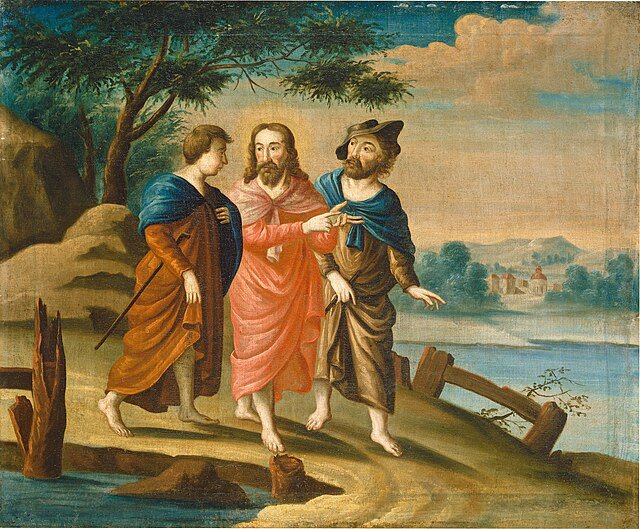
“That very day two of them were going to a village named Emmaus, about seven miles from Jerusalem, and they were talking with each other about all these things that had happened. While they were talking and discussing together, Jesus himself drew near and went with them.”
v. 13-15
Emmaus2 was seven miles from Jerusalem3, which is about a casual day trip on foot. Unlike Jerusalem, it was not a significant town, and could have been this couple’s home. The number of miles might hint at something (cough… “Genesis“). Back in verse one, Luke was also clear to note that it was the “first day of the week.”
Jerusalem, with its Temple, was the center of the dream that had just been publicly executed. These two disciples aren’t visiting relatives, but possibly a couple that lives in Emmaus, and leaving a place where everything failed. While they journeyed, they were processing, talking about what it all meant, trying to find solid ground.
Luke uses two Greek verbs in this passage to highlight the emotional nature of their journey.
The first word is ὁμιλοῦν (homiloun, v. 14), which we translate as “talking.” Homiloun is the root of our word “homiletics” and means to be in close company with someone while processing together. It’s more than chatting. This is deep, mutual, grief-saturated processing of two people who’ve been through something together and are trying to hold each other up by talking.
The second is συζητεῖν (syzētein, v. 15), translated “discussing,” but it actually carries the weight of disputing or debating. These two weren’t just serenely processing, but were debating, locked in a live theological conflict about what just happened and what it meant. The messianic paradigm had collapsed, and they were in the middle of the wreckage, fighting about which piece to hold on to.
Into that confusion and arguing, the not-knowing, Jesus himself drew near and went with them without announcing himself.
“But their eyes were kept from recognizing him.”
v. 16
The Greek word is ἐκρατοῦντο (ekratounto), from the root krateō — to seize, to hold fast, to arrest4. Their capacity for perception was held hostage not by a disguise or divine trickery, but by the paradigm structures their minds had already built for what “Messiah” looked like. Their brain wasn’t an observer, but an interpreter, and interpreters work from existing frameworks. These two had a framework for a conquering king, not a crucified one. What stood next to them on the road was a once-crucified rabbi who was apparently still walking around. That category didn’t exist yet. So their eyes couldn’t hold it.
However, Luke 24 will drop hints that the scales of their eyes begin to fall off.
As Dallas Willard reiterates, “The Kingdom of God is available here and now, but we must change if we are to see it.” The disciples didn’t need more information. They needed new eyes, and they couldn’t manufacture those themselves.
The Emmaus Key (Luke 24:17-27)
“And he said to them, ‘What is this conversation that you are holding with each other as you walk?’ And they stood still, looking sad.”
v. 17
They stop arguing, looking sad5, the moment someone genuinely asks what they were carrying (“holding”). It’s worth sitting with for a minute.
Cleopas answers with one of the more ironic lines in Scripture:
“Are you the only visitor to Jerusalem who does not know the things that have happened there in these days?”
v. 18
He asked the victim of the tragedy whether he had heard about the tragedy. The Gospels use irony to show the blind spots we can all fall into. And, yet, there is no facetiousness here — this man didn’t know who he was talking to. Jesus doesn’t answer. He simply asked: “What things?” (v. 19)
Jesus was not going to correct their theology from the top down, nor was He concerned with himself. Like the Samaritan woman at the well in John 4, He dances with the couple without them realizing it. He was going to let them say the whole thing out loud first. And they do for a full six verses, the third-longest monologue in Luke, not counting Jesus’ (v. 19-24).
Grief needs to be confessed, understood, and accepted before it can be healed and reframed. Every decent therapist, spiritual director, or sponsor knows this, as well as parents and leaders. This is basic humanity, and why Jews practiced sitting Shiva with those in mourning. We don’t hand someone a new map while they’re still insisting the old one should have worked.
“But we had hoped that he was the one to redeem Israel.”
v. 21
“We had hoped” is past tense. They were hopeless. Hope is a painful thing to bury because it doesn’t go quietly. It feels like the scaffolding of life is now drowning it. These two had reorganized their entire existence around Jesus of Nazareth as the one who would put Israel’s story back on track. And now that story seemed to have ended at a Roman cross, with linen in an empty cave, and the women sounding like lēros.
Jesus didn’t skip past it. He names the problem and leans in with the answer.
“O foolish ones, and slow of heart to believe all that the prophets have spoken!”
v. 25
He tenderly calls out their confusion and redirects. Ἀνόητοι (anoētoi) means to be “without” (a-) and “mind” (nous), understanding, or spiritual perception. He wasn’t calling them stupid. Their nous, the apparatus for seeing what God is doing, was fragmented because they never needed something they couldn’t see before. A crucified-and-risen Christ was not in anyone’s theological dictionary in the first century.
Jesus walks them from Moses through all the Prophets, showing them the Christ-pattern, not just listing proof texts or scoring debate points, but showing them the shape of the whole story: the descent before the ascent, the burial before harvest, the exile before the return, the bruised heel before the crushed crown. The Son of Man is always on the horizon, and Salvation here and now. Jesus was not correcting isolated verses. He was making them experience (gnosis). The cross was not a glitch in the program. Resurrection was the telos — the end toward which the whole story was always bending.
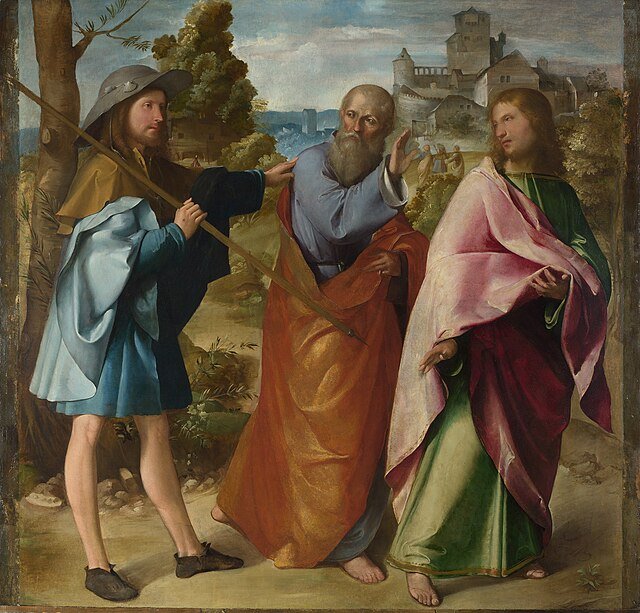
This is what Paul would later call the mystery hidden from ages and generations, now revealed (Colossians 1:26). Not invented at the last minute or a contingency plan, but a hidden in plain sight in every prophet who descended before being raised up, every psalmist crying from the pit, and every Passover lamb. The road to Emmaus was a cosmic unveiling dressed up as a conversation between two grieving humans and a stranger on a dirt road.
Before Jesus was done, the entirety of their Jewish canon had been unfolded and reconstructed before their eyes, walking from the Pentateuch and through the Red Sea with Moses, watching it all fall apart in Babylon, and remembering that the Romans were still spinning the same old scratch.
Still, they didn’t recognize Him.
“To have faith is precisely to lose one’s mind so as to win God.”
— Søren Kierkegaard
The Sacrament of the Dyad (Luke 24:28-35)
“When he was at table with them, he took the bread and blessed and broke it and gave it to them. And their eyes were opened, and they recognized him. And he vanished from their sight.”
v. 30-31
All those miles and Scriptures. All that divine hermeneutics of the entire Hebrew Bible and God-given answers, and still the veil wouldn’t tear. They were necessary, though, a part of the process. The veil will tear at the table, in the breaking of bread.
It’s Jesus who takes the bread and blesses it, not the hosts, but the guest. Other scholars, like Wright and Willard, have noted the reversal of roles at play here. Jesus’ dance began when He mysteriously wove Himself back into this couple’s inner narratives. After a seven-mile journey and a long, emotional conversation, He offers them the bread they were now ready for. But they still must receive from Him and take the bread He gives. Faith is trusting that which we surrender to. And when they do…
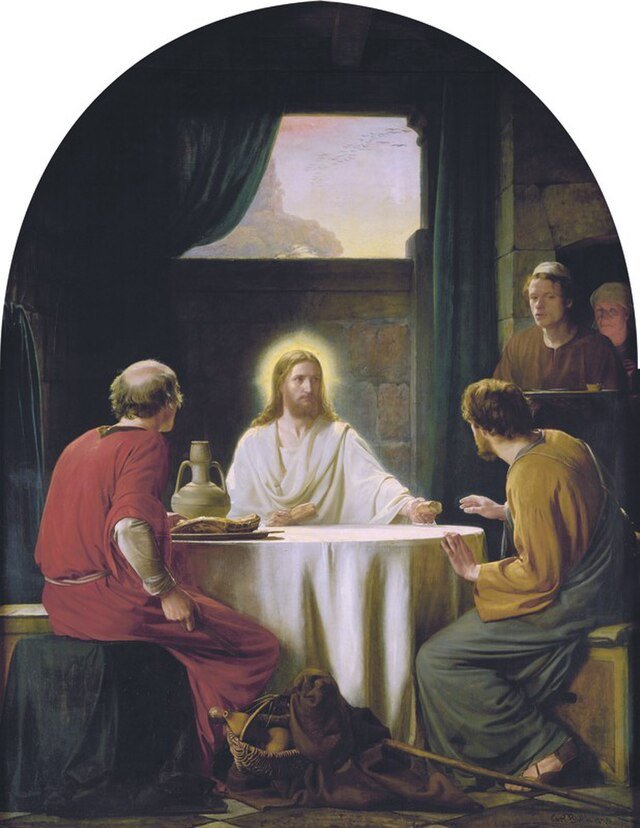
“Their eyes were opened.” The Greek word is διηνοίχθησαν (diēnoichthēsan) and means to open completely, to burst through. This is also the same verb used in the Septuagint, an ancient Greek translation of the Old Testament, in Genesis 3:7, when Adam and Eve’s eyes are opened to their nakedness and shame. The last time Luke’s Greek-literate audience would have heard this word, it was the opening that inaugurated the Fall and exile from Eden. Here, at that table, with their bread, the same verb marks the reversal. What was closed since Eden is thrown open again, and what rushes in is not shame, but recognition. Not exposure, but presence.
Ἐγνώσθη (egnōsthē) in v. 35, “he was known to them,” is the aorist passive (a perfected past tense of something done to, not by) of ginōskō: relational, participatory knowledge, the kind that happens between persons and from the inside out, not between an observer and a subject. This is the same root used in the LXX for the deep mutuality of husband and wife. What happened at this table was not cognitive recognition or intellectual ascent. It was a union, and the passive voice tells us it was given to them, not achieved by them. Their veil had fallen.
While the Scripture lecture on the road didn’t open the eyes, it was preparatory. They needed to want to take the bread this man had to offer. The table, communion with another, forced their eyes open to finally be able to see Christ in front of them.
René Girard would point to what’s happening underneath: these two disciples have been grieving the ultimate scapegoat, one crushed by the combined weight of Roman imperial machinery and religious institution working in concert, as they always do. The mimetic cycle — the violence-sacrifice-repeat engine running human civilization since Cain killed Abel — had apparently won. What the breaking of the bread reveals is that the scapegoat didn’t just survive. He subverted the whole system from the inside. The bread broken freely is the anti-scapegoat: the one who enters the machine not to fight it but to absorb it and drain it of its power. The meal isn’t a commemoration. It is the enactment of the reality that the cycle is broken, and we are all out of excuses. We are neither master and slave, nor sinner and victim.
“The resurrection of Jesus is the first time in human history that a lynch mob’s victim has come back to tell the story from the victim’s point of view, without malice and without extending the cycle of violence. It is the definitive collapse of the sacrificial mechanism.”
— René Girard
Then, Jesus vanishes.
He didn’t “leave” them: He left it to them.
When He disappears, they don’t collapse back into confusion. They say, “Did not our hearts burn within us while he talked to us on the road?” If anything, they’re confused about how they didn’t get it from the beginning. The burning was already happening, just couldn’t name it yet. The external, physical, walking-next-to-them Christ had now become internal. The teacher outside becomes the Christ within. Jesus’ presence doesn’t depart — it was resurrected in them.
This is the same transition the Apostle Paul kept circling from every angle in his letters: “Christ in you, the hope of glory” (Colossians 1:27). Not Christ described to us, nor simply Christ near us. But “in” you and me. That’s bread-eating good.
The mystery hidden before ages and generations, sewn into the grain of Moses and the prophets and the psalms, hidden in the pattern of all descent-before-ascent — that Mystery broke through hearts and foolish minds as they looked on with each other at a new Reality. They would never be able to see things the same way again.
This is also why the Resurrection isn’t primarily about what happened to Jesus. It is about what it made possible for everyone else, and why it was possible in the first place. His open tomb was the proof of concept for every sealed-off heart. Jesus was the second Adam, and the firstfruit of the Telos Adam. His dance with two confused, arguing, retreating disciples, and maybe a couple at that, on a road leading away from the Cross was the demonstration that the Kingdom won’t wait for you and me to arrive somewhere. It meets us even where we are walking away from, and the unknowns we face.
The Light shines in darkness, and it’s already in us.
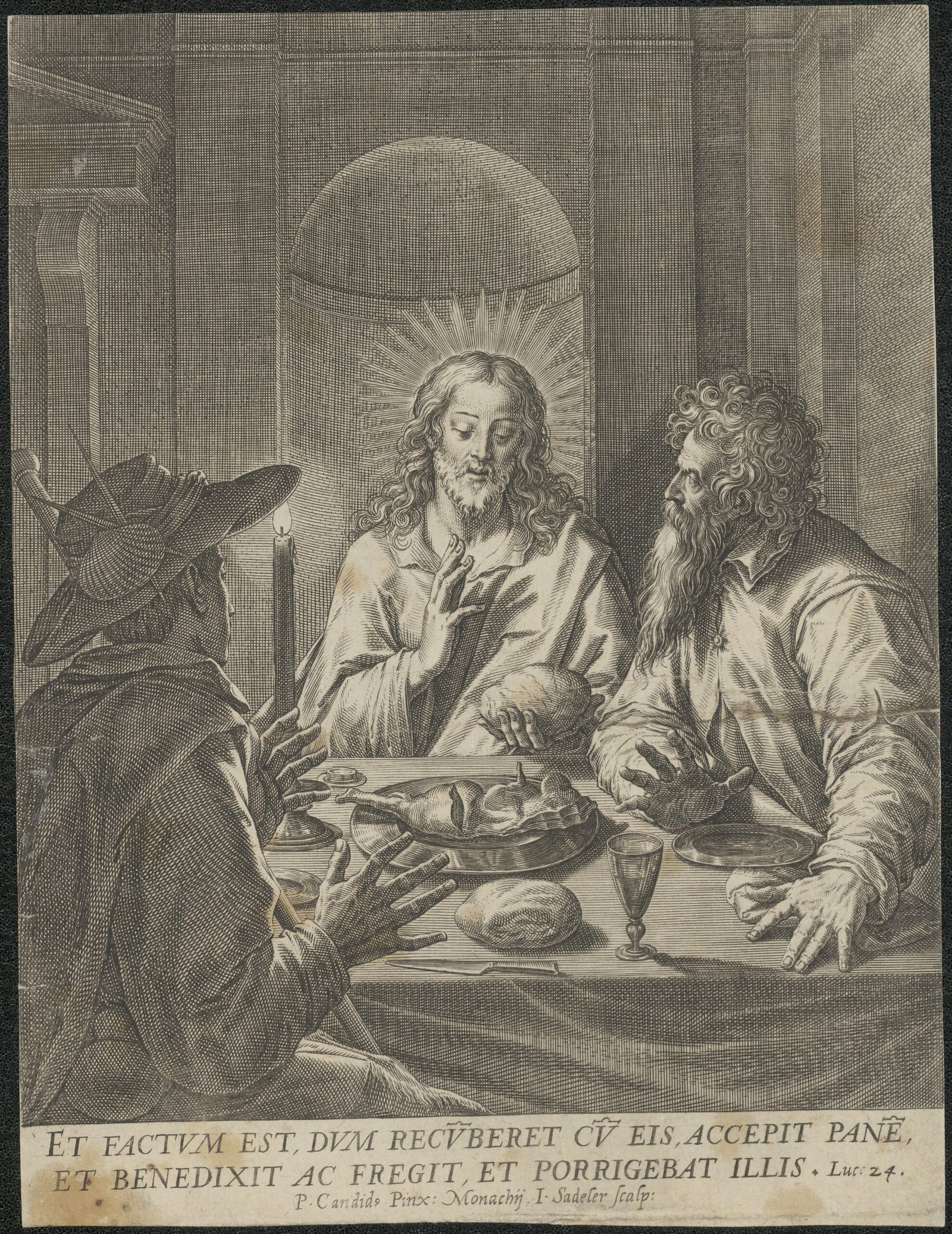
“Then They Told What Had Happened…”
They instantly got up and went back to Jerusalem, to the men still scratching their heads, where they lost hope. Because they had finally known Christ and had to share it with the others, and specifically the Eleven.
“Then they told what had happened on the road, and how he was known to them in the breaking of the bread.”
— Luke 24:35
When the two got back, the Eleven had already heard the Lord had risen and had appeared to Simon as well. The news was already moving. And the two add their testimony to the growing collective: how Jesus was known to them in the breaking of the bread.
And at that moment, Jesus appeared and said, “Peace be with you.”
Easter was the announcement of a new mode of existence: the Christ who was crucified, buried, and raised was now available not as an institution, excuse, or status game, but as a living presence inside the people awake enough to encounter Him hidden in all things, Present before time, and Revealed in the burning of hearts, breaking of bread, and opening of eyes that were held hostage by old paradigms.
Maybe you’re seven miles down the road from the place where life fell apart.
Perhaps, you’ve been debating with the people next to you about what any of it means.
May be marveling without believing.
And the Stranger has already been walking with you.
In the hopelessness, darkness, and oppression, under confusion and shame, is where the Gospel takes root, and God’s glory is made present. The Cross draws us gently to our knees that we might die, so we would be willing to wash another’s foot, even those who might betray us. The Resurrection is the freedom it brings.
“The encounter with oneself is, together with the encounter with God, the most formidable of experiences. It is the wreck of the world and the birth of a new one.”
— Carl Jung
Happy Easter! He has risen and on the journey with us.
*Footnotes (& Leftovers)
- Lēros (λῆρος) appears in the Hippocratic Corpus, a collection of Greek medical works from around the fifth century BC, to describe the incoherent speech of patients in the throes of a high fever. By using this term, Luke isn’t just saying the apostles “doubted”; he is recording a clinical dismissal of a traumatic event, as well as potentially observing the women’s states. The two didn’t see the same reality, yet. It is another recorded instance of the “rational” ego diagnosing a mystical encounter as a pathological break. ↩︎
- While the walk to Emmaus occurs on the “first day of the week,” its theological weight is from the contrast to the preceding Sabbath, which Jesus had just reframed. Under Rabbinic law, a Sabbath day’s journey was strictly limited to 2,000 cubits (about 0.6 miles). By traveling 60 stadia (7 miles) the moment the Sabbath restrictions lifted, the disciples physically departed from the old constraints. The “Eighth Day” defines holiness by its presence on the road and with strangers. ↩︎
- Emmaus, from the Hebrew word Hammat, “hot spring,” serves as a potential literary device in Luke. Geographically situated roughly seven miles (approx. 60 stadia) west of Jerusalem, the journey toward Emmaus represents a literal and symbolic “sunset” movement away from the axis mundi of the Temple into the gathering shadows of the mundane. In the ancient world, hot springs were sites of thermal relief and purgation, suggesting that the disciples were subconsciously retreating toward a site of healing from the trauma of the crucifixion. However, Luke’s irony lies in the reversal of “heat.” The relief was found not in the baths of the destination, but in the burning hearts (v. 32) ignited by the Stranger on the road. This transition from external thermal relief to internal spiritual ignition marks a quintessential Lukan shift from the old institutional center to the new, resurrected interiority. ↩︎
- Ekratounto is in the imperfect passive, suggesting a continuous, external “holding.” In psychological terms, this is a “paradigm constraint,” where our brains filter out data that does not match our established internal model. Their eyes were not “blind.” Their “nous” was in a state of cognitive arrest and disbelief. ↩︎
- The Greek, estathēsan skythrōpoi, implies a sudden, heavy halt. Skythrōpoi is a compound of skythros (gloomy) and ops (face/eye). It is a physiological melancholia. They aren’t just “sad.” They are “heavy-faced,” a state of depression where the body resists moving forward because the mind sees no future. ↩︎