Table of Contents Show
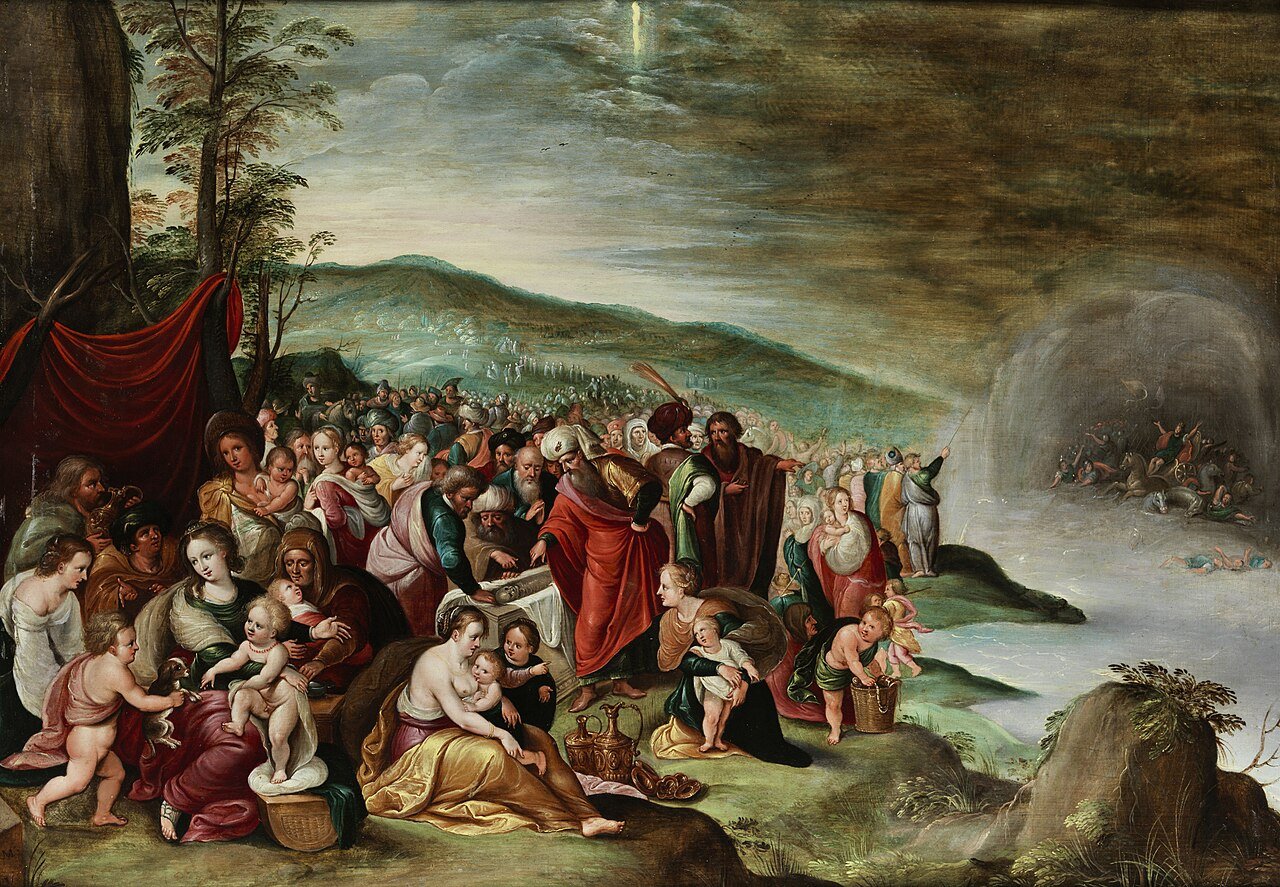
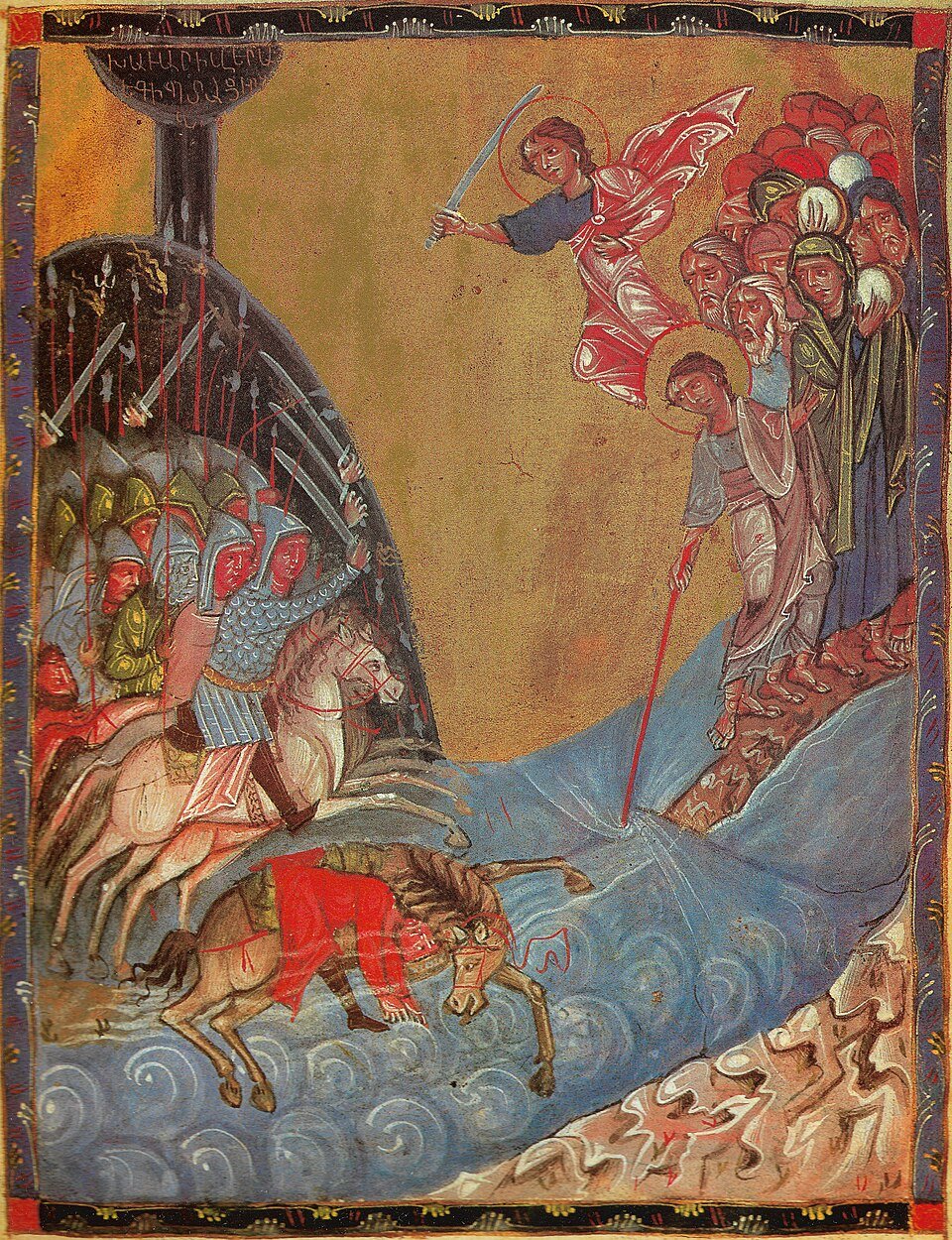
There’s a part in Exodus when Moses comes to the Red Sea; Pharaoh’s army is in pursuit, and the people panic. And God answers.
But it is not the response we can typically expect in such moments. The verses before are Moses encouraging the people to trust the Lord.
So, with a mass of scared people depending on him, stuck at the Red Sea with a tyrant’s army in pursuit, God’s words to Moses were: “Why do you cry to me? Tell the people of Israel to go forward…” (14:15).
Interestingly, Moses doesn’t actually mention a prayer. So, the question is: why did God ask Moses, “Why do you cry to me?“
If Moses’ prayer was silent, why the public criticism?
Would it not make more sense, given the Israelites’ trust issues and other Scriptural instructions, to encourage Moses and the people to cry out to the Lord? Is God’s response a rhetorical rebuke, a response to an unreported appeal, or a literary transition from assurance to action?
Not The First To Ask The Question
“Why do you cry to Me?” — There is no mention that he prayed to God concerning this, but this teaches us that Moses stood in prayer. Whereupon the Holy One, blessed be He, said to him, “It is no time now to pray at length, when Israel is placed in trouble.”
— Midrash / Rashi
It’s not surprising that ancient Jews also noticed this subtle detail. In classical Rabbinic literature, God’s response to Moses contains several teachings. Most agree he prayed a silent prayer between verses 14 and 15. I bet he did.
Rabbis taught that this was a correction of priority: worship and prayer have their place, but emergency requires action. In the Talmud (Sotah 37a), Rabbi Eliezer notes that there is “a time to pray briefly and a time to pray at length.” At the Sea, prolonged prayer was an obstacle to necessary action.
Also in Sotah 37a, there’s the Legend of Nachshon ben Amminadab. While Israel’s leader was praying and the people were waiting for a miracle, Nachshon (prince of the tribe of Judah) stepped directly into the Red Sea. He kept walking until the water reached his nose, and only then did the sea split. A prayer for divine deliverance also accompanied Nachshon’s action. Prayer and action are not mutually exclusive, and sometimes work better that way.
Divine salvation is always ready, but it requires human initiative to unlock it. At some point, we have to stop talking and move forward.
There’s also the nature of Moses’ calling. Moses has been told he had been given everything he needed and that God would be with him the whole way. Sometimes, when we pray, we can be like children trying to argue the same point from another angle, hoping to get something out of it.
Over and over again, God bumps Moses into leadership as He brings the Israelites out of Egypt 1. There is a possible, obvious rebuke here for Moses: the risk of Pharaoh changing his mind had already happened before and the Red Sea was there before Moses came back to Egypt. Moses was familiar with it as an Egyptian royal and a desert nomad. This was not some potential hazard but a necessary crossing. Why is Moses acting surprised and not doing what he was already prepared for? God’s question was a pointed inquiry into a man who showed struggles with embodying his calling.
Just like Moses, Israel had already demonstrated fear and crying; what they lacked in that moment was the courageous trust to step forward into the unknown. What was known was too comfortable. This would be a habit immediately tested after the Red Sea and for over 40 years.
“Scripture does not tell us explicitly that Moses cried out to the Lord, but the words ‘Why do you cry to Me?’ imply that he did so in his heart… ‘Now is not the time for lengthy prayer. The hour for action has arrived.'”
— Umberto Cassuto
Prayer is neither a substitute nor an excuse. It’s not a distraction or an escape. It is meant always for action. If prayer becomes something else, it risks becoming a self-reinforcing co-dependency, a sort of manufactured equilibrium to which we’ve attached our God-vending machine, so we can feel like our internal ledgers are balanced enough in our favor.
Humans prefer passive ritual over active responsibility. This is why sin can feel like such a fine line and why practically every human problem can be traced back to the fabrication of this one line.
The Blame Game Begins
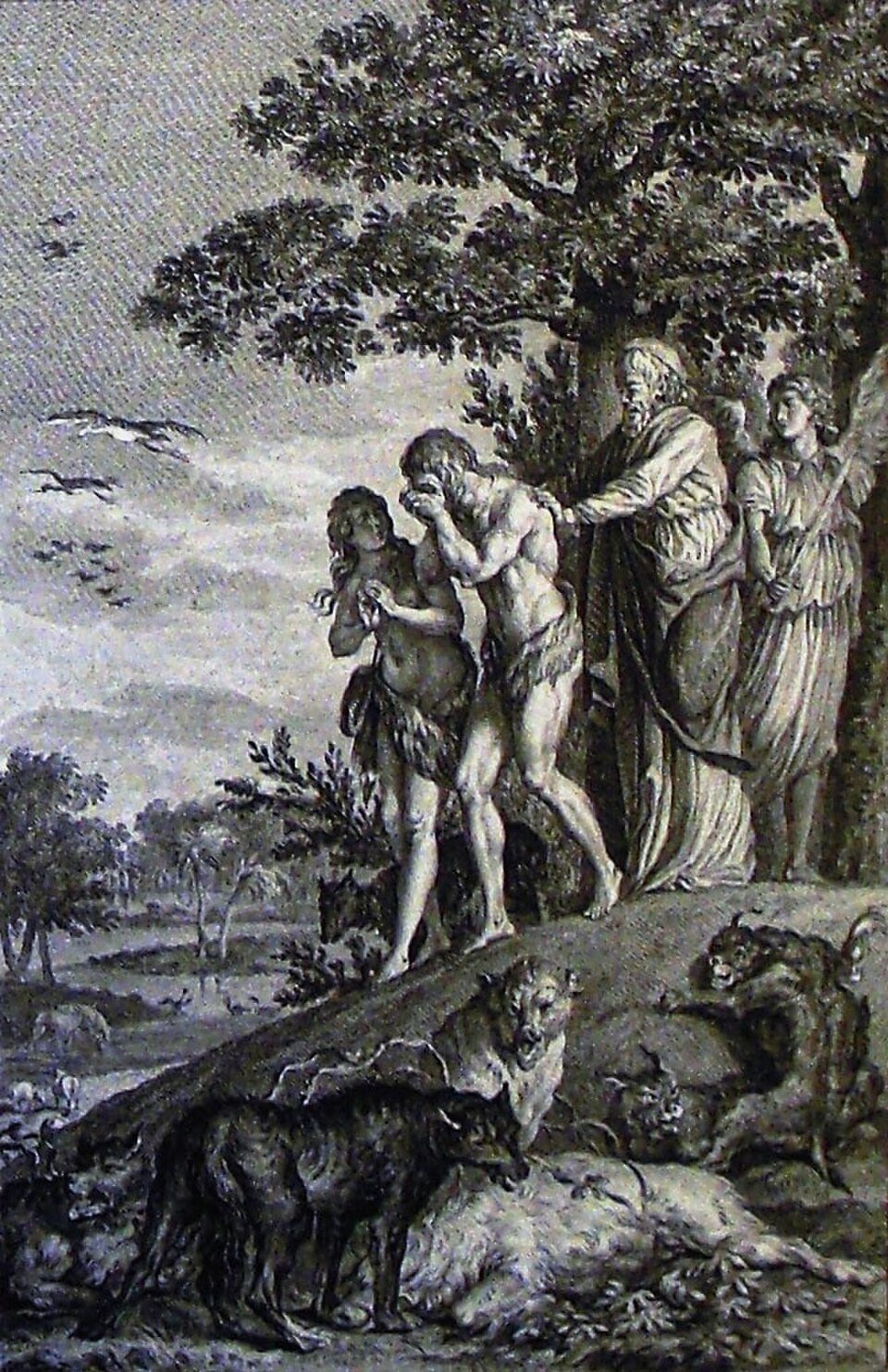
In Genesis 3, after Adam and Eve eat the fruit, they hide because they are afraid of their nakedness. When God appears, the man and woman blame each other and the snake. Notably, God also gets blamed. It’s a finger-pointing match, and one God doesn’t play.
In Genesis 3:12, Adam responds to God:
“The woman whom you gave to be with me, she gave me fruit of the tree, and I ate.”
Adam’s response deflects responsibility toward the woman and indirectly toward God. God is blamed for giving him the woman whom he says led him into sin….typical 2. Eve, in turn, points to the serpent.
This is the nature of sin and human ego: it can tempt us into thinking we’ve tricked reality and somehow forced God to agree to our terms. While humanity can scapegoat each other and continue to come up with excuses not to fully face themselves, each time we do we’re manufacturing a ledger where we blame something and justify another. We judge evil out there so we can be comfortable and ignorant of our own. In the mix of all of that, we also blame and scapegoat God.
Other places in Scripture play with this imaginary line; James 1:13–15 and 1 John 2:15-17 are two passages that, in parallel comparison, really accentuate Genesis’ themes. A modern retelling of it might follow something like:
- Exposure: Awareness of nakedness, followed by hiding.
- Threatened self-image: Being seen becomes something to avoid, and hiding must be sustained.
- Self-justified desire: We take or refuse action to protect our older self-image and feed its dependencies, resentments, and assumptions.
- Displacement of responsibility: Blame is shifted out towards one another, the serpent, and implicitly God becomes part of an unnecessary explanation.
- Fractured relationships: The encounter becomes defensive and accusatory rather than transparent. Existence assumes a power struggle, and the human perspective becomes inverted.
This pattern has been spotted in modern times. For example, Everything is F*cked, a sequel to The Subtle Art of How Not To Give A F*ck by Mark Manson, does a great job describing how we humans try to live in and maintain an equilibrium. Another book, Leadership & Self-Deception, talks about how we put ourselves in boxes when we do such things. These two books, and other secular books, play with the same ledger line.
It’s this line that Aleksandr Solzhenitsyn described in The Gulag Archipelago:
“The line separating good and evil passes not through states, nor between classes, nor between political parties either—but right through every human heart—and through all human hearts. This line shifts. Inside us, it oscillates with the years. And even within hearts overwhelmed by evil, one small bridgehead of good is retained.”
The biblical narrative mapped this out thousands of years ago. The apostle Paul slapped it down with one pregnant line: “the wages of sin is death.” We pick from the Tree of Knowledge of Good and Evil whenever we place ourselves as judge of others and assume God’s role (Genesis 50:19). A line divides our consciousness in order for us to maintain this back-and-forth ledger, to keep up its equilibrium. We try to do more good than bad, and hope that’s enough to earn entry into the afterlife…which itself is an upside-down notion. Salvation is for this life.
“We seldom consciously know that we are scapegoating or projecting. As Jesus said, people literally ‘do not know what they are doing’ (Luke 23:34). In fact, the effectiveness of this mechanism depends on not seeing it! It’s automatic, ingrained, and unconscious.”
— Richard Rohr
The Line Had Babies
In modern debates, there are too many sides to pick from. When the line dividing good and evil is projected outward onto political, social, religious, or gendered tribes rather than drawn down the center of our own hearts, culture becomes an unending game of collective scapegoating.
The America of 2026 was not created in a vacuum. It’s been riding a wave of history that far predates any one of us alive today. The moments and cultural shifts from the 60s and 70s are not disconnected from the fracturing of the Roman Catholic church during the Renaissance, Reformation, and Enlightenment. And we’re still living with them while a slurry of issues are spinning on plates. In the last few generations, things have been moving faster and faster. While the world has gotten bigger, it’s gotten smaller.
America is divided along every possible psychological and tribal line: distracted and dysfunctional. What we have been handed, we’ve made our own, and will pass off to the next generations to repeat. In a time such as this, we have no more excuses or room to kick cans down the road. There’s a mounting sea of them already that we need to work through.
A New Testament Alternative
Romans 12:1-2 is Paul’s big application after 11 chapters of arguments. He encourages us, in light of God’s mercy, to offer ourselves as living sacrifices. As a result of that, he describes how our minds are transformed (not removed), and then he says this one line: “that by testing you may discern what is the will of God.“
The NASB translates it as “so that you may prove [or discover] what the will of God is.” I like this better because it captures the Present Active Infinitive of δοκιμάζω, the Greek word for “test” 3. The present infinitive presents the action imperfectively, viewing it as a progressing activity rather than presenting it as a completed whole. It means knowing God’s will is an ongoing thing, and not book knowledge. One has to experience it, and thus live in it, to be able to actually test it. It’s much easier to look back and see how God was working, and we ought to. Looking forward, however, is a matter of faith and love.
Paul connects embodied self-offering, transformation through the renewal of the mind, discernment of God’s will, and sober self-assessment. Discernment comes with a renewed mind, not simple possession of a rulebook. Romans moves immediately into the image of a body whose members belong to one another (Romans 12:3–8), before Paul sums up the whole law in Romans 13: “let no one owe any debt except that of love” (Romans 13:8).
In 1 Corinthians 13, to a different group of Christians, Paul makes the same kind of point, but this time after dismantling misconstrued ideas around tongues and spiritual gifts that people were dividing over…typical.
He says, in contrast to all of that, there is “a far better way” (1 Corinthians 12:31). And in the entire next chapter, Paul frames agape love as the final telos of this entire Christian venture: “Love keeps no record of wrongs” (1 Corinthians 13:5, cf. 1 Timothy 1:5).
While human ego constantly balances a ledger of blame, self-justification, and scapegoating on one side and status, wealth, and pleasure on the other, divine love obliterates the ledger. Love is not the absence of responsibility but the clarity of it. Love’s refusal to keep an account of wrongs does not mean denying harm, abandoning accountability, or protecting someone from the consequences of their actions. Love is the telos of responsibility.
Paul throughout the New Testament hovers around this image of a human body maturing in love (Ephesians 4:12-16). What prevents us from doing so are the same childish excuses used in Genesis 3, where we point fingers, protect our vulnerability, rely on excuses, and blame God for the fires around us while we hold the gas can, “of whom I am the foremost” (1 Timothy 1:15).
The call of the Gospel is to cross the line.
“The Red Sea crossing is a baptism, a passage through the watery abyss. God does not split the sea to allow Israel to remain comfortable in their old life; He drives them through the waters to destroy the old order and create a new people.”
— Peter Leithart
Footnotes (& Leftovers)
- The easy part was getting Israel out of Egypt. The hard part was getting Egypt out of them, something that had mixed results later in the biblical narrative. ↩︎
- By implicating both Eve and God, Adam attempts to construct a sacrificial triangle where God becomes the ultimate author of the failure. The Gospel’s rejection of this mechanism is complete: rather than allowing humanity to scapegoat Him to preserve their self-image, God in Christ absorbs the scapegoating mechanism entirely. ↩︎
- The Greek verb dokimazō in Romans 12:2 was historically used in metallurgy for testing coins or metals to prove their purity and genuine worth. Dokimazō carries a positive orientation: it is a test to demonstrate soundness. Applied to ethics, Paul implies that God’s will is not an abstract secret to be deciphered before action, but a reality that is proven, refined, and validated in the process of stepping into it. ↩︎