Table of Contents Show
“The conflict between Christ and the beast is not a conflict between religion and politics, but between two total claims to universal sovereignty.”
— Richard Bauckham
The “Whore of Babylon” and the Native American Oceti Sakowin (Sioux) White Buffalo prophecy share something in common. To see it, we’ll start with the birth of the Roman Empire. The transition from Republic to Empire wasn’t just won with swords; it was won through manipulation and back-room deals, and Cleopatra was an active player.
“Monsters” & Marketing
Rome was a republic until Julius Caesar. He did not become Dictator through military might alone but through alliances, deals, and plenty of propaganda. One of such alliances was with Egypt. While down there, he met someone just as cunning and ambitious as he: Cleopatra.
Before she met Caesar, Cleopatra was already a hardened dynastic player: the youngest surviving daughter of Ptolemy XII, she had been pulled into a brutal succession struggle, co-ruled with her brother Ptolemy XIII, and soon driven into exile amid court intrigue and violence. She was not an uncontested heir, but a Hellenistic queen fighting to secure and preserve her own crown.
The alliance between Julius Caesar and Cleopatra wasn’t a mere romantic tryst. The high-stakes geopolitical merger produced a ticking time bomb: Ptolemy XV Caesar, better known as Caesarion.
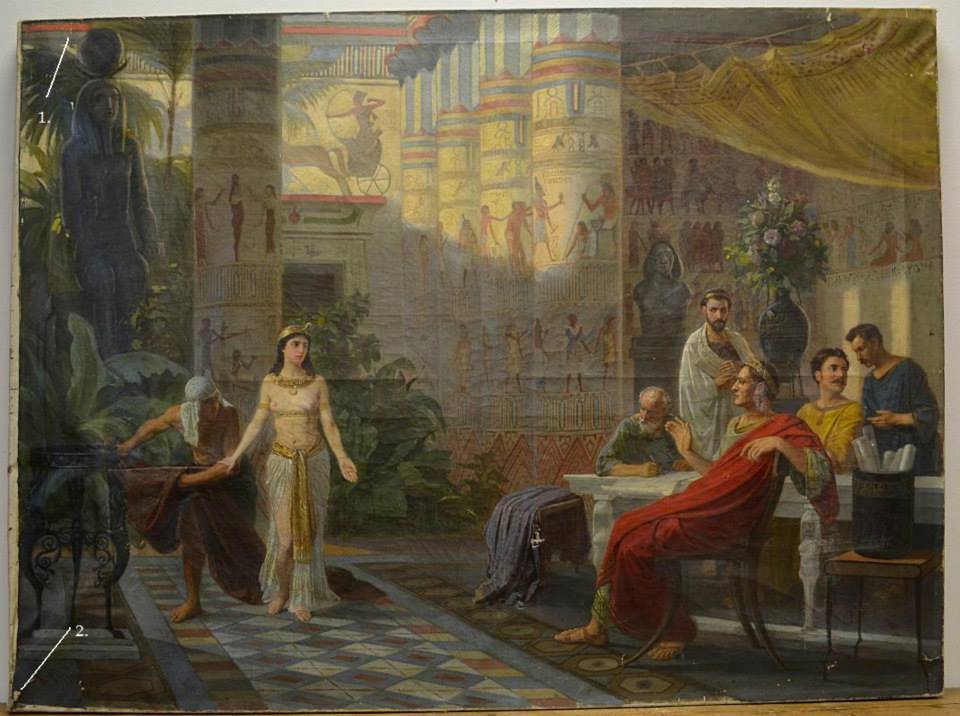
Like others, Cleopatra did not hesitate to remove rivals, including the later execution of her sister Arsinoe IV. After Julius Caesar restored Cleopatra VII to power, she formally co-ruled with her much younger brother Ptolemy XIV. He died a few years later (44 BC), and most ancient sources, while not definitive, strongly suspect Cleopatra had him poisoned so she could elevate her son, Caesarion, as co-ruler instead.
When Cleopatra arrived in Rome in 46 BC, she stayed in Caesar’s private villa, asserting her status as the Queen of Egypt and the mother of his only son. For the Roman Senate, Caesarion was a threat to the Republic. Rome was built on the idea that no one man—and certainly no foreign-born heir—could hold absolute power. By siring a son with a Ptolemaic queen, Caesar was potentially founding a dynasty that could bridge the Mediterranean and render the Roman Senate obsolete.
The Power Vacuum & Second Act
After Caesar was assassinated in 44 BC, and her son was nowhere in Caesar’s will, Cleopatra fled back to Egypt and pivoted. To protect Caesarion’s claim (and her own throne), she needed a Roman sword. Enter Mark Antony.
Cleopatra joined forces with Antony and then funded him. Egypt was the wealthiest state in the Mediterranean, the breadbasket of the Roman world. In exchange for her wealth and grain, she demanded Roman territory. At the Donations of Alexandria in 34 BC, Antony—acting with the authority of a Roman Triumvir—officially declared Caesarion to be the “King of Kings” and the legitimate heir of Julius Caesar.
This was a nightmare for Octavian, the other co-ruler of Rome (Triumvirate). Octavian was running opposing political and propaganda campaigns, calling himself the “son of god” (divi filius).
The Battle of The Beasts
Octavian, Caesar’s adopted nephew, knew he had to win the narrative. He (illegally) seized Antony’s will from the Temple of Vesta and read it to the Senate, showing that Antony intended to be buried in Alexandria next to Cleopatra.
Octavian’s marketing was brilliant: He framed the conflict not as a civil war between Romans, but as a crusade to save the Roman soul from an Eastern “Whore” who had enslaved a Roman general through sorcery and luxury. He turned Cleopatra into a monstrum—a warning that if she won, the Roman “Head” would be replaced by an Egyptian “Tail.”
This deliberate creation of a “monster” to consolidate power is the same ego trap the White Buffalo prophecy deconstructs. For Octavian, it was simply the solution to a major branding problem. Keep this pairing of masculine military power and feminine “enchantment” in mind—it is the corrupted archetype that the White Buffalo narrative also inverts.
In the mid-30s BC, the Roman world was split between Octavian (the future Augustus) and Mark Antony. Octavian had a major branding problem: he was fighting a civil war against a fellow Roman hero, which the public hated. To solve this, he pivoted the narrative. He didn’t frame Antony as a rival; he framed him as a victim of a foreign, “oriental” enchantment.
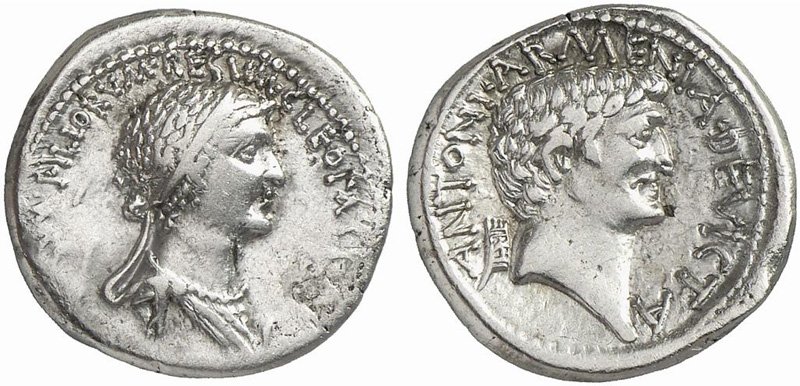
Cleopatra was a clear scapegoat. She birthed a biological son of Julius Caesar, Caesarion, who was a threat to Octavian’s claim as Caesar’s legitimate heir. By the time Antony joined forces with her in Egypt, Octavian’s propaganda machine was in overdrive. He painted a picture of a Roman general who had traded his toga for a royal Egyptian robe, trading his Roman identity for a fake front of Egyptian identity1.
The Battle of Actium & the Horace Quote
When Octavian crushed their forces at the Battle of Actium in 31 BC, it was marketed as a victory for Western civilization over “monstrous” chaos. Horace, an influential poet, framed the victory in a way that avoided the messy truth of a Roman-on-Roman bloodbath. Rome used gifts and bribes to influence and control the outcomes of artistic creations; they censored. Horace had to frame the narrative in a pro-Octavian light. He used the phrase “fatale monstrum” (a mortal monstrosity) to describe Cleopatra. In Ode 1.37, about Cleopatra’s death, Horace wrote;
“Caesar [Octavian] pressed her, as she fled from Italy, urging her on with his oars, like a hawk after tender doves, or a swift hunter after a hare in the snowy fields of Thessaly, so that he might put in chains that fatal monster.“
By calling her a “fatal monster,” Horace justified the erasure of the Ptolemaic line and execution of Caesarion. The Roman people could believe the Pax Romana had been restored. We only have the Romans’ worlds to work with, and a few outside perspectives.
While the Romans were busy dehumanizing one another, non-Roman sources, such as the Sibylline Oracles, were recording a different story. In this Greek text, Cleopatra was a δέσποινα (Mistress/Queen) competing with the “arrogance of Rome.”
The Jews echoed imagery of Deuteronomy 28:44 (and maybe Genesis 3:15) to describe the geopolitical nightmare of the Cleopatra-Antony alliance: “He shall be the head, and thou shalt be the tail.“
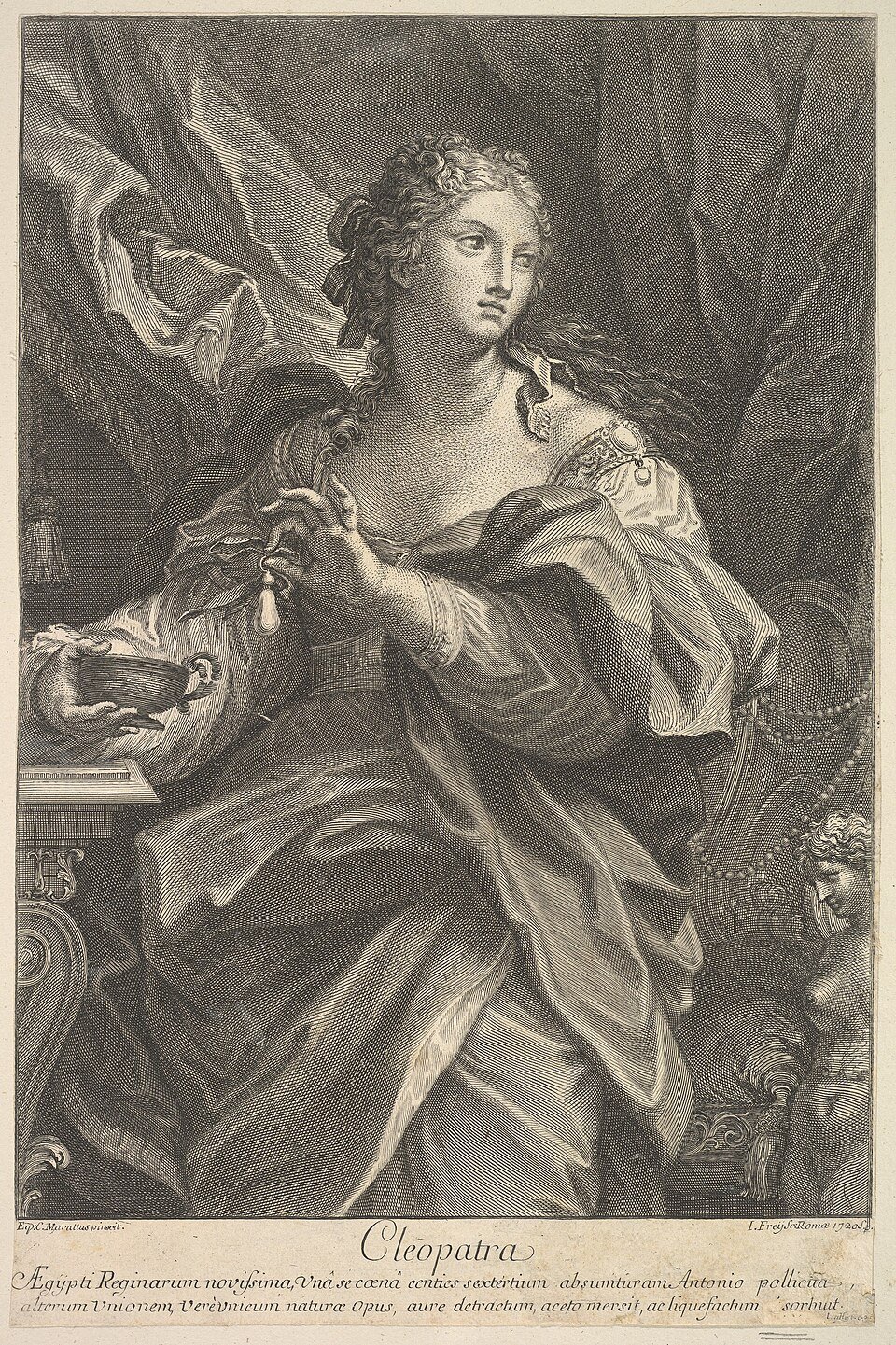
Josephus records Cleopatra arriving in Judea with a massive “retinue” of luxury, flaunting gold and purple. Writing in Antiquities of the Jews and The Jewish War, he records about her:
“She was a woman who enjoyed her lusts… she was an insatiable woman, and a slave to her lusts.”
And about Antony:
“Antony was so entirely overcome by this woman… that he seemed not so much to be his own master as to be enslaved to her.”
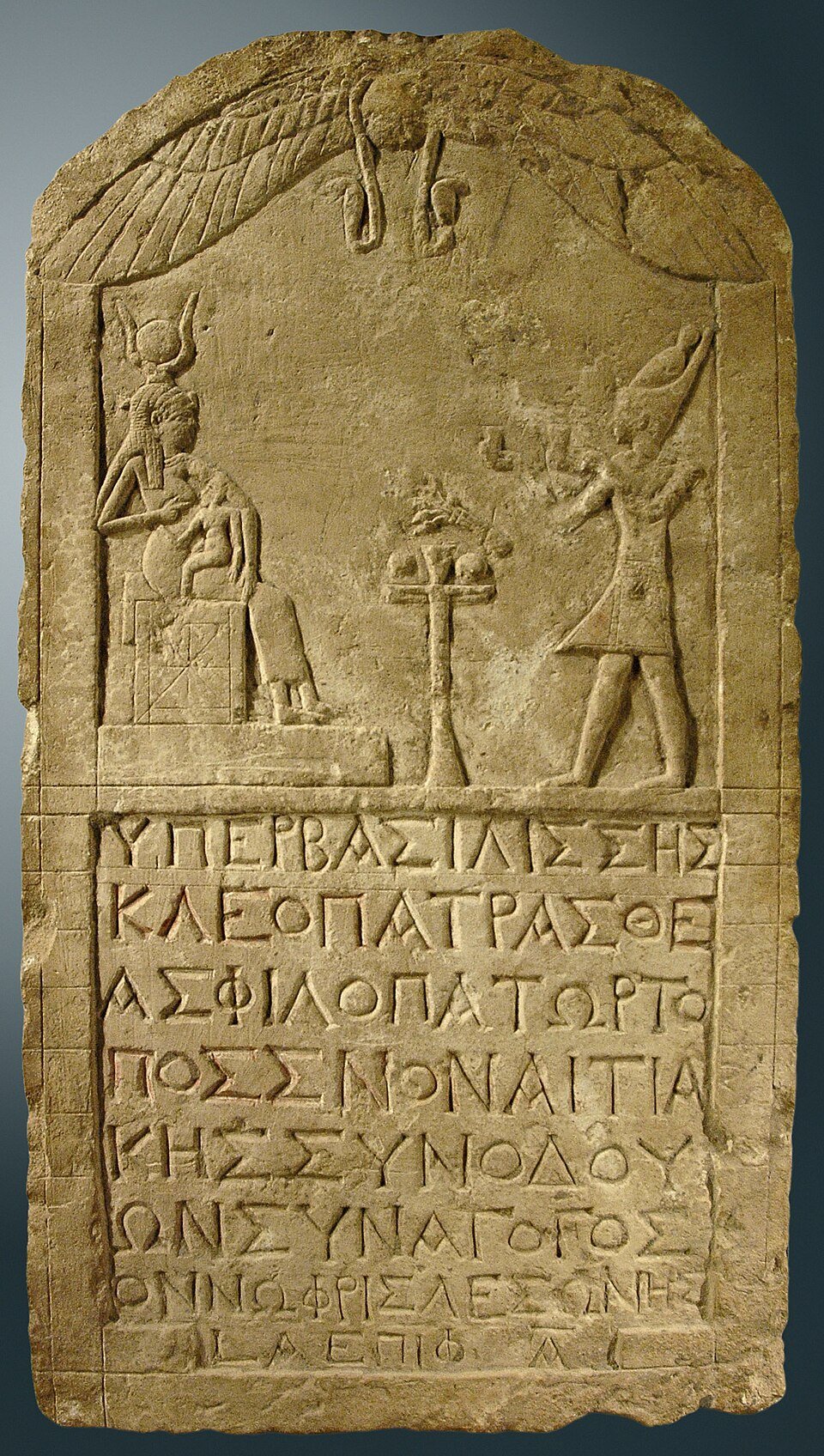
Mark Antony and Cleopatra integrated their imperial cults; Antony recast himself as the Neos Dionysos (“New Dionysus”) in the Ptolemaic divine architecture. This religious and political title was the masculine counterpart to Cleopatra’s Nea Isis (“New Isis”). In the East, the pair was worshipped as the Theoi Adelphoi (“Sibling Gods”).
The boundary between Roman magistrate and Eastern god had vanished. Antony sat on a silver throne, dressed as Dionysus, while Cleopatra sat as Isis, together redistributing Roman provinces. To the Greeks and Egyptians, this was the expected behavior of a divine sovereign; to Octavian and the Roman Senate, it was “monstrous” proof that a Roman general had been consumed by an oriental demon. Octavian (later renaming himself as Augustus) also capitalized on and leveraged his Imperial Cult to seize control of the Roman Senate.
Set all of that side-by-side with Revelation.
The Whore of Babylon & Cleopatra
“Revelation is written by someone convinced that Rome, the “great city,” is destined for destruction, and its imagery reflects the author’s experience of imperial oppression.”
— Bart Ehrman
Revelation wasn’t about some far-off future; John was unveiling the delusions of empire his readers lived in. Just as Horace framed Cleopatra as a “fatal monster” because she threatened the Roman hierarchy, John used the imagery of the Whore of Babylon—decked out in the same royal purple and gold as a Ptolemaic queen2—to describe the seductive, commercial witchcraft of Rome. “Witchcraft” or “sorcery” (pharmakeia) mentioned in Revelation 18 was linked to the global delusion and preoccupation, which numbs and justifies itself.
- The Beast from the Sea: This is Rome—the power of kings (Augustus, Nero, Domitian) who demanded to be called “Lord and God.” It’s characteristic of masculine ego.
- The Whore riding the Beast: This is the spiritual and economic “enchantment” Romans drank from: Rome’s idolatries. The masculine beast might like to think he’s in control, but another is pulling the strings. This is characteristic of feminine ego.
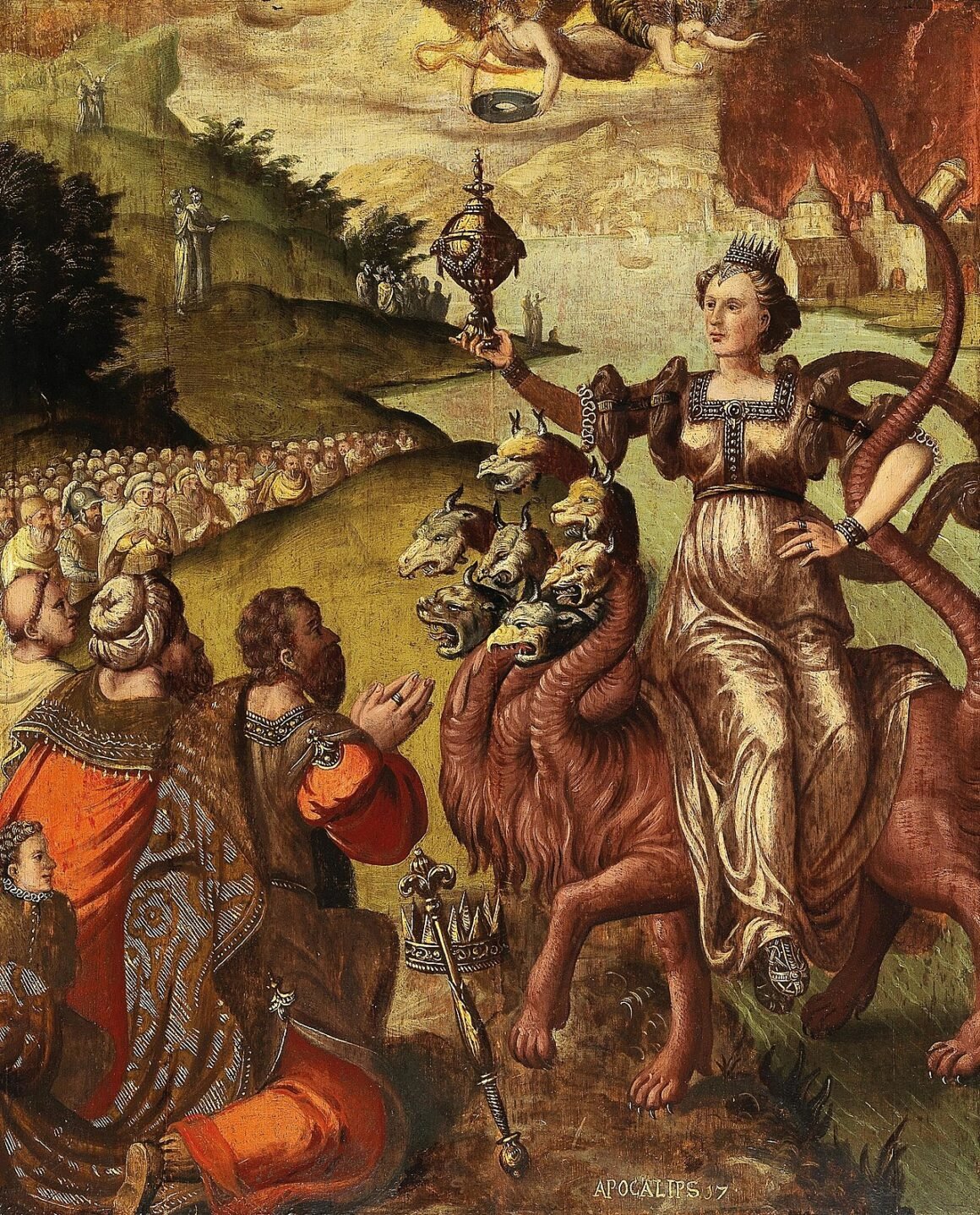
While the Romanized public in the West saw her that way, in the New Testament world, people didn’t see her as a “monster” (τέρας)3. They saw a δέσποινα—a queen riding the Beast. The monsters were the wannabe kings. Cleopatra redirected and swayed Rome. John used the same imagery: Rome the monster, and “Whore” the economic and religious illusion that enforced the mark of the Beast in the agora4.
The Imperial Cult, in places like Ephesus and Pergamum, built temples to the “Savior of the World.” In contrast, when Jesus calls Himself the “Son of Man,” He’s pulling from Daniel 7 as a challenge to Divi Filius, as well as the Beast and Whore, of Rome.
The word, Gospel (“Good News”) wasn’t invented by the Church, just like the word “church.”5 Gospel was a term for imperial announcements, victories, and ascensions. Revelation took the “fatal monster” imagery used against Rome’s enemies to turn it back on the Empire. The true “monster” wasn’t a queen in Egypt or a king in Rome; it was the egoic, power-hungry system that demanded pistis (loyalty/trust) to a human on a throne.
“Babylon is a symbolic designation for Rome as the center of economic power and imperial violence.”
— Craig R. Koester
The White Buffalo Prophecy
On this side of recovery, Native American traditions and teachings have had a surprising influence. The White Buffalo prophecy comes to my mind often.
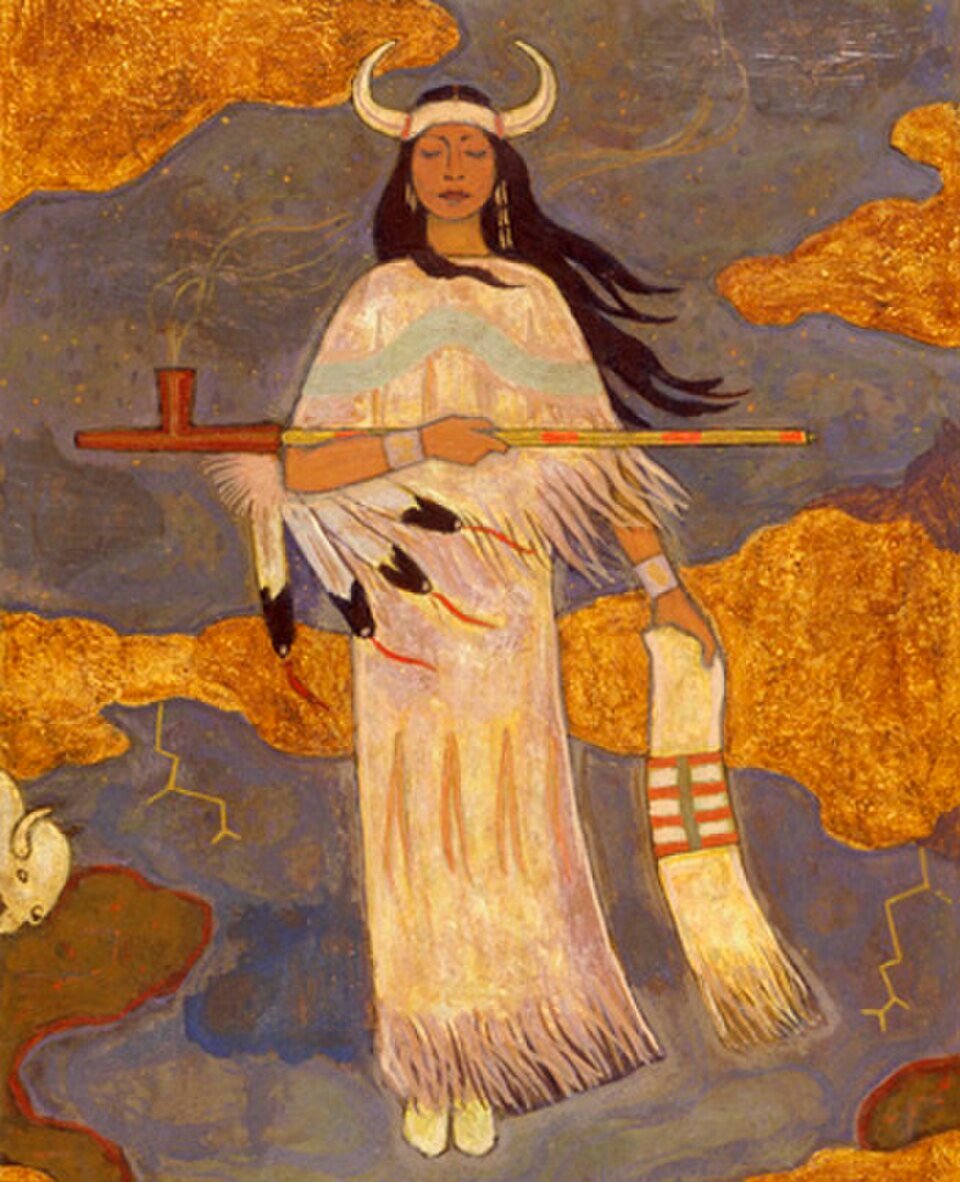
It functions as an indigenous counter-narrative to the Roman complex. For the Lakota and other Plains tribes, the birth of a white buffalo is a sacred omen that a “great change or purification is at hand.”
Chief Arvol Looking Horse, the 19th keeper of the Sacred Pipe, described these births as “both a blessing and a warning.” Unlike the “fatal monster,” the White Buffalo is a call for humanity to “reconnect with spiritual and ecological responsibilities” and “live in harmony with nature.” It reflects a cyclical perspective rather than an assumed linear trajectory of empire.
According to Lakota tradition, a White Buffalo Calf Woman (Ptesáŋwi) appeared during a time of famine to two hunters. One hunter looked at her with lust and was instantly reduced to a pile of bones—a rejection of the consuming ego. The second hunter approached her with reverence.
She brought the Lakota the Sacred Pipe (čhaŋnúŋpa) and the seven sacred rites, teaching the people how to communicate with the Creator and live in right relationship with the earth. When her teaching was done, she walked away and rolled on the earth four times. With each roll, she changed color (black, red, yellow), and on the final roll, she transformed into a White Buffalo calf before disappearing over the hill. She promised that when times were hardest, she would return as a white buffalo calf to restore harmony.
“I shall see you again in another world. I am leaving you now, but I shall look back upon your people in every age, and at the end I shall return.”
An Archetypal Mirror: Parasite vs. Symbiosis
What emerges when read through an archetypal lens is the same male/female dynamic, but operating at different ends of the spiritual spectrum.
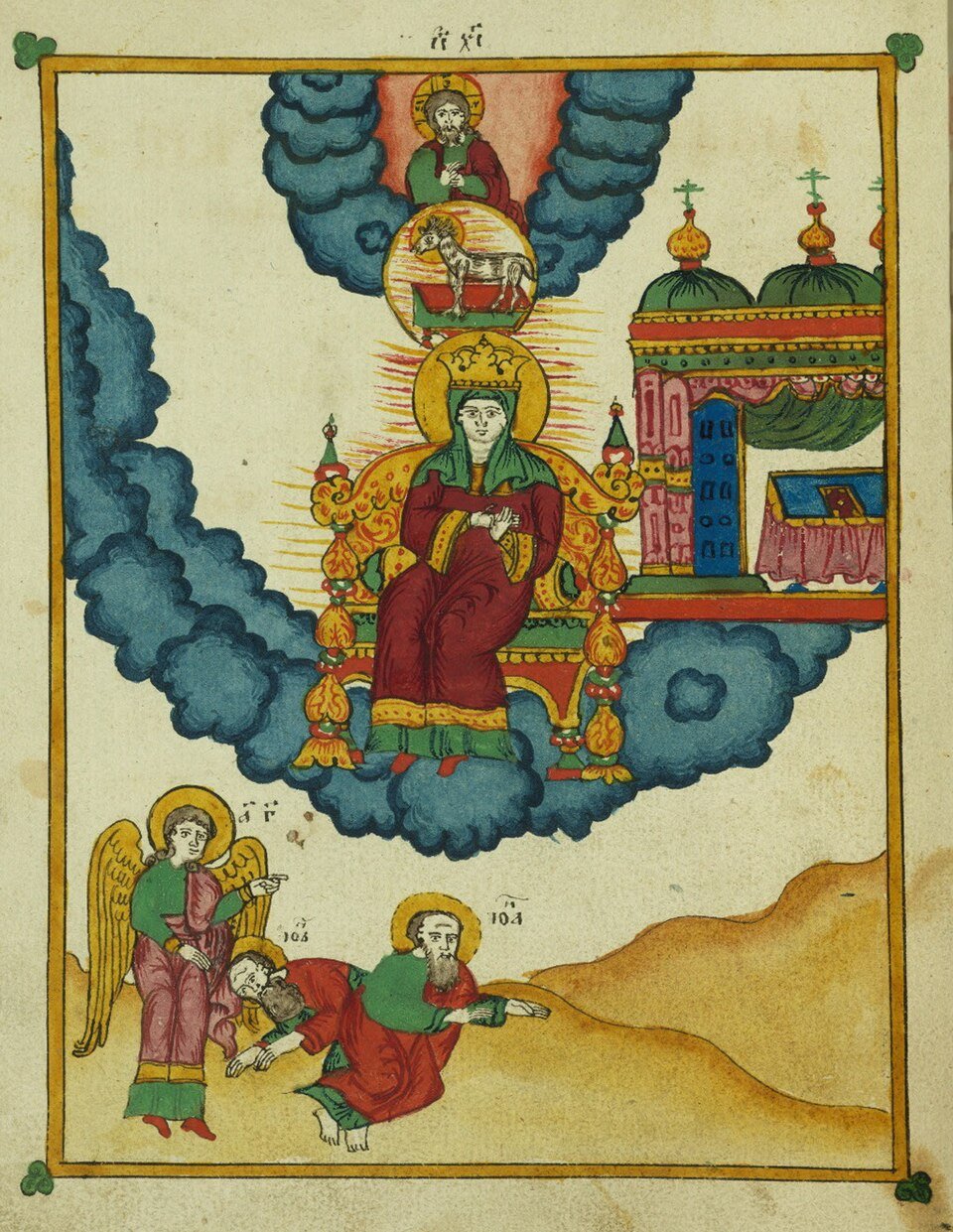
The Corrupted Archetype (Revelation): Rome’s system, as diagnosed by John, is a parasitic loop of the corrupted masculine and feminine:
- The Beast (the Corrupted Masculine): This is the Power and Ego of Empire. It is a masculine archetype: aggressive, dominating, consuming, and territorial. It rules through violence and demands submission.
- The Whore (the Corrupted Feminine): Riding the Beast is the economic and spiritual seduction of the empire. She is a feminine archetype, both enjoying and influencing the work of the Beast: manipulative, materialistic, and intoxicating. She represents the dark magics and the facade of comfort, image, and control.
- The Pair: The two are one, not the same. Each uses and depends on the other to maintain an equilibrium6, an eschatology of self-destruction. In Revelation, the Beast eventually turns on the Whore, hates her, strips her naked, and burns her (Revelation 17:16). The egoic system eats itself.
The White Buffalo illustrates integration and communion, acting as a teleological symbol that pulls a group of nations towards hope. This hope and trust in their Creator fuels the fire of their prayers and sweat lodges. She can be understood as representing:
- The Woman (The Divine Feminine): Ptesáŋwi represents wisdom, mediation, and spiritual alignment (cf. Proverbs 3:13-18). She brings the Pipe, which is a tool for community and illumination, not a weapon for conquest or a drug for escape. Her teachings are about restoring harmony and balance.
- The Buffalo (The Divine Masculine): When she transforms into the White Buffalo, she bridges the feminine with a masculine image: a “beast of the earth.” To the Plains tribes, the buffalo was a source of physical life, providing food, shelter, and tools. It is the masculine archetype of provision and strength, freely given.
- The Pair: Unlike the Beast and Whore, the Woman and Buffalo are not two separate entities fighting for dominance; they are the same entity transformed. The spiritual (the Woman) and the created (the Buffalo) are integrated in union with Creation.
The “monster” of the Roman Imperial cult needed power and fear to maintain its power. Rome required monsters and whores to be chained and sacrificed to keep its Pax Romana. The White Buffalo prophecy requires destroying the consuming ego (the first hunter).
Revelation did not skip the integrated archetype: The Bride and the Lamb are victors over the Whore and the Beast (Revelation 19:7; 21:9). Revelation closes with their union in marriage and the merging of Heaven and Earth. It’s the Gospel, again, as a solution for sin, despair, ego, and empire. Its end is love, and its purpose is wholeness and harmony, ultimately culminating in the unification of Heaven on Earth and the healing of all nations.
“The ‘gospel’ of Caesar was the good news that the world had a new lord, a savior, whose birth and career had brought peace and justice to the world… When Paul or John spoke of the ‘gospel’ of Jesus, they were using a term that was already heavy with imperial significance, and they were deliberately setting up a rival claim.”
— N.T. Wright
If by the end of this, you’re picking up what I’ve been laying down, and you also feel like the world is shaking, growing smaller while it gets bigger, remember that Jesus taught that when times felt like Noah’s, we should look at the fruit and keep our heads up because redemption is near. The second coming of the Son of Man breaks forth in the crevices, not in the spectacle.
The “Son of Man” is a collective organism, not just a singular figure, and we are it.
*Finalized: 10/9/2026
Footnotes & Leftovers:
- The same tactic would also fail Neopoleon. ↩︎
- Cleopatra VII presided over the Ptolemaic ruler cult, the operational template for the Roman Imperial Cult. The Alexandrian Agora functioned as the Mediterranean’s central trade hub, physically and legally integrating commerce with state religion. By identifying as Nea Isis, Cleopatra established divine status as the foundation of her legal authority. This system was managed by a state priesthood that administered royal temples in every major city. Participation in high-level trade or bureaucracy required acknowledging the Queen’s divinity; the priesthood effectively functioned as the state’s economic administrators, controlling the flow of grain and wealth. ↩︎
- In the Greco-Roman world, a monstrum was often seen as a “divine sign” or “warning” (from monere, to warn). ↩︎
- The Roman agora was a central forum that functioned as the commercial, political, and civil heart of ancient cities. Rome had a sprawling, decentralized network of them. The centralization of state power and trade was a global phenomenon, mirrored in the great temple-markets of Mesoamerica (such as Tlatelolco) and the hubs of Han dynasty China. Under Rome, the agora was dominated by the Imperial Cult. Altars dedicated to the goddess Roma and the reigning Caesar anchored the public square. Routine economic participation, including entering the market or securing membership in essential trade guilds (collegia), routinely required a token sacrifice, such as a pinch of incense to the emperor’s genius. For early Christians, refusing to participate in civic idolatry could result in economic exile. Stripped of the ability to buy, sell, or sustain livelihoods, many took on the marks and sacrifice of persecution. ↩︎
- The word church in the New Testament is ekklesia, and it was a common word in the Greco-Roman world, used for a kind of assembly, from town halls and courts to guilds and religious ceremonies. The Gospel took an everyday civic word and subverted it. Wherever two or more people gathered and accepted the same name of Jesus, there the Kingdom of God could not only breathe but expand. The New Testament is God’s virus of blessing taking over human ego and hopelessness. ↩︎
- For context on “equilibrium,” see Mark Manson’s Everything is F*cked, and his Newton’s Laws of Emotion. These two books helped a lot on this side of recovery. ↩︎