It’s finally “finished.” Free paper is below.
What started as reflections quickly evolved into a commentary and thesis: equal parts exegesis, personal reckoning, and an attempt to read Scripture honestly alongside modernity.
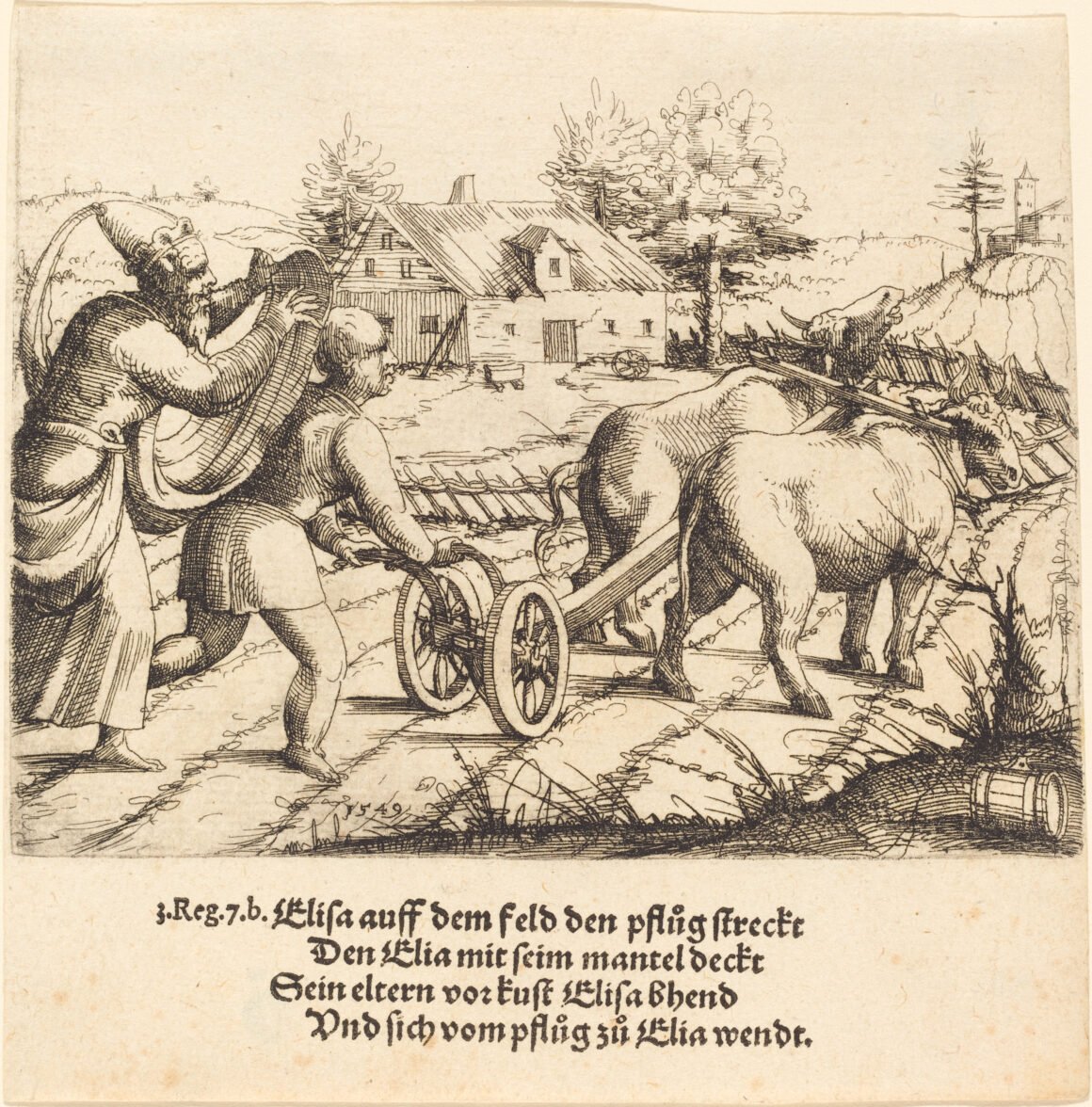
It moves from Elijah’s sudden appearance in 1Kings 16 to Elisha’s funeral in 2 Kings 13, keeping the magnifying glass on the two main characters, as God teaches every character involved lessons along the way.
It’d help to have a Bible open (digital or physical) while reading it. It doesn’t cover every verse… just not possible despite my burning desire.
Discussion questions are included in the one for Patrons and will be coming soon for The Existential Hangover subscribers.
Leave any feedback below!
Rather than explaining it, the Abstract and Introduction are after the download below:
A PsychoSpiritual Exegesis of Elijah & Elisha
This theological commentary covers the prophetic transition from Elijah to Elisha, integrating an exegetical reading with psychological and social analysis. It reveals Scripture as a lens through which enduring human patterns, such as exhaustion, identity, calling, community, and transformation, can be examined across time and regardless of culture.
The thesis moves through exegesis and grounded psychology, showing the prophetic narrative anticipates conditions now easily measurable in modern society. In the United States, over 60% of adults report experiencing burnout or chronic stress, while rates of anxiety and depression have risen significantly over the past decade. Nihilism about the future among every demographic is growing.
Individuals are also increasingly embedded in systems that reward status, productivity, and performance. Economists and sociologists describe it as an “attention economy” and a metric-driven identity formation. Social trust has declined, with fewer than one-third of Americans reporting high trust in institutions or even their neighbors. Loneliness has reached levels that the U.S. Surgeon General has classified as a public health concern.
Within this context, the manuscript reads Elijah’s collapse not as an isolated crisis, but as a recognizable human pattern: the breaking point of unsustainable intensity and identity built on output. Elisha’s emergence, by contrast, represents a shift away from spectacle and toward proximity, continuity, and distributed presence—a biblical pattern that challenges modern assumptions about success, influence, and control.
Readers are encouraged to engage the biblical text alongside while reading, as its effectiveness depends on interaction and familiarity with the Text. The piece uses the English Standard Version (ESV) while referencing original languages.
A Tale of Kings
Leading up to the book of Kings, Israel had abandoned its former government to “be like the other nations,” a motivation that stood in stark contrast with Israel’s calling to be a kingdom of priests, set apart from the rest of the nations (Deuteronomy 17:14–20; 1 Samuel 8:10–18). Through Samuel, God was clear that the people were abandoning Him and that the unintended consequences of such a misplaced trust would be devastating for the Israelites.
At first, they followed their desires and selected a king who outwardly matched their inner desires: tall, handsome, strong, typical. Before long, Saul fell apart, and David was set apart as a proper version of kinghood. While David had issues, the contrast between Saul and David provides illuminating lessons on leadership and character, as well as his failures, which highlight the promised risks of a monarchy.
In Scripture, the people’s choice quickly exposed the inherent risk of human empires and placing spiritual trust in human authority. David’s son, Solomon, while having vast wisdom and success, also fell to vast temptations and converted the moving house of the Lord into a stationary mini-wonder of the world. In 1 Kings 12:4, the people explicitly complain about the “hard service” and the “heavy yoke” that Solomon imposed on them. Rehoboam’s response (1 Kings 12:14) didn’t just fulfill Samuel’s warning; it doubled down on it. He confirmed that the monarchy had already become the “taker” Samuel predicted, rather than the “giver” or “priest” God intended.
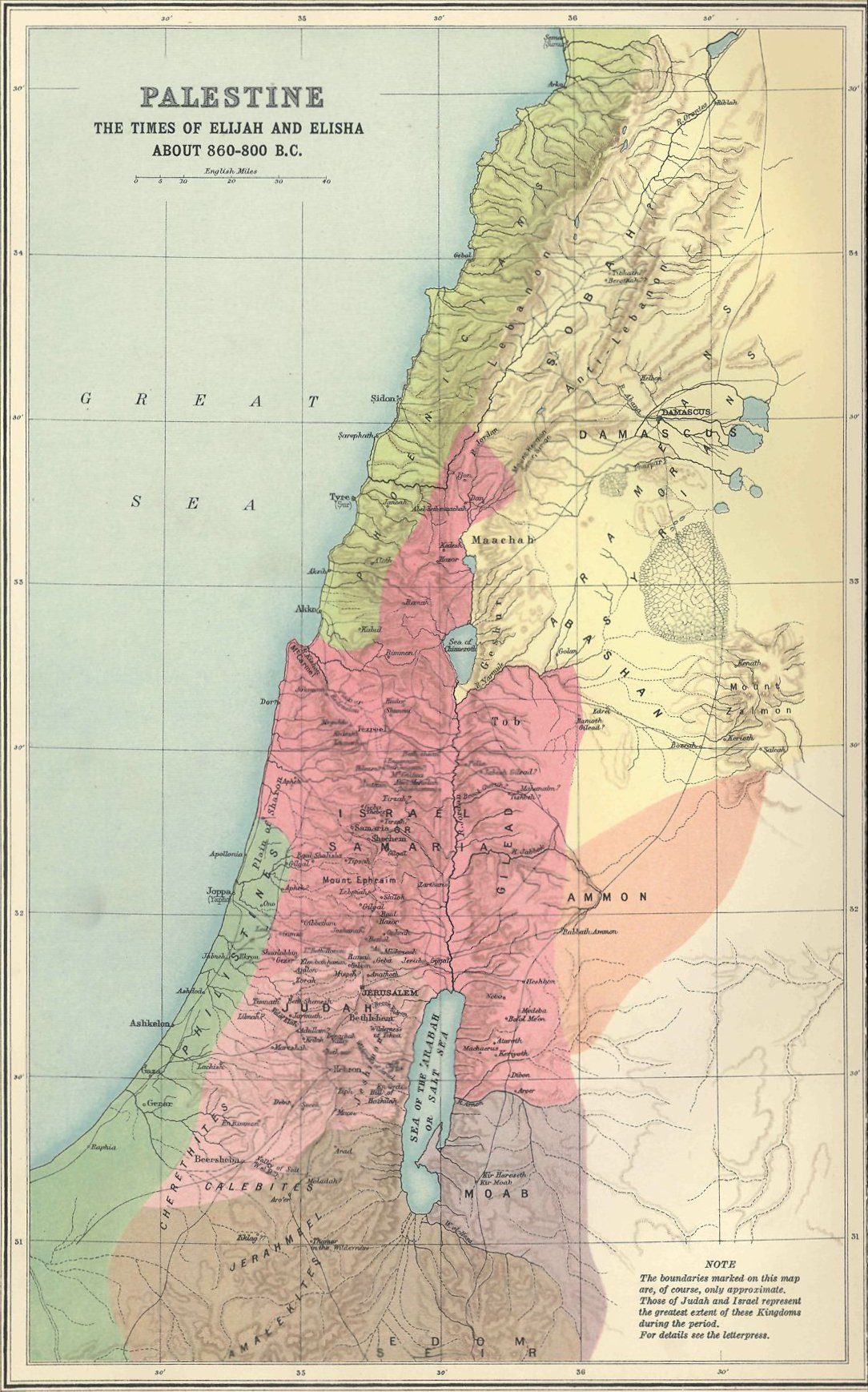
A few short years after the supposed glory of Solomon, the Davidic empire of Israel split in half: Israel to the North and Judah to the South. Some faith in the Divine had been lost in favor of a king, along with political control and turmoil. The spirituality of the surrounding nations and their temptations bleed in while Israel’s distinctiveness was lost to its desire to compete with the Joneses.
Before long, foreign oppressors are ruling back over Judah, armies sweep in, people are deported, and God continues to keep trying to teach His people the lessons staring them in their face. For the next several decades, the split nation spiraled into a cycle of coups and cults, eventually landing in the hands of the most notorious duo in the Bible: Ahab and Jezebel.
When we arrive at the middle of 1 Kings, Ahab is concisely but dramatically introduced at the end of chapter 16. His ambitious overhaul of Israelite identity into another is outlined, and Scripture is uniquely clear about his character: “He did evil in the sight of the Lord, more than all who were before him. And as if it had been a light thing for him to walk in the sins” of basically everyone before him (1 Kings 16:30-31). His wife, Jezebel, a non-Israelite, was a part of it, as were foreign pagan cults.
Read the Rest—Get The Download
If you’d like to read the first part, Elisha pt. 1 has been updated. The other parts are still rough drafts and still capture the spine of the finished product.