Table of Contents Show
“Elisha’s ministry is a sustained assault on the secular autonomy of the palace. He proves that the King cannot even provide bread or water without the mediation of the Covenant. The palace is an ornament; the Prophet’s house is the infrastructure.”
— Peter Leithart
Part IIIa began with Elijah’s walk out of Israel, declaring the Promised Land had been conquered, and ended with Elisha’s redirection of a Syrian army to Samaria, where instead of a battle, they shared a meal. The geopolitical threads within the Scripture hint at something grander than “one nation to rule them all.” Elisha draws conflicting neighbors with blood ties back together and brings peace across borders, even while Israel and Judah remain divided.
Elisha’s Double Portion
Back in 1 Kings, there were hanging threads left over: namely, Jezebel and the remaining darkness over the land. Elijah, the man who began all of it, has exited the scene while his prophecy lingers in the air: “The dogs shall eat Jezebel by the wall of Jezreel” (1 Kings 21:23).
Instead of Elijah’s mode being maintained, justice is distributed and established through people and political relations, not through a one-man show, both performative and self-isolatory. 2 Kings 9 and 10 have Jehu, king of Israel, completing what Elijah has started. Between chapters 6 and 9, Elisha is a bizarre figure, roaming the countryside, acting as a pattern disruptor and catalyst, setting both communities and trajectories into motion that will inevitably collide.
Interestingly, Elisha noticeably performs about, or almost exactly, twice as many miracles as Elijah. Elisha walked back into the Promise Land, carrying the mantle and double portion of Elijah. He was on a mission. While some of these stories only cover a few paragraphs or chapters, they often span years. From the end of 1 Kings to 2 Kings 13 is what we know of Elisha and his work, as well as the other people contained within. Each one is a nugget, a part of a plan. Elisha was walking out the Kingdom as it unfolded. He was bringing the Kingdom into the shadows of Empires.
The new King Jehu’s final victory over Joram is what ushers in Jezebel’s end. Her’s and Elisha’s deaths will set up how this four-part series will end, with a look at the power of “two or more.“
The New King’s Approach (2 Kings 9)
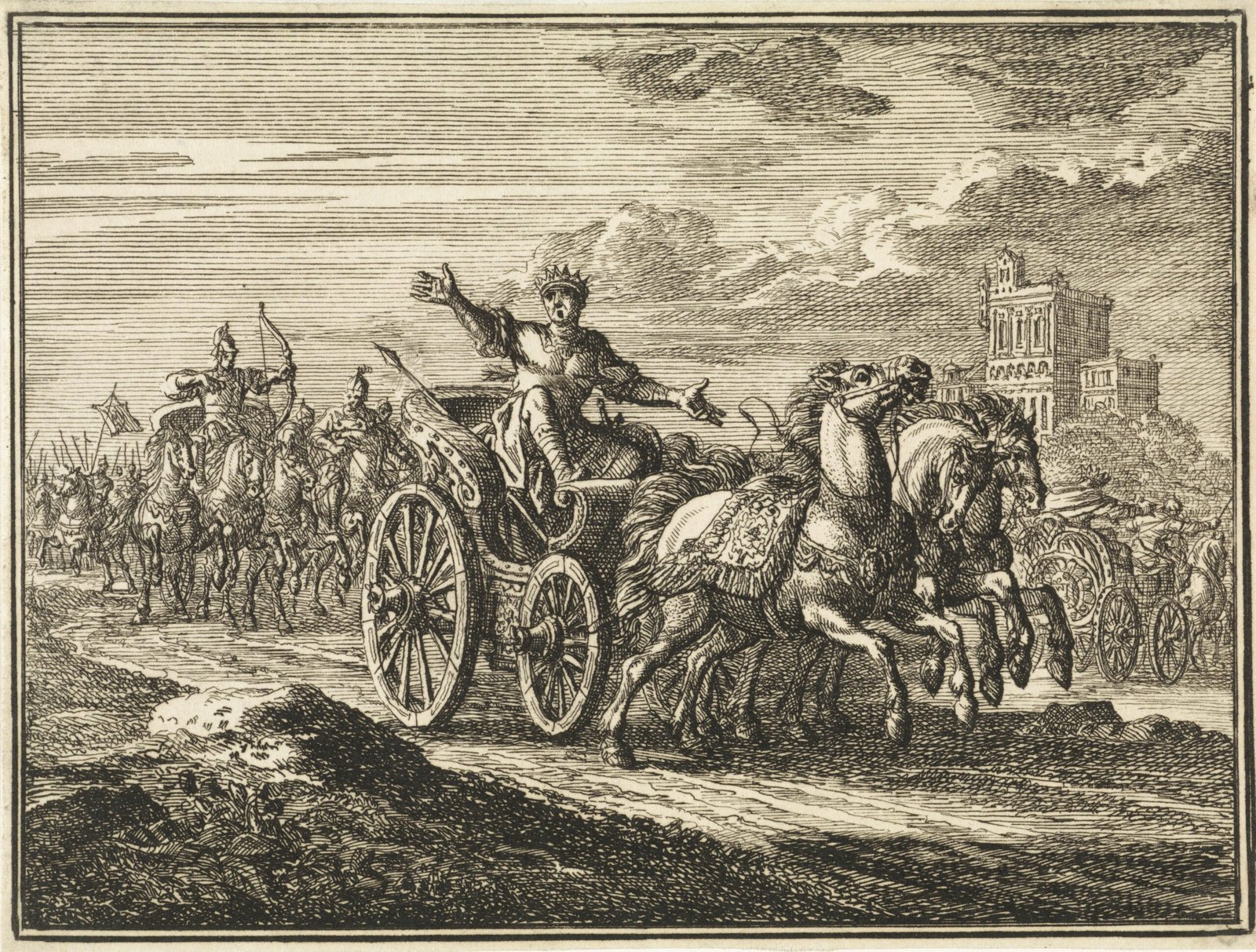
The work God recommissioned Elijah back on Mt Horeb is finally coming to a resolution. The newly ordained king of Israel, Jehu, was on his way to finish off Ahaziah, king of Judah, and Joram, the former king of Israel. Both were also sons of Ahab and Jezebel. Joram has hunkered down in Jezreel. Jezreel was a royal city located in the northern kingdom of Israel, specifically the territory of Issachar.
When Joram sees Jehu’s army approaching, he sends a rider to ask if Jehu brings an offer of peace. When Joram’s rider approaches Israel’s army and asks, they respond in an honest, satirical invitation to join their ranks.1 And three times in a row they do, joining the ranks of their brothers and neighbors.
This hints back to Elisha telling his servant that those who are with them are more than those who are against them. Elisha was not referring only to metaphysical entities, but to the people. While Elijah may have been the chariots of Israel, Elisha was in the business of making more by winning the hearts and minds of people. The influence and darkness Jezebel once symbolized had broken; the Witch’s winter was ending.
When it’s apparent this isn’t working, Joram rides out before the army arrives to ask in person, “Is it peace, Jehu?” Jehu answered, “What peace can there be, so long as the whorings and the sorceries of your mother Jezebel are so many?” (v. 22). Joram immediately flipped a U-turn and ran away, crying to his nephew, who was back inside the gates of Jezereel, “Treachery, O Ahaziah!” (v. 23). Jehu shoots Joram before he can get away. Seeing the writing on the wall, Joram’s little nephew also runs away, eventually meeting the same end.
This is in part why Elisha’s ministry and goals took longer, while Elijah’s were impractical and doomed to fail from the beginning. Egypt and Babylonia don’t go away overnight. The throne is a mindset, and the kingdom resides in people, not empires.
“Elisha is the ‘Man of God’ who proves the king is an ornament. By performing miracles that the palace cannot—multiplying bread, healing lepers, finding lost tools—Elisha demonstrates that the true politics of Israel happens in the house and the kitchen. The throne is bypassed because the Spirit has taken root in the common life.”
— Peter Leithart
Settling the Score: Ending Jezebel’s Influence
The scene is staged for irony. Jezebel hears about what’s coming. So, she painted her face and dressed in her finest garments, looked down from the palace window as Jehu answered from the gate. Jezebel asks the same question of him, “Is it peace?” Tyrants only seek peace when they’re at the end, as a last means of holding on to their crumbling empires.
Just like his approach to Jezreel, he recruits the people on hand, the people who were Israel, and with Joram. He asks, “Who is with me?” Two of the three eunuchs look at him, and Jehu says, “Throw her down.” So they hurled her at the window2. Her body is torn up by the walls before hitting the ground. Upon hitting the ground, her body was trampled by horses and consumed by the dogs around her. Jehu still wanted to bury her as the daughter of a king, but all that was left of her was her skull, feet, and palms.
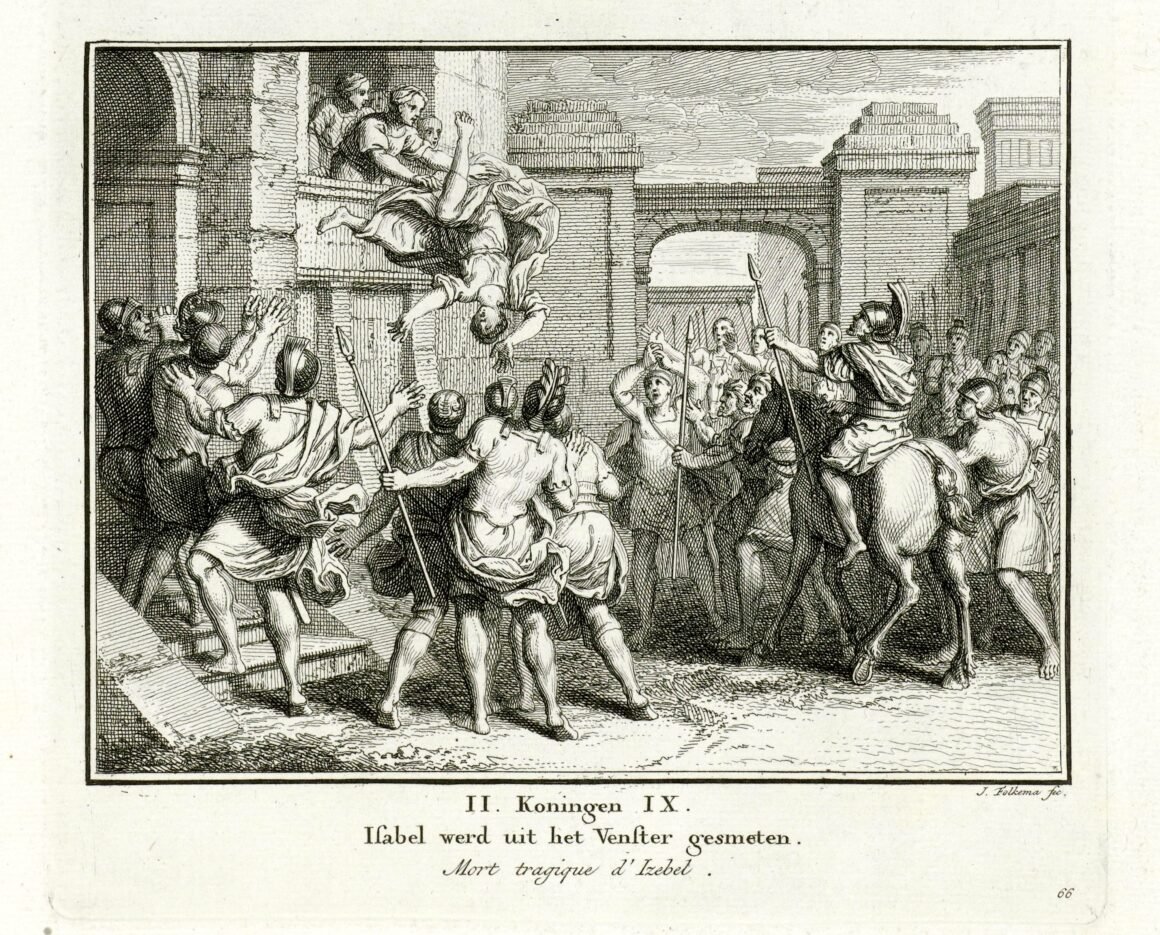
Scripture frames her death as a forensic closure, narratively just, but not tribal vengeance. While Elijah decreed it, Elisha reinvigorated the social and political machinery; Jehu gave the order as king, and he invited the two eunuchs by her side to pitch the witch out. Even this seems poetic: The two boys were dealt with by the two boys, and here the eunuchs are invited to deal with their female captor and join Israel’s community. From 2 Kings 2 to 10, not a single man can claim personal glory over another. That is, precisely, the point.
The death of Jezebel was no epilogue of Elijah’s vengeance. God wouldn’t allow it and took Elijah out of the story well before it did. The oracle Elijah delivered over Ahab’s house after the Naboth affair (1 Kings 21) was still not idle rhetoric. It was a covenantal accusation, carrying divine judicial authority. Words that, once spoken by a true prophet of Yahweh, demanded historical enactment. “The dogs shall eat Jezebel within the walls of Jezreel‘” (1 Kings 21:23).3
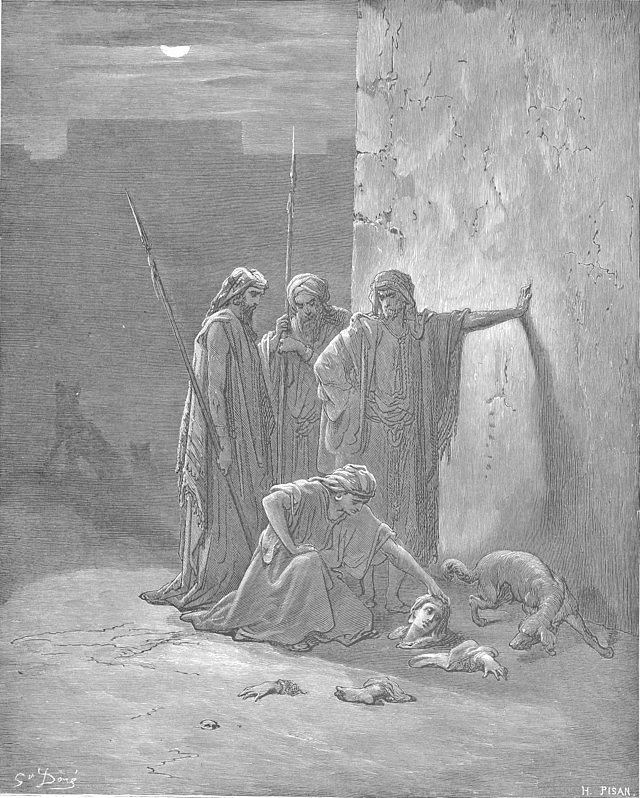
In 2 Kings 9, when that enactment arrives, it doesn’t arrive through another solo pyrotechnic from Elijah. It arrives through the succession-machinery Elisha has set in place. Elisha dispatches a prophetic agent to anoint Jehu as king (2 Kings 9:1–3), and Jehu becomes the executive blade of the prophet’s sentence. Scripture completes the chain instructed at Elijah’s recommissioning: oracle → succession → political displacement → public fulfillment.
The Legacy in the Dirt (2 Kings 13:14–21)
“Elijah ascended; Elisha descended. The one was fire from above; the other was life from below. And it is the one who went into the ground whose bones still raise the dead.”
— Marvin A. Sweeney
Elisha gets sick. He does not ascend in a chariot of fire. He does not receive a final vision at Horeb. The prophet who spent his life living in upper rooms in other people’s houses, healing children with his hands, and washing lepers in the Jordan gets sick and dies like every other human being in the ancient Near East.
Before Elisha dies in bed, King Joash of Israel comes to him in his illness, weeping over him, and uses the same phrase Elisha himself had cried over Elijah decades earlier in chapter 3:12: “My father, my father! The chariots of Israel and its horsemen!” (13:14). What passed from Elijah to Elisha has passed again, this time to a political leader who is at least paying attention. The chariots of Israel and its horsemen, those objects Israel was told to never depend on, were always the people themselves: never the military might or economic splendor.
After prophesying about a half-finished victory over Syria, Elisha dies, and he is buried. And then there’s this:
“And as a man was being buried, behold, a marauding band was seen and the man was thrown into the grave of Elisha, and as soon as the man touched the bones of Elisha, he revived and stood on his feet.”
— 2 Kings 13:21
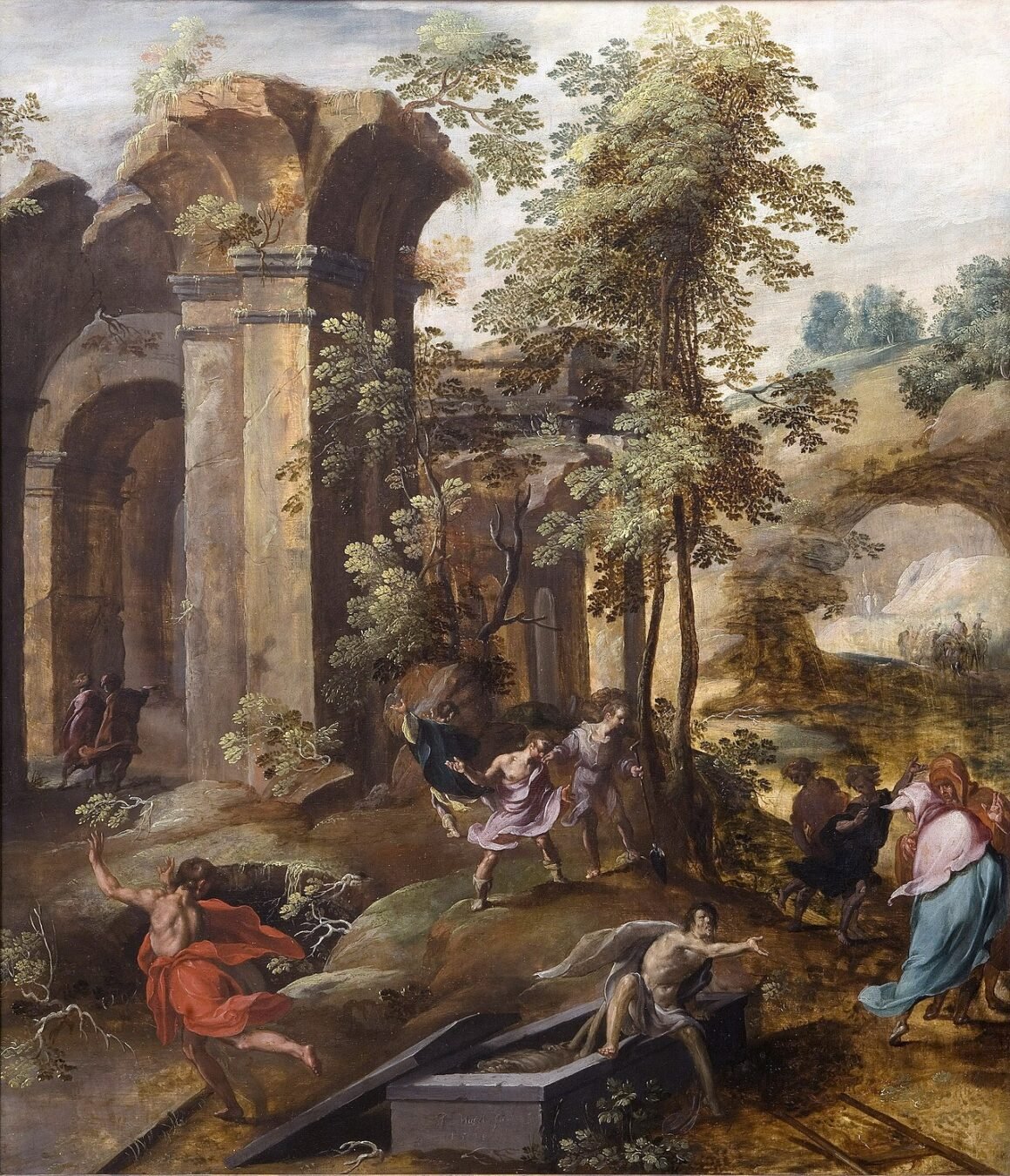
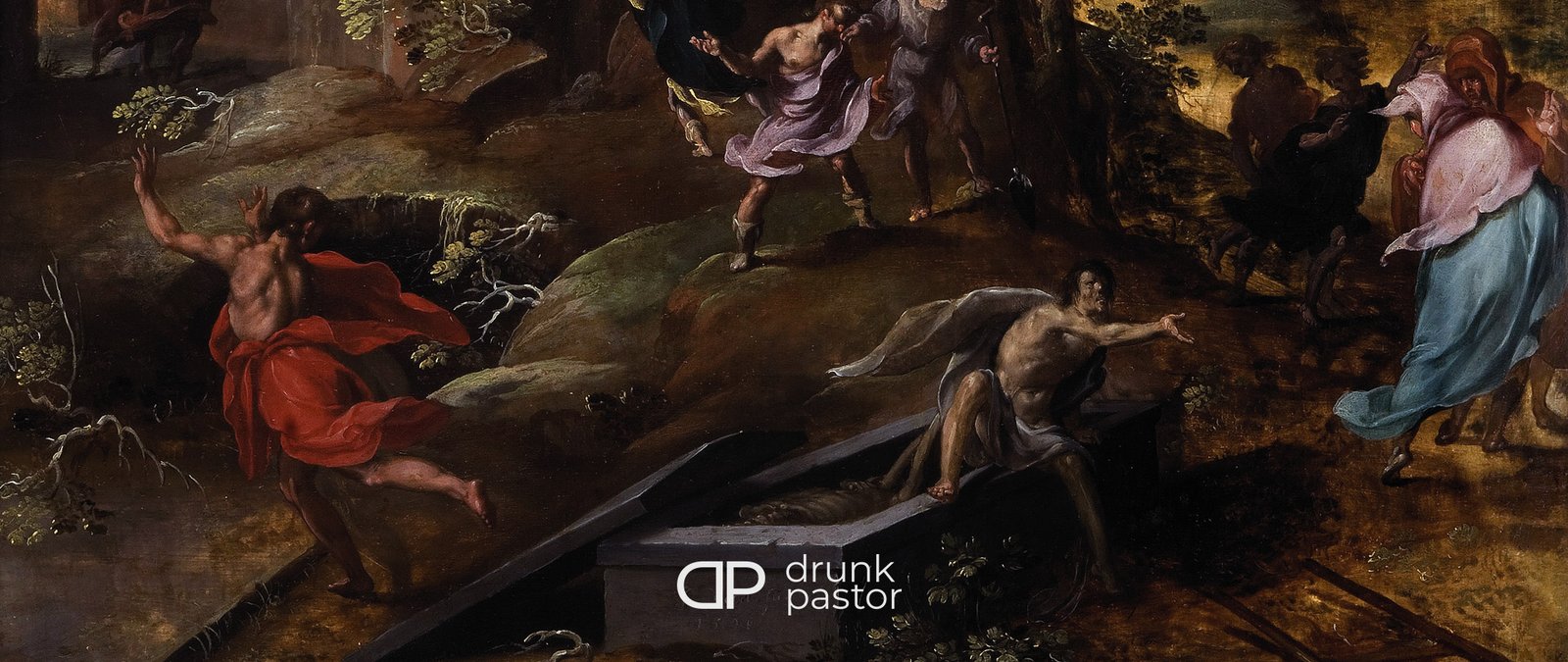
This is the last miracle in the Elisha narrative, and it happens after he is dead. A nameless man, hastily buried in the prophet’s tomb during a Moabite raid, touches the bones of Elisha and comes back to life.
These two verses are wedged in between Elisha’s final prophecy about Joash, king of Israel, only having three victories against Syria (v. 19, 25). Moab was one of the rebellious kingdoms Jehoshaphat engaged with back in chapter 3. Where Elijah’s left this Earth, Elisha was planted in it, leaving behind his double portion. Even from the grave, Elisha would continue to work by reminding kings and eunuchs alike who God is, and it’s not them.
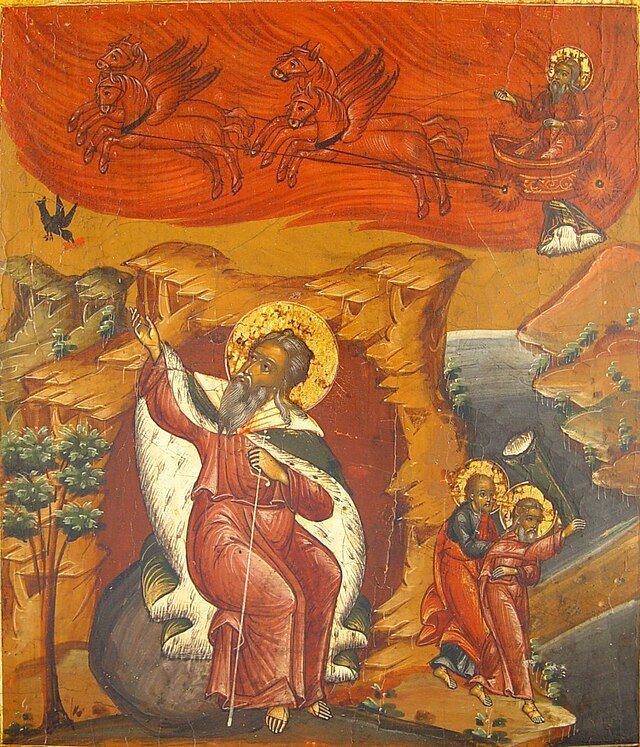
Elijah was assumed bodily into heaven in a storm of fire and divine chariots. His exit was vertical and singular. Elisha was the prophet of soil, living rooms, and human vessels. He went into the ground with everybody else.
Elijah’s authority came from the top. Elisha was from the bottom. The directional element is an intentional narrative device that the Scripture calls readers to reflecton.
| Elijah | Elisha |
|---|---|
| Ascension | Burial |
| Vertical transcendence | Material persistence |
| Fire spectacle | Life continuity |
When Jesus taught that the Son of Man must descend before He ascends, He was saying a lot more than simply describing his death (John 3:14).4
A Theology of Two: How Pairing Rears the Future
“In the biblical pattern, the number two establishes a legal witness, but the number three signifies a completed cycle of divine judgment or blessing. Elisha’s ‘double portion’ creates a triad with Elijah, moving the prophetic office from a singular voice to a forensic certainty that cannot be ignored by history.”
— Umberto Cassuto
Sweeney, Brueggemann, Leithart, and Cassuto have unearthed enough of the literary mechanics of 1-2 Kings to show the importance of memory, succession, and covenant testimony. These Scholars, from different backgrounds, provide the gardening tools for finding the Text’s roots, shaping memory and humanity through repetition and communal testimony.
From Elijah’s beginning, the nation was divided with two different kings and altars. When Elisha enters the scene, Scripture starts doubling things: Elisha begins as a disciple, besides working 12 pairs of oxen (1 Kings 19:19–21), accepts a “double portion,” and then moves through households, kitchens, and guest rooms. There are twice the miracles, two resurrections (the boy in the bed and the man in the tomb), two bears, and two prophets.
These literary echoes are from the legislative shouting of blessings and curses back and forth at Mount Gerizim and Mount Ebal, near the city of Shechem, in Joshua 8:30-35. Israel, those who wrestle with God, had learn again what it meant to bear God’s presence through neighbors’ meals and family relationships.
Here are just some of the other “echoes”: There are two Jordan crossings, two widows, and the indebted widow has two sons. There are two servants (2 Kings 4–5). One servant, Gehazi, invents “two sons of the prophets” (2 Kings 5:22–23). Elisha anoints two kings in one succession (1 Kings 19:15–16). Ahab and Jezebel lose two sons to Jehu. Jehu calls up to the window, and two (of three) eunuchs answer the call.
The Scripture is calling back to the Shema, “Hear, O Israel: The Lord our God, the Lord is one” (Deut. 6:4), and the primal “the two shall become one flesh” of Genesis 2. For ancient Jewish thought, the number two symbolized the foundational dyads of creation: male and female, heaven and earth, light and darkness. Duality is the architecture of relationship, but not the telos: There’s also the biblical 1+1=1 internal realities of being and vulnerable trust (Gen 2:24 & John 17:21). Elisha’s arc is Eden’s ideology in practice.
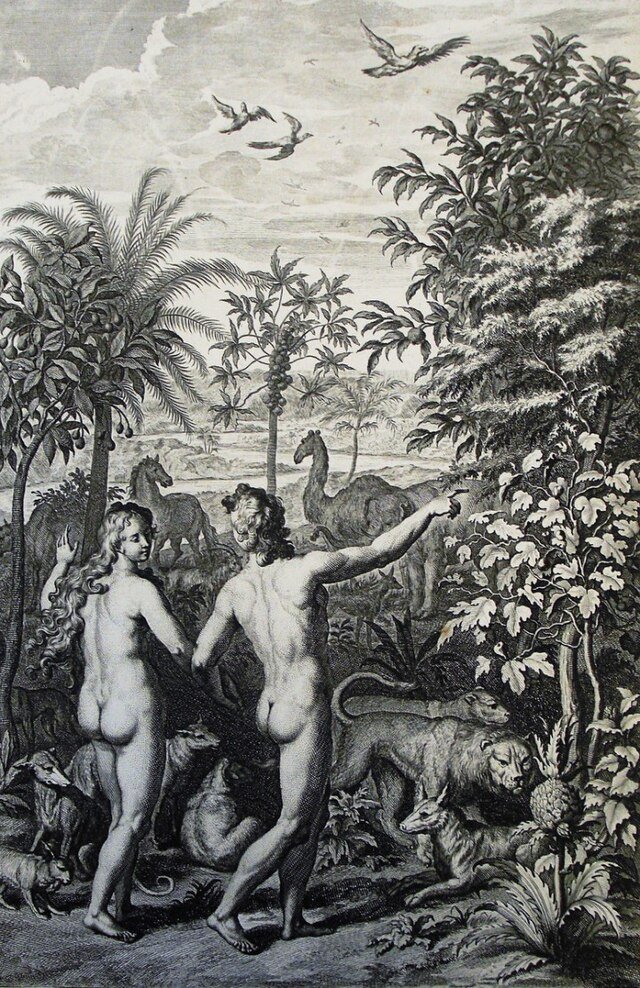
The entire Elijah–Elisha block (1 Kings 17 – 2 Kings 13) flows towards a theology of reconciliation and ontology, of relationships and discipline. Elisha works within, around, and under the system, but always with people. Elisha’s double-portion produces community-wide effects with implications that pierce nationalistic ideologies and typical religious divides.
By re-ontologizing the character of the community: moving from event and status to relation and community, from the singular thunderbolt to reciprocal presence. The “two” in these is how covenant life gets declared, witnessed, and sustained, and is an early foreshadowing of Paul’s adamant declaration that “there is now no Jew or Greek, male or female, slave or free” in Christ Jesus. The Gospel can be found on every page of Scripture.
How Relationship Births Community
First, repetition equals witness. Deuteronomy insists that truth in Israel is confirmed by two or three witnesses (Deut. 19:15). The biblical community prefers diverse corroboration to singular charisma. These pairs offer confirming perspectives from multiple angles. The Text will not let mantles pass behind closed doors, and places the sons of the prophets, foreign towns, and the mirrored widows in the testimony stand.
Second, pairing moves theology from public spectacle to private covenant. Elijah’s acts were adjudicatory and public; Elisha’s acts are restorative and domestic. The paired miracles recenter salvation away from a national event to an embodied reality and household practice. That relocation was a redistribution of the Spirit as it invested in networks rather than monopolies.
Third, the relational echoes are deafening. Genesis 1-2 pictures human flourishing as relational co-mutuality, while Genesis 3 conceives egos and blindspots, and chapter 4 is the birth of sin and death. If that is the human paradigm, then the Elijah→Elisha sequence is a canonical demonstration of redemption at work: God’s saving work insisted on forming relational pairs in households, with mentors and disciples, and with neighbors. The “two” is the smallest unit of covenant life.

But the Text does more than just pair things up; it pushes the math further. Ancient writings often include unnamed, ambiguous characters, mysterious +1‘s, in the background that were meant to act as a device to represent the audience or reader, you and me in the story. It was a tool to elicit a response. These figures are scattered in Elisha’s story.
The “double portion” itself inherently demands a whole divided into thirds (the firstborn’s two parts alongside another’s one). Elisha isn’t just establishing the “two” of relationality; he is constantly moving the equation toward a third element. The biblical formula is 1+1=3.
- When Jehu calls up to Jezebel’s window, the Text specifies “two or three eunuchs” (2 Kings 9:32). One witnesses.
- The first story in 2 Kings, Elijah has two captains of fifty being consumed by fire, while the third is spared. It’s his final act before ascending.
- When Elisha’s dead body raises a dead man, it adds to his resurrection of the Shunammite’s son, bringing Elisha’s total resurrections to two. When added to Elijah’s, it equals three.
- “My father! My father! The chariots of Israel and its horsemen!” is spoken twice, while the chariots of Israel make an appearance in between (2 Kings 6:17).
In biblical terms, two is the number of witnesses, but three establishes reality. Two is the “bear” minimum for relationship and covenant, but three adds vitality: “a threefold cord is not quickly broken” (Ecclesiastes 4:12). Elisha refuses to let Israel be trapped in dualistic deadlocks. He acts as a free agent, moving through the middle of the mess, bring halfs into wholes. Elisha himself was determinative “+1” as he transformed the static categories of king/prophet/people into a single, four-dimensional Kingdom.
So, as Elisha lived and died, he brought sacredness back to the ordinary.
“For where two or three are gathered in my name, there am I among them.”
— Matthew 18:20
While Rabbinic and patristic traditions emphasize Elijah’s eschatological role or Elisha’s typological echoes, Scripture also develops an Edenic, holonic (i.e., whole, holistic, integrated, etc.) hermeneutic, mapped in Elisha’s succession of Elijah. Pre-existing interpretative omissions are not an argument against the pulse of the Text. This, also, is a biblical anthropological option. We live in 2026, not 32 AD. The move is ours, not anyone else’s.
Reading Scripture from the holonic reality of Genesis 2, or Paul’s “so that God may be all in all” (1 Cor 15:28), is a factual orientation rather than simply opinionated (despite the source of the thesis). It’s defensible precisely because the Bible invites theological readings while still being accessible to humans wherever they are. Covenant form is a social form.
The Second Coming of The Spirit of Elisha
The mantle of Spirit is a pattern to be embodied and available to anyone wanting the same Spirit as Elisha. However, it is not “of Elijah.” Elisha’s Spirit came straight from the Source, and returned it to people and the Earth. He’d have it no other way for us.
Authority validated by might and performance only lasts as long as the awe or appease of a crowd; Divine authority is embedded in each of us, and His Kingdom when two or more are one together. Two-ness sustains a people, and a triad revitalizes. The prophetic vocation is not a soloist audition or an extension of empire. The prophet Joel said our sons and daughters would prophecy like small talk. We stand on a far grander legacy than he. Prophecy is a shared practice and a form of hospitality, the patient rebuilding of trust.
In Jesus’ time, they were waiting for the return of Elijah to signal the Elisha/Messiah figure. Jesus stepped and filled in, but He also passed it off. That was 2000 years ago. In 2026, the Spirit of Elisha can breathe dry bones back to life, feed the multitudes, and break down the dividing walls rotting humanity from the inside out.
It’s a private and public, local and global thing now. We all have to do the small, low-level work while engaging with the world, walking our paths, and learning how to do it with what we are provided.
Scripture cuts bone and marrow, through soul and spirit. God’s eyes are searching back and forth for vessels willing to trust Him. The Spirit is not impressed by spectacle. It is still looking for ground to take root in.
May the Spirit of Elisha spring up from Earth. May the Son of Man come quickly.
“Understand that if it is in the kitchen, the Lord walks among the pots and pans helping you both interiorly and exteriorly.”
— Teresa of Avila
A Recovering Pastor’s Epilogue:
Scripture has helped me so much in recovery, and usually by breaking me and mending me back together. Often enough, like an annoying mirror where I catch a glimpse of myself, this study led to crying over my keyboard. Over the last few years, there were stages where biblical characters would “haunt” me, like Jacob, Jonah, or Mary. These people are a part of our shared legacy, the “crowd of witnesses” that stands cheer for us to run the path laid before us now (Hebrews 12:1-3).
Before beginning writing a couple of years ago, I used to say, “I shouldn’t be the one doing this.” I knew in part why then, and much more now. I’ve been an Elijah over the last four years, and before that: My way or none other. When there was something true, I’d bring down fire from heaven…and be confused why there were no friends or bridges left over. I was also so wrong and idiotic, pedantic and petulant. Backasswards was a character defect that needed to be nailed to a cross and unlearned. Thank God.
There’s a moment when life finally makes sense, when enough of it comes together, and you are just you. The old-Paule hated why studying Elijah made such logical sense, and Elisha had to be a part of it. The math broke me. I was reminded of the many Elishas in my life. In part, I promise, you definitely understand what I’m talking about, maybe even relate: You’re a +1. But you’d have to be there for the whole blessed 41 years to fully understand and then appreciate what I found in this long journey…. unless you’ve been on your own.
God has been faithful when I was not, and there’s such a blessing and wholeness, a love and peace available that I once could only preach poetically about, faking it til (I prayed) I made it one day. That wasn’t faith. Faith has found me, and God’s forgiveness and love have produced life, flooded me with Spirit, and set my feet on such solid ground that my mind and body took a couple of years to catch up.
You, whoever the Heaven you are, are a +1. There is no one else right now.
Whoever you are, whenever this is: God is right there with you, right now. Where else would God be?
*Footnotes (& Leftovers)
- This is a recurring motif: true peace in the Kingdom isn’t a treaty between empires; it’s the subversion of the soldier into a neighbor. It echoes the redirected Syrian army in Part IIIa, who were conquered with a meal instead of a sword. ↩︎
- The details of the “two or three eunuchs” who throw Jezebel down are important. In the Ancient Near East, eunuchs were the “liminal” figures, neither male nor female in the traditional sense, often marginalized within the palace. By having them act as the “two witnesses,” the Text is showing that the restoration of Eden’s ideology often begins with those the “spectacle” has discarded. ↩︎
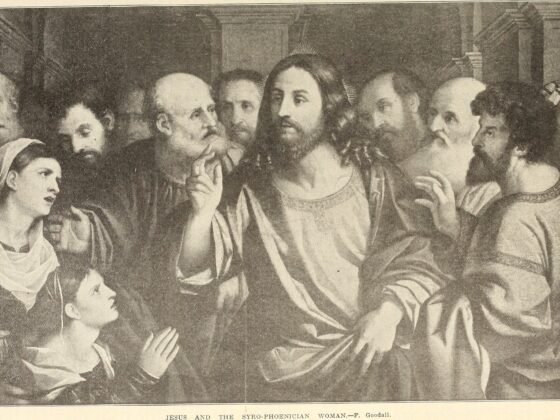
- In Matthew 15, the Canaanite woman who asks Jesus for healing claps back at his “dog” comment by saying even the dogs get the scraps (Matthew 15:21–28; Mark 7:24–30). If she’s referencing the Jezebel narrative, she’s claiming that even the “judgment” of the Covenant has enough life-giving “scraps” to heal an outsider. That’s tenacity. But, this is speculative. ↩︎
- In the Nicodemus dialogue of John 3, Jesus is “Elisha-ifying” the Spirit, moving it from a nationalistic, religious category back to the “wind” that blows where it wishes. Just as Elisha was a figure roaming the countryside, Jesus suggests that the Spirit is unpredictable, uncontrollable, and bypasses the “palace” of religious status ↩︎