Table of Contents Show
Throwback from February 15, 2017, and updated on 5/10/2026. Over eight years, a lot of things have changed…and a lot has not.
Faith is often thought of as an all-in or all-out decision. It’s as if there is a clear line in the sand: on one side is faith, and on the other is not. We either completely trust God, submitting to His every word, or we don’t.
In an era of cliché preachers and obtuse fundamentalists, modern “faith” has two faces. To some, it is a cultural compliance and doctrinal loyalty with little room for dissent and difference of opinion. To others, it is an emotional optimism, blind trust, that expects ignorance of personal failures and difficult circumstances. This happens to fall on the identical dividing line of America’s notion of Left and Right or Progressive and Conservative.
It is nowhere near black and white—a reality made clearer by a decade of experience between this post’s original publication and its 2026 update.
In Scripture, faith is much more obscure and dynamic. It is often violent, rebellious, absurd, and even doubtful.
Don’t get me wrong. There are often, if not normally, times of serene trust and all-in obedience. Faith does expect that we will trust and follow God. What I would like to push back against, however, is this notion that faith is only silent obedience or fake submission.
Once again, many times, faith is “believing.” Yet, in Scripture, faith is much more fluid and dynamic, always meaning trust, and not “belief” ever. It is practically never defined or spelled out. In part for this reason, the word “believe” is significantly less frequent in the Old Testament compared to the New Testament in English translations. The one place faith is defined (which I would suggest is not a definition but rather a metaphor), it is followed by a litany of examples that almost seem to contradict the definition.
Hall of Faith
In Hebrews 11, the Hall of Faith, faith is defined as “the assurance of things hoped for, the conviction of things not seen.” The author then provides examples of what that looks like. We read as the author recounts these exemplary people as if they had this miraculous and fully obedient faith.
But if we were to look into each life listed, we would find glaring discrepancies with some modern understandings of “belief.”
Noah gets plastered on wine and curses his grandson. Sarah laughed at God’s promise. Jacob was a liar and a manipulator. Moses was a murderer, refused to speak to Pharaoh, and failed to make it to the Promised Land. Rahab was a prostitute looking out for her own safety. To even reference Gideon and Samson as models of faith is a complete joke: their stories are more warnings than examples. David is obviously better, but he was still an adulterer and murderer.
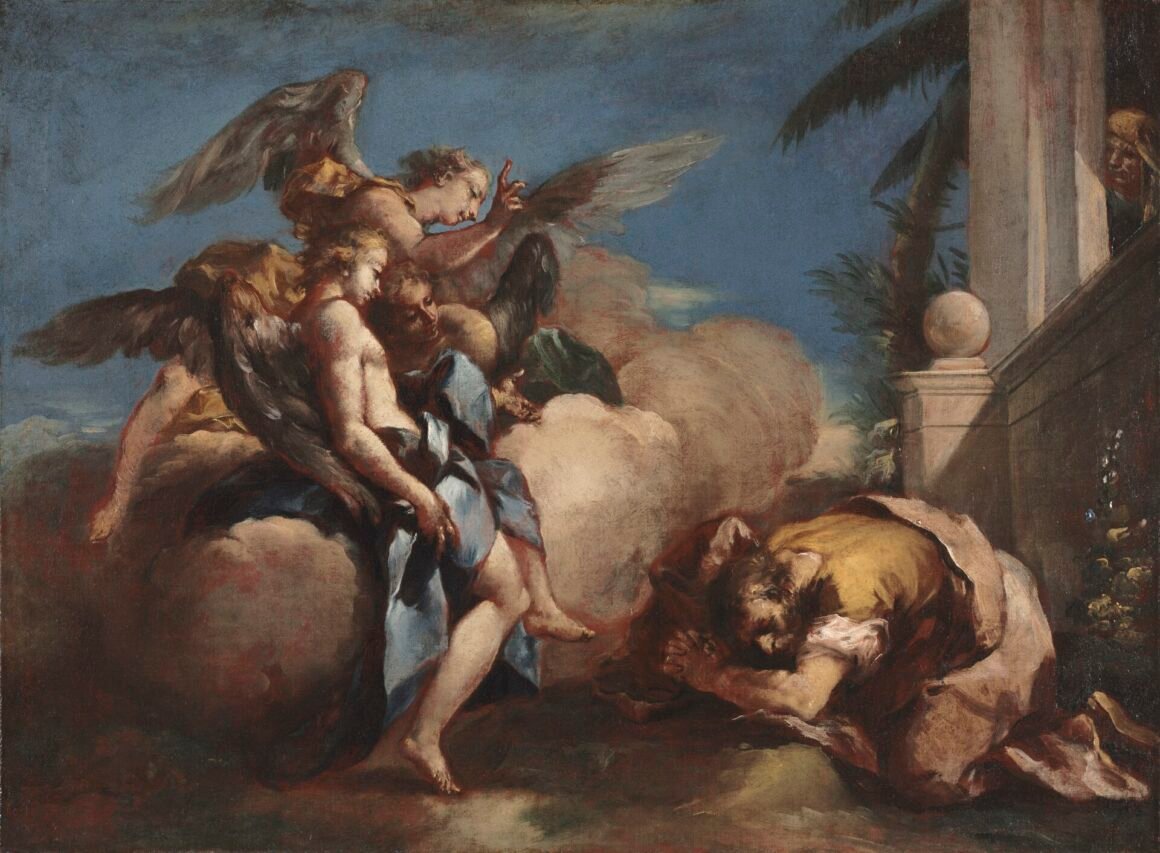
These are not pretty and clean examples of belief, but of rough and imperfect faith becoming something more. Perhaps that’s why the author of Hebrews used these examples as faith, because they are not “perfect.”1 Faith is not easy or pretty. It can be just as ugly as beautiful, and rough as serene.
As the symbol and founder of the Jewish people, Abraham’s character and actions were of central importance. In him, we find a man who typically trusts in the promises of his God. However, he still sleeps with another woman, attempting to shortcut God’s promise. Another time, he flat-out argues with and opposes God.
As God and his two companions were on their way to destroy Sodom and Gomorrah, God said this;
“Shall I hide from Abraham what I am about to do? Abraham will surely become a great and powerful nation, and all nations on earth will be blessed through him. For I have chosen him, so that he will direct his children and his household after him to keep the way of the Lord by doing what is right and just, so that the Lord will bring about for Abraham what he has promised him.”
— Genesis 18:17–19
It’s almost like God knew that Abraham would not like what He was about to do. He knew that Abraham would be upset, and He knew the reason he would be upset was the exact reason God had chosen him, “to keep the way of the Lord by doing what is right and just.”
So when Abraham learned of God’s plan, he flipped his lid. “Far be it from you to do such a thing! …Will not the Judge of all the earth do right?!” (Genesis 18:25). After this, Abraham haggles with God to an agreement: If there are at least 10 righteous people in these two cities, God would spare them.2
Saving People from God
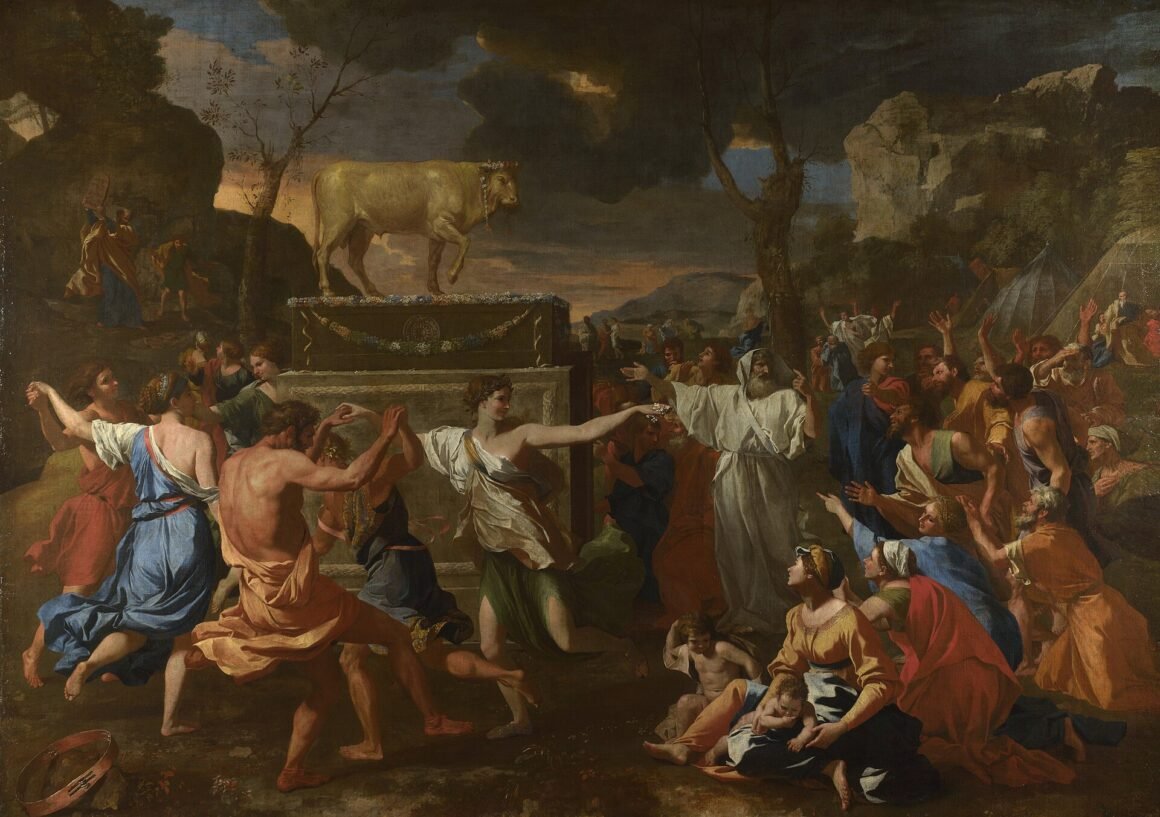
This happened again with another important character in the Old Testament narrative. Moses, the redeemer of Israel, abandoned the Israelites and later doubted God’s very clear direction to return. Following the exodus, Moses descended from Mount Sinai with the 10 Commandments and found the people worshipping a golden calf. God then states that He will utterly destroy them and start the Abrahamic promise over with Moses. To this, Moses responds:
“O Lord, why does your wrath burn hot against your people, whom you have brought out of the land of Egypt with great power and with a mighty hand? Why should the Egyptians say, ‘With evil intent did he bring them out, to kill them in the mountains and to consume them from the face of the earth’? Turn from your burning anger and relent from this disaster against your people. Remember Abraham, Isaac, and Israel, your servants, to whom you swore by your own self, and said to them, ‘I will multiply your offspring as the stars of heaven, and all this land that I have promised I will give to your offspring, and they shall inherit it forever.’”
And the Lord relented from the disaster that he had spoken of bringing on his people.“
— Exodus 32:11-14
Moses changed God’s mind. Or, at least, it seems that way. This topic (“Can God change His mind?”) is a much larger theological debate, but it would seem that, at a minimum, God wants us to act as He can. Moses challenged God, saved millions of people, and kept becoming a hero of faith3.
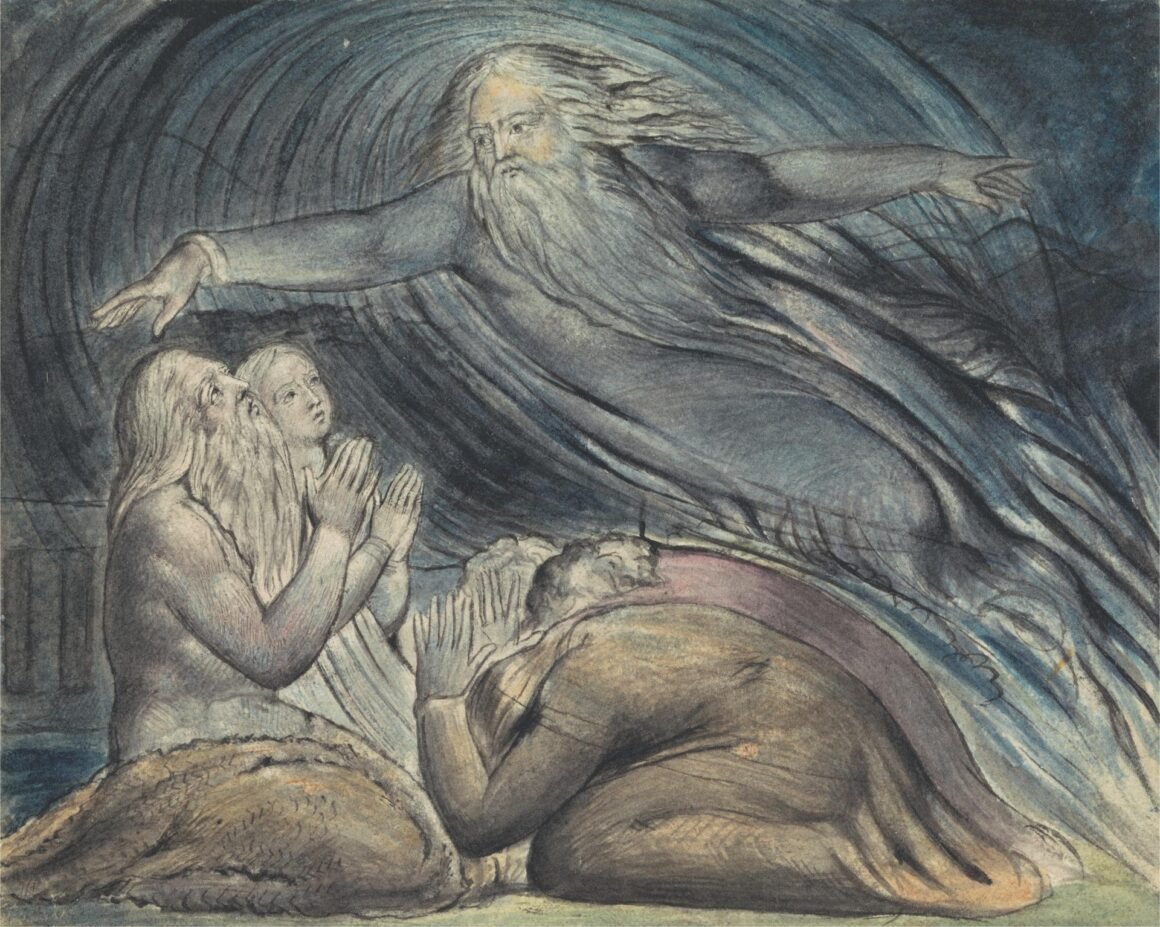
In another book, we read of Job, a righteous man whom God seems to callously give over to the Devil to test. Job loses everything: family, wealth, and health. Job wrestles with why God allowed this to happen with no clear answers. He questions God over and over. His friends attempt to offer answers, but none suffice. As the tension builds, eventually, an answer is given:
Then the Lord answered Job out of the whirlwind and said:
“Who is this that darkens counsel by words without knowledge?
— Job 38:1-2
Dress for action like a man;
I will question you, and you make it known to me.”
God then lambasted Job with one unanswerable question after another. To which Job basically mumbled, “I don’t know” (Job 40:3-5). But this answer was not good enough for God. So, God bombarded him again with another deluge of questions that Job was unable to answer. Job then responded;
“I know that you can do all things,
— Job 42:1-6
and that no purpose of yours can be thwarted.
‘Who is this that hides counsel without knowledge?’
Therefore I have uttered what I did not understand,
things too wonderful for me, which I did not know.
‘Hear, and I will speak;
I will question you, and you make it known to me.’
I had heard of you by the hearing of the ear,
but now my eye sees you;
therefore I despise myself,
and repent in dust and ashes.“
Job, although questioned by God, was apparently in no need of atonement. His mindset was still off, and he wasn’t able to move on from his mourning time. So, God “adjusted” it.
However, God’s rebuke was saved for Job’s friends for their simple answers, and demanded they make atonement through Job for their petty answers (Job 42:7-9). In Job’s refusal to accept a simplistic answer, he found redemption, while his friends, by their simplistic answers, found themselves further from God.4
Faith is…
In Isaiah, God implored His people, “Come now, let us reason together” (Isaiah 1:18) and “Put me in remembrance; let us argue together; set forth your case, that you may be proved right” (Isaiah 43:26). He beckoned his people to argue with Him and try to change His mind. What God wants more from His people than simple blind allegiance or a social behavioral code is a dynamic relationship, one where we wrestle with our own nature, the nature of the world, and the nature of God.
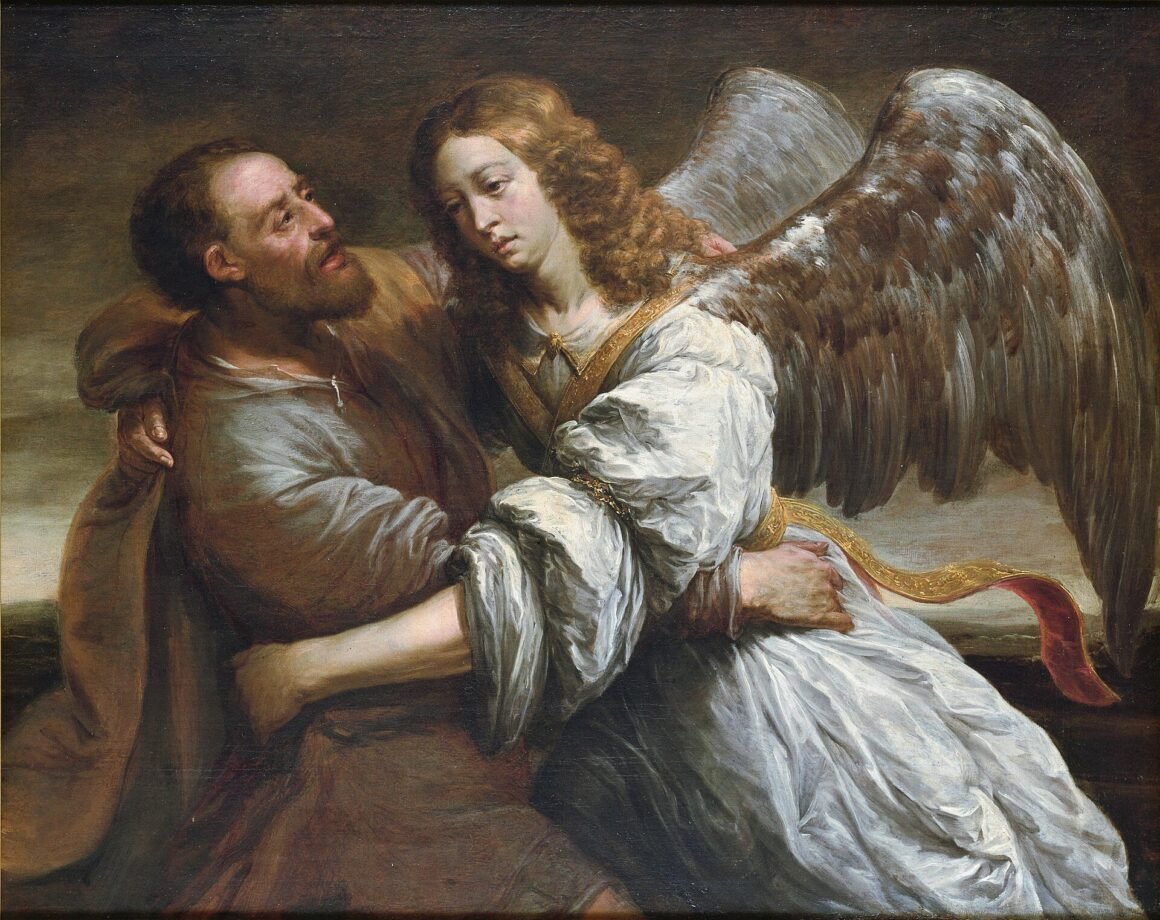
He wants us to be willing to wrestle with Him through the night, as Jacob did, demanding a response (Genesis 32:22-32).5 It is in wrestling that we discover God and ourselves6. Does faith exist in obedience? Often, but they are not the same. Does faith begin in trust? Always.
Faith is not the exclusion of doubt, but rather an expression of it. Faith can be a silent submission or a violent struggle: it just depends. Faith is not simply complying with God’s demands but also engaging with Him, not as Him. Faith is the commitment to be present even when fear pulls against you and as pride wells to the surface. Faith is not pretty. It’s a way of life: the things we trust and rely on, the things we are trying to become and unbecome, what calls us, and overcoming what enslaves us.
Faith is soaked in blood, sweat, and tears. It is a dance with two stubborn partners until they become one. Faith is built on the back of questions and fears, grown in the soil of intimacy and vulnerability. It’s feisty and tender. One thing faith is not is placid, lukewarm, apathetically complacent, or blindly optimistic. It would seem the Bible’s faith is not about some end perfection but about a way through the imperfect world and growing through it.
Often, in today’s Christian environment, we speak of faith as some blind trust, one that simply plays its part, no questions asked. Sometimes, this is explicitly stated. Other times, it is communicated implicitly with simplistic catch-phrases and cheap platitudes, social behavior, gossip, shunning, exclusion, and church politics. Christianity was meant to help us grow up and get over these issues a long time ago.
We can try to control every aspect of life, including our relationship with God, and make others accept our social codes. We could think that we can create a system by which we give to God what we think He wants, and He then gives back to us what we want. But God is not that reducible, safe, or predictable. And I don’t think He wants our faith to be either.7
*Footnotes & Leftovers:
These are all either new or massively redone.
- Hebrews 11 describes faith as “the assurance of things hoped for, the conviction of things not seen.” The Greek term pistis (faith) is a relational trust that encompasses not only intellectual assent but is also rooted in covenantal loyalty and ethical commitment. Scholars like N. T. Wright argue that pistis implies a participatory confidence—one that is engaged with history and future promise rather than a passive mental state. Similarly, James Dunn emphasizes faith is “active, embodied, and often fraught with failure.” Hebrew’s roster of imperfect heroes thus becomes both a polemic against performance and a testament of faith that is as much about risk and perseverance as it is about the Divine promise. ↩︎
- Genesis 18 opens by telling us the Lord (YHWH) revealed Himself to Abraham, and then goes on to explain how it unfolds. So, while the three mysterious travelers were about to leave Abraham to visit destruction on Sodom and Gomorrah, there is a dramatic private conversation that reveals the nature of the three: “The Lord said, ‘Shall I hide from Abraham what I am about to do…’” (Genesis 18:17-21). Scripture drops the veil, shifting the voice from “the men” to the singular voice of YHWH, still in dialogue. After deciding what to do, the narrative shifts back: “the men turned from there.” After revealing what they’re about to do to Abraham, which they/He didn’t have to—the faithful Abraham practically loses his mind, as if the Lord expected he would. So, Abraham negotiates with God over the fate of Sodom and Gomorrah in a way that ignores a reductionistic notion of passive loyalty or blind obedience. His opening is a challenge to the Divine: “Will not the Judge of all the earth do right?” (18:25). ↩︎
- In Exodus 32, the people have fallen back into old ways in just 40 days. So, the Lord told Moses He’d wipe them all out and just start over with Moses as He did with Abraham. Moses then intercedes on behalf of Israel, and his argument reminds God of His promises and their shared redemptive history. Moses’ confrontation isn’t a defect of his character but his personal growth and a deliberate narrative strategy to portray God as relational and responsive. This episode can be interpreted as showing that a divine “change of mind” is less about inconsistency and more about engaging with a community that’s actively involved in the unfolding of its destiny. ↩︎
- The Book of Job places human suffering and the Divine mystery in stark contrast as a high-stakes drama. In Job 38, God’s barrage of questions, ranging from the origins of the cosmos to the subtleties of natural order, serves not only as an assault on Job’s hubris but as a demonstration that human knowledge is inherently limited. The divine interrogations dismantle any pretension of mastery over creation and fate, forcing Job (and the reader) to confront the vastness of God’s wisdom, Creation, and inevitable gaps in individual understanding. Job’s eventual reply in Job 42, tinged with both humility and awe, is indicative of a faith that grows in the soil of bewilderment rather than assumed acceptance. ↩︎
- Isaiah opens with God speaking over Creation, “Children have I reared and brought up, but they have rebelled against me…Israel does not know, my people do not understand” (Isaiah 1:1-3). God’s invitation includes, “Come now, let us reason [or debate] together, though your sins are like scarlet, they shall be as white as snow…” in Isaiah 1:18, and Jacob’s struggle with a mysterious opponent in Genesis 32, portray faith as an active, dialogical process. The mind and reason are a part of it, just as much as the body, soul, and emotions. Isaiah’s invitation is to the collective, as if it were singular. The Hebrew terms employed by Isaiah carry connotations of negotiation and reasoning, reflecting an understanding of faith as involving both personal accountability and collective transformation. Jacob’s renaming to Israel (“he who struggles with God”) is emblematic of how faith transforms through conflict. Rather than presuming divine decree, these texts invite believers into a space where questioning, wrestling, and ultimately transformation are not only allowed but necessary. ↩︎
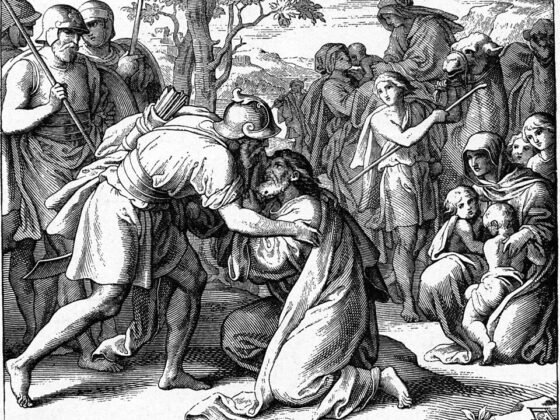
- Jacob’s encounter at the Jabbok (Genesis 32:22-32) is a literal “violent” Scriptural encounter of a man on his way to face a brother he had not seen in decades. The last time he saw Esau, his hairy brother wanted to kill him, and he had to flee. Having sent everything ahead, Jacob was alone, caught between another past he ran from and a future he’s terrified of. Then, randomly, “a man” wrestles him, who is later revealed to be Divine. It was an all-night, hip-dislocating, night-long brawl. The blessing Jacob extracts—the name Israel—was only granted after he refused to let go and after he was permanently crippled. It suggests that in the biblical imagination, we don’t always get a new identity without a limp. Faith, in this light, isn’t the strength to overcome the struggle, but conscious endurance to stay in it until the sun rises, even if we leave the ring with a permanent scar. And then face our sibling on the horizon. ↩︎
- Kierkegaard understood as an embrace of the absurd: A leap into the unknown where certainty is released, and doubt sometimes an annoying, unavoidable companion. Doubt isn’t the obstacle; it’s the journey faith demands. Kierkegaard’s Fear and Trembling illustrates that human faith is punctuated by paradox and risk: it demands a total commitment even if reason and society insist on limitations and constraints. The same tension is evident through Scripture, where the Divine often appears inscrutable, and the human response is mixed revolt and reverence. This simple truth can be seen in how many of the saints of Hebrews 11 would be put on public trial today. Far from being mere sentiment, this dialectic calls for an engagement that is relationally accountable, intellectually integrated, and emotionally honest, forcing us to reconcile the tension between divine mystery and human existence. ↩︎