Table of Contents Show
Author’s note:
Originally posted on www.validambiguity.com on December 10, 2015. It’s been edited mainly for readability and some nuance. The introduction is what changed the most: It was unnecessarily bloated. The irony of this piece is that I did fall headfirst into my own “victimenge,” wrapped up in lies and defense mechanisms for years. My younger, cocky self was coming through a little loud, so I tamed the intro down to a stomachable level. Whatever I thought I knew about counseling back then has been both informed and transformed. “Progress, not perfection.“
There were a few hats to wear as a pastor, and counseling was one of them. It came naturally. I had some courses and ministry training that provided a good base and toolkit, too. Part of my knack was just knowing the art of bluffing: I was a good liar. My default defense mechanism was to bluff. Something I was both proud and ashamed of.
What it afforded me was an ability to get a read on people. I tried to “feel” what they were feeling and trace the logical path backwards. Over time, I noticed a lot of issues we struggle with can be simplified to a handful of categories: A common one is victimhood.

Defining Victimhood
Victimhood (or victim mentality) is the tendency to conclude one’s present situation as primarily the result of others and one’s environment while assuming little responsibility for one’s own circumstances. Judith Orloff, MD, Assistant Clinical Professor of Psychiatry at UCLA, in the Huffington Post, provides a visceral description of the victim mentality:
“The victim grates on you with a poor-me attitude, and is allergic to taking responsibility for their actions. People are always against them, the reason for their unhappiness. They portray themselves as unfortunates who demand rescuing, and they will make you into their therapist. As a friend, you want to help, but you become overwhelmed by their endless tales of woe: A boyfriend stormed out… again, a mother doesn’t understand, a diva-boss was ungrateful. When you suggest how to put an end to the pity party, they’ll say, “Yes… but,” then launch into more unsolvable gripes.”
Let us be honest; we all have a bit of victim in us. It’s easier to blame someone else than to face our own nakedness (Genesis 3). To presume ourselves the victim automatically moves us to the moral high ground. As a victim, I obtain a strange source of power over those who have wronged me in that they owe me a debt. I become the debt collector. We can now leverage our victimhood for approval. By playing the victim, we automatically justify our position and demonize all who oppose.
Psychologist, Dr. Ofer Zur said,
“In claiming the status of victim and by assailing all blame to others, a person can achieve moral superiority while simultaneously disowning any responsibility for one’s behaviour and its outcome…The victim stance is a powerful one. The victim is always morally right, neither responsible nor accountable, and forever entitled to sympathy.“
It’s understandable. You and I are being raised in a culture where the new moral code is victimhood and…I know what you just did. You just labeled someone: a party, a movement, or an individual. You and I are quick to categorize “those people” who are against us and, thusly, make you and me the victims of “those people.” It is a powerful tool. Victimhood is used in politics, social justice, education, and religion. It is a constant assumption that someone out there is against us, either proactively or passively. Maybe one of the only unifying ethics we all have today is victimhood, and sociologists and psychologists are just recently documenting this trend. It is understandable, not healthy.

For an example of this discussion, check out this paper by sociologists Bradley Campbell and Jason Manning: Microaggression and Moral Cultures
The hard truth is that there are legitimate desires for justice and vindication. There are real violations of our personhood that we all experience. There are times when we are truthfully victimized. Yet, in becoming the victim, we allow someone else to determine who we are, and oftentimes this “someone” is nothing more than a caricature. We submit ourselves as slaves to either a person or, worse, our misconstrued interpretation of a person.
The uglier truth is that “victimism” can become a dysfunction. An infinite feedback loop can be established where one aggrieved party assumes the victim of the opposing party, all the while the other party is also assuming the victim of the first party. The cycle emanates on the macro and micro scales. It is found in families and political debates, in restaurants and corporate businesses, and in churches and between churches.
“Each person must ask what his relationship is to the scapegoat. I am not aware of my own, and I am persuaded that the same holds true for my readers. We only have legitimate enmities. And yet the entire universe swarms with scapegoats.”
— René Girard, The Scapegoat
Victimenge
Victimenge (an invented word) is the passive and incognito form of revenge. By playing the victim, I thrust blame onto others. It becomes socially justifiable to label, caricaturize, and gossip. I can withhold relational privileges, deny my wrongdoer’s opinions and feelings, and refuse value to him or her who violated mine. I give myself ethical permission to make broad conclusions about the character of others based on insufficient evidence. Through playing my part, I can put the other party’s character on trial and never allow them to defend themselves. All the while, no physical act of aggression has taken place.
As victimhood has spread through our culture, groups of “victims” have united against their perceived oppressors. War lines are drawn, and the fight to prove who is the real victim begins. Slander and assumptions replace healthy discussion. Blame becomes our modus operandi, jargon our artillery, and persecution our pretext. A culture where everyone is the victim is a culture where everyone is the enemy.
Exodus from Victimhood
I remember taking Psychology 101. The course helped form my view of student ministry. When the professor, however, first introduced the Nature versus Nurture debate, I couldn’t help but ask, “What about me?” Do I not, as a volitional being, carry some weight in this tension? Can I not choose to rise above both my nature and nurture? Or am I to assume that my life trajectory has already been determined based on my internal chemistry and external stimuli?
In a materialistic worldview, the latter really is the only option. Materialistic determinism teaches that all we are is matter and energy, so all of the future outcomes of our lives are a predictive product of the current state of matter and energy. In this view of the world, everything that happens isn’t my fault because there is no “me.”
It reminds me of a song by Anna Russell, an English-Canadian singer and comedian, I heard in a high school psychology class. It’s a funny song, but it speaks directly to victim mentality:
“I went to my psychiatrist to be psychoanalysed
To find out why I killed the cat and blackened my husband’s eyes.
He laid me on a downy couch to see what he could find,
And here is what he dredged up from my subconscious mind:
When I was one, my mommie hid my dolly in a trunk,
And so it follows naturally that I am always drunk.
When I was two, I saw my father kiss the maid one day,
And that is why I suffer now from kleptomania.
At three, I had the feeling of ambivalence towards my brothers,
And so it follows naturally I poison all my lovers.
But I am happy; now I’ve learned the lesson this has taught;
That everything I do that’s wrong is someone else’s fault.“
We are volitional beings, able to think, decide, and act regardless of circumstances. It is “I” who, whether truly victimized or not, can choose to live in a state of victimhood or move out. I can reciprocate the victim mentality in my culture or choose to break the cycle. The only way to really break the cultural cycle of reaction and revenge is through forgiveness. I must, even in the depths of exploitation, forgive the other party. I have to allow myself to be victimized while refusing to be the victim.
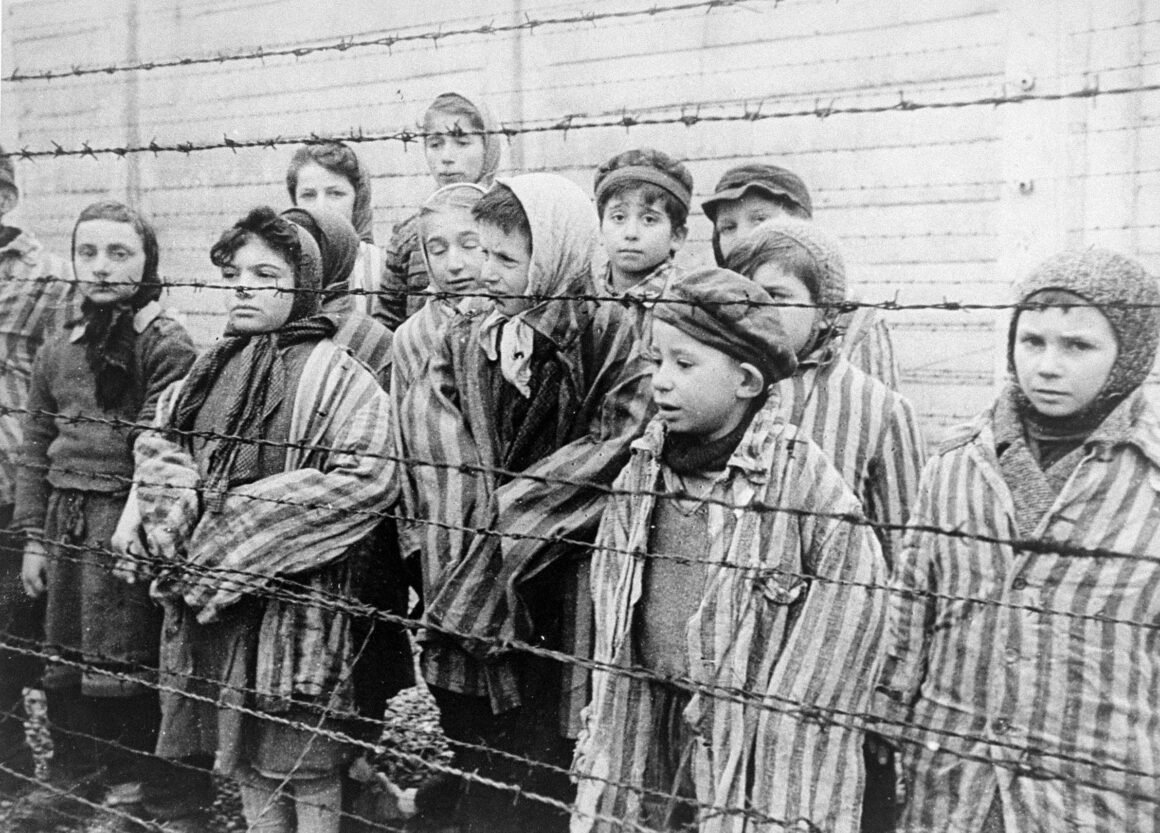
Eva Kor, a holocaust survivor, and her twin sister, Miriam, were subject to heinous experimentation in the Nazi death camp of Auschwitz. Nazis preferred experimenting on twins so they could compare the two against each other. Through the world war and mass genocides, Eva and Miriam were the only survivors from her family. After the war, Eva and her sister moved to the United States.
Eventually, Miriam died from complications of the vast experiments she went through as a young girl. Eva, after losing her last family member, met with Hans Münch, a Nazi doctor, and offered him forgiveness. She also, at the meeting, said she had forgiven Josef Mengele, the infamous “Angel of Death.”
This year (2015), Eva met Oskar Groening, a former Nazi guard and “the accountant of Auschwitz.” She hugged him, and he kissed her hand.
Eva has said, ”I realized I had power over my life. I had the power to heal the pain imposed on me in Auschwitz by forgiving the people who imposed that pain.”

The Victimization of Jesus
Jesus, throughout the Gospels, describes His death on the cross not as an act of victimization but as the giving of Himself for the sake of others:
“I am the good shepherd. The good shepherd lays down his life for the sheep…No one takes it from me, but I lay it down of my own accord. I have authority to lay it down, and I have authority to take it up again.”
— John 10:11, 18 (cf. Matthew 26:53)
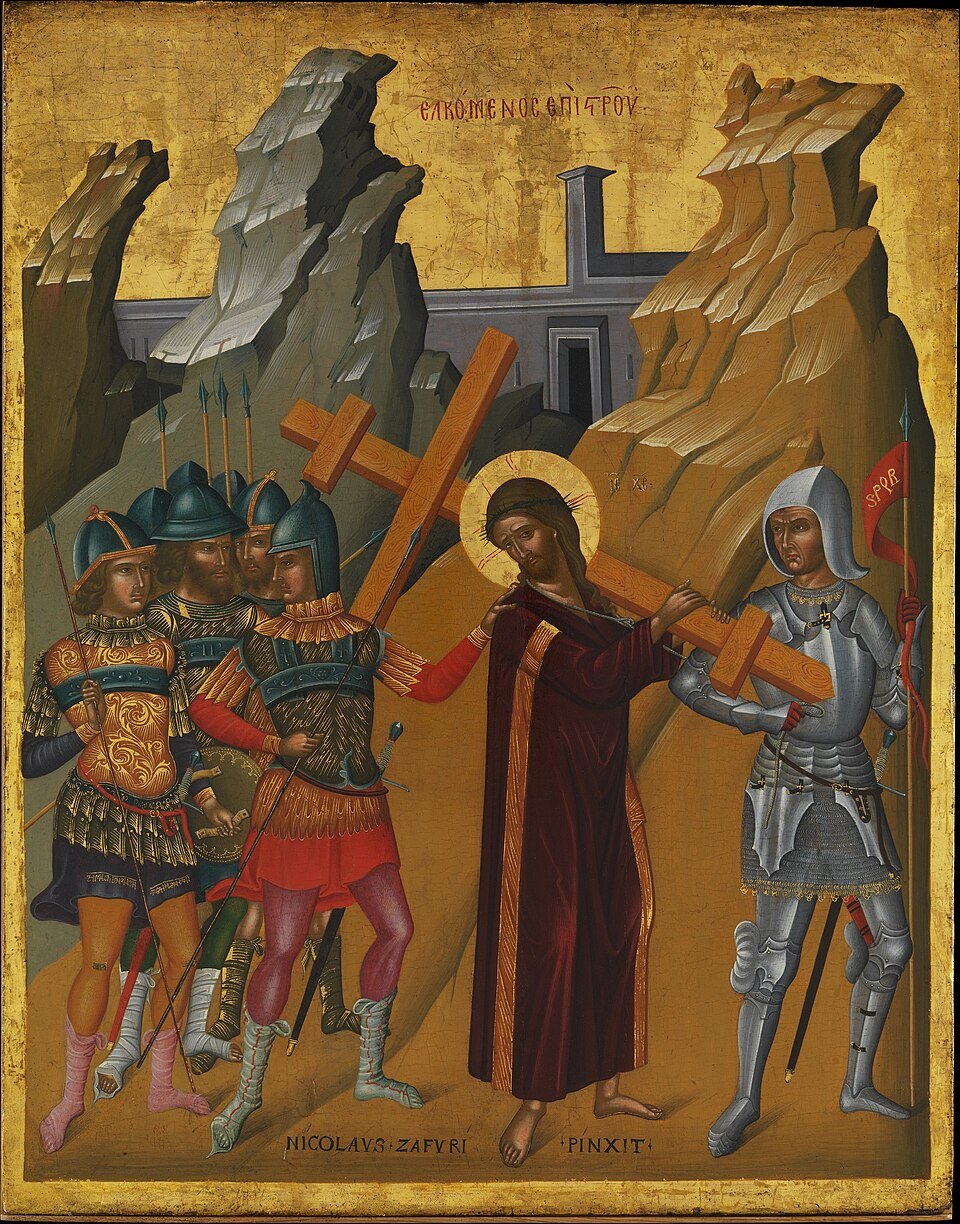
Jesus breaks the chain of victimization by being victimized and refusing to be a victim. In His oppression, He lifts. In His injustice, He justifies. In His arrest, He is free. In His defamation, He blesses. In His suffering, He heals. The Deity, killed by His own, refuses to be the plaintiff. His murder now becomes His willing sacrifice.
When we take communion, we ought to be reminded of this. We eat the parts of someone victimized. We also eat of someone who rose from victimhood. It’s as if we partake in His suffering, and there is no retaliation for dessert (“Vengeance belongs to the Lord“).
We are invited to live in His words, “Love your enemies, do good to those who hate you, bless those who curse you, pray for those who abuse you” (Luke 6:27-28). This is what was meant to set Christians apart from others: the unconditional and unprompted forgiveness of our enemies.
“Enemies” implies that they are still against us. They haven’t changed or apologized. And loving them means not seeing them the same way they might see us. Jesus was speaking to a group of people who had been living under Roman occupation. Their daughters have been raped, their babies stapled to door frames, their husbands crucified, their families’ income robbed, and their God blasphemied.
In the midst of ethnic, political, economic, and religious oppression, Jesus’ words must have stung, “Forgive them.” Forgiveness means that, instead of making them pay, we have to absorb the debt. It means that we give up our rights even while our enemy abuses his. It means we stop retorting while the other offends. It means we stop viewing them as enemies. It means that when they are against us, we are for them. It means we take up our own cross. This is how the early church upended the Roman empire: one person at a time.
Timothy Keller, in his book The Reason for God, wrote,
“Forgiveness means refusing to make them pay for what they did. However, to refrain from lashing out at someone when you want to do so with all your being is agony. It is a form of suffering. You not only suffer the original loss of happiness, reputation, and opportunity, but now you forgo the consolation of inflicting the same on them. You are absorbing the debt, taking the cost of it completely on yourself instead of taking it out of the other person. It hurts terribly. Many people would say it feels like a kind of death
“Yes, but it is a death that leads to resurrection instead of the lifelong living death of bitterness and cynicism.“
Large Print
In no way am I saying that there not legitimate times to acknowledge victimization and abuse: far from it.
If you’ve been victimized, you can not forgive unless you first acknowledge that you have been hurt. I am also not saying this is something quick or an easy, one-time decision. Nope: sometimes you have to hang on in agony while you simply work towards forgiveness.
Justice and protection have proper places and functions: use them. If you are being abused, get out and get help. You don’t have to live that way anymore. You don’t have to stay someone’s victim.
No matter what, we should not let what was done in the past become the definition of who we are today. The only way to truly move on is to forgive, and usually the hardest person to forgive is ourselves. If we choose to exist as a victim, life will always seem like it is out to get us.
There is no joy to be found in that life.