Table of Contents Show
Part 2 – Framing a Church for the Here and Now
In a previous post, we explored the intricate relationship between curiosity and love, challenging the idea that they are at odds. Agape love, as described in 1 Corinthians 13, is inherently curious, seeking to know, understand, and embrace truth. Fear often impedes this process, particularly within the Church, where theological rigidity and cultural shifts have fostered division, unhealthy mindsets, and a loss of authenticity.
By tracing historical and theological perspectives—from Augustine’s wary view of curiosity to Aquinas’ more balanced stance, and Kierkegaard’s call for an honest, vibrant faith—we examined how curiosity, rooted in love, can transform our spiritual lives.
Kierkegaard’s Vision Beyond the Facade
Søren Kierkegaard’s sharp critique of the Church, especially of a “Christian nation,” and society remains startlingly relevant. His lament was not over the existence of faith but over its reduction to hollow ritualism—a lifeless performance devoid of transformative power. In Attack Upon Christendom, Kierkegaard declared:
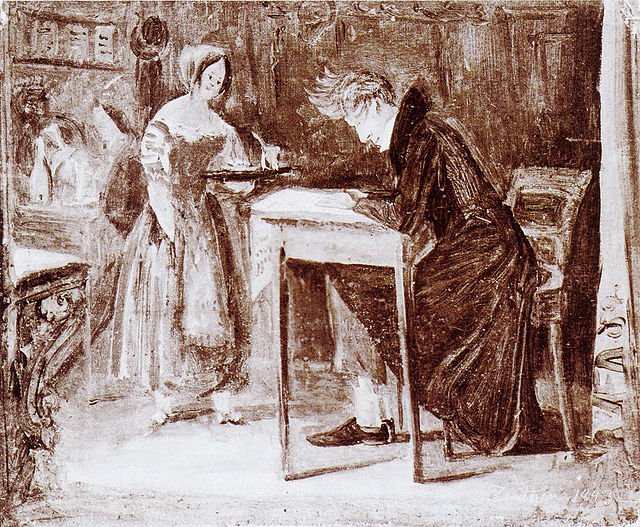
“The Christianity of the New Testament simply does not exist. What has taken its place is a falsification of Christianity… The Christianity of the New Testament is infinitely high, infinitely deep, infinitely holy, infinitely glorious. But this official Christianity is an attempt to render Christianity finite, an attempt to make Christianity so secular that it has no qualms about calling itself a ‘Christian nation’… Oh, in one word, I ask only for honesty!”
Honesty is essential for faith to exist at all. Hebrews says that “without faith it is impossible to please him,” so how does one obtain faith in the first place? Paul makes the point in Romans 10:17 that “faith comes by hearing” (cf. Galatians 3:2-6) and refusing to obey it is where faith ends. Can we not see how the curiosity of the Bereans helped them rather than oppose them? Refusing to be curious is refusing to listen. Faith is not possible without first an authentic question.
Without curiosity and authentic faith, the Church risks becoming a lifeless institution, suppressing vitality and individuality. For Kierkegaard, this suppression wasn’t merely bad theology—it was a betrayal of love and truth. He saw Christendom as a failed reflection of Christ’s call, a system that prioritized appearances over genuine transformation.
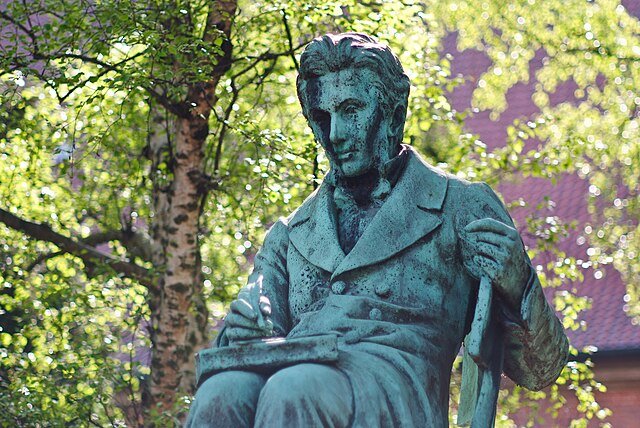
Curiosity, Kierkegaard believed, is foundational to honesty. Without a willingness to ask questions and seek truth, faith is reduced to a mechanical act, devoid of vitality. His critique resonates with Nietzsche’s proclamation, “God is dead, and we have killed him,” though their conclusions diverge. Where Nietzsche saw the collapse of meaning in this death, Kierkegaard saw an opportunity—a call to rediscover faith that is rooted in authenticity, love, and radical vulnerability.
Existential Foundations: Kierkegaard as the Father of Existentialism
Kierkegaard is often called the father of existentialism because he shifted philosophical inquiry from abstract systems to the individual’s subjective experience. His driving question was not, What is the objective nature of God? but rather, How do I relate with God? Faith, for Kierkegaard, was deeply personal and required an authentic engagement with existence—a process that demanded courage and love.
In Fear and Trembling, Kierkegaard famously explored the “leap of faith,” using Abraham’s willingness to sacrifice Isaac as a paradigm of trust in the divine. This leap was blind but necessary; it was driven by a curiosity about the nature of God. It comes, in some sense, from the realization that there is something more than what we often settle for. It comes, sometimes, from desperation and others from delight.

Regardless, curiosity is present all along the way. To turn off curiosity is to turn off something essential about our nature, and that simply isn’t consistent with how we’re made. The opposite of curiosity is apathy, ignorance, and arrogance – none of which are in the fruit of the Spirit. Today, faith is reduced and caged in order to explain away the world. Faith, instead, ought to burn from the inside out as it goes about loving the world. Kierkegaard insisted:
“Faith is the highest passion in a person. There are perhaps many in every generation who do not even come to it, but without it, there is no love.”
This intertwining of faith and love reflects Paul’s declaration in 1 Corinthians 13:13 that love is greater than both hope and faith. Agape love is inherently curious—it desires to know and to be known. Love seeks understanding, embraces vulnerability, and approaches life’s complexities with openness rather than fear.
This foundation of love and curiosity laid the groundwork for existential psychology, influencing later thinkers like Viktor Frankl, Carl Rogers, and Carl Jung. Their focus on authenticity and self-awareness owes much to Kierkegaard’s vision of faith as an ongoing, transformative relationship with God. Today, Kierkergaard’s popularity has soared and for obvious reasons.
Kierkegaard and Nietzsche: Diverging Paths from the Same Truth
While Kierkegaard and Nietzsche never directly influenced one another, their works intersect profoundly. Both critiqued the spiritual void of modernity and the failures of institutional religion, yet their responses were distinct.
Nietzsche criticized Christianity for fostering a “slave morality” that prioritized submission over vitality and creativity. He correctly predicted, 200 years in advance, the Church’s institutional control over Truth (and curiosity) was coming to an end. In The Antichrist, he described the Church as suppressing curiosity and ambition to maintain control. Kierkegaard shared Nietzsche’s disdain for Christendom but saw its failure in the absence of genuine love and faith rather than just morality.
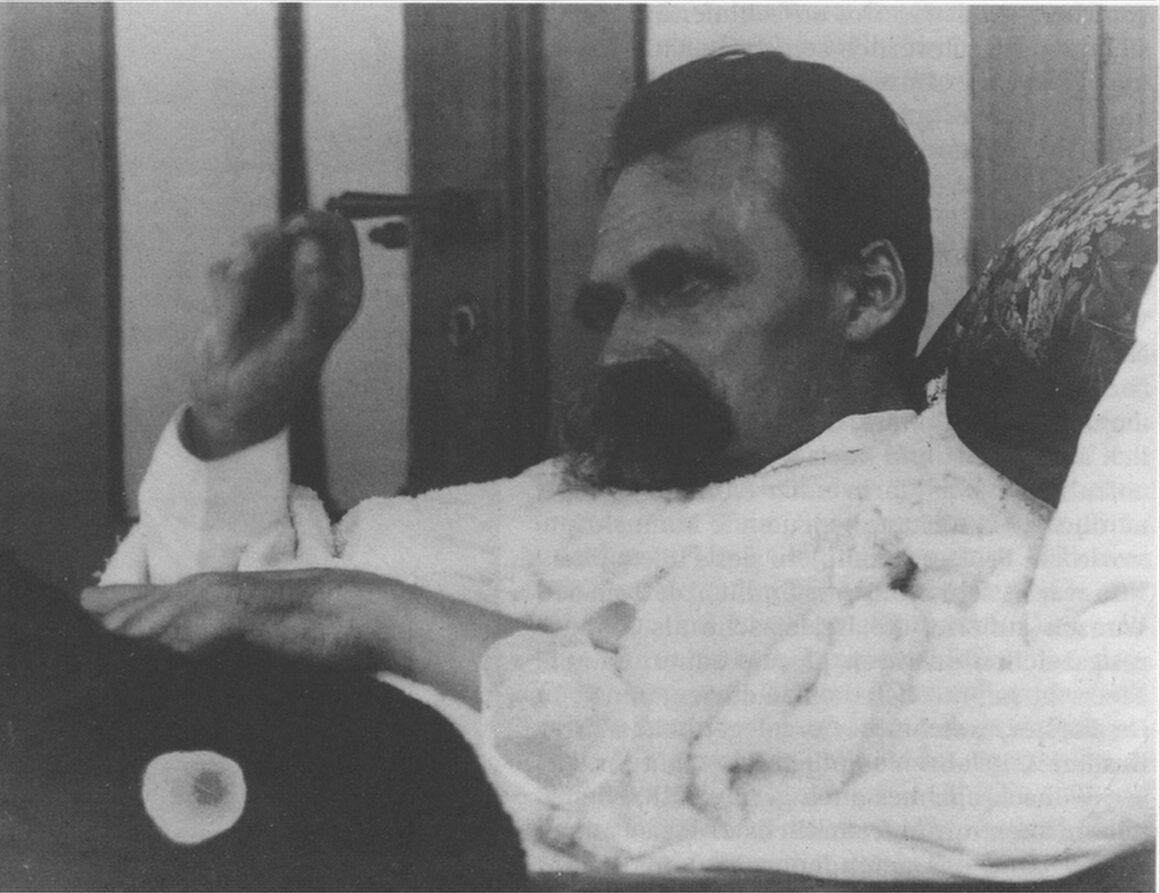
Nietzsche’s Übermensch, a conceptual future human who transcends societal values to create personal meaning, stands in stark contrast to Kierkegaard’s Knight of Faith. The Knight of Faith represents the individual who fully trusts in God despite absurdity, surrendering everything yet receiving it back in a transcendent way through faith. Nietzsche taught a similar concept called Amor Fati. Kierkergaard’s concept, illustrated in Fear and Trembling, highlights the tension between human reason and divine trust, epitomized by Abraham’s willingness to sacrifice Isaac while believing in God’s ultimate goodness.
Kierkergaard’s ideal of the individual who surrenders their ego in love and faith. Nietzsche was close but went the other direction, in some sense, towards bolstering the ego; today I think we all live with the consequences of this mindset. Yet, both thinkers recognized the facades humanity constructs to avoid confronting existential fears. Kierkegaard, however, believed that love—authentic, unconditional love—was the antidote. Love was the meaning that Nietzschew was looking for.
“Love does not alter the beloved, but it alters itself.”
Søren Kierkegaard and Friedrich Nietzsche laid critical foundations for modern disciplines in philosophy, education, psychology, and neuroscience by challenging traditional epistemologies and emphasizing the primacy of subjective experience. Both thinkers anticipated modern psychology’s turn toward understanding the interplay between emotion, identity, and cognition, while recent advancements in neuroscience, particularly in areas such as neuroplasticity and emotional regulation, echo their insights into how belief systems and existential struggles shape human behavior and brain function.
Together, their works serve as a bridge between 19th-century philosophical inquiry and the interdisciplinary approaches of the 21st century, providing tools for investigating the complexities of human existence. They inspired hundreds of years of curiosity.
Jesus’ Invitation to Authentic Faith
These philosophers critiqued institutional faith because Jesus embodied faith and lived transformative love. Kierkegaard’s critique of institutional Christianity drew deeply from Jesus’ teachings. Jesus dismantled the religious facades of His time, exposing their hollow rituals and calling people to a transformative relationship with God. To the Pharisees, who prioritized outward appearances, Jesus said:
“You clean the outside of the cup and dish, but inside they are full of greed and self-indulgence” (Matthew 23:25).
Similarly, Kierkegaard saw Christendom as obsessed with maintaining its facade, neglecting the inward journey of faith. The institutional Church had, in his view, traded authenticity for control, stifling curiosity and reducing faith to compliance. Honesty was absent.

Jesus’ invitation, “Follow me,” was a call to walk with God in authenticity, free from the constraints of assumptions and attachments. He declared, “The kingdom of God is within you” (Luke 17:21), placing the pursuit of truth in the hands of individuals rather than institutional powers. Truth, no matter its source, still must be decided upon by the individual. Faith is not an intellectual agreement. It is a deeply personal and transformative relationship with God and others.
Love as the Antidote to Nihilism
At the heart of the human struggle with nihilism lies a battle between love and fear. Fear silences curiosity, drives despair, and perpetuates the facades we hide behind. Love, by contrast, seeks understanding, embraces the unknown, and empowers us to confront life’s deepest questions. The same reason we fear love is the same reason we fear curiosity.
“There is no fear in love. But perfect love drives out fear” (1 John 4:18).
Love is the ultimate form of courage. Jesus embodied this love in His interactions, from the Samaritan woman at the well to Zacchaeus the tax collector. He took to the Cross and out the other side. His approach was steeped in curiosity and compassion, breaking down barriers of fear and control. He refused to allow the assumptions and compliance of those around him to define him. Then He made disciples to go and do the same.

In contrast, the modern Church often reflects Nietzsche’s critique—unaware of deep assumptions, power structures, and facades while desperately trying to hold on to perceived meaning. Jesus’ words, “I am the way and the truth and the life” (John 14:6), are an invitation to freedom through love and curiosity, not a declaration of dominance.
The Role of Curiosity in Walking with God
Curiosity is not a threat to faith but a holy pursuit. We can’t change our beliefs unless we first doubt our old ones. We don’t doubt unless we’re curious. The Bible invites questioning and exploration:
“It is the glory of God to conceal a matter; to search out a matter is the glory of kings” (Proverbs 25:2).
Abraham’s questioning of God about Sodom, Moses’ approach to the burning bush, and Thomas’ request to see the wounds of Christ are all acts of curiosity that deepened faith rather than diminished it. The average American Christian is, unfortunately, bored with the Bible since they think its meaning perfectly aligns with Evangelicalism – it does not. Honest questioning is not a sign of doubt but of engagement with the divine. An honest question is at least honest. Pretending we don’t question is falsehood and more masks.
Paul’s prayer in Ephesians 3:14-21 captures the essence of this holy curiosity:
“That you, being rooted and grounded in love, may have strength to comprehend… what is the breadth and length and height and depth, and to know the love of Christ that surpasses knowledge.”
Curiosity leads us to discover the depths of God’s love—a love that surpasses understanding yet invites us to seek it fully. In a world drowning in nihilism, curiosity becomes an act of rebellion against despair.
Toward an Authentic Church
The Church must rediscover its calling not as a dispenser of rigid doctrine but as a community of love, curiosity, and transformation. We ought to guide people in Truth, not force our predetermined “truth.” Kierkegaard’s critique is a powerful reminder that faith without authenticity is hollow, and love without curiosity is incomplete. Paul the Apostle seemed to agree. Jesus’ life and teachings offer the way forward: a faith that embraces questions, a love that casts out fear, and a truth that transforms.
This is the invitation of the Gospel—not to conformity but to courage, not to control but to curiosity, and not to fear but to love.
It’s time for the Church, and the World, to be brave. This is objectively part of the answer for our global future, not just “Christians.” It’s a whole new world and there’s work to do.